


Samsung Electronics is strengthening its technological leadership in the next-generation high-bandwidth memory (HBM) market. Following the approval for mass production of 1c DRAM in mid-2025, which laid the groundwork for HBM4 competition, the company has begun shipping HBM4 (5th generation) products and is now proactively supplying samples of HBM4E (6th generation) 12-layer memory, expanding its presence in the AI memory market.
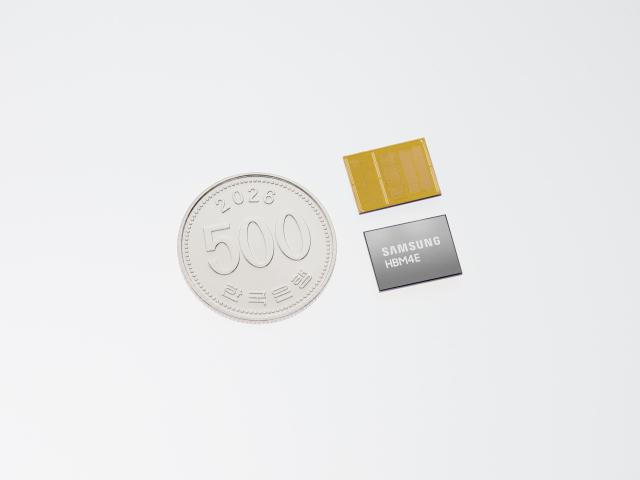
On May 29, the company announced that it has shipped HBM4E 12-layer samples to global customers. This marks a rapid transition to sample supply just months after the mass production of HBM4, indicating a shift in momentum for Samsung, which faced challenges in the HBM3E competition.
The key to HBM4E lies in the combination of 1c DRAM and 4-nanometer logic die. Samsung has applied the 10-nanometer class 6th generation DRAM process, 1c DRAM, to HBM4, enhancing yield and performance stability, and has continued this foundation into HBM4E. As HBM technology relies not only on DRAM stacking but also on the competitive edge of individual DRAM die processes, securing 1c DRAM has become a crucial starting point for the competitiveness of products following HBM4.
Previously, this agency reported on June 30, 2025, that Samsung had completed the approval for mass production of 1c DRAM, marking the beginning of serious competition in HBM4. At that time, industry experts viewed the development of 1c DRAM as a key variable for producing dies for HBM4, beyond just a simple transition to general-purpose DRAM processes. Indeed, Samsung has since succeeded in mass production of HBM4 and is now supplying HBM4E samples to customers, accelerating its technological roadmap.
The HBM4E 12-layer product features a capacity of 48GB and operates at a stable speed of 14Gbps, with a maximum speed of up to 16Gbps. The bandwidth per single stack reaches approximately 3.6TB per second. Samsung has reported a 16% improvement in energy efficiency compared to its predecessor and has enhanced thermal resistance characteristics by over 14%.
However, the shipment of samples does not immediately translate to mass production. HBM products must undergo customer certification and package-level validation before actual supply volumes can be realized. In particular, HBM for AI accelerators is evaluated not only on performance but also on long-term operational stability, heat management, energy efficiency, and packaging quality.
Industry analysts believe that Samsung's experience in achieving yield targets during the HBM4 mass production process will positively influence the transition to HBM4E production. Since both HBM4 and HBM4E are based on 1c DRAM and 4-nanometer logic die, the stabilization of earlier processes and packaging expertise can carry over to subsequent products.
Samsung is applying the yield management of 1c DRAM and the experience of integrating 4-nanometer base die from the HBM4 production process to the customer validation phase for HBM4E. Internally, the company is reportedly focusing on aligning the mass production schedule with customer roadmaps following the sample supply.
Samsung plans to expand its lineup starting with the HBM4E 12-layer product to include 32GB 8-layer and 64GB 16-layer products. As the demand for memory bandwidth and capacity in AI servers and accelerators rapidly increases, HBM4E is poised to become a key product for next-generation AI infrastructure.
Samsung's strengths lie in its integrated business structure, which encompasses memory, foundry, system LSI, and advanced packaging. In products following HBM4, it is becoming increasingly difficult to compete based solely on DRAM performance; the capabilities of base die, packaging, and customer-specific design responsiveness are also becoming crucial.
Industry observers note that Samsung has significantly recovered from its relatively slow start with HBM3E during the HBM4 generation. The early stabilization of 1c DRAM leading to the mass production of HBM4 and the shipment of HBM4E samples indicates that this shipment is more than just a product announcement; it signifies that Samsung's next-generation HBM strategy is advancing to the actual supply stage.
Hwang Sang-jun, Executive Vice President of Samsung Electronics' Memory Business Division, stated, "Following the successful mass production of HBM4 and the seamless supply of next-generation HBM4E samples, we have firmly established Samsung's unparalleled technological leadership in the market. We will continue to lead the growth of the global AI memory market with overwhelming technological superiority and proactive investments in production infrastructure."
* This article has been translated by AI.
Copyright ⓒ Aju Press All rights reserved.