

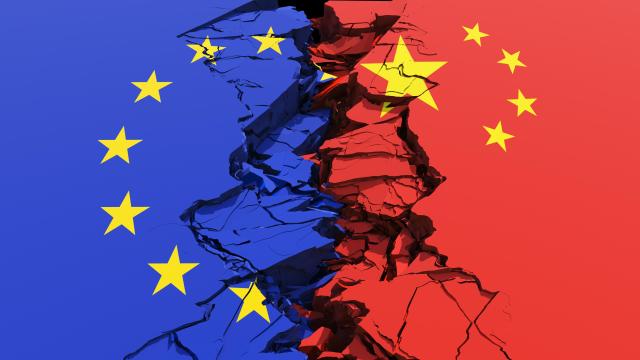
Chinese state media has strongly criticized the European Union's (EU) pressure tactics, warning that it will "fight back to the end." This response comes as the EU considers implementing import quotas and additional tariffs in response to the issue of overproduction from China.
On May 29, the social media account "Yuyuantantian," affiliated with China Central Television (CCTV), stated, "If the EU insists on enforcing its so-called 'overproduction tools,' China could immediately launch countermeasures, including anti-discrimination investigations and security checks on industries and supply chains." It emphasized that the Ministry of Commerce has made it clear it will firmly retaliate if national interests and corporate rights are infringed upon.
The media outlet further warned, "If the EU stubbornly pushes forward with its 'overproduction tools,' China will take immediate action and implement comprehensive countermeasures. Trade friction is neither unfamiliar nor frightening to China. We will fight to the end (奉陪到底)."
The EU's proposed 'overproduction tools' refer to mechanisms that would allow for the imposition of import quotas or additional tariffs to counteract the influx of low-priced goods from China. The EU is set to hold a special meeting to discuss unfair trade practices related to China and potential responses.
Ahead of the meeting, Stefan Sejourne, the EU Commissioner for Prosperity and Industrial Strategy, warned that European industries in chemicals, metals, and clean technologies are at risk of being undermined by unfair competition from China. He indicated that the EU would systematically mobilize measures such as import quotas and tariffs.
In response, Yuyuantantian criticized the EU's increasingly radical economic and trade policies toward China, stating, "The EU's shift toward trade protectionism is a result of long-term decline in European industries and lobbying by vested interest groups." It added that the EU, facing difficulties, is avoiding necessary structural reforms by raising barriers instead of addressing the root causes.
China has also hinted at potential retaliation against European products. Yuyuantantian noted, "European products such as meat, alcohol, luxury goods, and cosmetics hold significant market shares in China. If the EU defines Chinese products as overproduced based on the logic that 'production capacity exceeds domestic demand,' it should consider whether the same criteria apply to European products sold in China." This suggests that a wide range of European consumer goods could become targets of China's response.
The Chinese government has also issued an official response. Mao Ning, a spokesperson for the Chinese Foreign Ministry, stated during a briefing the previous day, "The EU should view the China-EU trade relationship comprehensively and objectively and adhere to its free trade commitments." She indicated that China would closely monitor the EU's actions and take necessary measures to safeguard its legitimate rights and interests.
This exchange comes amid the EU's recent expansion of its measures against China across various sectors, including industry, telecommunications, and digital platforms. The EU is advancing the Industrial Acceleration Act (IAA), which prioritizes 'production within Europe' for public procurement and subsidies in strategic industries such as batteries, electric vehicles, and solar energy. Additionally, it is pushing for amendments to cybersecurity laws to exclude Chinese telecommunications companies like Huawei from European networks, thereby tightening regulations on Chinese firms.
Recently, the EU imposed a fine of 200 million euros (approximately $349 million) on the Chinese e-commerce platform Temu for selling illegal products that did not meet safety standards. On the same day, it initiated an investigation into JD.com's acquisition of the German electronics distributor Ceconomy under foreign subsidy regulations (FSR), suspecting that JD.com may have received favorable financial and tax benefits from the Chinese government, potentially distorting competition in the EU market. The FSR was introduced to prevent companies receiving foreign government subsidies from distorting market competition by acquiring EU firms or participating in public tenders.
* This article has been translated by AI.
Copyright ⓒ Aju Press All rights reserved.