

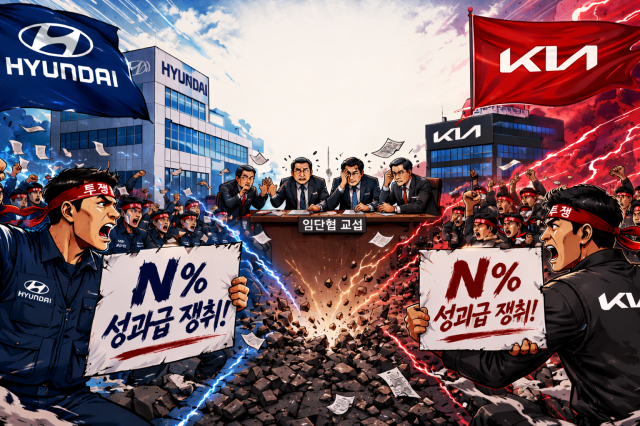
As Hyundai Motor Group enters the wage and collective bargaining phase this year, tensions are rising in the automotive industry. While Hyundai has already accelerated negotiations, Kia has shown differences even before scheduling its initial meeting, increasing pressure on the group.
According to industry sources on May 29, Kia plans to hold its first meeting between labor and management as early as next week to kick off this year's negotiations. The Kia union had initially proposed to meet on this day, but the meeting did not take place.
The management sent a formal notice to the Kia union two days earlier, on May 27, suggesting a postponement of the schedule. The management cited that the overall timeline for this year's negotiations was progressing faster than expected as the reason for the delay. Consequently, Kia's negotiations will be slightly delayed.
Recently, the Kia union finalized its demands for this year's negotiations during a delegate meeting. Key demands include a basic salary increase of 149,600 won, a bonus equal to 30% of operating profit, inclusion of average wages in the bonus calculation, increases in production line and service allowances, hiring new employees to match the number of retirees this year (1,830), and the abolition of the dual wage system.
Regarding the revision of the collective agreement, the union's core demands include hiring new employees through domestic factory investments, increasing bonuses from 750% to 800%, reducing weekly working hours to 4.5 days, introducing new models at domestic factories, and extending retirement age linked to national pension eligibility.
The management's attempt to delay the negotiation schedule is interpreted as a strategy to minimize group-level pressure, especially with ongoing negotiations at Hyundai. Recently, labor disputes over issues like the so-called 'N% bonuses' have spread among companies like Samsung Electronics and SK Hynix, raising expectations for increased tensions over bonuses and wage structures in the automotive sector during this year's negotiations.
Hyundai has already shown significant differences in positions during its negotiations this year. The eighth round of negotiations is scheduled for next week, and the union continues to present its demands to the management. However, the management reportedly finds it challenging to realistically accept the major demands. The Hyundai union is demanding that 30% of last year's net profit be distributed as bonuses to union members and employees of partner companies.
During the seventh round of negotiations held on May 27, substantial differences in views between labor and management were noted regarding these demands. Industry insiders predict that as Kia enters the negotiation phase, the intensity of labor disputes in the automotive sector this year could be higher than in previous years, with the possibility of both Hyundai and Kia resorting to strikes.
An industry source stated, "While Hyundai's negotiations are ongoing, we are still in the explanation phase, and there are significant differences in opinions between labor and management."
* This article has been translated by AI.
Copyright ⓒ Aju Press All rights reserved.