

"Governor, you stated your intention to make North Chungcheong Province a startup hub. In ten years, should it be remembered as a region producing semiconductors and biopharmaceuticals, or as the area that birthed the most AI entrepreneurs in South Korea?"
North Chungcheong Province has always been at the center of South Korea. Located in the heart of the country, it serves as a transportation hub connecting the capital region with the Yeongnam and Honam areas. With the growth of Osong's biopharmaceutical sector, Ochang's semiconductor industry, and advanced industries in Chungju, it has played a crucial role in the nation's manufacturing sector.
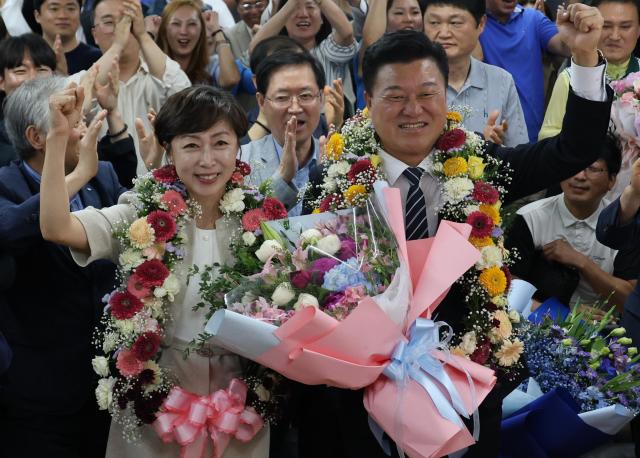
However, North Chungcheong faces another dilemma. While industries are growing, young people are leaving, and although factories are increasing, the region's future remains uncertain. Newly elected Governor Shin Yong-han has directly addressed this issue.
He emphasized integration, harmony, livelihood, and jobs, presenting 'Startup Hub North Chungcheong' as the core vision of his administration. This declaration marks a shift from an era of creating industrial complexes to one focused on building a startup ecosystem. North Chungcheong now stands at a crossroads: will it remain an industrial center, or leap forward as a hub of entrepreneurial innovation in the AI era?
The startup hub is North Chungcheong's survival strategy.
The biggest crisis facing local governments in South Korea is population decline. However, population decline is merely a symptom, not the root cause. Young people leave due to a lack of job opportunities, and the absence of new businesses is the reason for this job scarcity. The essence of regional extinction lies in the lack of entrepreneurship.
This is why Governor Shin emphasized the startup hub during his campaign. In a post-election interview, he stated that he would create an environment where talented individuals in North Chungcheong no longer have to leave for the capital region but can start businesses, take risks, and grow locally. He also promised to establish a 20 billion won investment fund and a system that allows failed entrepreneurs to try again.
This aspect should not be viewed merely as an economic pledge.
Historically, local governments have competed to attract businesses, measuring success by the number of industrial complexes and factories established. However, in the AI era, the rules of competition are changing entirely. It is no longer about factories but about people; not buildings, but ideas; and not budgets, but ecosystems that define competitiveness.
Silicon Valley became the center of global innovation not because of its large factories, but due to the presence of Stanford University, entrepreneurs, investors, and a culture that accepts failure. Similarly, Shenzhen in China, once a manufacturing city, has now become a symbol of entrepreneurship and innovation. Ultimately, future regional competitiveness will likely be determined by how many businesses are created rather than how many are attracted.
In this context, Governor Shin's vision for a startup hub represents both a strategic and survival plan for North Chungcheong. It signifies a shift from a factory-centered economy to one focused on entrepreneurship.
Can AI startups thrive in a land known for semiconductors and biopharmaceuticals?
North Chungcheong's greatest strength lies in its existing foundation for future industries. Osong is home to biopharmaceuticals, Ochang hosts semiconductor production, and Chungju and Jincheon are developing the secondary battery industry. Cheongju Airport is evolving into a central airport for the region, and the Gangho Axis is positioning North Chungcheong as a new national growth axis.
However, the challenge is that these assets have yet to be interconnected into a single ecosystem. Industries grow independently, universities operate separately, research institutes function in isolation, and entrepreneurship remains in a different realm. In the AI era, this fragmentation becomes a significant weakness.
Today, most innovative companies that drive the world emerge at the intersection of different industries. New value is created when AI meets biopharmaceuticals, semiconductors connect with software, and manufacturing integrates with data.
North Chungcheong possesses this potential. If biopharmaceutical companies in Osong connect with semiconductor firms in Ochang, if local university research leads to startups, and if investment capital links with regional startups, North Chungcheong can evolve from a mere industrial base into an innovation hub.
In the AI era, competitiveness no longer stems from production capacity but from the ability to connect. Who can connect more talent? Who can link more technologies? Who can unite more ideas? These factors will determine the future.
North Chungcheong is home to 19 universities, graduating numerous young people each year. However, many leave for the capital region. The issue of talent outflow that Governor Shin highlighted is part of this broader context. The future of North Chungcheong will likely be determined not by the number of semiconductor factories but by the number of young people who remain in the region.
The success of the startup hub also hinges on this.
Many view Daejeon or Sejong as North Chungcheong's competitors. Daejeon is a center for research and development, while Sejong serves as the administrative capital. However, competition in the AI era does not operate in such a manner. North Chungcheong's true competitors are cities with innovative ecosystems.
In this regard, Austin in the U.S., Tel Aviv in Israel, and Shenzhen in China represent North Chungcheong's real competition. The commonality among these cities is that entrepreneurship is at the heart of their local economies.
Governor Shin, who has experience as a CEO and venture investment expert, stated during his campaign announcement, "We need a serving manager, not a ruling administrator." This statement reflects a significant shift from an administrative-centered governance to an economy-centered governance.
In the past, local governments focused on budget allocation. Moving forward, their role will be to nurture entrepreneurs, connect investors, and build innovative ecosystems. In the AI era, local governments must also become platforms.
A platform where entrepreneurs gather, investors converge, and universities connect with businesses. If North Chungcheong succeeds as a startup hub, it will not only transform itself but could also redefine the model for regional development across South Korea.
This transition from creating industrial complexes to fostering startup ecosystems is crucial for the success of Governor Shin's administration.
Ultimately, what matters more than how much budget has been secured is how many young people remain in North Chungcheong. More significant than the number of businesses attracted is how many new enterprises are born. More important than the number of buildings constructed is how many new entrepreneurs emerge.
Governor Shin expressed his desire to be evaluated based on results.
Therefore, in four years, the questions North Chungcheong residents should ask are clear. How many AI startups has North Chungcheong created? How many young people have been retained? How many future jobs have been generated? If these questions can be answered, North Chungcheong could become South Korea's first true startup hub.
SWOT Analysis:
- Strength: North Chungcheong is one of the few regions with a biopharmaceutical cluster in Osong, a semiconductor industrial complex in Ochang, and a foundation for the secondary battery industry. It also has transportation infrastructure like Cheongju Airport and the Gangho Axis. Additionally, Governor Shin's clear vision for a startup hub is a significant advantage.
- Weakness: The scale of the startup ecosystem is small compared to the capital region, and the venture investment market is limited. There is a continuous outflow of talented individuals to the capital region, and concerns about a lack of experience in regional administration persist.
- Opportunity: The AI revolution presents new opportunities for North Chungcheong. By combining the semiconductor, biopharmaceutical, and secondary battery industries with AI, a new startup ecosystem can be established. The development of the Gangho Axis and policies for balanced regional development can also serve as growth drivers.
- Threat: The concentration of resources in the capital region remains strong. Competition with Daejeon and Sejong is intense. If the startup hub remains a mere support initiative and fails to build an ecosystem, achieving results will be challenging.
ABC asks Governor Shin Yong-han.
* This article has been translated by AI.

Copyright ⓒ Aju Press All rights reserved.