

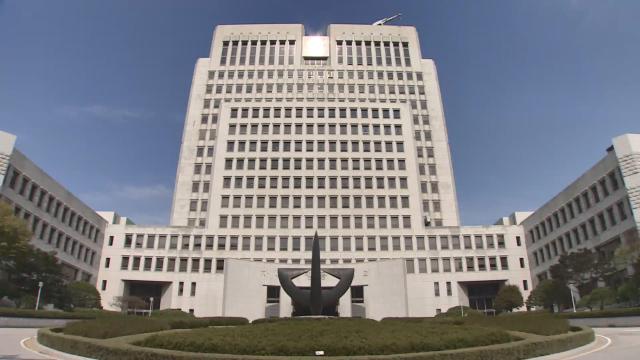
According to the legal community on June 7, the Supreme Court's first division, led by Justice Cheon Dae-yeop, ruled that a military service member facing a loss of status due to a confirmed sentence must be ordered to complete a sexual violence treatment program, despite not being subject to such orders under the probation law's special provisions.
The case involved A, a current non-commissioned officer, who was prosecuted for sexually assaulting B, the wife of a junior soldier, in 2020.
Both the first and second trials found A guilty and imposed a fine of 8 million won. However, they did not issue a treatment order, citing special circumstances under Article 56 and Article 64, Section 1 of the probation law, which precludes such orders for active military personnel.
Article 56 of the probation law states that the law does not apply to individuals subject to military court law, while Article 64, Section 1 allows for the application of Article 56's provisions to those subject to community service or educational orders, creating special provisions for military personnel.
These special provisions consider the unique nature of military command and the need to protect the authority of commanders. This legal principle also applies to treatment orders under Article 16 of the Sexual Violence Punishment Act.
However, the Supreme Court stated, "The lower court's judgment misunderstood the legal principles regarding the special circumstances that prevent the imposition of treatment orders under Article 56 of the probation law and Article 16, Section 2 of the Sexual Violence Punishment Act, affecting the verdict."
The court explained, "Probation and treatment orders are executed after a judgment is finalized. Even if a person is classified as a 'military law subject' at the time of sentencing, if their status is set to change due to the finalization of the criminal judgment, the execution of probation or treatment orders will occur after the loss of that status."
It further noted, "Considering the legislative intent of the special provisions, when determining whether to impose probation or treatment orders, it should not be assumed that such individuals fall under the category of 'military law subjects.' Therefore, the court can impose probation or treatment orders regardless of the special provisions when sentencing leads to a loss of status."
The court concluded that since A was found guilty of sexual assault and fined 8 million won, he would automatically lose his status as an active military member under the former Military Personnel Act. Thus, the fact that he was considered a military law subject at the time of sentencing does not qualify as a 'special circumstance' under Article 16, Section 2 of the Sexual Violence Punishment Act.
The former Military Personnel Act stipulates that individuals sentenced to a fine of 1 million won or more for sexual violence crimes under Article 2 of the Sexual Violence Punishment Act cannot be appointed as officers, non-commissioned officers, or warrant officers if the sentence is finalized within three years. It also states that individuals who fall under any disqualifying conditions in Article 10, Section 2 of the former Military Personnel Act will be dismissed.
* This article has been translated by AI.

Copyright ⓒ Aju Press All rights reserved.