

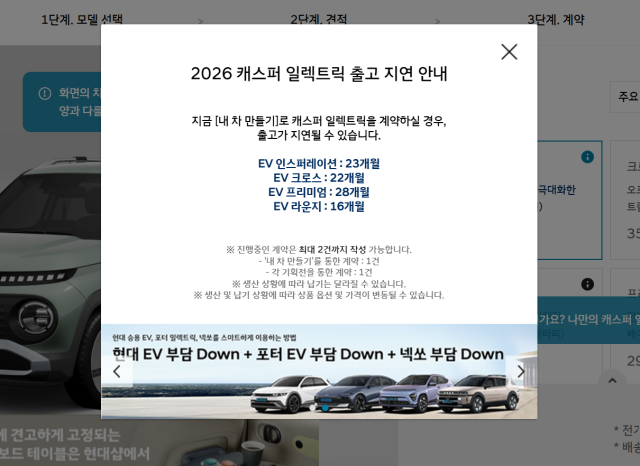
As of June 5, industry sources report that the waiting period for the Kasper Electric can extend up to 28 months. Except for the top-tier EV Lounge trim, which has a waiting period of 16 months, all other trims require over 22 months for delivery.
Hyundai has been informing customers about the delays for both the gasoline model of the 2026 Kasper and the Kasper EV on its official website. This notification has been ongoing for more than a year, starting in June of last year.
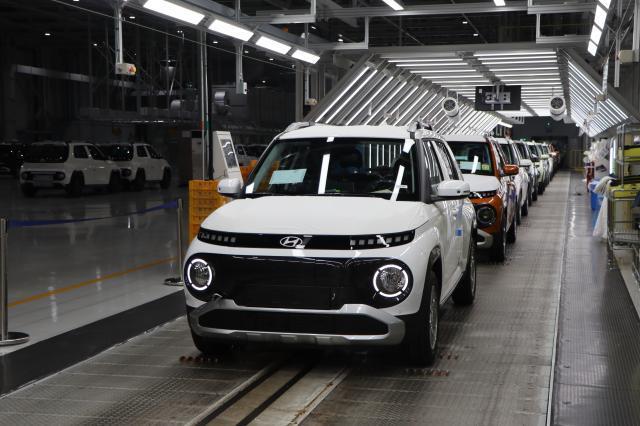
The delays in new car launches are attributed to the expansion of exports to Europe. Gwangju Global Motors (GGM), which handles production, has prioritized a significant portion of its output for export, resulting in domestic supply struggling to meet demand.
The Kasper Electric, sold under the name 'Inster' in the European market, has been steadily gaining popularity since its export began in 2024.
According to Hyundai's European division, the cumulative sales of the Inster reached 33,917 units last year, making it the second best-selling electric vehicle in the A-segment (microcar category).
In April, 2,974 units were sold in the European market, ranking it as the third most sold model among Hyundai's electrified vehicles, following the Tucson and Kona.
Industry experts point to Europe's unique automotive consumption culture as a key factor in the Inster's success. While the domestic market has shifted towards mid-sized SUVs, European consumers still prefer smaller cars. The rising cost of electric vehicles has also increased demand for entry-level electric cars, contributing to the Inster's popularity.
A Hyundai representative stated, "While the Kasper is perceived as a compact car in Korea, it is recognized as a practical urban electric vehicle in Europe. However, production volumes are fixed, making it difficult to increase output in the short term, so the delivery delays are likely to continue for the foreseeable future."
* This article has been translated by AI.

Copyright ⓒ Aju Press All rights reserved.