

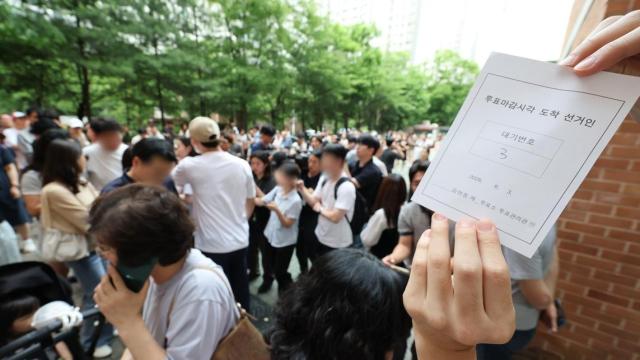
The ballot shortage that occurred during the June 3 local elections was not merely a logistical error; it exposed significant flaws in the entire election management system. Voters faced long lines, and some polling stations had to halt voting or extend their hours due to the lack of ballots. The fact that a fundamental election resource was not adequately secured in a democratic nation is shocking. However, the more pressing issue is the systemic failures revealed in the aftermath of the incident.
The Songpa-gu Election Commission recognized the potential for a ballot shortage by 11:40 a.m. on election day and reached out to the Seoul Election Commission for solutions. This indicates that warning signs had been detected early in the day. However, this information was not communicated to the Ministry of the Interior and Safety's election situation room. The Songpa District Office only reported the situation to the Election Commission and did not share information with other agencies. The Ministry of the Interior and Safety became aware of the situation only after media reports surfaced at around 5:20 p.m.
Despite the presence of situation rooms at the Central Election Commission, local election commissions, the Ministry of the Interior and Safety, and local governments, critical information failed to flow between these entities. Although there were signs of a crisis and a reporting system in place, no one was able to assess the overall situation comprehensively. Election management agencies operated within their own silos, ultimately exacerbating the crisis. This is a classic example of compartmentalized administration. More seriously, the issue at hand was not just administrative but involved the fundamental rights of citizens to participate in elections.
The Election Commission has long emphasized its independence as a constitutional body. There is universal agreement on the principle that it must remain free from political influence to ensure fair elections. The problem arises when this independence is misused as a shield against accountability. Being an independent agency does not exempt it from responsibility for failures. In fact, with its considerable authority comes an even greater obligation for accountability and scrutiny.
Public outrage over this incident stems from the lack of identifiable accountability despite the ballot shortages and chaos in election management. This has led to strong criticism from political circles. Seoul Mayor Oh Se-hoon has called for a "reform at the level of disbandment" of the Election Commission. Some members of the ruling party are even discussing the possibility of a special investigation. Representative Han Dong-hoon, who won a by-election in Busan, announced he would introduce a bill to amend the Audit Act to allow the Board of Audit and Inspection to conduct oversight of the Central Election Commission. This reflects concerns that the Election Commission has operated as an untouchable entity, leading to accumulated incompetence and arrogance.
The current situation is not just about a shortage of ballots. It highlights a combination of inadequate preparation, failure in crisis response, lack of inter-agency communication, and a culture of evading responsibility. This is a systemic issue that goes beyond a single ballot.
Now is not the time for temporary fixes. A comprehensive review is needed of ballot printing standards and supply systems, crisis response manuals for election day, inter-agency information sharing systems, and the internal decision-making structure of the Election Commission. The system of having part-time and concurrent positions for the Election Commission chair also needs to be reassessed. While maintaining independence, reforms should aim to enhance accountability and transparency.
The Election Commission should not focus on preserving its image at this time. It must fully disclose why this incident occurred and ensure that those responsible are held accountable. This is the minimum standard that a constitutional body must uphold before the public. If this issue is brushed aside again, demands for reform of the Election Commission will only intensify.
* This article has been translated by AI.

Copyright ⓒ Aju Press All rights reserved.