

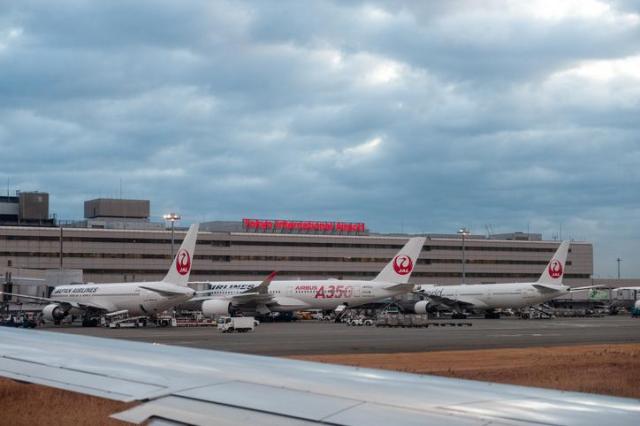
The ongoing crisis in the Middle East is shaking the global airline industry once again. Disruptions in the Strait of Hormuz have caused a surge in jet fuel prices, leading to projections that global airline profits will drop by nearly half this year compared to last year. In Japan, All Nippon Airways (ANA) and Japan Airlines (JAL) are moving towards code-sharing agreements on low-profit regional routes as a response to rising costs.
The Nikkei reported on June 9 that the International Air Transport Association (IATA) forecasts the total net profit for the global airline industry to be $23 billion (approximately 35 trillion won) this year, down from $45 billion last year. After a brief recovery in travel demand following the COVID-19 pandemic, the airline sector now faces a new challenge due to skyrocketing fuel costs stemming from the Middle East crisis.
Fuel costs are the primary factor pressuring airline profitability. IATA estimates that total fuel expenses for the airline industry will reach $350 billion this year, a 40% increase from last year, amounting to an additional $100 billion. Typically, fuel costs account for about 25-30% of airline operating expenses. When fuel prices rise sharply, airlines have no choice but to respond with fare increases or capacity reductions; however, it is challenging to pass these costs onto passengers on less popular regional routes.
The increase in ticket prices is also directly impacting demand for flights to the Middle East. IATA predicts that air travel demand in the region will decrease by 11% this year, measured in revenue passenger kilometers (RPK). As geopolitical tensions have dampened passenger demand for flights to and from the Middle East, major airlines such as Qatar Airways, which operates out of Doha, are reducing flight frequencies or suspending certain routes. Similarly, Lufthansa and Air India are cutting back on less profitable routes.
The Japanese airline industry is not immune to these trends. According to the Nikkei, ANA and JAL are expected to pursue code-sharing agreements for domestic regional routes, particularly those that are difficult to replace with rail services but have low profitability. Discussions about collaboration between the two companies have been ongoing since before the Middle East crisis, but the recent spike in fuel prices has heightened the need for such partnerships.
Japan's regional airline routes have already been weakened by declining populations and reduced business travel demand. With fuel costs rising, even major airlines are finding it increasingly difficult to maintain routes independently. This context explains why ANA and JAL are considering code-sharing on certain routes while still remaining competitors.
This crisis differs from that of the COVID-19 pandemic. During the pandemic, airline demand plummeted, forcing carriers to rely on capital infusions and government support. In contrast, demand for air travel remains relatively strong outside the Middle East. IATA projects that global passenger numbers will increase by 2.4% this year, reaching 5.1 billion. While demand holds steady, the burden of soaring fuel costs is eroding airline profits.
In response to these cost pressures, the global airline industry is experiencing accelerated restructuring following the escalation of the Middle East crisis. Larger airlines can benefit from economies of scale in fuel procurement and absorb stable passenger demand. Recently, Lufthansa invested in Italy's ITA Airways, and the merger of Korean Air and Asiana Airlines was confirmed. Additionally, U.S. investment fund Castlelake is reportedly supporting Air France-KLM's acquisition of Scandinavian Airlines (SAS) and is considering a takeover of the British low-cost carrier easyJet. In the U.S., discussions about a merger between United Airlines and American Airlines emerged in April. Historical instances, such as the 2008 merger of Delta Air Lines and Northwest Airlines, show that surging fuel prices have often triggered restructuring in the U.S. airline industry.
Conditions for restructuring are also developing in Japan's airline sector. The Ministry of Land, Infrastructure, Transport and Tourism recently lifted restrictions on large airlines investing in medium-sized carriers, lowering the barriers for acquisition and investment proposals for domestic airlines.
IATA Director General Willie Walsh noted, "The increase in fuel costs could threaten the very existence of many airlines." As the airline industry emerges from the shock of COVID-19, it now faces the challenge of soaring fuel prices due to the Middle East crisis. With increasing pressures for restructuring in the global airline sector, discussions on code-sharing for regional routes and the restructuring of medium-sized airlines in Japan are likely to gain momentum.
* This article has been translated by AI.
Copyright ⓒ Aju Press All rights reserved.