

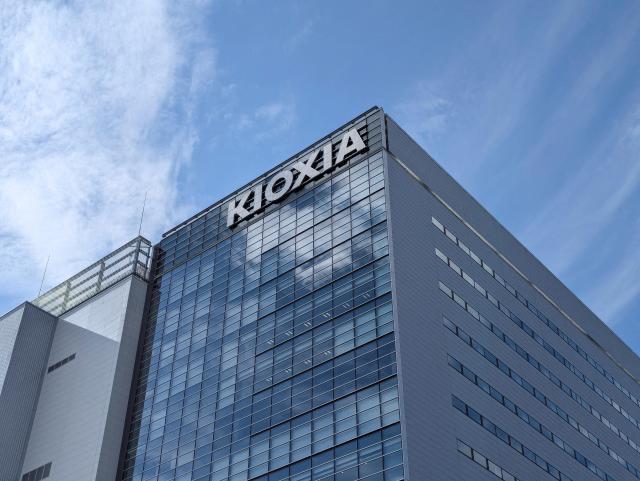
On June 12, Kioxia Holdings, a Japanese semiconductor memory company, briefly surpassed Toyota Motor Corporation to become the most valuable publicly traded company in Japan during trading on the Tokyo Stock Exchange. This milestone was fueled by a surge in demand for NAND flash memory, driven by increased investments in artificial intelligence (AI) data centers, allowing a semiconductor firm to outpace the iconic Japanese manufacturer.
According to the Nihon Keizai Shimbun (Nikkei), Kioxia's stock price rose by as much as 8% during morning trading, pushing its market capitalization to approximately 44 trillion yen (about $418 billion), surpassing Toyota. The upward momentum followed a strong performance of semiconductor stocks in the U.S. market, coupled with expectations of improved earnings due to expanded AI investments.
The primary driver behind Kioxia's stock surge is the anticipated improvement in earnings. As major U.S. tech companies ramp up investments in AI data centers, the demand for NAND flash memory, used for data storage, is rapidly increasing. Market forecasts from Quick Consensus predict that Kioxia's consolidated operating profit for the fiscal year 2026 could reach around 7 trillion yen, an eightfold increase from the previous year. If realized, this would significantly exceed Toyota's projected operating profit of 3 trillion yen.
Analysts' outlooks are also rising quickly. SMBC Nikko Securities raised its target price for Kioxia from 48,000 yen to 126,000 yen in a report released on June 10. Senior analyst Takehru Hanaya stated in the report, "We expect an unprecedented boom to continue." Nomura Securities also noted that the potential for earnings growth has increased through fiscal year 2028, adjusting its target price from 71,880 yen to 115,000 yen.
This year, AI and semiconductor-related stocks have increasingly threatened Toyota's position as the top company by market capitalization on the Tokyo Stock Exchange. Earlier, SoftBank Group briefly surpassed Toyota on June 1, driven by optimism surrounding AI investments. SoftBank's substantial investments in U.S. OpenAI and its subsidiary, British semiconductor design firm Arm, have contributed to its valuation increase. In contrast, Kioxia's profits stem from NAND flash sales. The Nikkei pointed out that Kioxia has a manufacturing-based profit structure similar to Toyota, which generates revenue through increased vehicle sales.
The AI memory boom is also benefiting South Korean semiconductor companies. The Nikkei cited market forecasts indicating that Samsung Electronics' net profit for 2026 could rise sixfold to approximately 29 trillion yen, surpassing the projected net profit of about 27 trillion yen for Alphabet, Google's parent company. SK Hynix is also expected to see its net profit increase fivefold to around 21 trillion yen in the same year. Additionally, SK Hynix indirectly holds shares in Kioxia through private equity investments.
Kioxia, a dedicated NAND flash producer, and its joint venture partner, U.S. SanDisk, have seen some of the highest stock price increases among semiconductor companies this year. Samsung Electronics and SK Hynix, known for their strength in DRAM, have also experienced significant stock price gains. The demand for semiconductor memory used in data centers for AI processing is driving clear earnings growth for major memory companies in South Korea and the U.S.
However, despite Kioxia's achievement of becoming Japan's most valuable company during trading, there remains a significant gap compared to global semiconductor giants. The market capitalization of U.S. leader Nvidia approaches $5 trillion, while Samsung Electronics has surpassed $1 trillion.
Yoshihiko Kawamura, Kioxia's vice president, expressed confidence in the company's long-term growth during an investor briefing on June 2, stating, "We may be entering a supercycle, a period of surging demand." However, he acknowledged that the semiconductor industry has historically experienced cycles of boom and bust, raising questions about how long the growth driven by AI demand will last.
* This article has been translated by AI.
Copyright ⓒ Aju Press All rights reserved.