

On June 14, following a peace agreement signed by President Donald Trump, Vice President JD Vance, and Iranian Parliament Speaker Mohammad Bagher Ghalibaf, Iranian oil has begun to flow past U.S. naval blockades, the Wall Street Journal reported on June 16.
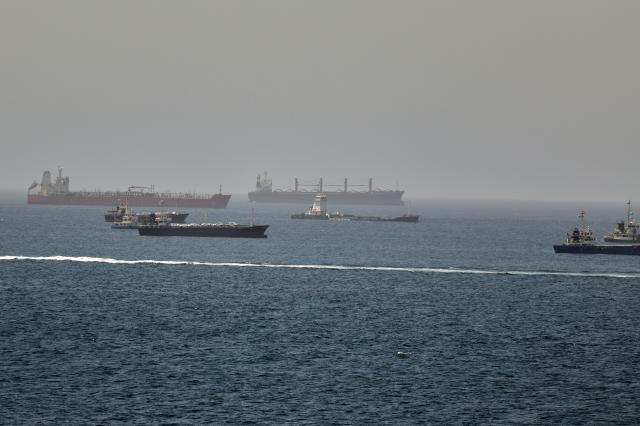
According to the report, the nonprofit organization Iran Nuclear Opposition Coalition stated that a supertanker carrying Iranian oil has departed from Iran's Chabahar port and is navigating through U.S. naval blockades in the Gulf of Oman. The vessel is currently sailing with its tracking device activated. The newspaper noted that this marks the first instance of an Iranian tanker navigating since the U.S. implemented its blockade in the Strait of Hormuz in April.
This voyage is based on the peace agreement reached on June 14, which includes provisions for the exemption of Iranian financial and transportation sanctions. A source familiar with the agreement told the newspaper that the U.S. would allow Iran to sell oil immediately in exchange for the cessation of hostilities, providing an incentive for the Iranian government to resolve the conflict quickly. However, a senior U.S. official indicated that while Iran would benefit from sanctions relief for oil sales, the continuation of such relief would depend on Iran's compliance with U.S. demands regarding the reopening of the Strait of Hormuz and its nuclear program.
Iranian media have also emphasized that their vessels are navigating normally without U.S. interference. The Iranian Fars News Agency reported that several Iranian commercial ships are passing through the U.S. naval blockade without issues. Iranian Tasnim News Agency also reported that three Iranian tankers and two cargo ships are currently operating with essential goods on board.
In response, Farzin Nadimi, a senior research fellow at the Washington Institute for Near East Policy, suggested that the White House believes incentives, such as oil export permits, are necessary to encourage Iranian concessions. He noted that without such incentives, continuing negotiations with Iran would have been challenging. However, Nadimi also warned that the U.S. could reimpose sanctions on Iran depending on the situation.
The memorandum of understanding between the U.S. and Iran reportedly includes not only the easing of sanctions on Iranian oil exports and finance but also an extended ceasefire, the lifting of the U.S. blockade in the Strait of Hormuz, and preparations for in-depth discussions on Iran's nuclear program, according to the Wall Street Journal.
Meanwhile, there is ongoing debate regarding a proposed $300 billion reconstruction fund included in the memorandum. According to The Hill, a U.S. congressional publication, a U.S. official stated on June 15 that this fund would be available to rebuild Iran, contingent on the country's compliance with the agreement. President Trump, however, denied any intention to invest in Iran during a press conference at the G7 summit in Évian-les-Bains, stating that while there may be a need for investment due to the devastation caused by the war with the U.S., it is not his immediate priority.
Qatar's Al Jazeera analyzed that the $300 billion investment fund could be a vital lifeline for Iran, which has suffered $29 billion in damages due to wars with the U.S. and Israel and is currently grappling with the highest inflation rates since 1942.
* This article has been translated by AI.
Copyright ⓒ Aju Press All rights reserved.