

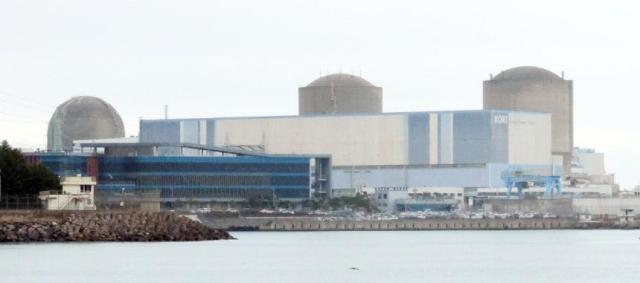
The New Nuclear Power Site Selection Evaluation Committee announced the results of its 11th meeting on June 17, following the Basic Plan for Power Supply and Demand. According to this plan, the construction of two large nuclear reactors with a total capacity of 2.8GW and one SMR demonstration reactor with a capacity of 0.7GW will proceed, totaling 3.5GW.
The two large reactors are scheduled for introduction in 2037 and 2038, while the SMR demonstration reactor is targeted for 2035-2036. This new 3.5GW capacity represents approximately 13.4% of the current domestic nuclear power capacity of 26.05GW.
If existing reactors continue to operate, the number of large nuclear reactors in South Korea could increase to 32 by 2038. This marks the first selection of new nuclear power sites since 2011.
First New Nuclear Power Site Selection Since 2011
In the large nuclear power category, Yeongdeok County scored 91.01 points, surpassing Ulsan's Ulju County, which scored 82.63. In the SMR category, Gijang County received a score of 87.11, higher than Gyeongju in North Gyeongsang Province, which scored 84.56.
Yeongdeok County received favorable evaluations in areas such as local resident surveys, site conditions, and environmental factors. Gijang County also excelled in resident surveys and site conditions compared to competing regions.
Yeongdeok was previously designated as the site for the now-canceled Shinjiwon Nuclear Power Plant Units 1 and 2. Although land acquisition, geological surveys, and environmental impact assessments were partially completed, the project was scrapped during the Moon Jae-in administration's nuclear phase-out policy. The selected site in Yeongdeok spans 3.24 million square meters, more than three times the 1.041 million square meters required for the bidding criteria. With this selection, Yeongdeok has once again been named a candidate for a large nuclear power site.
Gijang County is home to the Gori Nuclear Power Plant. The site was previously considered for the Shin-Kori Units 7 and 9. Its existing operational experience and infrastructure, including the transmission network, are seen as advantages. The site selection process for the first SMR in the country has also been clarified.
This process accelerated after the government decided in January to proceed with new nuclear power plans following public discussions and surveys.
Korea Hydro & Nuclear Power (KHNP) formed an evaluation committee composed of external experts, which determined the candidate sites after conducting basic site and environmental surveys, on-site inspections, and resident surveys. Following the selection, KHNP will undergo strategic environmental impact assessments and other permitting processes.
Growing Need for Power Demand Response, but Transmission Network Remains a Challenge
The push for additional nuclear power is aligned with rising power demand forecasts. The 12th Basic Plan for Power Supply and Demand suggests that maximum demand could reach 138.2GW by 2040. This indicates a need for more stable power generation sources.
However, there are concerns that relying solely on nuclear power may not adequately address long-term increases in power demand. Even with the addition of the new 3.5GW of nuclear power to the current capacity of 26.05GW, the total would only reach 29.55GW, which is about 21.4% of the projected maximum demand of 138.2GW in 2040. To ensure stable supply, expansion of the transmission network, increased renewable energy, and demand management must occur simultaneously.
The construction of large nuclear power plants involves lengthy site selection, permitting, and construction processes before they can generate electricity. This raises concerns about their ability to respond to short-term power demand.
The concentration of nuclear power plants in the Yeongnam region also poses challenges for local communities. There are worries that the structure of increasing power plants and transmission networks in non-capital regions to supply the capital area could become more entrenched.
The evaluation committee stated, "Stable power supply is essential for securing national competitiveness and for future generations," adding, "We aimed to find the optimal site while prioritizing regional coexistence."
* This article has been translated by AI.
Copyright ⓒ Aju Press All rights reserved.