

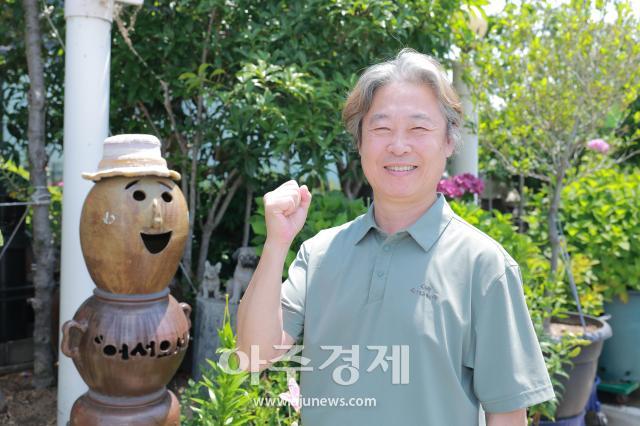
Since then, Kim has continued to play a mediating role in labor relations, working across political lines as a labor advisor in Ulsan, addressing local labor issues and policies. He has closely observed labor relations at major local companies, including Hyundai. "I have represented labor, served as an executive in public institutions, and worked to bridge labor relations," he stated, reflecting on his transition from an activist to a mediator.
Recently, Kim's focus has shifted to supporting vulnerable workers and migrant laborers. He has participated in initiatives like the 'Name Calling' campaign, where he wrote names on safety helmets for migrant workers in collaboration with local labor and civic groups. "Ulsan is home to major unions like S-OIL, SK, Hyundai Motor, and Hyundai Heavy Industries," he noted, expressing pride in the collaborative efforts of local labor.
In July, he plans to launch a safety shoe distribution project for workers at businesses with fewer than ten employees, following a suggestion from a Hyundai union branch leader. While large companies regularly provide safety shoes, many workers in small businesses often wear worn-out footwear. He is also considering initiatives such as distributing work uniforms, supporting restaurants for migrant workers, and replacing aging air conditioning units in industrial complex eateries.
Looking ahead to next year, Kim expressed a desire to initiate the 'Oasis Coexistence Solidarity' project. This initiative would involve placing refrigerators in convenience stores where citizens could donate bottled water or beverages purchased in a 1+1 offer, which would then be distributed to the elderly, delivery workers, and mobile laborers. "I want to create a sustainable social solidarity that involves businesses, the city, citizens, and labor unions, rather than just a one-time event," he emphasized.
Once a symbol of the struggle against layoffs, Kim now emphasizes coexistence over victory. He remarked, "While we can achieve through struggle, we must avoid overusing the term 'victory' in labor relations. It is essential to work together to foster future value and growth."
* This article has been translated by AI.
Copyright ⓒ Aju Press All rights reserved.