

Analysts predict that the exchange rate between the South Korean won and the U.S. dollar will drop to around 1480 won in the second half of this year, following an agreement to end hostilities between the U.S. and Iran and the reopening of the Strait of Hormuz. The anticipated strength of the won is expected to be supported by an increase in semiconductor exports and a booming domestic stock market.
However, uncertainties remain regarding international oil prices and U.S. trade policies, indicating the need for tailored corporate strategies.
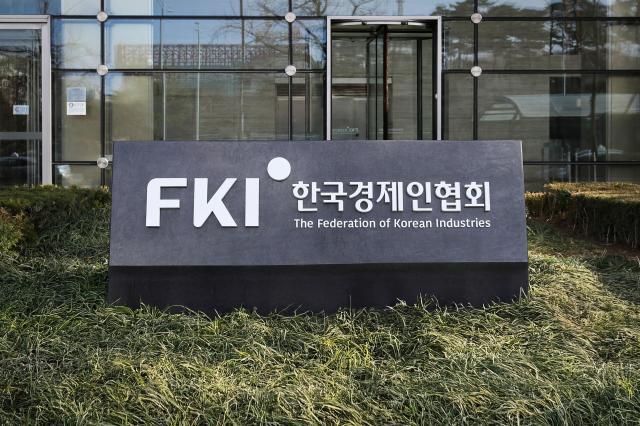
This outlook was presented at a seminar on "2026 Second Half Exchange Rate Forecast and Industry Response Strategies" hosted by the Korea Economic Association on June 22 at the FKI Tower in Yeouido, Seoul.
Kim Jin-wook, chief economist at Citibank, emphasized the downward stabilization of the won-dollar exchange rate. He noted, "In May, the won weakened due to foreign investors' portfolio rebalancing and profit-taking. I expect the won-dollar exchange rate to hover around 1480 won for the next three months and then decline to about 1450 won within six to twelve months."
On the same day, the won-dollar exchange rate opened at 1530.9 won, up 3.9 won from the previous week's closing price of 1527.0 won.
Kim attributed the expected strength of the won to the semiconductor boom, increased domestic investment in stocks, and a continued current account surplus.
Regarding trends in the dollar and yen, he stated, "The U.S. economy is expected to maintain its growth, which will keep the dollar relatively strong. The yen is likely to peak around 160 yen per dollar before falling to the 150 yen range."
However, he cautioned that uncertainties related to international oil prices, U.S. trade policies, and rising global agricultural prices still persist.
As the impact of exchange rate fluctuations varies by industry, experts suggested that companies should adopt differentiated strategies. Cho Kyung-yup, head of the CGE Economic Research Institute, explained that large corporations with high export ratios should leverage exchange rate effects to enhance global competitiveness, while companies reliant on imported intermediate goods should focus on hedging and stabilizing their supply chains.
During a subsequent panel discussion, the need for long-term strategies, including strengthening monetary cooperation with the U.S. and enhancing industrial structure, was highlighted.
Kim Chang-beom, executive vice president of the Korea Economic Association, remarked, "With the recent agreement between the U.S. and Iran to end hostilities and reopen the Strait of Hormuz, expectations are growing that the uncertainties stemming from the Middle East will ease, which has been weighing on international oil prices and financial markets. We must seize this rare opportunity of stability in the Middle East and recovery in exports to fundamentally improve the Korean economy."
* This article has been translated by AI.
Copyright ⓒ Aju Press All rights reserved.