

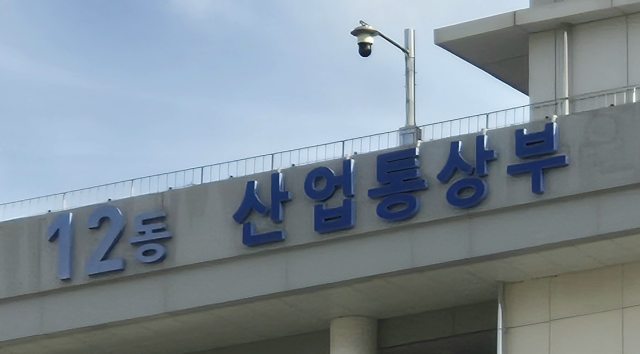
On June 24, the Ministry of Trade, Industry and Energy held the "1st Korea-China Service Trade Cooperation Council" in Beijing, with Bae Jun-hyung, Director of the Trade Cooperation Bureau, and Gong Dejun, Director of the Service Trade and Commerce Services Department of the Chinese Ministry of Commerce, leading their respective delegations.
This meeting follows a memorandum of understanding signed during the Korea-China summit in November 2025, where both countries agreed to explore practical cooperation tasks to expand their trade structure from goods to services.
Historically, economic cooperation between South Korea and China has focused on intermediate goods and manufacturing. However, as both economies evolve and digital transformation accelerates, non-goods sectors are emerging as new areas for collaboration.
During the council, the two nations discussed practical cooperation tasks in the service trade sector. With the continuous increase in Chinese tourists visiting South Korea for medical tourism, they agreed to enhance access to information related to medical services. They also acknowledged the need to create a safe and reliable environment for medical tourism.
South Korea has a competitive edge in medical tourism, while China is a geographically close and high-demand market. Expanding cooperation in this area could have a ripple effect on related service industries such as tourism, accommodation, interpretation, and payment services.
Intellectual property rights were also a key agenda item. The South Korean side proposed strengthening cooperation on intellectual property protection between the two countries. Discussions included measures to preemptively block counterfeit products online using artificial intelligence (AI) technology and collaboration on secondary creations based on intellectual property. This is particularly relevant as issues related to counterfeit products and unauthorized use of K-brands and K-content have been repeatedly raised with the growth of China's online platforms and e-commerce market.
China also proposed initiatives for digital trade, exhibitions, and cooperation between local governments. Both sides discussed ways to strengthen exchanges in the digital trade sector and promote joint research on innovative business models, statistics, standards, and regulations.
Additionally, they agreed to support each other's participation in major exhibitions to broaden cooperation in the exhibition and convention sectors. They also discussed establishing a permanent cooperation system between local governments to assist service companies in entering overseas markets.
Bae Jun-hyung stated, "At this point, where both economies are advancing and digital transformation is accelerating, service trade will become a new growth engine for Korea-China economic cooperation. We will strive to create results that both countries' businesses and citizens can feel."
* This article has been translated by AI.
Copyright ⓒ Aju Press All rights reserved.