

"I will make humanity a multi-planetary species by colonizing Mars."
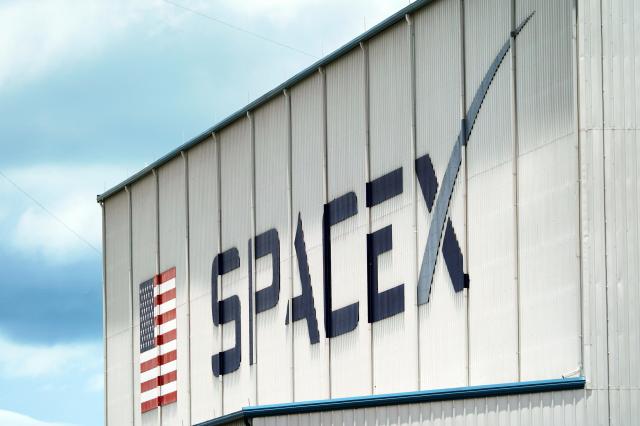
In early 2001, Elon Musk appeared at a fundraising event for the Mars Society, a nonprofit organization focused on space exploration. He donated $100,000 and joined the board, harboring a modest dream of creating a small greenhouse on Mars. That fall, he attempted to purchase decommissioned intercontinental ballistic missiles (ICBMs) from Russia to secure a launch vehicle. When negotiations with Russia fell through, Musk resolved to build his own rockets and founded SpaceX. This marked the beginning of his vision for humanity's migration to Mars and becoming a multi-planetary species.
Musk was once labeled a "grand dreamer" and a "fraud," with some critics suggesting his ambitions were unrealistic. However, 24 years later, his trajectory shows significant progress.
To fund his Mars ambitions, Musk founded Tesla, focusing on autonomous driving technology as a key revenue source. He also established Tesla Energy to secure energy for the space manufacturing era. This initiative includes the Gigafactory project, aiming for fully automated manufacturing facilities without human intervention. SpaceX has developed reusable launch vehicles and is also working on humanoid robots capable of performing tasks like humans.
On the evening of June 23, Korean time, SpaceX successfully tested its unmanned re-entry capsule, Starfall, designed to deliver products manufactured in space back to Earth. This vision includes establishing advanced manufacturing facilities in space that utilize solar energy and operate with extreme efficiency, producing high-value space-manufactured goods that generate revenue and drive technological innovation.
Musk's entire journey is directed toward the monumental goal of colonizing Mars. At this point, the idea of "Mars colonization" is no longer a fantasy. Since Musk first spoke of conquering Mars, he has not wasted a single year, and his dream is now becoming a reality.
The success of the Starfall launch signifies the dawn of the "space manufacturing" era. In the past, both the public and some sectors of academia and industry raised fundamental questions about the necessity of producing goods in space at such a high cost.
However, the emergence of a new material known as ZBLAN, often referred to as the next-generation optical fiber, has brought attention to space manufacturing. ZBLAN, made from a mixture of five fluorides including zirconium and barium, theoretically offers signal transmission efficiency that is 10 to 100 times better than conventional optical fibers.
The challenge lies in the fact that ZBLAN cannot be manufactured on Earth due to micro-convection caused by gravity, which forms atomic-level defects that block light. Manufacturing it in space, free from gravitational interference, allows for the creation of nearly defect-free glass crystals. Experiments conducted on the International Space Station (ISS) have successfully produced commercially viable ZBLAN.
Applying ZBLAN to undersea cables that cross the Atlantic would eliminate the need for expensive repeaters that compensate for light loss. Its applications extend beyond communications to military lasers and medical equipment. The challenge remains in transporting it back to Earth, a path that SpaceX is paving.
While the technology to build manufacturing plants in space is enticing, Elon Musk's dream of reaching Mars is even more inspiring. What is needed now for our companies is a "spirit of challenge that sells dreams." It is time to set ambitious goals that will mark a turning point in human history and to pursue disruptive innovations that create new technologies and open new markets.
* This article has been translated by AI.
Copyright ⓒ Aju Press All rights reserved.