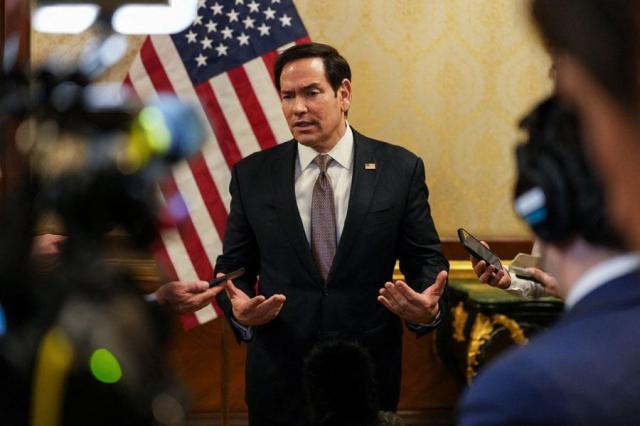
Speaking during a press briefing in Kuwait City as part of his tour of the Gulf region, Rubio said, "I think the whole world will be against any mechanism that charges money to use an international waterway," adding, "When we mean open the straits, we mean open the straits free and international waterways."
His remarks came amid reports suggesting that Iran is working with Oman on a possible arrangement to regulate maritime traffic through the strategic chokepoint, which handles roughly a quarter of global energy shipments.
There have been growing concerns that Tehran could seek to expand its influence over the strait after signing a preliminary 14-point memorandum of understanding (MOU) with Washington last week that includes a commitment from both sides to hold further talks on a final agreement, with safe passage for vessels for 60 days without charges.
But Rubio reiterated that the U.S. and its allies would oppose any attempt to impose fees on vessels using the waterway.
"I know of no country on the planet that supports tolling or a fee for the use of the straits. That's just not – that's not going to happen," he said.
Rubio also stressed that the U.S. expects Iran to comply with its commitments under the MOU, warning that Washington has "a lot of options" if obligations are not met.
"We expect them to live up to the commitments they made in Switzerland. If they don't live up to those commitments, [the U.S. President Donald Trump] has a lot of options at his disposal," he said.
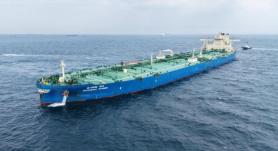
Shipping through the strait remains a key concern for many Asian countries including South Korea, which relies heavily on the route for crude oil and liquefied natural gas shipments.
After four vessels managed to exit the strait, followed by five more earlier this week, 13 South Korean-operated ships carrying about 87 crew members remain stranded.
Copyright ⓒ Aju Press All rights reserved.