

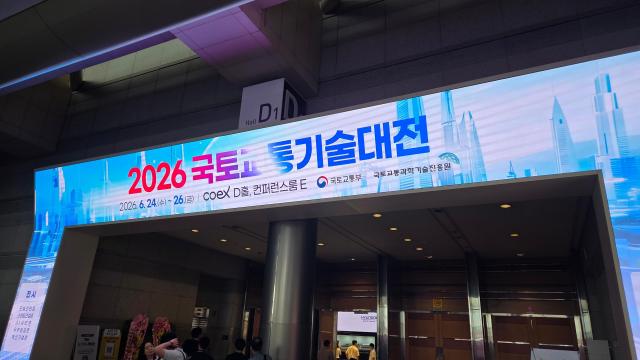
Physical robots are moving materials, while AI-powered closed-circuit television (CCTV) systems issue immediate warnings if workers are not wearing safety helmets. Wind turbines maintain balance even on shaky ground, and a hydrogen-powered tram is being introduced as a future transportation solution that operates without overhead wires.
The 2026 National Land and Transportation Technology Fair, held on June 25 at COEX in Gangnam, Seoul, focuses on "technologies that change the future," featuring exhibits on mobility, smart construction, AI cities, aerospace, and innovative companies. Demonstrations throughout the venue showcased how AI, robotics, digital twins, modular construction methods, and eco-friendly energy technologies can be applied in real-world industrial settings.
Particularly noteworthy were the robots and AI technologies deployed on construction sites. At the smart construction booths, visitors saw material transport robots, welding-specialized collaborative robots, smart airbag vests, and AI-based site management technologies. These displays illustrated a shift from traditional construction practices, where workers manually transported heavy materials or accessed hazardous areas, to a system managed by robots and data.
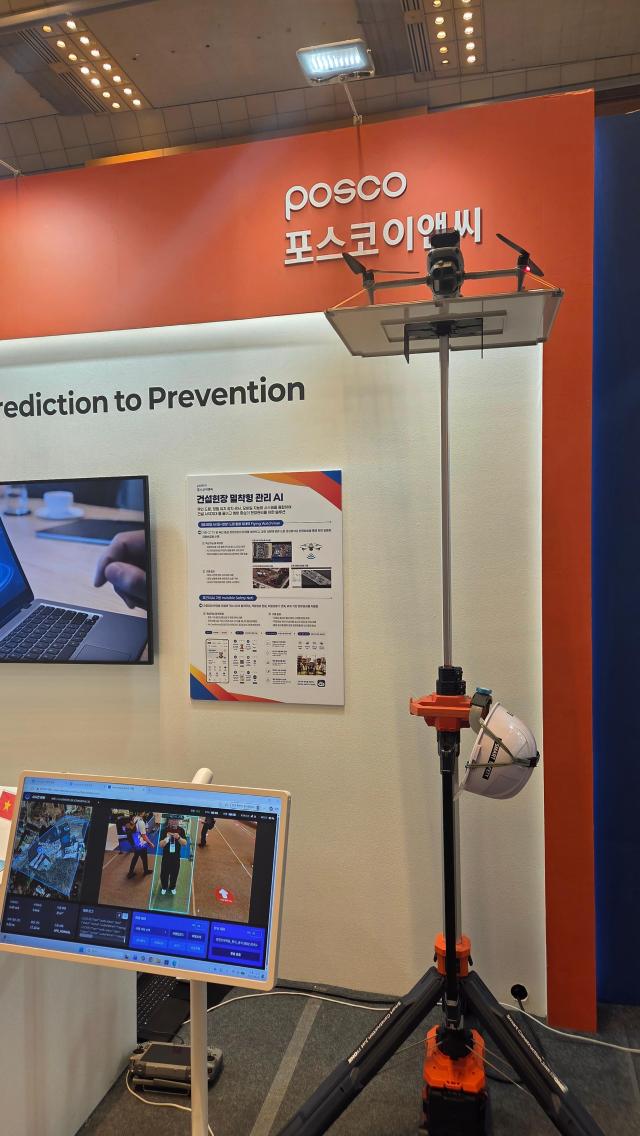
AI monitoring technology also captured the attention of attendees. This system recognizes when workers are not wearing helmets or are approaching dangerous areas, issuing immediate alerts through video analysis. In large construction sites where site managers cannot monitor every worker, such technology can serve as a vital safety measure. With the construction industry facing challenges related to serious accidents and labor shortages, interest in AI monitoring technologies is growing.
In the mobility exhibition area, a virtual reality (VR) experience zone operated by Hyundai Rotem stood out. Visitors could indirectly experience the hydrogen-powered tram set to be introduced on Line 2 of the Daejeon subway. The hydrogen tram, which can operate without external wires, is presented as a transportation solution that reduces urban visual clutter and infrastructure installation burdens.
A Hyundai Rotem representative explained, "Since it is difficult to create the hydrogen tram before business approval, we can use VR to verify design and performance in advance. This reduces the review process before actual production, leading to potential cost savings."
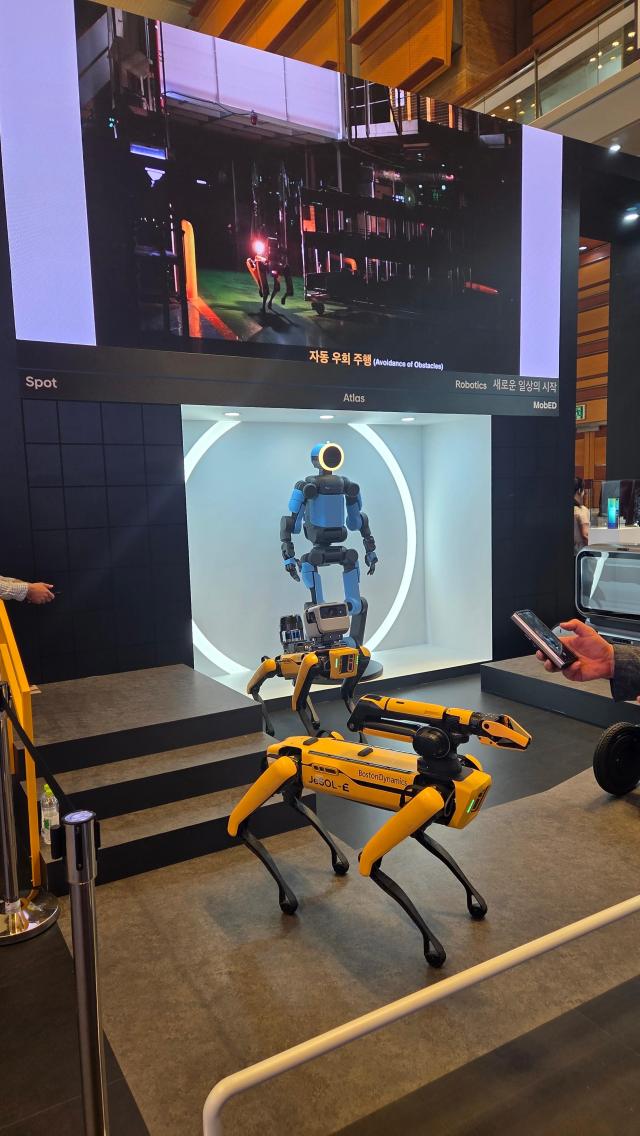
The humanoid robot "Atlas" and the quadruped robot "Spot" also drew significant interest from visitors. These robots, capable of moving like humans or traversing rough terrain, have great potential for use in construction sites, disaster areas, and facility inspections. Their ability to replace humans in hazardous locations or in spaces requiring repetitive inspections exemplifies the emerging era of "physical AI."
In the construction and housing sectors, modular and off-site construction (OSC) technologies have emerged as key topics. With rising construction costs and delays in housing supply becoming critical issues, modular construction methods are being proposed as alternatives for improving supply speed and quality control. At the modular PC apartment research group's booth, the process of assembling pre-manufactured components on-site was explained. The group emphasized that for the standardization and infrastructure development of modular methods, support in technology dissemination, regulatory improvements, education, business models, cost analysis, and evaluation systems is essential.
Unit Lab, located in the innovation pavilion, also showcased an automated design solution utilizing modular construction methods. A representative from Unit Lab stated that AI-based modular design automation can significantly shorten project review and design timelines. The technology allows for rapid assessment of land conditions and construction possibilities, automatically generating various design combinations, thus reducing the time needed for initial project feasibility assessments.
This technology aligns with the government's recent push for AI-based pre-approval diagnostics and the spread of smart construction. If the entire construction process—from site assessment to design, construction, and safety management—transitions to a data-driven model, the traditional reliance on experience will inevitably change.
One industry representative noted, "Combining AI and modular technology can reduce trial and error from the project review stage, but for actual site expansion, a standardized system that can be used by clients, construction companies, designers, and manufacturers is crucial."
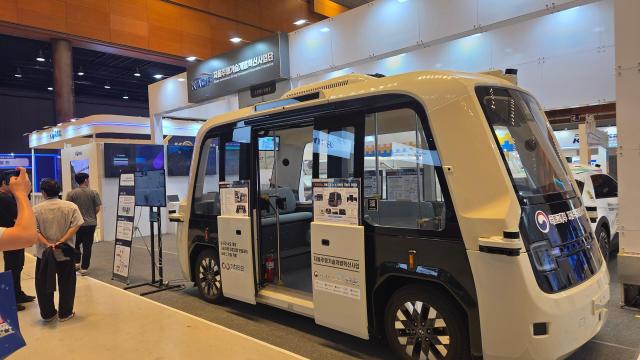
The Autonomous Driving Technology Development Innovation Project introduced the autonomous public transport mobility "Gachi Tayo." This service aims to support mobility for the elderly, people with disabilities, and residents in areas with limited public transportation access. A standard model of a low-floor bus was also displayed, allowing visitors to experience the boarding and alighting structure firsthand. The emphasis was on how advanced technology can enhance the mobility rights of socially vulnerable groups, rather than merely increasing speed and efficiency.
The exhibition also featured a significant focus on eco-friendly technologies. Displays included wind power technologies that operate stably on shaky ground, hydrogen-based transportation solutions, and energy-independent urban and housing projects. As carbon neutrality and energy transition emerge as key challenges in the construction and transportation industries, the direction of technological development is shifting from mere automation to a simultaneous pursuit of eco-friendliness, safety, and efficiency.
The National Land and Transportation Technology Fair served not only as a showcase for new technologies but also as a reflection of the changing direction of the land and transportation industry.
An industry representative stated, "AI and robotics in construction sites are gaining attention as alternatives to alleviate labor shortages and safety management burdens. To achieve widespread adoption across the industry, improvements in technology performance, cost burdens, regulatory changes, and standardization on-site must all occur together."
* This article has been translated by AI.
Copyright ⓒ Aju Press All rights reserved.