

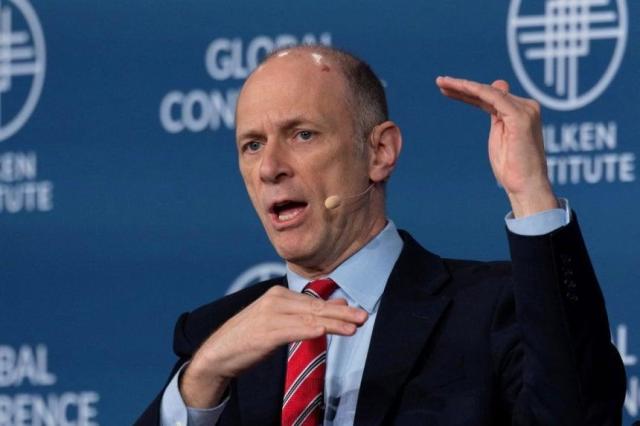
In an interview with CNBC on June 25, Goolsbee commented on the recently released May Personal Consumption Expenditures (PCE) price index, saying, "There were some hopeful signs in the service sector," but he added, "I don't want to overstate it."
He noted, "Service prices are still much higher than they should be," and emphasized that "core inflation is too high and heading in the wrong direction."
The U.S. Department of Commerce reported that the core PCE price index rose 3.4% year-over-year and 0.3% month-over-month in May, marking the highest annual increase since October 2023.
Goolsbee also expressed concern that advancements in technology, such as artificial intelligence (AI), could lead to inflationary pressures. He warned that expectations of increased productivity from AI could be reflected in current asset prices, and if people anticipate future income growth, it may lead to overheating demand. He stated, "The more I see this, the more anxious I become," adding that "we could witness inflationary overheating."
Regarding changes in how Federal Reserve Chair Kevin Warsh plans to communicate interest rate direction, Goolsbee expressed a positive view. He said, "I have felt uncomfortable with the practice of signaling how the benchmark interest rate will move in advance," and emphasized that future policy directions should not be presented too definitively.
He acknowledged the need to simplify the dot plot, which indicates members' interest rate projections. "I don't hate the dot plot itself, but I don't like promising predictions three years out," he remarked, expressing support for its simplification.
* This article has been translated by AI.
Copyright ⓒ Aju Press All rights reserved.