

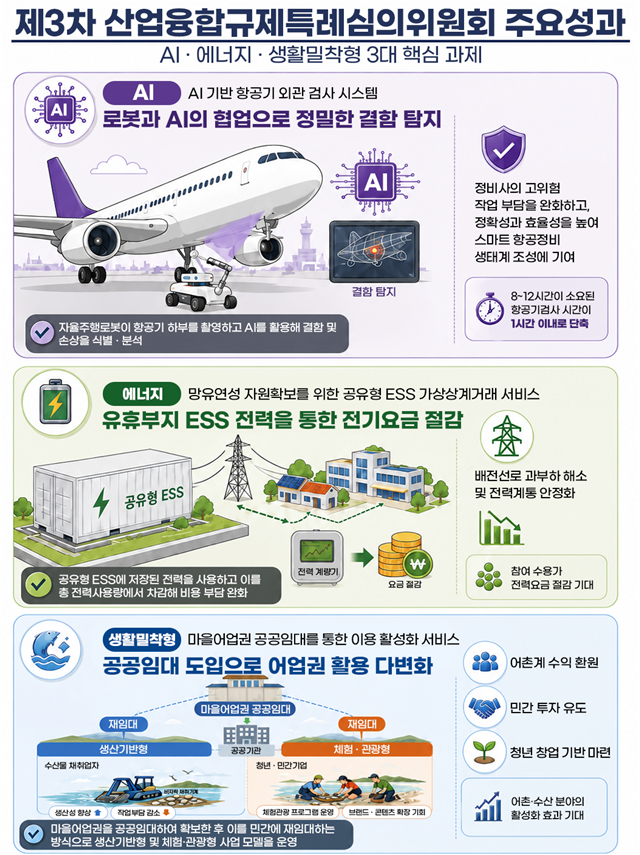
In a significant development, autonomous robots utilizing artificial intelligence (AI) will soon be permitted to inspect the exteriors of aircraft. Additionally, a pilot program will allow electricity consumers to receive power from shared energy storage systems (ESS) and deduct it from their total electricity usage.
On June 29, the Ministry of Trade, Industry and Energy convened the 3rd Industrial Convergence Regulatory Special Committee to discuss regulatory exemptions for nine cases. The committee approved five regulatory sandbox projects focused on AI, energy, and consumer-oriented sectors, while reviewing four operational regulations.
The industrial convergence regulatory sandbox is a system that allows new products and services utilizing innovative technologies to be tested and verified under specific conditions, with regulatory exemptions or waivers.
Under the new regulations, AI-powered autonomous robots will be allowed to conduct inspections of aircraft. Previously, these robots were prohibited from entering airport hangars, but this exemption will enable them to capture images of the underside of aircraft and identify potential damages using AI.
Korean Air plans to utilize autonomous robots at Incheon and Gimpo airports, reducing aircraft inspection times from 8-12 hours to under one hour. This advancement is expected to enhance the safety of maintenance workers who often operate at heights of up to 20 meters.
Aircraft maintenance requires both safety and efficiency. By assigning repetitive and hazardous exterior inspections to AI robots while allowing maintenance personnel to make final assessments, the new approach aims to shorten inspection times and ensure worker safety. This exemption marks the first step in testing the potential for AI transformation in the aircraft maintenance sector.
In the energy sector, Raon Friends and others will conduct a pilot program allowing electricity consumers to receive power from shared ESS and deduct it from their total electricity usage, thereby reducing their electricity bills. Previously, ESS operators were not allowed to transact directly with consumers without going through the electricity exchange, and electricity brokerage platforms could not facilitate transactions between ESS operators and consumers.
The government anticipates that this pilot program will enable consumer utilization of ESS power through brokerage, alleviating overloads on distribution lines during peak hours. Participants in the pilot program are also expected to see reductions in their electricity bills. As the demand for renewable energy grows and the need for grid flexibility increases, this initiative aims to validate localized ESS utilization models.
The Korea Fisheries and Coastal Development Corporation will support various activities to invigorate aging fishing villages through private sector involvement. Current regulations prohibit leasing fishing rights to outsiders or using mechanical equipment in fishing grounds. However, the new regulatory exemption will allow fishing villages in Jeonbuk and Jeju to operate tourism services such as clam harvesting and sea-woman experiences using machinery.
This initiative is expected to enhance productivity in fishing villages and promote tourism based on fishing, contributing to increased income for local fishing communities. It is also anticipated to encourage private participation in aging fishing areas and diversify income sources by utilizing idle resources.
Kim Sung-yeol, head of the Ministry's Industrial Growth Division, stated, "From autonomous robots responsible for aircraft safety to public leasing of village fishing rights that enhance productivity, various exemptions closely related to citizens' lives have been approved. We will continue to rationalize regulations to contribute to our industrial development and ensure that citizens can feel the benefits in their daily lives."
* This article has been translated by AI.
Copyright ⓒ Aju Press All rights reserved.