

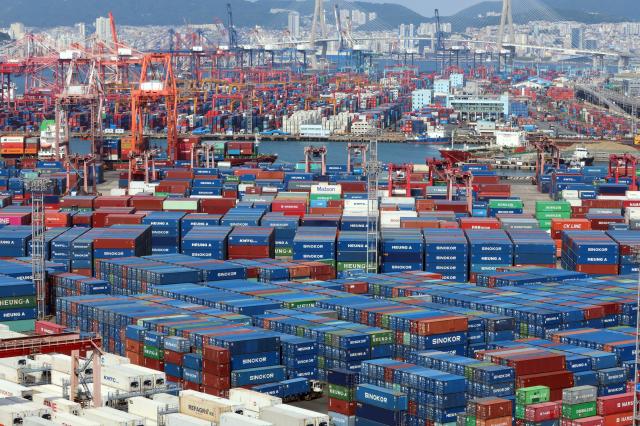
According to the Ministry of Trade, Industry and Energy and the Korea Customs Service, June exports totaled $102.25 billion, marking a 70.9% increase from the previous year. This marks the 13th consecutive month of growth, and it is the first time monthly exports have exceeded $100 billion. South Korea is now the fourth country to achieve this milestone, following Germany, China, and the United States.
When adjusted for working days, the average daily export value rose 59.5% year-on-year to $4.54 billion, setting a record for the second consecutive month.
Semiconductors remain the backbone of South Korea's exports. In June, semiconductor exports reached $44.82 billion, a staggering 199.5% increase, surpassing $40 billion for the first time. This growth was fueled by a surge in memory demand and rising fixed prices.
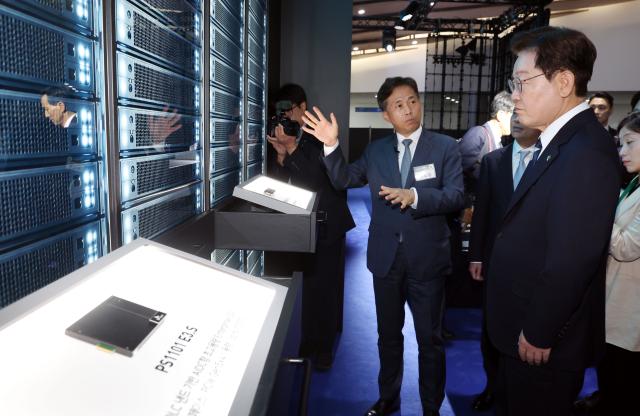
Exports of computers and wireless communication devices also showed strong growth. Computer exports rose 308.8% to $5.41 billion, driven by increased demand for SSDs due to AI infrastructure investments by major tech companies. Wireless communication device exports increased 51.9% to $1.55 billion, thanks to strong sales of new products.
Automobile exports grew 5.8% to $6.71 billion, aided by stabilized parts supply, while automobile parts exports fell 2.4%. Ship exports rose 12.9% to $2.83 billion, driven by an increase in high-value liquefied natural gas (LNG) carriers.
Petroleum product exports reached $5.59 billion, up 49.8%. However, the volume decreased by 7%, with exports of gasoline, diesel, and kerosene—subject to export controls—falling by 16.0%, 6.9%, and 99.7%, respectively. This decline is attributed to the impact of price controls on petroleum products. Petrochemical exports increased by 18.8% to $4.07 billion.
Steel exports rose 9.6% to $2.14 billion, reflecting increased shipments of construction materials. This marks the first positive growth since April of last year. Non-ferrous metal exports reached $1.82 billion, a 45.8% increase, achieving the highest June performance on record. General machinery exports also rose 7.5% to $4.087 billion, marking a positive trend for the first time in five months.
Consumer goods exports showed robust growth as well. Biohealth exports increased by 14.12% to $1.92 billion, cosmetics rose 42.5% to $1.34 billion, and agricultural and seafood products grew 16.8% to $1.17 billion.
Imports increased by 30.1% to $66.1 billion, with energy imports rising 45.1% to $12.51 billion, including a 50.4% increase in crude oil imports to $8.6 billion. Non-energy imports grew by 27.0% to $53.59 billion, largely driven by increases in non-ferrous metals and semiconductor equipment imports.
With exports exceeding imports, June's trade surplus reached $36.15 billion, an increase of $27.14 billion from the previous year. This marks the 17th consecutive month of surplus, and it is the first time the trade surplus has exceeded $30 billion.
First-half exports totaled $496.7 billion, a 48.4% increase from the previous year, marking the highest first-half total on record, largely due to a 163% increase in semiconductor exports. First-half imports reached $358.4 billion, up 16.6% from a year earlier. The cumulative surplus for the first half stands at $13.83 billion, an increase of $11.09 billion from the same period last year, surpassing the record surplus of $9.52 billion set in 2017.
With exports showing strong performance, the government is expected to exceed its annual export target significantly. The Ministry of Trade set an export goal of $740 billion at the beginning of the year. However, with first-half exports already approaching $500 billion, there is a possibility of upward adjustments to the export forecast.
Notably, first-half exports are nearing the cumulative total from the third quarter of last year ($519.78 billion). The strong demand for semiconductors continues to drive export growth, while non-semiconductor exports are also performing well.
Looking ahead to the second half, factors such as U.S. tariff measures, oil price volatility, and global economic slowdown are expected to pose challenges. Additionally, the spread of global protectionism, including the European Union's new steel measures, is likely to increase external uncertainties.
Minister of Trade, Industry and Energy Kim Jeong-kwan stated, "The government will continue close consultations with major countries to minimize uncertainties faced by our companies and create a favorable export environment. We will fully support not only the quantitative increase in exports but also qualitative growth through diversification of products and markets, and strengthening the export competitiveness of small and medium-sized enterprises, aiming to elevate our status as a top five exporting nation."
* This article has been translated by AI.
Copyright ⓒ Aju Press All rights reserved.