SEOUL, July 30 (AJP) - South Korea's foreign ministry said Thursday that China's position on the denuclearization of the Korean Peninsula has not changed, setting the tone for a planned visit to Seoul by Chinese Foreign Minister Wang Yi, the first by a top Chinese diplomat since President Lee Jae Myung took office.
Wang is expected to travel to Seoul on August 19 and 20 for talks with Foreign Minister Cho Hyun, according to diplomatic sources cited in Korean media reports, with a courtesy call on Lee also under arrangement. The trip carries an uncomfortable question. Wang visited Pyongyang in April, and Chinese President Xi Jinping followed in June, and on both occasions Beijing avoided any public mention of denuclearization, deepening concern in Seoul that China now values rebuilding ties with North Korea over resolving its nuclear program.
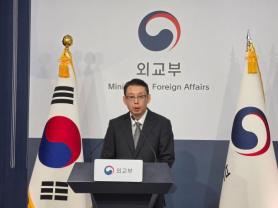
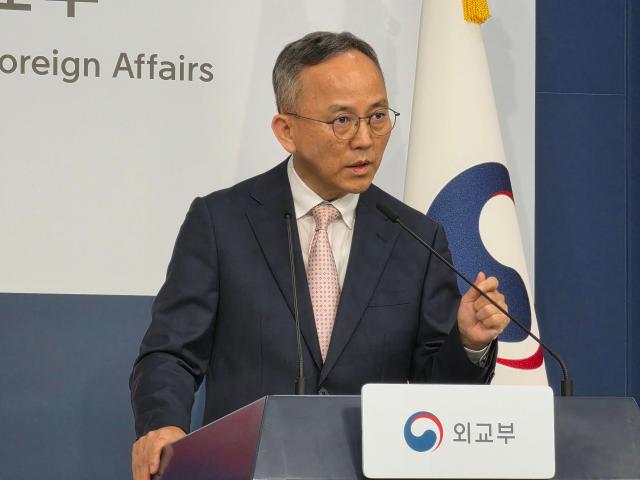
Asked at a regular briefing whether the government sees a need for Beijing to publicly reaffirm the principle during the visit, and whether a joint document reflecting it is under discussion, foreign ministry spokesperson Park Il pointed to commitments already on the record. "Peace and stability on the Korean Peninsula are a common interest of the two countries," Park said, an understanding he said was confirmed through the leaders' reciprocal state visits, most recently Lee's state visit to Beijing in January. China has expressed its intent to play a constructive role toward that end, he added, and has said it would maintain the continuity and stability of its policy toward the peninsula.
"The denuclearization of the Korean Peninsula is the consistent goal of the international community, confirmed through multiple Security Council resolutions, and our government will uphold that goal without wavering," Park said. "China, too, has seen no change in its position on the Korean Peninsula issue, and the US-China summit in May also confirmed that North Korea's denuclearization is a common goal." He did not address whether a joint statement or outcome document is being coordinated, saying only that the government would keep strengthening communication, including through the visit now in consultations, to draw out a constructive role from China.
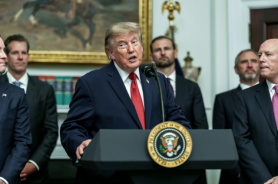
The summit reference has a paper trail. After US President Donald Trump met Xi in Beijing on May 14 and 15, the White House released a fact sheet stating the two presidents "confirmed their shared goal to denuclearize North Korea." Beijing never echoed the language. Asked days later to confirm the American account, Chinese foreign ministry spokesperson Guo Jiakun said only that China's position and policy on the Korean Peninsula maintain continuity. Seoul has leaned on both statements since. The ministry delivered essentially the same answer in June, days after Xi returned from Pyongyang, making Thursday's response the latest recitation of a fixed line rather than a reaction to the visit reports.
That is the ambiguity Wang would carry into Seoul. The South Korean government is expected to press for a more active Chinese role on the North Korean nuclear issue, while Beijing is likely to use the visit to present its position on Taiwan and its trade friction with Washington, and to restore balance to a peninsula diplomacy that has tilted heavily toward Pyongyang this year. Whether Wang states the word denuclearization in public while in Seoul will be watched as the clearest signal of where China actually stands.
The last time the question was put to the test, the answer was silence. Xi spent two days in Pyongyang in June, his first visit to North Korea since 2019, and left without once mentioning denuclearization.
Copyright ⓒ Aju Press All rights reserved.