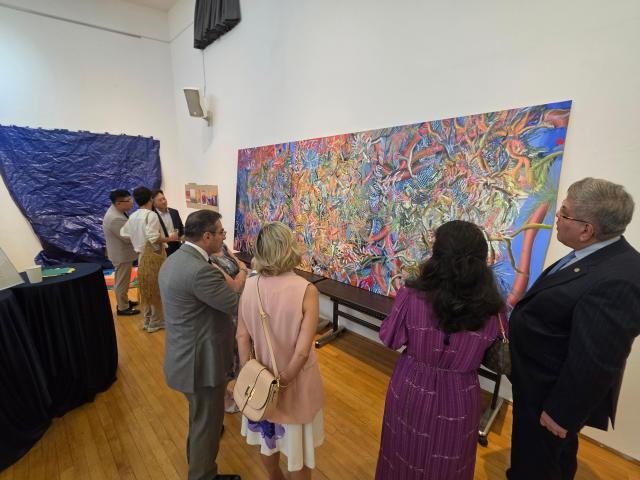
SEOUL, August 22 (AJP) - Thirteen Brazilian artists have donated works to the permanent collection of the Brazilian Embassy in Seoul, the embassy announced at a closing reception Friday evening, just over two weeks before their country opens its first national pavilion at the Gwangju Biennale.
The pavilion, "Devorações do Amanhã – Brasil em rebento," or "Devouring Tomorrow," opens Sept. 5 at the Gwangju History and Folk Museum and runs through Nov. 15. It brings together 35 Brazilian artists across several generations and regions, under curators Aldones Nino and Bruna Levi. The Gwangju Biennale has hosted national pavilions alongside its main exhibition since 2018. Brazil has never had one until now.
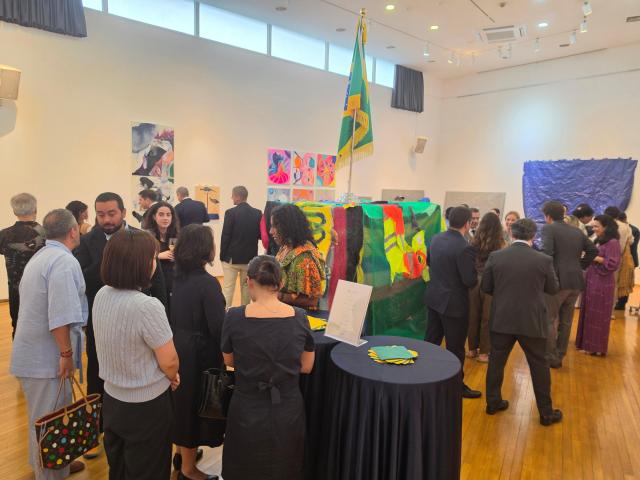
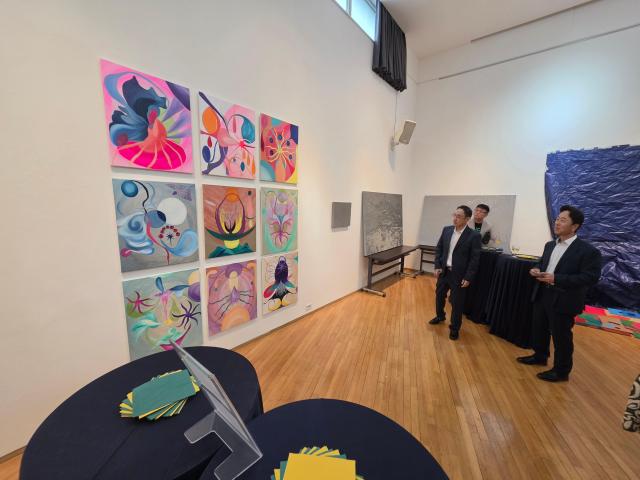
The announcement came at Brazil Hall, the embassy's cultural space in Samcheong-dong in central Seoul, where roughly 60 guests gathered on the final night of a three-week artist residency called Tropismo. Diplomats, artists and invited guests moved through a room still holding the work made there over the past three weeks.
Aldones Nino, a Brazilian curator based in Spain, told the room that works by Ayla Tavares, Heloisa Hariadne, Isabella Ogêda, Lucas Lugarinho, Manauara Clandestina, Marcos Chaves, Maruan Sipert, Nathan Braga, Patrícia Abbott, Shinji Nagabe, Vicente de Mello, Uýra Capelobo and Vinicius Gerheim would enter the embassy collection.
He said the residency was never meant to be a warm-up for the exhibition in Gwangju.
"When I first envisioned this program, I wanted to create something that would go beyond serving as a preparatory stage for an exhibition," Nino said.
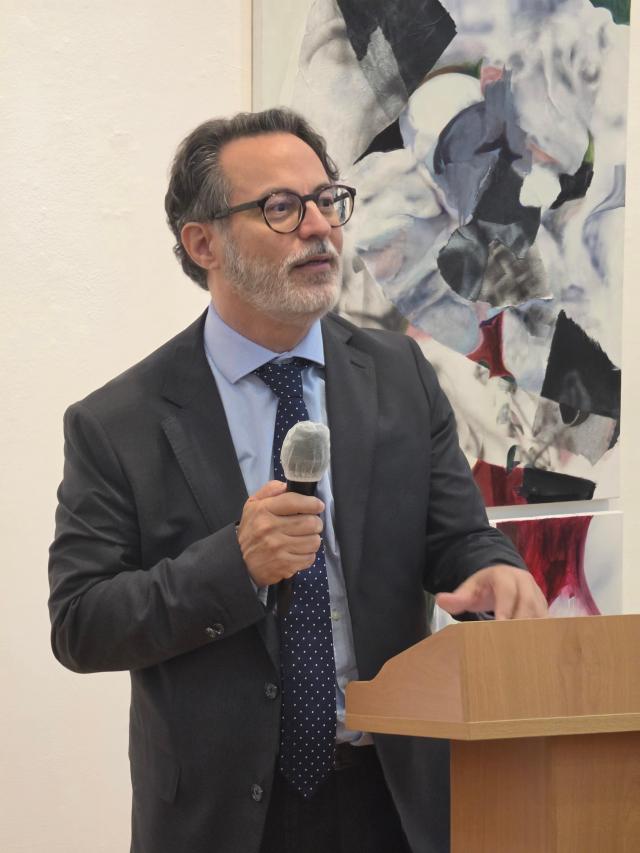
Ambassador Fernando Meirelles de Azevedo Pimentel, who presented his credentials to President Lee Jae Myung on July 22, said the donations matter to how the mission presents Brazil in South Korea.
"It is for us critical that the embassy becomes also the face of Brazil," the ambassador said. "We show our people, we show our art, and we cannot do it in a more beautiful way than through the contributions we will be receiving from the artists."
He reached for a Korean idea to describe what the residency had done. Tropism, in biology, is the way a plant grows toward light or water. The ambassador said it echoed Cheon-ji-in, an old Korean and East Asian framework that treats heaven, earth and human beings as one connected whole. The three elements are familiar to most Koreans from the alphabet itself, since the vowels of hangeul are built from a dot for heaven, a horizontal line for earth and a vertical line for a standing person.
"Tropism and Cheon-Ji-In emerge from different traditions, but they share a simple and profound insight: we do not grow in isolation," he said.
The residency ran on almost nothing. According to the organizers' own transparency statement, the embassy lent Brazil Hall free of charge, and there was no budget for airfare, accommodation, production or operating costs. The artists covered those themselves. Vicente de Mello, a photographer who is also among the donors, directed the program day to day.
The ambassador said the artists pushed to stay past closing.
"The artists kept bugging us to give them more time, leave the studio later. 'We need to work until midnight,'" he said. "We did as much as we could. I'm sure they liked the overtime."
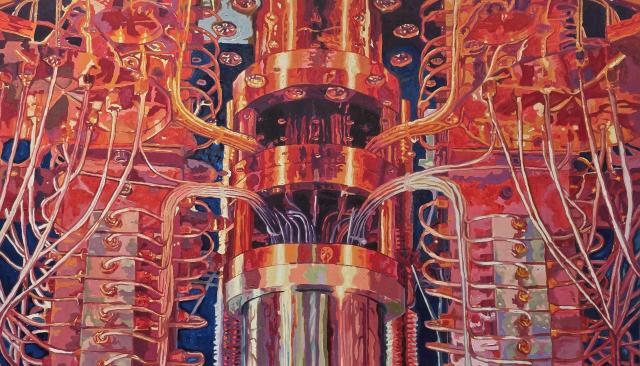
Some of the work went well outside a studio. Isabella Ogêda, who works at the meeting point of art and science, spent part of her stay at a nuclear fusion laboratory.
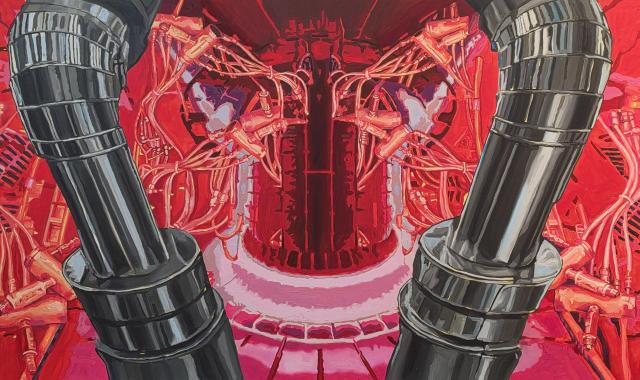
"My time in Korea has included research with the Korea Institute of Fusion Energy (KFE) and a visit to KSTAR in Daejeon, which has been particularly important for the new work I am developing," she said.
KSTAR is South Korea's superconducting fusion research reactor, a machine that holds plasma at temperatures far hotter than the core of the sun in an attempt to reproduce the reaction that powers stars.
Speaking after the reception, Nino said the value of a residency shows up later, in how artists work once they are home.
"There are artists who made their artwork in a specific form, but after this experience, a lot of artists changed the mode to create their artworks," he said. "I believe this is the strongest point in an artistic residency: the moment the artist goes back to their country and changes the mode to see the world."
He said Asia remains largely unexplored territory for Brazilian artists.
"In Brazil, it's very common to have connections with Europe and North America, but with the Asian world, the artists don't have the opportunity to investigate," Nino said.
He said his hope for the pavilion is that it runs in both directions, with more Brazilian artists showing in South Korea and Korean artists invited to Brazil.
The 16th Gwangju Biennale, directed by Ho Tzu Nyen under the title "You Must Change Your Life," opens Sept. 5 and runs to Nov. 15.
Copyright ⓒ Aju Press All rights reserved.