

“Is Paris burning?” The question immortalized in the 1966 black-and-while epic war film evoked the threatened destruction of a city whose survival mattered far beyond France.
Paris was a repository of civilization, its streets and monuments belonging, in some measure, to the world.
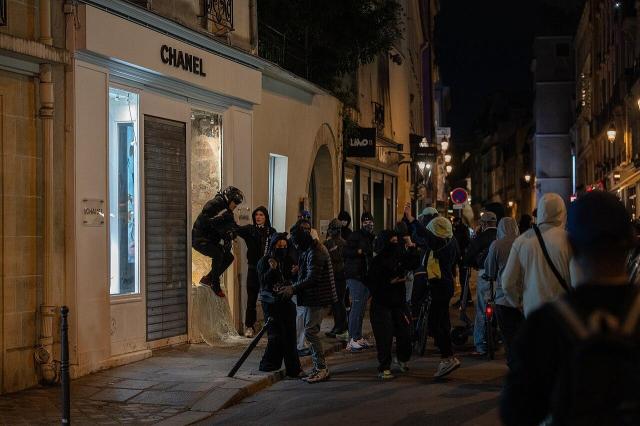
Today, images of burning buildings and vandalized streets invite a different question. Can the country that helped teach the modern world how to overthrow an old order still find the political will to renew its own?
France’s latest unrest began with students demanding better conditions in their schools. It widened into a confrontation over living costs, public services and austerity, drawing in workers and veterans of the yellow vest movement.
Violence accompanied the demonstrations, including the burning of the historic town hall in Limoges. Once again, grievances that France’s political institutions could not resolve have spilled into its streets.
The temptation is to reach for the familiar language of revolution. Yet the more troubling story is the failure of reform.
Few countries carry a revolutionary inheritance as powerful as France’s. In 1789, the storming of the Bastille signaled a revolt against an entire structure of inherited privilege. The Declaration of the Rights of Man and of the Citizen established principles whose authority would outlast the governments that claimed to embody them.
Revolution promised a future that the existing order could neither imagine nor accommodate. Its legitimacy rested on something larger than defiance: the conviction that political power had forfeited its moral authority and that a new order could better serve the people.
Koreans understand that distinction. The April 1960 uprising grew out of outrage at electoral fraud that had emptied popular sovereignty of meaning. Students paid with their lives to restore a principle the government had betrayed. The democratic ideals of that uprising remain enshrined in South Korea’s Constitution.
Such moments deserve remembrance. But their moral authority cannot be inherited by every movement that fills a street.
France’s upheaval of May 1968 was itself different from 1789. Beginning with student protests against university authority and restrictive social conventions, it expanded into a nationwide crisis as workers joined the revolt. Even Charles de Gaulle, whose stature rested on his wartime leadership and the founding of the Fifth Republic, briefly left France for Baden-Baden to consult Gen. Jacques Massu. He subsequently dissolved the National Assembly and regained the political initiative.
The political order survived. French society nevertheless changed profoundly. Authority in universities, workplaces and private life became more open to challenge. Demands for individual autonomy and greater equality acquired a force that an electoral victory could not extinguish.
That is the ambiguity of 1968: a movement can fall short of political revolution while transforming the culture in which politics operates.
The unrest of 2026 belongs to another historical moment. High school students have been prominent among its initiators. Their complaints concern the ordinary foundations of a credible future: functioning schools, adequate staff and the prospect of a life they can afford. These are demands that a wealthy democracy should be capable of addressing through its institutions. Their expansion into a broader protest movement reveals how widely that confidence has eroded.
Yet anger, however understandable, does not supply a program of government. Burning a town hall cannot improve a school. Looting a shop cannot restore purchasing power. The destruction of public property consumes resources that protesters themselves insist are desperately scarce.
A democracy must protect peaceful dissent and respond to the grievances behind it. It must also distinguish that dissent from violence. To romanticize destruction as revolutionary energy is to evade responsibility for what follows.
France’s predicament is especially acute because the state is being asked to provide more while struggling to finance the commitments it already carries.
Its social model embodies achievements that citizens understandably value: security in old age, public services and protection against the harsher consequences of the market. But those achievements require a durable economic foundation. A promise does not become sustainable simply because withdrawing or revising it would be politically painful.
The International Monetary Fund has warned that France’s high debt, modest growth and rising spending pressures require a credible multiyear adjustment. The difficulty is no longer merely identifying the problem. It is assembling the political consent to act on it.
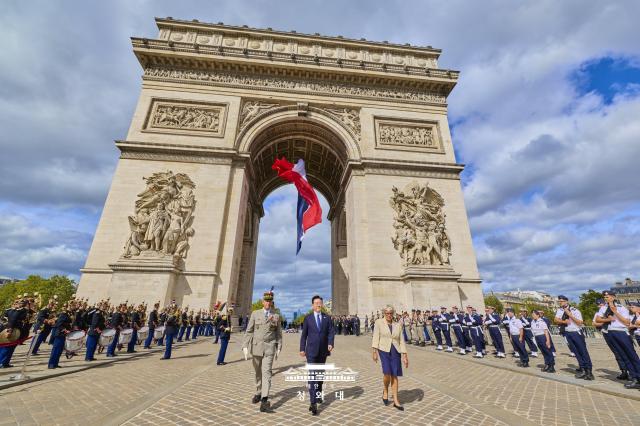
Pension reform captures the impasse. Emmanuel Macron’s government enacted an increase in the retirement age from 62 to 64 in 2023, only for the reform to be suspended as part of the political bargaining over the 2026 budget. A measure presented as essential to the system’s future proved unable to secure lasting acceptance.
The obligations remain. The adjustment is deferred, standing as a particularly poor bargain for younger generations.
Preserving every existing entitlement may look like solidarity, but it becomes harder to defend when the bill is passed to people whose own prospects are increasingly uncertain. Intergenerational fairness requires attention to those who will finance the system as well as those who currently benefit from it.
Britain’s experience under Margaret Thatcher offers an uncomfortable comparison. Her determination to confront entrenched interests made her a symbol of reform, although the social costs of her policies remain deeply contested. France needs something of that willingness to face choices that postponement has made more difficult.
Resolve alone, however, is insufficient. Reform must explain who will bear the burden, why the distribution is fair and what citizens can reasonably expect in return. Otherwise, fiscal necessity becomes another phrase through which people hear that their lives must grow harder.
The political danger is that repeated failure discredits the very idea of democratic compromise. When mainstream parties cannot reconcile promises with resources, movements offering more sweeping answers gain an opening. The extremes need not demonstrate that their programs will work. They need only persuade voters that the existing parties have exhausted their claim to govern.
Immigration adds another source of division. Instability in the Middle East and Africa has placed difficult questions of refuge, borders and integration before European societies. Those questions demand workable policies and cooperation. When they instead become tests of national loyalty, the space for compromise contracts further.
France’s unrest should not be reduced to immigration, nor should migration become a convenient explanation for failures of fiscal management and public provision. But a political system already weakened by domestic frustration is more vulnerable to movements that turn anxiety into hostility.
The revolutionary inheritance offers a warning here as well as inspiration. The fall of the old order did not assure France a peaceful or liberal future. Louis XVI and Marie Antoinette went to the guillotine; so did Robespierre, whose name became inseparable from revolutionary terror. Those who unleash upheaval cannot assume they will control its course.
Revolution can destroy an exhausted order. It cannot guarantee that what follows will be more just, more capable or more humane.
France now needs the patience to negotiate change and the courage to carry it through. That means acknowledging legitimate hardship while confronting fiscal limits, protecting dissent while enforcing the law, and making solidarity an obligation shared across generations.
Gradual reform is often harder than dramatic rupture. It requires citizens to accept imperfect bargains and leaders to defend decisions whose benefits may arrive after their own political careers have ended.
But each reform abandoned makes the next confrontation more likely. A country that has repeatedly changed the world through revolution must now show that it can change itself through democratic consent.
* The author is a professor emeritus of law at Seoul National University, where he served as its 26th president from 2014 to 2018. He holds a doctorate in law from Paris II University and previously headed the Korean Public Law Association, the Korean Law Professors Association and the National Assembly’s Public Officials Ethics Committee.
**The views expressed are those of the author and do not necessarily reflect the editorial position of AJP.
Copyright ⓒ Aju Press All rights reserved.
