

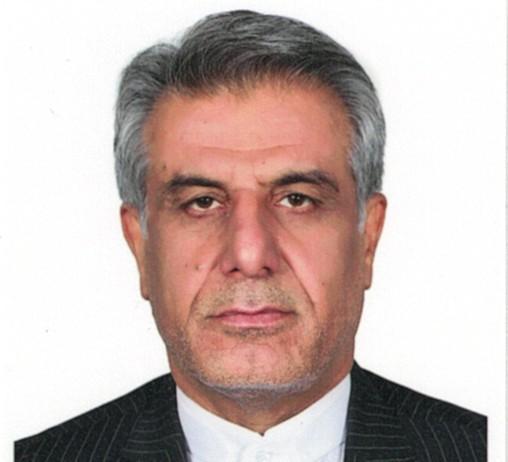
Editor's Note: The following opinion article is contributed by Ahmad Erfanian, Ambassador of the Islamic Republic of Iran to the Republic of Korea
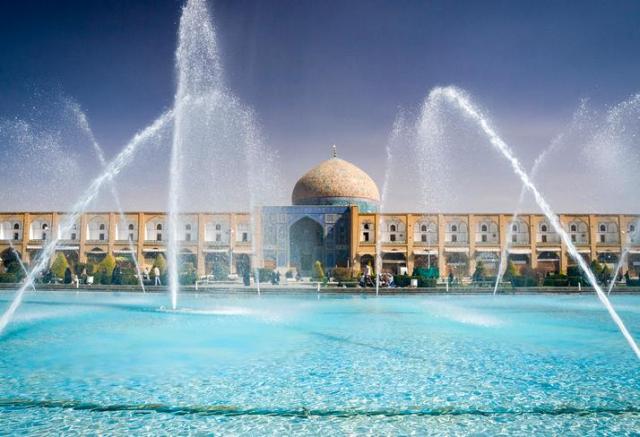
The 50th anniversary of the introduction of Persian language studies at Hankuk University of Foreign Studies (HUFS) offers a valuable opportunity to celebrate five decades of efforts to promote understanding of Iran’s language, history, and culture in South Korea. Since 1976, this academic endeavor has played an important role in strengthening mutual understanding and cultural ties between the two nations, introducing successive generations of Korean students to Iran’s rich linguistic and cultural heritage.
The significance of this achievement extends beyond the continuation of Persian language education for half a century. It also lies in its contribution to the expansion of academic teaching and research on Iran. The department’s renaming in 2021 to “Persian Language and Iranian Studies” reflected the broadening scope of its academic activities. Beyond learning vocabulary and grammar, studying Persian opens a window onto Iran’s literature, history, society, and contemporary realities, enabling Korean students to gain a more direct understanding of the country. Knowledge of Persian also provides access to original sources and perspectives whose cultural nuances and layers of meaning cannot always be fully conveyed through translation.
Enduring relations between nations are built not only on political and economic ties. Universities, professors, and students also play an essential role in strengthening these relations through dialogue, research, and mutual understanding. Iranian studies in South Korea can pave the way for greater academic and cultural cooperation and a deeper understanding between the two peoples. Such exchanges also provide opportunities to explore diverse perspectives and experiences in an atmosphere of mutual respect, which is itself a cornerstone of constructive dialogue among cultures.
Looking ahead, broader access to Persian-language resources, stronger links between Persian language education and Iranian studies, and more opportunities for direct engagement with Iranian society could further enrich this academic field. Expanded cooperation between Hankuk University of Foreign Studies and academic institutions in Iran, through faculty and student exchanges, joint research projects, and educational and cultural programs, could also open up new avenues for strengthening academic and cultural relations between the two countries.
On this 50th anniversary, I would like to express my appreciation to the professors, students, and researchers who have sustained Persian language education and Iranian studies in South Korea. I hope that the achievements of the past five decades will serve as a solid foundation for expanding academic and cultural cooperation between Iran and South Korea. With the participation of younger generations and the initiative of universities, this journey can undoubtedly continue, opening new horizons for friendship, mutual understanding, and cooperation between our two nations.
Copyright ⓒ Aju Press All rights reserved.
