

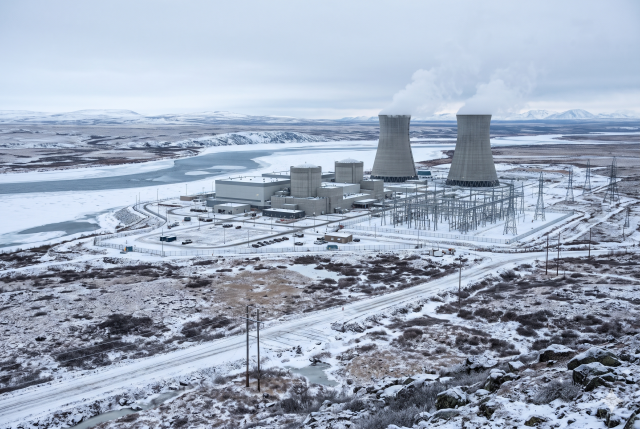
Competitiveness in the age of artificial intelligence will not be decided by semiconductors and data centers alone. Without a stable supply of electricity, both investment in advanced industries and the goal of carbon neutrality are empty promises. Now that the government has opened a public deliberation on the role and share of nuclear power, it must face the country's energy reality and draw up a rational power mix that includes building new reactors.
Countries around the world are moving quickly to expand nuclear power. According to the International Energy Agency, 78 gigawatts of nuclear capacity is under construction in 15 countries, the highest level in more than 30 years.
The United States and Europe are pursuing nuclear expansion in response to energy security concerns and electricity demand from AI, while China and India are also pushing ahead with large-scale construction. Some 38 countries have joined the international goal of tripling nuclear capacity by 2050. Nuclear power is no longer seen as an energy source of the past but as a strategic asset that will determine future industrial competitiveness.
Last month, a public deliberation committee on nuclear power, run by the Ministry of Climate, Energy and Environment, was launched. Its recommendations, which will come out of deliberations by a citizens' panel, will be reflected in the 12th Basic Plan for Electricity Supply and Demand.
Because the process is premised on the national greenhouse gas reduction target and plans to expand renewable energy, it marks a major turning point for South Korea's energy policy.
Semiconductor plants, AI data centers and the spread of electric vehicles are driving a structural rise in electricity consumption. Nuclear power serves carbon neutrality as well as a stable supply. It emits almost no carbon during generation and produces large amounts of electricity around the clock, regardless of the weather.
Solar and wind power also need to grow, but their fluctuating output requires a stable source to back them up. Nuclear and renewable energy should not be treated as rival options but approached as a complementary energy mix.
Public opinion also supports expansion. In a survey of 2,000 adults conducted in June by the Korea Energy Information Culture Agency, its second-quarter 2026 public perception survey on energy, 79.2 percent of respondents said new reactors should be included in the Basic Plan for Electricity Supply and Demand.
Building nuclear plants takes time. A new reactor is expected to take at least nine years, and as long as 13, from site selection to completion. If South Korea fails to secure supply capacity now, the cost could come back as power shortages a decade from now. Responding only after demand materializes will make it difficult to keep pace with what industry needs.
Expanding nuclear power requires guaranteed safety, management of spent nuclear fuel, acceptance from local residents and control over project costs and construction schedules. These challenges, however, should not become a reason to put off the decision.
With the world racing to build reactors, a South Korea that hesitates alone could lose not only its power supply but the competitiveness of its nuclear industry. A country that regrets its choices only after electricity runs short cannot win the race in advanced industries.
Copyright ⓒ Aju Press All rights reserved.
