

South and North Korean delegates meet in the North's Mount Kumgang resort to arrange family reunions. [Yonhap News Photo]
MOUNT KUMGANG, North Korea (Joint Press Corps) -- North Korea called for a decisive break with the past in inter-Korean humanitarian cooperation Friday at talks on arranging a fresh round of reunions for separate families in August, almost three years after the highly emotional event stopped at the height of cross-border tensions.
A landmark peace declaration signed by South and North Korean leaders at a summit in April contained an agreement to hold a reunion of separated families on the occasion of August 15 when the two Koreas mark their liberation from Japan's 1910-45 colonial rule.
"Something that can not even be imagined in the past between North and South Korea is unfolding," Pak Yong-il, the North's chief delegate, said at the start of talks in the North's Mount Kumgang resort, according to pool reports.
"When we have a decisive break with the past with a new mind and a right mindset, I think that inter-Korean humanitarian cooperation will be smoothly solved," he said.
Millions of people were displaced by the sweep of the Korean conflict, which ended with an armistice rather than a peace treaty, leaving the two Koreas technically at war. Direct cross-border exchanges of letters or telephone calls are banned.
Family reunions were held annually since the historic inter-Korean summit in 2000, but they came to a halt in March 2010 due to high military tensions. Seoul has prioritized family reunions as divided family members are aged and many of them died. Government data showed there are about 60,000 South Koreans who wait to meet their loved ones in the North.
Pyongyang has long manipulated the issue as a tool for extracting concessions from Seoul, rejecting South Korean requests for frequent family gatherings.

Copyright ⓒ Aju Press All rights reserved.
Related News
-
 President Lee Pledges Support for Dignified Life at Vatican Event
President Lee Jae-myung delivers a commemorative speech at a special mass for peace and solidarity at St. Paul's Cathedral in Rome on June 14, 2026. President Lee Jae-myung stated on June 14 that he would contribute to creating a world where everyone can enjoy a dignified life.Speaking at a special mass for peace and solidarity held at St. Paul's Cathedral in Rome, President Lee emphasized his commitment to fulfilling international responsibilities to ensure that peace becomes a shared heritage of humanity.Quoting Isaiah 2:4, which speaks of turning swords into plowshares and spears into pruning hooks, he expressed hope that peace on the Korean Peninsula would lead to global peace, creating a virtuous cycle where international solidarity strengthens peace in Korea.He noted, "The world today is facing deeper conflicts and uncertainties than ever before. The sounds of war in Ukraine continue, and new conflicts are emerging in the Middle East."President Lee remarked that the foundations of cooperation and coexistence are being shaken, casting shadows of division and confrontation across the international community, and that the Korean Peninsula is not free from this reality.He highlighted the resilience of the South Korean people, who have maintained their belief in peace and democracy despite numerous trials and hardships. He stated, "We reclaimed our lost nation, rebuilt it from the ruins of war, and advanced democracy beyond the era of dictatorship and oppression."He also pointed out that even amid economic crises and social turbulence, South Koreans have illuminated the darkness with candles instead of guns, peace instead of violence, and solidarity instead of cynicism. He praised the Korean Catholic Church, which began as a voluntary community of faith and has been a steadfast support in upholding the values of human dignity, peace, and solidarity during difficult times.Reflecting on the historic June 15 Inter-Korean Declaration, he noted that 26 years ago, the North and South met for the first time since their division and announced the declaration, marking a turning point that signaled the possibility of dialogue and cooperation beyond long-standing hostility and tension.He affirmed, "I firmly believe that the spark of hope from that declaration is still alive today," referencing the subsequent family reunions, humanitarian cooperation, and exchanges that opened new doors for peace on the Korean Peninsula.President Lee stated that since taking office last year, the South Korean government has pursued proactive measures to ease tensions, including halting leaflet distribution and loudspeaker broadcasts towards the North, clearly stating that it does not seek absorption or unilateral competition.He committed to continuing efforts to prevent accidental clashes between the North and South and to restore military trust, stating, "We will do everything we can to build a sustainable peace regime beyond the current armistice."He also mentioned the upcoming World Youth Conference to be held in Seoul next year, expressing hope that young people from around the world could gather beyond frontlines, barbed wires, and borders. He requested the Vatican's interest and constructive role in this endeavor, promising that the South Korean government would do its utmost to support it.President Lee concluded by recalling the words of Jesus Christ, who told his fearful disciples, "Take courage; I have overcome the world," wishing that this message would bring comfort, courage, and hope to today's youth.* This article has been translated by AI.
-
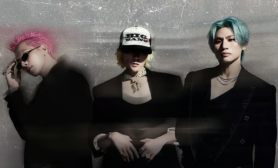 BigBang's 20th anniversary comes as older K-pop acts find new life
Member of K-pop boy group BIGBang poses for digital single 'BiiiG' promotional photo. Courtesy of YG Entertainment SEOUL, August 19 (AJP) - K-pop boy band BigBang marked their 20th anniversary on Wednesday with their first digital single in four years, hoping to continue attracting attention years after their heyday. Their return comes as older K-pop groups are gaining renewed attention, attracting both longtime fans and younger listeners discovering their music years after their debut. But another shift is unfolding at the same time. While veteran acts are finding ways to stay together, some younger idols are choosing to leave successful groups earlier in their careers. "BiiiG," their first digital single in four years, is the group's first release since reshaping into a trio consisting of G-Dragon, Taeyang and Daesung. Demand has hardly faded. When general sales opened for the group's third world tour, "BIGBANG 2026 2027 WORLD TOUR XX : COSMOS," over 210,000 users logged in simultaneously. The kicks for Goyang concert where all three shows sold out within 22 minutes. It marked the highest ticket demand among concerts and events sold through Coupang Play this year. Members of K-pop girl group I.O.I posing for their group photo. Courtesy of Swing Entertainment Old groups, new demand BigBang are hardly alone. I.O.I returned for their 10th anniversary and sent "Suddenly" to No. 1 on Melon's TOP100 and HOT100 charts. SeeYa came back after 15 years, while Wanna One reunited after roughly seven. Other anniversary projects have brought back acts including Secret, Boyfriend and Click-B. What matters is not simply how many groups have returned. It is that audiences are still showing up when they do. The appetite for established acts also goes beyond reunions. BTS never disbanded, but resumed full-group activity after all seven members completed their military service. Their comeback album "ARIRANG" spent three straight weeks atop the Billboard 200. The demand is visible in the concert market. Popular-music ticket sales in South Korea reached about 452.7 billion won in the first half of 2026, up 9.6 percent from a year earlier and accounting for 55.9 percent of total performance ticket sales, according to Korea Performing Arts Box Office shortened as KOPIS. Part of the explanation is simple: the fans grew up. Listeners who once bought albums with their allowance are now adults with money for concert tickets, merchandise and travel. BigBang's current promotion reflects that shift. A world-tour pop-up that opened Aug. 14 offers 58 official merchandise items, including a redesigned version of the group's signature light stick. Nostalgia has become a market of its own. Promotional poster for K-pop boy group BIGBANG's 20th Anniversary. Courtesy of YG Entertainment Two fans, twenty years apart But not everyone buying into BigBang is looking backward. Kwon Sun, 20, found the group through YouTube. A compilation video introduced her to Daesung, and from there she worked backward through G-Dragon and Taeyang before becoming a fan of the group. "I didn't even know until recently that BigBang used to have five members," she said. She now listens regularly to G-Dragon's solo music and says BigBang's appeal lies in their distinctive voices, lyrics and songs that do not wear out after repeated plays. She did not get the seats she wanted for the Goyang concerts. She is going anyway, alone, with a new light stick and merchandise from the group's pop-up. Park Min-seok, born in 1995, came from the opposite direction. He grew up with BigBang and still plays songs such as "Fantastic Baby" and "Blue" when he travels, feels down or needs comfort. He never joined the official fan club but owns nearly every BigBang album on CD. Work will keep him from the concerts this week, but he has been waiting for the new release for months. "It's been so long since a real comeback," he said. "That's exactly why I'm looking forward to it." One discovered the group through an algorithm two decades after its debut. The other never really stopped listening. That mix of old and new fans is what gives veteran K-pop something more durable than a brief nostalgia cycle. Promotional photo of K-pop veteran BIGBANG's upcoming digital single 'BIIIG.' Courtesy of YG Entertainment Most groups never get this far BigBang's 20-year run is still rare. A study published by Kim Jung-sup, a professor at Sungshin Women's University, examined 1,182 Korean idol groups that debuted between 1996 and 2025. Their average period of activity was 4.12 years. About 55 percent remained active three years after debut. That fell to 36.6 percent after five years and 17.9 percent after a decade. Only 19 groups, or about 1.6 percent of the total, ever sold more than 1 million copies of a single album. Part of that short lifespan is built into the industry. K-pop's so-called "seven-year curse" grew around the industry's contract cycle. In July 2009, the Fair Trade Commission introduced a standard exclusive contract that made seven years a key limit for entertainment agreements. Later that month, three members of TVXQ sought a court injunction against SM Entertainment over their 13-year contracts, turning the dispute into one of K-pop's defining battles over long-term artist agreements. Ownership of group names can create another obstacle. Shinhwa fought for years over its trademark rights. Beast left Cube Entertainment in 2016 and continued as Highlight before eventually regaining rights to the Beast name. That is where comparisons with Western rock bands begin to break down. Bands often form independently of their labels and can continue as business arrangements change. K-pop groups are usually assembled by agencies, with members tied to individual contracts and much of the group's identity controlled within that system. The industry became very good at creating idols. Keeping the same group together for 20 years was never its strongest feature. K-pop boy group ENHYPEN's promotional group photo for their seventh mini album 'THE SIN : VANISH' . Courtesy of Belift Lab While veterans stay, younger idols leave Yet another trend is pushing in the opposite direction. Some younger idols are no longer waiting until a group declines before choosing a different path. Heeseung left ENHYPEN in March after discussions with BELIFT LAB over his future direction. The group continued with six members. A month later, Mark left NCT when his contract with SM Entertainment ended, concluding his activities with NCT 127 and NCT Dream after nearly a decade. Neither departure came because the group had stopped selling records or attracting fans. That distinction matters. Commercial success once seemed to provide a strong reason for members to stay. Increasingly, it may not be enough on its own. Creative control and individual career choices are entering the equation earlier. At the same time, new groups continue to break through. Fifth-generation act CORTIS reached No. 3 on the Billboard 200 with "GREENGREEN" this year. The issue, then, is not whether K-pop can still produce successful groups. It is whether success still means members will want to spend most of their careers inside one. Photo of K-pop boy group BIGBANG performing at the 27th Mama Award. Courtesy of CJ ENM Two directions K-pop is therefore moving along two tracks. Veteran acts with large catalogs and loyal fan bases increasingly have enough bargaining power to separate group activity from individual careers. BLACKPINK offers one version. Their members maintain their group relationship with YG Entertainment while pursuing solo careers separately. Girls' Generation offer another. SM Entertainment said Yuri's exclusive contract will end Aug. 31, while making clear she will remain a member of the group. For veteran acts, loosening the link between agency and group may actually help them stay together. For younger idols, the same flexibility can make leaving easier. The two trends are less contradictory than they first appear. Both weaken an older assumption of the K-pop system: that one agency, one contract and one group identity have to remain tied together for an idol career to work. At 6 p.m. Wednesday, a 20-year-old who discovered BigBang through YouTube and a longtime listener who grew up with the group will both be waiting for "BiiiG." Twenty years after BigBang's debut, K-pop has shown that an idol group can live long enough to become a legacy act.
-
 President Lee: The June 15 North-South Joint Declaration is a Beacon of Hope
President Lee Jae-myung greets Cardinal Yoo Heung-sik after delivering a commemorative speech at the Special Mass for Peace and Solidarity at St. Paul Outside the Walls in Rome on June 14, 2026. President Lee Jae-myung stated on June 14 that he believes the hope sparked by the June 15 North-South Joint Declaration remains alive. He expressed his commitment to doing everything possible to establish a sustainable peace system, moving beyond the current armistice.Speaking at the Special Mass for Peace and Solidarity held at St. Paul Outside the Walls in Rome, President Lee remarked that the dialogue and cooperation that once characterized relations between the North and South have regressed into a period of disconnection and confrontation.He noted that while communication channels between the two Koreas have closed and distrust and tension persist, the people of South Korea have not lost their faith in peace and democracy, having overcome numerous trials and hardships.Reflecting on the historic meeting 26 years ago on June 15, when the two Koreas first sat down to announce the Joint Declaration, President Lee called it a pivotal moment that signaled the possibility of dialogue and cooperation to the world.Below is the full text of President Lee's commemorative speech.Cardinal Yoo Heung-sik, esteemed guests, it is a profound honor to stand in this sacred place, alive with the spirit of St. Paul.I extend my heartfelt gratitude to Cardinal Yoo and the Vatican officials for their warm hospitality and for organizing this meaningful event.Ladies and gentlemen, the world today is engulfed in deep conflict and uncertainty.The war in Ukraine continues unabated, and new clashes are erupting in the Middle East. The foundations of cooperation and coexistence are shaking, casting shadows of division and confrontation across the international community.The Korean Peninsula is not free from these realities. The North and South, once discussing peace and prosperity together, have reverted to a state of disconnection. Communication channels have closed, and distrust and tension remain.However, the people of South Korea have a history of steadfastly maintaining their belief in peace and democracy, even amid numerous trials and tribulations.We reclaimed our nation, rebuilt from the ruins of war, and advanced democracy beyond an era of dictatorship and oppression.Amid economic crises and social upheaval, we have illuminated the darkness not with weapons, but with candles; not through violence, but through peace; and not with cynicism, but with solidarity.The Korean Catholic Church, which began as a voluntary community of lay believers and endured severe persecution, has been a steadfast support in times of hardship, upholding the values of human dignity, peace, and solidarity.Esteemed guests, on June 15, 26 years ago, the North and South first met and announced the June 15 North-South Joint Declaration.This was a historic turning point that signaled the possibility of dialogue and cooperation beyond long-standing hostility and tension.Since then, family reunions, humanitarian cooperation, and exchanges have opened a new door of hope for peace on the Korean Peninsula.I am confident that the spark of hope remains alive today.Since its inauguration last year, the South Korean government has taken proactive measures to ease tensions, including halting leaflet distribution and loudspeaker broadcasts toward the North. We have also made it clear that we do not pursue absorption unification or unilateral regime competition.We will continue our efforts to prevent accidental clashes between the North and South and to restore military trust. We are committed to doing everything possible to establish a sustainable peace system beyond the current armistice.Esteemed guests, for many years, the international community has longed for peace and reconciliation on the Korean Peninsula, and South Korea has consistently worked to meet those expectations and support.I would like to take this opportunity to express sincere gratitude, on behalf of the people of South Korea, to the Vatican for its unwavering interest and support throughout this process.In a time when conflict and uncertainty weigh heavily on the world, South Korea aims to convey a message of hope.We will unite our efforts to create a world where democracy shines brightly, where the richness of culture is celebrated, and where the possibilities of science, technology, and innovation pave the way for a more peaceful and free existence for all, allowing everyone to live with dignity.We will fulfill our international responsibilities to foster reconciliation where there is conflict, trust where there is distrust, and solidarity where there is division, transcending borders, ideologies, races, and cultures.Esteemed guests, let us pray together that the precious words from Isaiah 2:4, "They will beat their swords into plowshares and their spears into pruning hooks," may be realized throughout the nation.I hope that peace on the Korean Peninsula will lead to global peace, and that international solidarity will reinforce peace on the Korean Peninsula in a virtuous cycle.Next year, the World Youth Conference will be held in Seoul. I am confident it will be a meaningful time for young people to share friendships and learn the values of peace and solidarity, transcending borders, languages, and cultures.I hope that youth from around the world can gather here, overcoming battle lines, barbed wire, and borders, and I request the Vatican's interest and constructive role in this endeavor. The South Korean government also promises to do its utmost to support this effort."Take heart; I have overcome the world," Jesus Christ said to his fearful disciples 2,000 years ago. May these words bring comfort, courage, and hope to our youth today.I pray that our prayers offered today may be a blessed seed for peace and solidarity throughout the world.May God's grace be with everyone present here today.Thank you.* This article has been translated by AI.