

Journalist

Joonha Yoo유준하
joonhayoo94@ajupress.com
ReporterCOEX Sejong Center for the Performing Arts & Music, Culture, Entertainment, Automotive
Joonha Yoo is a bilingual journalist at AJU Press (AJP), covering music, culture, entertainment and Korea’s automotive industry.
Raised in Fort Collins, Colorado, he often writes from the scene, bringing firsthand detail to stories ranging
from BTS comeback concerts to unique cultural events that catch the world's eye. "I write from the scene, not from the sidelines."
Raised in Fort Collins, Colorado, he often writes from the scene, bringing firsthand detail to stories ranging
from BTS comeback concerts to unique cultural events that catch the world's eye. "I write from the scene, not from the sidelines."
Latest by Joonha Yoo
-
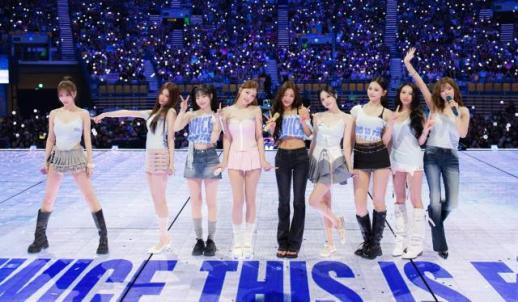 TWICE's sold-out Seoul finale concludes yearlong world tour SEOUL, July 13 (AJP) - K-pop girl group TWICE wrapped up their sixth world tour with three sold-out concerts at KSPO Dome in southern Seoul over the weekend, JYP Entertainment said on Monday. The yearlong tour covered 81 shows across 44 locations around the world, marking one of the group's largest global concert tours so far. The "THIS IS FOR" tour began at Inspire Arena in Incheon in July 2025 before traveling across Asia, Oceania, North America and Europe. Along the way, TWICE became the first overseas act to hold a solo concert at Tokyo's National Stadium and the first K-pop girl group to perform at Hong Kong's Kai Tak Stadium. TWICE attracted about 550,000 fans across their North American shows, the largest audience for a North American tour by a K-pop girl group, according to JYP Entertainment, and about 640,000 fans across their Japanese shows. The Seoul finale used the same 360-degree stage setup featured throughout the tour, placing the main stage at the center of the arena and opening seating on all sides. The concerts featured a live band and a career-spanning set list that moved from recent songs including "THIS IS FOR," "OPTIONS" and "MARS" to earlier hits such as "Like OOH-AHH," "TT," "CHEER UP," "What Is Love?" and "YES or YES." The group also performed solo and unit stages, including the first Korean performances of "TAKEDOWN" by Chaeyoung, Jeongyeon and Jihyo and "Confetti" by Mina, Momo and Sana. The final concert on Sunday was streamed worldwide through Beyond LIVE. At the end of the show, the members thanked "ONCE," the group's official fandom, for supporting the tour and hinted that another tour would follow. "The long journey of the 'THIS IS FOR' tour has come to an end," the members said. "We were able to finish it safely because of ONCE. Thank you sincerely for your support and love." TWICE, which debuted in October 2015, will celebrate their 11th anniversary this fall. 2026-07-13 17:38:42
 -
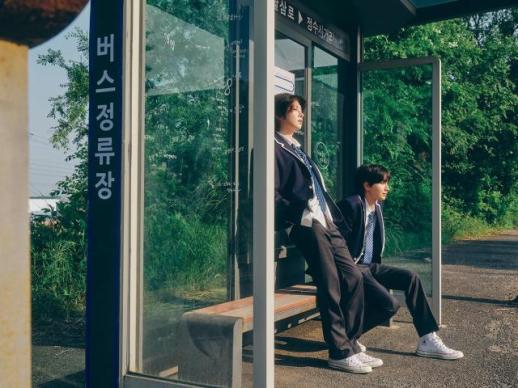 Leeteuk, Heechul team up as subuit for Super Junior SEOUL, July 13 (AJP) - Leeteuk and Heechul of K-pop boy group Super Junior have teamed up as a new unit, their management agency SM Entertainment said Monday. Their six-track EP, "Promise," under Super Junior-83z, named for their shared 1983 birth year, is set for release at 6 p.m. later in the day. Reminiscent of the nostalgic sound of the 1990s and 2000s, the song centers on a heartfelt confession delivered through the duo's contrasting vocal styles. Its music video, directed by Walala Studio, a production team that includes fellow Super Junior member Shindong, tells the story of two close friends who reconnect years after their school days. The EP also includes one solo song from each member. Leeteuk's "Bad Name," which he wrote, is an R&B pop track built around bass and brass. Its lyrics use a relationship as a way to explore the desire to break free from false emotions and move beyond past trauma. Heechul also wrote his solo track, "GODOGNAM," a brighter song about a man who has grown comfortable with solitude before unexpectedly falling in love. Other songs on the EP include "SOLOVE," which compares love to the sun; "ONSAEMIRO," about remaining by someone's side; and "More Than Love," which portrays friendship as stronger than romance. Super Junior, one of the first major K-pop groups to build long-running subunits, celebrate their 21st anniversary this year. 2026-07-13 11:32:09
 -
 K-pop boy band Stray Kids to release new album next month ahead of world tour SEOUL, July 13 (AJP) - K-pop boy group Stray Kids will release a new album next month, their management agency JYP Entertainment said on Monday. Slated for release on Aug. 7, the EP "This & That" features all eight tracks produced by the group's production trio, 3RACHA - Bang Chan, Changbin and Han - including the prerelease single "RUN IT," which dropped on June 24. The trio have written and produced Stray Kids' songs since before the group's official debut, starting with the pre-debut track "Hellevator." Ahead of the album's release, teaser posters featuring the members' individual images have been unveiled one by one. Following the album's release, Stray Kids will embark on their world tour, beginning with five concerts at KSPO Dome in southern Seoul in July and August. They are also scheduled to perform at "Rock in Rio," the biennial music festival in Brazil, in September before bringing their newly launched "STRAYCITY" festival to Latin America, with stops in Bogotá, Buenos Aires and Mexico City. 2026-07-13 11:06:59
 -
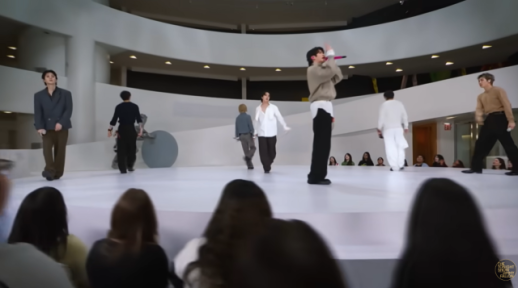 BTS' 'SWIM' lawsuit centers on alleged path from demo to hit song SEOUL, July 10 (AJP) - A copyright lawsuit over BTS' chart-topping single "SWIM" is focusing not only on alleged musical similarities, but on how an unreleased demo may have traveled through Los Angeles' songwriting and publishing network before reaching people involved in the hit. Three Los Angeles-based songwriters, Steve Cooper, Jon Sandler and Greylyn Johnson, filed the case in the U.S. District Court for the Central District of California on July 8, accusing HYBE-related companies, Artist Publishing Group and several of the song's credited writers of copyright infringement. BTS and its members were not named as defendants. RM is credited as a co-writer of "SWIM," but neither he nor the group is listed among the parties being sued. The defendants include HYBE, HYBE America, HYBE Music Services, Big Hit Music and songwriters Derrick Milano, James Essien, Le Clair, Ryan Tedder, Tyler Spry, Sean Foreman and Kirsten Spencer. The plaintiffs say they completed their own song, also titled "SWIM," in March 2025 and circulated a demo to music industry contacts in Los Angeles. According to the complaint, the demo was sent to executives at Artist Publishing Group and to other managers and publishing figures. The plaintiffs allege that the song was later shared with people connected to writers who worked on BTS' version. That alleged chain of access is likely to become a central issue in the case. In music copyright disputes, plaintiffs generally must show not only that two works are substantially similar, but that the accused creators had a plausible opportunity to hear the earlier work. The complaint does not identify direct evidence showing that BTS or every credited writer personally heard the demo. Instead, it lays out what the plaintiffs describe as a path through publishers, managers and songwriters that may have connected the two works. To support their case, the plaintiffs commissioned a preliminary analysis from musicologist Alexander Stewart. Stewart's report claims that the two songs share similarities in their title-based hooks, melodies, rhythms, harmonic structure, lyrical themes and recurring synthesizer patterns. Stewart argues that both tracks rely heavily on two chords without establishing a clear tonal center, creating what he describes as a floating, aquatic sound. He also compares the repeated use of the word "swim" and melodic phrases that follow it in both songs. Those findings are allegations submitted by the plaintiffs and have not been tested in court. HYBE and Big Hit Music had not publicly commented on the lawsuit as of Friday. The plaintiffs are seeking damages, profits tied to the song and injunctive relief. In an alternative claim, they argue that they should be recognized as co-creators and receive a share of past and future earnings from "SWIM." The case comes after "SWIM" became one of the biggest releases of BTS' career. The song debuted at No. 1 on the Billboard Hot 100, while the group's fifth studio album, "ARIRANG," also opened atop the Billboard 200. This is the third copyright case filed against HYBE-linked entities in recent months. In May, four Los Angeles songwriters sued HYBE, ADOR and NewJeans over the 2024 single "How Sweet." On July 7, New York publisher All Surface Publishing sued the same companies over NewJeans' 2023 track "ETA." Both cases are unrelated to the SWIM lawsuit and involve different songs and claimants. 2026-07-10 16:53:12
 -
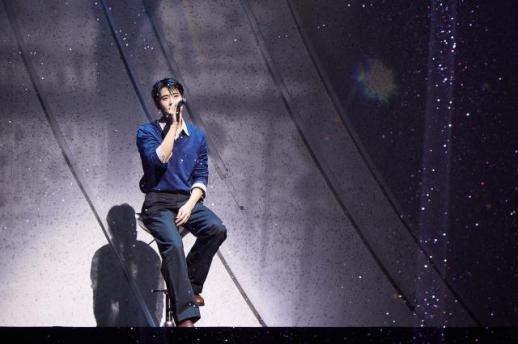 NCT's Jaehyun drops new solo single SEOUL, July 10 (AJP) - K-pop boy group NCT's Jaehyun has released his new solo single "99 Degrees," his management agency SM Entertainment said on Friday. The single, a ballad that Jaehyun helped write and compose around the idea that love can make an incomplete person feel whole, will also be released on major global music-streaming platforms at 6 p.m. here, with its music video available on YouTube. The song opens with a restrained piano line before gradually building into a fuller instrumental arrangement. Near the end, the instrumentation pulls back, leaving Jaehyun's vocals at the center. "99 Degrees," which is one degree below the boiling point, symbolizes an incomplete state. Rather than viewing that missing degree as a flaw, the lyrics use it as a metaphor for finding completeness through another person. The music video follows a similar arc, with Jaehyun revisiting places tied to his memories before letting go of the pressure to be perfect and learning to embrace imperfection as part of moving forward. "I am happy to share '99 Degrees,' a song I worked on with a lot of care," Jaehyun said in a press release. "I hope listeners can also feel the meaning of finding something complete within imperfection," he said. "I hope the song brings a small sense of comfort to Czennies (NCT's fans) and everyone who listens to it. "99 Degrees" marks Jaehyun's first solo release since completing his mandatory military service in May this year. It follows his debut solo album "J" in 2024 which included tracks such as "Forever Only," "Horizon," and "Unconditional." 2026-07-10 15:14:32
 -
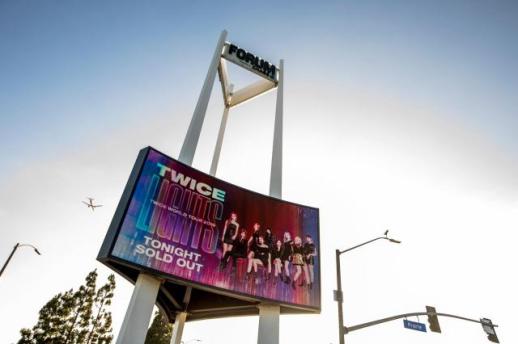 TWICE to wrap up largest-ever world tour with sold-out Seoul finale SEOUL, July 10 (AJP) - K-pop girl group TWICE will wrap up their world tour with three sold-out concerts in Seoul this weekend, bringing to an end their yearlong run of some 81 shows across 44 cities across the world. According to JYP Entertainment, the three-day encore concerts, starting Friday at KSPO Dome in southern Seoul, will conclude "THIS IS FOR," their largest-ever tour since their debut, which began in Incheon in July 2025. A 360-degree stage will be used for all three shows, allowing fans to watch the group from every angle instead of just one end of the arena. Meanwhile, the yearlong tour reflected the group's steady expansion from arena venues in Asia to major stadiums across North America, Japan and other key markets. In North America, TWICE performed 35 concerts in 20 cities including 13 first-time stops such as Boston, Montreal, Vancouver and Washington. The leg drew about 550,000 fans, the largest audience ever for a North American tour by a K-pop girl group. Japan was another milestone on the tour. In April, TWICE became the first K-pop act to stage a solo concert at Japan National Stadium in Tokyo, attracting about 240,000 fans over three days, or roughly 80,000 per show. The group also performed at Japan's four major domes during the tour, bringing total attendance for their shows there to about 640,000, according to the agency. Elsewhere in Asia, TWICE staged their first solo concerts in Hong Kong, Kaohsiung, Macau and Taipei. The group attracted about 110,000 fans over two shows at Kaohsiung National Stadium and about 120,000 across three concerts at Taipei Dome. The Hong Kong stop also made TWICE the first K-pop girl group to hold a concert at Kai Tak Stadium, one of the city's largest venues. The scale of the tour reflects how far the group's live presence has grown since their first concert tour in 2017. Across six tours, the nine members of TWICE have now performed 188 concerts in 59 cities, setting a K-pop girl group record for both the number of cities visited and solo concerts held. This weekend's encore concerts come ahead of the 11th anniversary of TWICE's debut in October 2015, serving as a retrospective of the group's journey. 2026-07-10 14:52:51
 -
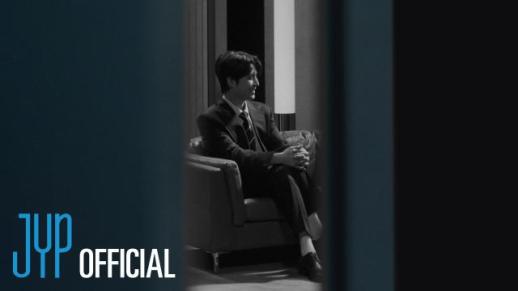 DAY6's Young K to drop 2nd solo album later this month SEOUL, July 10 (AJP) - Young K of K-pop band DAY6 will release his second full-length solo album later this month, his management agency JYP Entertainment said on Friday. "YOUNGEST," due out on July 27, will be Young K's first solo release since his debut full-length album "Letters with notes" in September 2023. To promote the album, Young K will stage a three-day concert series in Incheon from Aug. 14 to 16, marking his first solo concerts in nearly three years. JYP Entertainment has already begun promoting his upcoming album with teaser photos and posters, with more details about the album and the concerts to be unveiled later. Young K debuted as a member of the quartet in 2015 and has served as the band's bassist and a key songwriter, writing or co-writing a number of the group's songs. 2026-07-10 14:18:48
 -
 Koreans don't fight summer. They accessorize it SEOUL, July 9 (AJP) — When Europe melts, people flock to rivers, lakes and public fountains. When South Korea swelters, shoppers head to Olive Young and Daiso. To withstand increasingly early, longer and more punishing summers, Europeans seek out whatever water they can find. Koreans, long accustomed to humid East Asian heat, have developed another survival strategy: buying a growing arsenal of cooling products that seems to evolve every summer. Cooling patches. Frozen neck wraps. Sun powders. Cooling shampoos. Ice sleeves. Chilled sanitary pads. Portable fans. Ice cups. Heat-blocking clothing. What began as practical gadgets has become summer fashion — and increasingly, an industry of its own. The transformation has been gradual. Seoul National University's annual Trend Korea series described 2024 as the year record-breaking heat became impossible to ignore. By the following edition, "climate sensitivity" had emerged as one of the defining consumer keywords for 2025, reflecting a shift from viewing extreme weather as a distant environmental concern to treating it as part of everyday life. This year's edition goes a step further, arguing that Korea has entered a "survival economy," where climate itself increasingly shapes what consumers buy. Retailers have embraced the language. CJ Olive Young now markets its seasonal campaign under the slogan "Survival Beauty." During Olive Young's late-May sales event, searches for sun powder — a cooling setting powder designed to reduce shine and leave a refreshing finish — jumped 284 percent from a year earlier, according to the retailer. Searches for body odor products rose 98 percent, while searches related to scalp odor climbed more than 80 percent. On social media, posts featuring "summer survival kits" and "heatwave must-haves" have attracted millions of views. The trend is spreading well beyond beauty. Budget retailer Daiso quickly sold out of its 3,000-won reusable ice neck cooling band after launching it for the summer season. Sales of cooling innerwear doubled from a year earlier in May, prompting the chain to expand its cooling lineup from 70 to 90 products. It has also launched a dedicated "Summer Essentials" campaign featuring cooling bedding, cooling sprays and portable fans, underscoring how heat-relief products have become everyday household necessities rather than seasonal novelties. The trend is also exposing a generational divide in how Koreans cope with the heat. Kim Eun-seo, 23, from Ilsan, said she walked into Olive Young simply to escape the rain but ended up browsing cooling products for her boyfriend, who gets hot more easily than she does. She used to carry a handheld fan throughout college. Today she buys most cooling products online, with a reusable cooling neck wrap topping her list. "It works really well in the heat, and it's inexpensive if you buy it online," she said. Kim Seon-chang, 63, from Seoul's Yangjae neighborhood, has taken the opposite approach. Rather than relying on rechargeable gadgets, he still carries a traditional folding fan. "There's a reason our ancestors used fans," he said. "It doesn't need charging, it doesn't make noise, and as long as I keep moving my arm, it keeps me cool." The popularity of such products reflects more than rising temperatures. Korea's summers are among the most humid in the developed world. Relative humidity typically ranges between 78 percent and 84 percent during the season, according to the Korea Meteorological Administration, and often approaches 88 percent in July. Combined with temperatures above 30 degrees Celsius, the humidity regularly pushes the country's discomfort index above 80 — a level at which most people experience significant discomfort. Because sweat evaporates more slowly in humid air, many of the season's best-selling products are designed less to lower body temperature directly than to reduce stickiness and help the body cool itself more efficiently. The health impact is already becoming visible. As of June 18, about 300 people had visited emergency rooms nationwide for heat-related illnesses over the previous month, up from 192 during the same period last year, according to the Korea Disease Control and Prevention Agency. Last summer was also Korea's hottest since nationwide records began in 1973. The national average temperature reached 25.7 degrees Celsius, while the average nighttime low climbed to a record 21.9 degrees, leaving many residents with little relief even after sunset. Europe is now confronting many of the same challenges, but the response has been markedly different. Across much of the continent, households still rely primarily on passive cooling by closing shutters during the day and ventilating homes at night. According to the International Energy Agency, household air-conditioner ownership averages around 20 percent across Europe, although rates vary widely, from 56 percent in Italy and 41 percent in Spain to 25 percent in France, 5 percent in the United Kingdom and just 3 percent in Germany. In Korean households, the rate is 98 percent of Korean households. Even with cooling available in almost every home, consumers continue spending on an expanding range of products designed to make daily life outdoors more bearable. What distinguishes Korea is not simply the demand for cooling products but the breadth of categories they now occupy. Heat-relief products increasingly blur the lines between beauty, fashion, healthcare and personal care, extending from cooling shampoos and sun powders to frozen neck wraps, cooling innerwear and wearable accessories. The result is a consumer market that has adapted to climate change with remarkable speed. For Europeans, surviving another scorching summer may still mean searching for shade or jumping into the nearest river. For Koreans, it increasingly means stopping by the cosmetics aisle first. 2026-07-09 18:02:53
 -
 Vietnamese arrivals in Korea surpass Chinese for first time SEOUL, July 09 (AJP) - Viet Nam overtook China as the largest source of foreign arrivals in South Korea last year as Vietnamese workers continued to enter the country while more Chinese nationals left, government data showed Thursday. Figures released by the Ministry of Data and Statistics showed 98,000 Vietnamese nationals arrived in South Korea in 2025, edging past 94,000 arrivals from China. A year earlier, China still led by a wide margin, with 112,000 arrivals compared with Viet Nam's 88,000. China, long South Korea's largest source of foreign arrivals, also posted a net outflow of migrants in 2025 after recording a net inflow the previous year. Visa data suggest the shift was largely driven by employment migration. Nearly half of Vietnamese arrivals entered on work visas, and that share continued to rise. Chinese arrivals, by contrast, relied more heavily on overseas Korean and student visas, while the share entering on employment visas declined. The shift also came as overall migration into South Korea slowed. Foreign arrivals fell from a year earlier while departures increased, reducing the net inflow of foreign nationals to about half the previous year's level. The sharpest decline came in short-term visits, with visa-free entries dropping by nearly half. Combined with a smaller net inflow of South Korean nationals, net population growth from migration fell by more than 40 percent from a year earlier. Elsewhere, Nepal and Uzbekistan continued to post solid net inflows, while Thailand's net outflow widened for a second straight year, reversing a trend seen in 2022 when it ranked among the countries with the largest net inflows. South Koreans also showed a clear generational divide in migration patterns. People in their 20s, along with children under 10, remained more likely to leave the country than return. From their 30s onward, however, the pattern reversed, with people in their 50s recording the largest net inflow of any age group. Although the gap narrowed slightly from a year earlier, overall cross-border movement among South Korean nationals declined in 2025. 2026-07-09 17:14:31
 -
 Hong Myung-bo to testify at National Assembly hearing SEOUL, July 09 (AJP) - Former South Korea head coach Hong Myung-bo issued a new public apology Thursday over the national team's early exit from the 2026 World Cup, saying he would appear before a parliamentary hearing if called and take full responsibility for the result. The statement was released through the Hong Myung-bo Scholarship Foundation, a charity the 57-year-old 2002 World Cup hero himself chairs. It was made public on the day the National Assembly's Culture, Sports and Tourism Committee voted to hold a hearing on issues surrounding the Korea Football Association and named Hong as a witness. The hearing is scheduled for July 22. It was Hong's second public apology since South Korea was eliminated in the World Cup group stage on June 28. He resigned and apologized at a news conference in Mexico the following day, June 29, but took no questions and largely disappeared from public view afterward. South Korea entered the final day of group play needing help from elsewhere after a 1-0 loss to South Africa on June 25 left the team with one win, two losses and a goal difference of -1. A late win by Uzbekistan over the Democratic Republic of Congo would have been enough to send South Korea through, and Uzbekistan led 1-0 before conceding three second-half goals to lose 3-1. A draw in a separate match between Algeria and Austria pushed South Korea's ranking among third-place finishers down further, and the team finished 10th among the group's third-place teams, one spot outside the eight that advanced to the round of 32 — South Korea's first group-stage exit from a World Cup in eight years. In Thursday's statement, Hong again apologized to Korean football fans and said the responsibility for the result was his alone. "I failed to deliver the result people expected at the World Cup," Hong said. "All responsibility for that result belongs to me as head coach." Hong said he had spent a long time considering what to say after stepping down. His first instinct, he said, was to accept the result and remain silent, since he believed the outcome was his to bear. But he said that it became harder to justify as time passed, with claims not grounded in fact circulating as though they were true and players and staff who had worked alongside him getting caught up in speculation. Hong also addressed criticism over his decision to leave for the United States just two days after returning to South Korea from the World Cup, a move that had fueled accusations that he was trying to dodge accountability. "Staying in the United States was not a choice made to avoid or turn away from the result," he said. "There were threats against me and my family at the time, along with concerns about our safety, and I had to protect my family." He said he had not intended to avoid his responsibilities as head coach or avoid facing the public. Hong closed the statement by turning to the hearing. He said that if the hearing is meant to explain the World Cup result to the public, then he should be the person standing there. "If a hearing is held, the person who should be there is me," he said. "I will answer every question without avoiding anything." Hong ended the statement with another apology, saying he would take every word of the public's criticism seriously. 2026-07-09 16:57:44