

Journalist
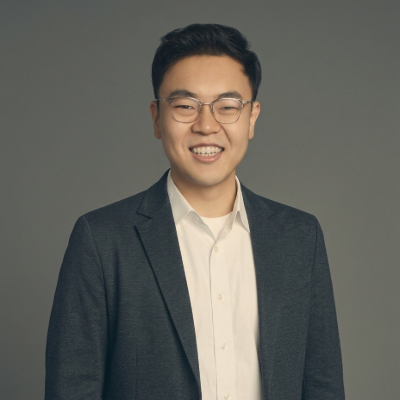
Joonha Yoo유준하
joonhayoo94@ajupress.com
ReporterCOEX Sejong Center for the Performing Arts & Music, Culture, Entertainment, Automotive
Joonha Yoo is a bilingual journalist at AJU Press (AJP), covering music, culture, entertainment and Korea’s automotive industry.
Raised in Fort Collins, Colorado, he often writes from the scene, bringing firsthand detail to stories ranging
from BTS comeback concerts to unique cultural events that catch the world's eye. "I write from the scene, not from the sidelines."
Raised in Fort Collins, Colorado, he often writes from the scene, bringing firsthand detail to stories ranging
from BTS comeback concerts to unique cultural events that catch the world's eye. "I write from the scene, not from the sidelines."
Latest by Joonha Yoo
-
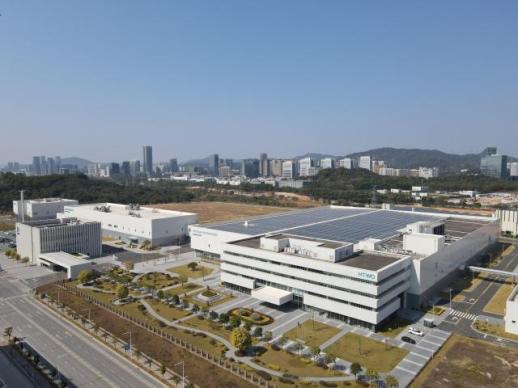 Hyundai Motor's HTWO Guangzhou named hydrogen industry leader in China SEOUL, May 29 (AJP) - Hyundai Motor Group's HTWO Guangzhou has been named a hydrogen industry leader by the southern Chinese city, becoming the only foreign-invested company among 96 firms selected under the city's strategic industry cluster program. According to the automaker, its first overseas production base for hydrogen fuel cell systems in China was selected by the Guangzhou municipal government as a leading enterprise in the hydrogen energy sector. The city has selected and fostered leading companies across 14 strategic industries including new energy, intelligent connected vehicles, artificial intelligence, and semiconductors with the aim of strengthening local supply chains, building industrial ecosystems and expanding cooperation in key technologies. With the designation, HTWO Guangzhou will take on a larger role in local hydrogen industry planning, supply-chain development, and technology cooperation, along with support and other benefits. The selection comes as China continues to expand its hydrogen industry as part of a broader energy transition. Beijing has set goals of reaching peak carbon emissions by 2030 and carbon neutrality by 2060, and has identified hydrogen as a key part of its future energy system. China's first long-term national hydrogen plan, released in 2022, called for establishing a hydrogen technology innovation system by 2030 and building a more diversified hydrogen application ecosystem by 2035. Under a 2021 program to promote hydrogen fuel cell vehicles, China designated five regional clusters, including Guangdong, with aims to deploy about 35,000 hydrogen vehicles by 2025. Guangdong led the five clusters by deploying more than 7,000 vehicles during the period, while Guangzhou operated more than 4,300, making it one of China's largest hydrogen vehicle markets. HTWO Guangzhou sold more than 900 hydrogen commercial vehicles in China in 2025, ranking third in the overall market and first among foreign-invested companies in a field of more than 60 competitors. "This selection recognizes HTWO Guangzhou's contribution to the development of Guangzhou's hydrogen industry and its local cooperation ecosystem," said Choi Doo-ha, general manager of HTWO Guangzhou. "We will continue contributing to the development of China's hydrogen industry and the expansion of its ecosystems. Choi added that the company plans to expand its participation in hydrogen energy demonstration projects scheduled to begin in China in the second half of this year and strengthen cooperation with local governments and partners. 2026-05-29 17:34:56
 -
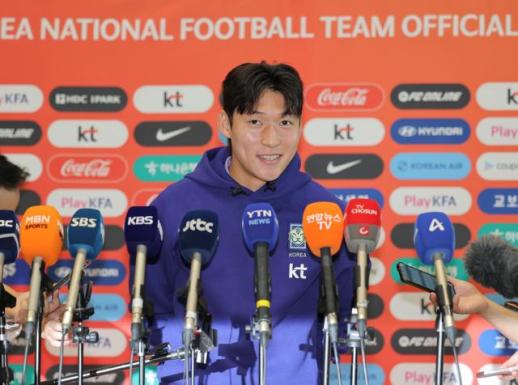 The Wildcard in Team Taegeuk Warriors SEOUL, May 29 (AJP) - When Hong Myung-bo named his squad for the 2026 FIFA World Cup last month, most of the coverage landed in the same place: Son Heung-min, captain, icon, almost certainly making his fourth and final appearance at the tournament. The farewell tour angle wrote itself. But scroll past the familiar names — Son, Lee Kang-in, Kim Min-jae, Hwang Hee-chan — and one entry reads differently. Bae Jun-ho, 22, Stoke City, attacker. Not a household name. Not yet a guaranteed starter. Precisely the kind of player that tends to get overlooked in squad announcements and remembered long after the tournament ends. Hong's selection problem is not obvious talent. South Korea has that. The problem is predictability. Opponents at this level have full dossiers on Son's movement, Lee's left foot, Hwang's runs in behind. They have watched the film. Against a Korea side that has historically leaned on its established stars, a younger attacking player creates a different equation — less data, less certainty, more space for something unexpected to happen. Bae can operate as an attacking midfielder or wide player, drift between lines, receive in tight spaces and link play in the final third. None of that sounds revolutionary. What matters is the context: in a squad where the attack announces itself in advance, he is the variable that doesn't. His path here has been methodical rather than meteoric. Three years ago he wore the No. 10 shirt for South Korea at the FIFA U-20 World Cup, contributing a goal and an assist across six matches as the team reached the semifinals. That was enough to accelerate his move from Daejeon Hana Citizen in the K League 1 to Stoke City in the Championship — English football's second tier, a division that tests character as much as quality. At Stoke he adapted without fanfare. In his first full season he logged 2,553 minutes across all competitions, scored twice and set up six more, and was named the club's player of the season. This season he has remained a regular. In Asian qualifying for the World Cup, he made 11 appearances and contributed two goals and four assists as South Korea punched through. The resume is solid without being spectacular. That, in a way, is the point. Korean football has a particular history with this kind of player — the young attacker who arrives without expectation and leaves with a moment the country doesn't forget. Lee Dong-gook was 19 at the 1998 World Cup in France when South Korea were hammered by the Netherlands. Most of that night is better forgotten. His long-range shot is not. Park Ji-sung was 21 in 2002 when he scored the goal against Portugal that helped send South Korea into the knockout rounds — and eventually the semifinals — under Guus Hiddink. Son himself was the youngest player in the 2014 squad when he scored against Algeria in Brazil, a footnote at the time and a origin point in retrospect. In Qatar in 2022, Hwang Hee-chan came off the bench against Portugal and scored in stoppage time to send Korea through. None of those moments were scripted. Bae is not a direct heir to any of them. But he is playing the same structural role: the player whose value lies partly in what opponents don't yet know about him. South Korea will enter Group A against Mexico, Czechia and South Africa, making their 11th consecutive World Cup appearance since 1986. The ambition, as ever, is to go further than the group stage — something the team has managed only once since that 2002 semifinal run. Hong's squad carries the usual weight of a nation's expectations on a small number of shoulders. What it also carries, quietly, is Bae — a 22-year-old who is not being asked to be the story, but who might end up being part of one. That is the thing about wildcards. You don't know which hand they'll fall in until the game is already being played. 2026-05-29 16:34:12
 -
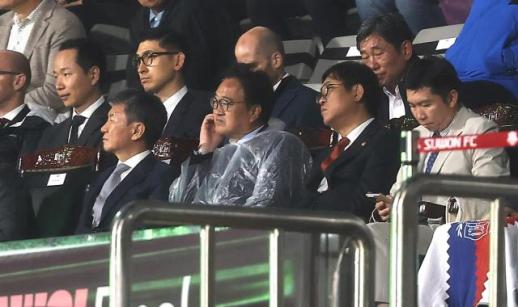 KFA chief Chung Mong-gyu to step down after 2026 World Cup SEOUL, May 29 (AJP) - Chung Mong-gyu, president of the Korea Football Association, said Friday he will step down after the 2026 FIFA World Cup in North America, ending his 13-year tenure at the helm of South Korean football. In a statement released two weeks before the tournament opens, Chung said he intends to resign after the World Cup, calling support for the national team his final duty as head of the association. "I intend to step down as president of the Korea Football Association after this World Cup," Chung said. "I believe my last duty as president is to do my best to support the national team so it can produce meaningful results at the tournament." "I am aware that there have been various controversies and criticisms during my time leading the association," Chung said. "I believe all of this is due to my shortcomings." The KFA said Chung made the decision to urge football fans to give their full support to the national team during the World Cup. It also said he concluded that taking responsibility was necessary for the association to move past the current situation and return to long-term planning for South Korean football. Chung won a fourth term in February last year with 85.6 percent support. He has led the KFA since 2013, when he took office as the association's 52nd president. South Korea, coached by Hong Myung-bo, is preparing for the World Cup finals, which open next month in North America. Chung plans to submit his resignation after the tournament, which is scheduled to conclude on July 19 local time. 2026-05-29 15:49:26
 -
 Nike teams up with BTS for customization, tour merchandise collection SEOUL, May 29 (AJP) - Nike has partnered with K-pop legend BTS to launch a Nike By You customization experience and tour merchandise tied to the group's BTS WORLD TOUR "ARIRANG," Nike said Friday. The project combines customized Nike products with tour merchandise, giving BTS fans a way to personalize apparel and accessories connected to the group's upcoming world tour. The Nike By You experience features 10 custom graphics created specifically for BTS. The designs can be used to personalize select Nike apparel and tote bags. Nike said the graphics use bold shapes, fluid movement and custom typography to reflect the group's musical evolution and its connection with fans around the world. The collaboration also includes Nike x BTS tour merchandise, including T-shirts, a hoodie and a Korea-only cap. The items will be sold in select cities on the "ARIRANG" world tour and online in China. The collection references BTS' Korean heritage alongside themes of legacy and creativity. Some Nike By You designs highlight the number seven, representing the seven members of BTS, while others reference musical bars and measures. The Nike By You customization experience will begin June 1 at select Nike stores in Seoul, Busan, Tokyo and Osaka. It will later expand to cities across Asia, Europe and North America through February 2027. Nike x BTS tour merchandise will launch June 12 in Seoul, Busan and Tokyo, followed by releases in major U.S. cities, including Chicago, Boston, San Francisco, Los Angeles, New York City and Las Vegas, on July 5 and in London on July 6. Additional merchandise drops are scheduled for China, Singapore, Taguig, Bangkok, Kuala Lumpur, Jakarta, Toronto, Melbourne and Sydney through February 2027. 2026-05-29 15:48:43
 -
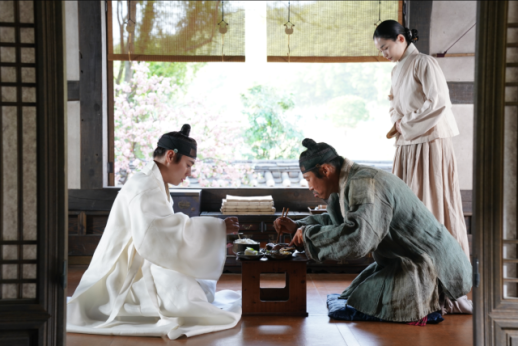 Korean box-office hit, indie drama Invited to Shanghai film festival SEOUL, May 29 (AJP) - Jang Hang-jun's box-office hit "The King's Warden" and Yoon Ga-eun's drama "The World of Love" have been invited to this year's Shanghai International Film Festival. The two films will be screened in the Asian Collection section of the festival's 28th edition, which opens June 12, according to the festival lineup. The Shanghai International Film Festival is one of China's major international film events, along with the Beijing International Film Festival. The Asian Collection section presents films from across the region. "The King's Warden" follows the exiled life of King Danjong, born Yi Hong-wi and played by Park Ji-hoon, the sixth king of the Joseon Dynasty. The historical drama has drawn 16.88 million admissions in South Korea so far, making it the second-most-watched film in the country's box-office history. It trails "Roaring Currents," which drew 17.61 million admissions, and stands ahead of "Extreme Job," which attracted 16.26 million viewers. The festival introduced "The King's Warden" on its official WeChat account as the top Korean box-office film of the year. "The World of Love" follows Ju-in, an 18-year-old high school student who faces conflict after refusing to join a petition opposing the release of a sex offender. The film, directed by Yoon, has also been selected for major international festival programs, including Toronto's Platform section. 2026-05-29 12:45:39
 -
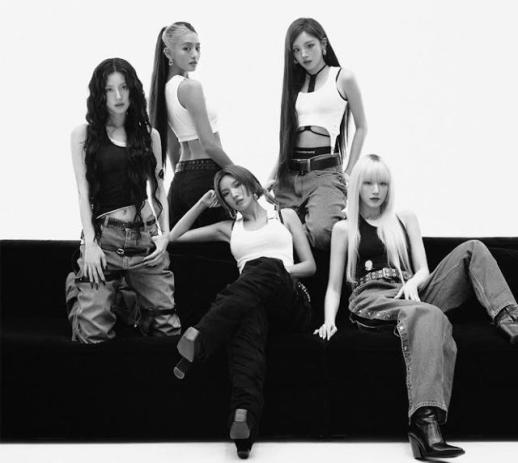 i-dle enters Forbes 30 under 30 Asia list ahead of July comeback SEOUL, May 29 (AJP) - K-pop girl group i-dle has been named to Forbes' 2026 30 Under 30 Asia list in the entertainment and sports category, the group's agency Cube Entertainment said Friday. The annual list recognizes young figures and teams across industries in Asia and the Pacific region. The recognition places i-dle among a select group of K-pop acts to have appeared on the list. The five-member group — Miyeon, Minnie, Soyeon, Yuqi and Shuhua — was included among this year's honorees ahead of its planned comeback in July. The group released the digital single "Mono (Feat. skaiwater)" in January and has since carried out a series of U.S. promotions, appearing on NBC's "Today" show, "The Kelly Clarkson Show" and "iHeart KPOP with JoJo." i-dle was also recently featured on the digital cover of U.S. magazine PAPER, which highlighted the group's creative identity and musical direction. The group is currently on its fourth world tour, "2026 i-dle WORLD TOUR ," and is scheduled to release a new album in July. It is also set to perform at Lollapalooza, one of the largest music festivals in the United States. 2026-05-29 12:44:31
 -
 LIGHTSUM's Yujeong set to make acting debut in YouTube rom-com SEOUL, May 29 (AJP) - Yujeong of K-pop girl group LIGHTSUM is set to make her acting debut in the web-based drama series "Subscription Love," her agency Cube Entertainment said on Friday. "Subscription Love," scheduled for release later in the day on the YouTube channel Rocodi, is a romance comedy set in a world where an artificial intelligence (AI)-powered dating subscription service matches a young man and woman, who grow closer while carrying out missions assigned in each episode. Yujeong plays a young woman who keeps failing at relationships and begins to experience changes through the subscription service. "I am thrilled that the series is finally being released," Yujeong said. "Since it was my first time acting in a drama, everything felt new to me, and I learned a lot while filming it." Expectations are high among fans to see Yujeong reveal a new side of herself through her acting debut, beyond her activities as a member of LIGHTSUM. Since debuting in 2021, the six members of LIGHTSUM, known for their bright songs, sharp choreography and youthful performances, have remained active through television appearances, festival performances and unit projects 2026-05-29 10:54:23
 -
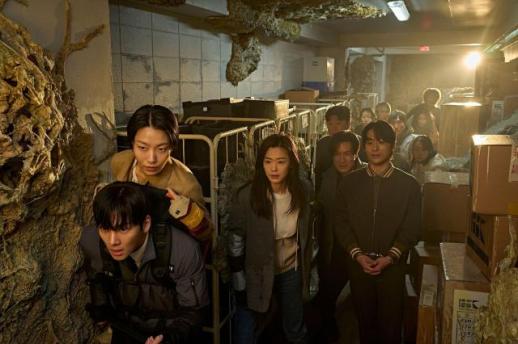 Korean Zombie Film 'Gunch' Redefines Horror Genre Amid Early Summer Release SEOUL, May 28 (AJP) - This year, the horror season has arrived earlier than usual, coinciding with the onset of summer. When thinking of K-horror, zombies have become synonymous over time. South Korea's unique interpretation of the Asian zombie, which began with the traditional Jiangshi, has evolved once again this year. This time, the zombies are equipped with the ability to 'think,' fitting for the AI era. Director Yeon Sang-ho's new zombie thriller 'Gunch' has surpassed 2.1 million viewers just six days after its release, making it a strong early summer box office hit. This pace is one day faster than the record set by the highest-grossing Korean film of 2025, 'Zombie Daughter,' which also crossed the 2 million mark. 'Gunch' is currently showing on 1,858 screens nationwide and has a reservation rate of 39.9%. Comparisons to 'Train to Busan,' which attracted 11.5 million viewers in 2016 and left a significant mark on the global zombie film market, are naturally emerging. However, Director Yeon describes 'Gunch' not as a continuation of 'Train to Busan,' but as a work that fundamentally changes the way we view the zombie genre. During a press conference at CGV Yongsan I-Park Mall, Yeon stated, "'Seoul Station,' 'Train to Busan,' and 'Peninsula' started from placing classic zombies in new settings. 'Gunch' is a film about zombies themselves. In a sense, it can be seen as my first film featuring a zombie protagonist." This shift in perspective leads to a change in the film's premise. In 'Gunch,' the infected mutate rapidly and act as a collective rather than individually. Yeon explained, "It's a confrontation between zombies with collective intelligence and humans. The zombies evolve quickly from a primitive state, while humans regress from civilization to barbarism. What remains at the end of that regression could be the essence of humanity." While 'Train to Busan' established the 'speed' of Korean zombies, 'Gunch' shifts the horror into the realms of 'connection' and 'collective intelligence.' Zombies are no longer just mindless flesh-eaters; they form a network. From Vengeful Spirits to Systemic Collapse Korean horror films have long been rooted in themes of vengeful spirits and the emotion of Han (grief). Unresolved resentment, unjust deaths, white-clad female ghosts, and settings like closed schools and broken family spaces have been central to Korean horror. Although director Kang Bum-gu's 'The Evil Dead' is often cited as Korea's first zombie film from the early 1980s, the zombie genre remained peripheral for a long time. The crises and anxieties experienced by Korean society have since become fertile ground for zombie narratives. Following the 1997 financial crisis, rising unemployment and distrust in institutions shifted public fears in popular culture from individual grievances to collective collapse and systemic failure. Recently, Korean horror has increasingly focused on themes of infection, isolation, social panic, and the disintegration of communities rather than supernatural revenge. 'Gunch' aligns with this trend. Set in a confined building beset by a mysterious infection, the film depicts survivors confronting infected individuals who evolve in unpredictable ways. The title 'Gunch' evokes a biological concept, suggesting a group of individual organisms functioning as a single unit. The provocative aspect of the film lies in the fact that these infected individuals are not 'thoughtless monsters.' “Zombies Resembling AI” — Audience Reactions Aaron Kim, a 20-year-old university student from Edinburgh visiting Seoul, initially had no plans to watch a Korean zombie film but was persuaded by a Korean friend to go to the theater. Kim remarked, "In most zombie films I've seen, zombies are thoughtless beings that indiscriminately kill people. In 'Gunch,' the zombies have intelligence. I felt how unsettling and frightening that could be." He found the film fresher compared to overseas zombie movies. Kim noted, "Overseas zombie films generally follow similar patterns. Korean zombies are new. They run fast and are not simple. I would rate the film 8 out of 10." He particularly connected the film's core concept to artificial intelligence. He explained, "As people use AI more, more data enters a single system, and that system becomes increasingly powerful. The zombies in 'Gunch' felt like part of a larger circuit that continuously learns." Jiyoon Lee, a 20-year-old university student living in New York, also evaluated 'Gunch' as taking a different direction from 'Train to Busan' and 'Kingdom.' Lee said, "In previous works, people became zombies due to a virus and charged aggressively, but they didn't appear to be thinking beings. The zombies in 'Gunch' seem to have a clear purpose to spread the virus. Their ability to create collective intelligence and move together through their own communication network is chilling." What Sets Korean Zombies Apart? The reactions from both audience members resonate with the image that Korean zombie films have built since 'Train to Busan': fast, intense, and physically overwhelming zombies. However, speed alone cannot explain the allure of Korean zombie films. Korean zombie narratives typically embed infection within densely populated social spaces. Settings like trains, schools, apartment complexes, and closed buildings serve as the main stages, reflecting the high density of life in Korean society. The fear of having nowhere to escape arises not just from the closed spaces themselves but from the social relationships and institutions that trap individuals even in crises. In this regard, Korean zombie films pose different questions than those shaped by George A. Romero's tradition in Western zombie films. While Western zombie narratives ask, 'What remains after civilization collapses?' Korean zombie films inquire, 'How quickly can society collapse while everyone is still trapped within the system?' Film critic Lee Ji-hye believes the strength of Korean zombie narratives comes from the 'relationships' that infection disrupts rather than the infection itself. Lee stated, "Korean zombie films often center around the premise that a beloved family member or friend has become a monster. The existing relationships are intricately woven into the narrative, significantly enhancing audience immersion." He explained that sadness and guilt often accompany the narrative of infection in Korean zombie films. Lee noted, "The fact that someone has become a zombie tends to bring about collective guilt or mourning. The two films show that Korean zombie cinema is no longer confined to a single genre." This sentiment is evident in many key works of Korean zombie cinema. 'Train to Busan' intertwined themes of family sacrifice and class conflict, while 'Kingdom' placed infection against the backdrop of royal politics, famine, and systemic failure. 'All of Us Are Dead' transformed schools into theaters of bullying and survival, and 'Happiness' dissected fear, hierarchy, and selfishness through a quarantined apartment complex. 'Zombie Daughter' embraced the zombie theme within a family comedy, opening a new spectrum for K-zombies. Lee also pointed out that the collapse of institutions is a core element of Korean zombie narratives. He remarked, "Korean zombie films do not merely tell stories of zombies chasing people; they also address how social systems collapse in crises, how ineffectively governments and bureaucracies operate, and how human selfishness manifests." While the hopping corpses of 1980s Hong Kong films combined Taoist folklore, Korean zombies are closer to modern disaster forms born from infection, institutions, and urban overcrowding. 'Gunch' pushes this genre a step further. Now, fear lies not only in the speed of the dead but also in the existence that learns, connects, and evolves collectively, targeting the vulnerabilities of human society.* This article has been translated by AI. 2026-05-29 08:02:00
 -
 Korean authorities step in to contain lodging prices ahead of BTS Busan concerts SEOUL, May 28 (AJP) -South Korean authorities moved quickly to respond to BTS' call for restraint in overcharging the group's beloved global fans traveling to the southern port city of Busan for the next stop on their worldwide tour. The government has secured more than 1,300 alternative accommodation options ahead of the concerts next month, after the group publicly criticized sharp price hikes around the event. The measures were announced Thursday at a task force meeting jointly led by the Ministry of Economy and Finance and the Ministry of Culture, Sports and Tourism to address price gouging around major events. BTS is scheduled to hold its "ARIRANG" world tour concerts on June 12 and 13 at Busan Asiad Main Stadium. The shows have triggered complaints from fans after some hotels and other accommodation providers in Busan reportedly raised room rates sharply around the concert dates—with some rooms said to have jumped from under 100,000 won to several million won per night. During a Weverse Live broadcast on Tuesday, BTS members addressed the controversy while speaking with fans. "There have been too many news reports about lodging businesses ahead of the Busan concerts. I hope businesses do not do that," RM said. "I understand there are peak-season rates, but I hope they keep it reasonable." RM also said he had heard some fans were considering staying overnight without lodging or using jjimjilbang — Korean public bathhouses with rest areas — because of the high accommodation costs. "That is not right," he said. "Shouldn't people think long term?" Jimin also expressed concern, saying he wanted fans to have a good experience in Busan. "I feel bad because I hope fans can have a good time in Busan," Jimin said. "They should keep it reasonable. How can they raise prices several times over?" Jungkook, who is from Busan, added in Busan dialect, "Goma haera" — meaning "Enough already." The controversy prompted President Lee Jae Myung to comment Wednesday that Busan's image had been hurt by complaints over what he called lodging price gouging linked to the BTS concerts, and that improvements were needed, underscoring the weight of the Kpop superstar who recently swept three awards—including their second-ever Artist of the Year trophy—at last week's American Music Awards with their new album ARIRANG just released two months ago. In response, the government said universities, religious facilities, public-sector training centers and youth training facilities in nearby areas including Busan, Yangsan and Changwon, will provide paid or free lodging for domestic and foreign visitors. Information on available facilities and reservation methods will be posted on the Visit Busan and Visit Korea websites. Authorities will also conduct special joint inspections of lodging businesses near the concert venue on Friday and again on June 8 and 9. The inspections will focus on hygiene conditions and possible price-fixing among accommodation providers. Businesses found to have violated regulations could face immediate administrative measures, including correction orders or business suspensions. Complaints filed through the 120 local call center or the 1330 tourist complaint center will be referred to local governments and subsequently to the National Tax Service for possible investigation into tax evasion. Accommodation providers confirmed to have engaged in excessive pricing will also face tougher penalties in hotel rating evaluations, with the maximum deduction raised to 30 points from the current 10. The government also plans to revise rules on reward payments for reports of unfair practices, including collusion. Under the planned changes, the current payment cap would be removed, and whistleblowers could receive up to 10 percent of the fines imposed. 2026-05-28 17:41:52
 -
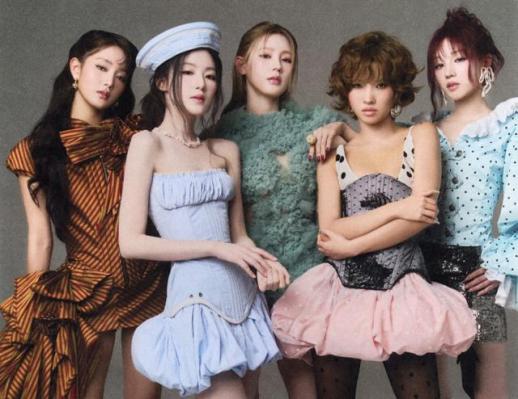 i-dle lands digital cover of U.S. magazine 'PAPER' ahead of July comeback SEOUL, May 28 (AJP) - K-pop girl group i-dle has been featured on the digital cover of U.S. magazine PAPER as the group prepares for a July comeback. PAPER released the cover shoot and interview with the five-member group — Miyeon, Minnie, Soyeon, Yuqi and Shuhua — on Tuesday. The feature comes as i-dle continues to expand its presence in North America through media appearances, festival stages and overseas promotions. In the cover images, the members reinterpret a 1990s-inspired angelic mood through vivid colors, ornate styling and romantic details, creating a softer but still highly stylized image for the group. PAPER described i-dle as a group that has grown more certain of its instincts and musical direction over time. The magazine said the group’s desire to strip away the unnecessary and move closer to the essential has come to define its music. The magazine also highlighted the group’s ability to build one of K-pop’s most distinctive creative worlds, balancing theatricality with emotional directness. The feature also looked at i-dle’s recent digital single “Mono (Feat. skaiwater),” released in January, describing it as a softer shift that still carries the confidence of artists no longer trying to prove themselves through noise. PAPER also drew attention to “Crow,” a new song first performed during the group’s 2026 world tour “Syncopation.” The magazine noted that the song reworks the image of the crow — often associated with death, disaster or bad omens — into a symbol of survival and endurance. The coverage adds momentum to i-dle’s upcoming activities in the United States. The group has recently appeared on NBC’s “Today” show, “The Kelly Clarkson Show” and “iHeart KPOP with JoJo” as part of its North American promotions. i-dle is also scheduled to perform at Lollapalooza in July, marking another major U.S. festival appearance for the group. In the feature, PAPER framed i-dle not simply as a K-pop act preparing another release, but as a group that has returned with a clearer sense of identity each time it has faced adversity. 2026-05-28 17:27:25