

Journalist
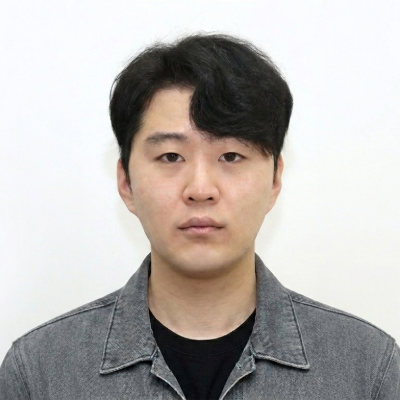
Han Jun-gu한준구
jungu141298@ajupress.com
PhotographerGeopolitics, Culture, History, People & Photo Journalist
Photojournalist, AJU PRESS (AJP)
Covering Asia's defining stories — from pressing issues and politics to culture and society — through a distinctly Asian lens. "I point the camera at what's there. That's the job."
Covering Asia's defining stories — from pressing issues and politics to culture and society — through a distinctly Asian lens. "I point the camera at what's there. That's the job."
Latest by Han Jun-gu
-
 PHOTOS: A fruit paradise born from Bangkok's dawn market SEOUL, October 14 (AJP) - The Thai Market was already alive with energy. The first impression upon entering was the sheer scale. The space stretched across what felt like several football fields, with a ceiling as high as a five-story building. Yet even that vastness was filled with the scent of fruit. The air was thick with the sweet, heavy fragrance of mangoes, durians, bananas, dragon fruit, and pineapples. Located about an hour’s drive from Suvarnabhumi Airport, this market—whose name, “Talaad Thai” literally means “Thai Market”—is the largest wholesale market in the country. Fruits were piled high like mountains. Pomelos and pineapples formed pyramids, and vendors stood atop trucks unloading crates with astonishing speed. Each section dedicated to a single fruit seemed to hold several tons. Trucks from across Thailand began arriving around 3 a.m., joined by motorbikes fitted with cargo platforms. Headlights flickered on one by one, engines rumbled, and the market woke to life. Once the fruit arrived, the real work began—unloading, trimming, sorting, and boxing. Teams of workers handled knives and boxes with the precision of professionals. Every piece was inspected for quality, graded by size, and packed for delivery. The entire process took place before dawn so the fruit could reach markets and restaurants across Bangkok by morning. The workers moved with the rhythm of a well-trained dance troupe. No one gave orders, yet everyone knew their role—one person tossing boxes from the truck, another catching and stacking them, others sorting and repacking. Their coordinated movements were seamless. The biggest attraction of Talaad Thai is its price. Even in Thailand, where food is known to be affordable, this market stands apart. Fruits here cost about 30 percent less than at regular stores or supermarkets. The reason is simple: there is no middleman. Farmers sell directly to restaurant owners and retailers. By morning, the fruit that arrived in the dark spreads across the city—from luxury hotel buffets to street stalls. Although it is a wholesale market, individuals can also buy here. Locals often come with friends or neighbors to share their purchases. The variety of fruit is astonishing. The durian section, unique to Southeast Asia, is especially memorable. Known as the “king of fruits,” durians are stacked by size, their rich aroma noticeable even meters away. At first the smell can be overwhelming, but it soon becomes familiar—earthy, nutty, and sweet. The banana section is equally striking, with green bunches stretching like a sea. Hundreds, even thousands of clusters are arranged neatly in rows. Mangoes, in contrast, display a palette of colors—yellow, green, and red-tinted varieties. Each type serves a different purpose: some are eaten fresh, others are used in cooking or juicing. Talaad Thai is not a tourist attraction. There are no flashy signs or English explanations, and the wet floors glisten with fruit juice. But that rawness is its charm. It offers a glimpse of everyday Bangkok—unfiltered and alive. The heat of the market before sunrise, the heaps of fruit tumbling from trucks, the scent rising to the high ceilings, and the swift hands of the vendors all reveal another face of the city. This is a side of Bangkok that guidebooks rarely show. Instead of golden temples or shopping malls, it shows how the city truly functions. Here, you can watch where the fruit eaten by millions of Bangkok residents each morning begins its journey. 2025-10-14 15:17:50
 -
 PHOTOS: The present and future of the Korean Army at Gyeryongdae airstrip SEOUL, September 23 (AJP) - From the moment visitors passed through the main gate of Gyeryongdae and walked toward the venue, there was a palpable sense of tension and anticipation. The chance to see up close the military equipment usually only seen on television quickened their steps. Upon entering the airstrip with the guidance of soldiers, the scale was overwhelming. Massive tanks stood proudly with their barrels pointed skyward, helicopters spread their rotor blades wide, and the Chunmoo multiple rocket launcher system exuded power by its sheer size. Set against the quiet hills of Gyeryong city in South Chungcheong Province, Gyeryongdae is normally closed to civilians. But on Sep. 18, the 21st Ground Forces Festival opened the heart of the Korean Army to the public. Rows of equipment stretched endlessly along one side of the airstrip, each accompanied by panels detailing their names, capabilities, and specifications. Many offered opportunities for children to climb aboard and take photos with soldiers. Young visitors raised their arms in salute beside troops, creating memories that parents and children shared together. Beyond the exhibition stood the experience zone, where civilians tried out simulators and saw daily life in uniform. Long lines formed at the shooting simulator, and children filled the uniform experience booth with laughter. Soldiers at each stand patiently explained to the crowd, turning curiosity into understanding. Even small tank and helicopter models, as well as army-themed souvenirs, drew attention from visitors who wished they could take them home. In the early afternoon, the highlight of the day began: a combined-arms combat demonstration. The K2 tank, the K1A1 armored vehicle for mine-clearing and obstacle removal, the AVLB bridge-laying tank, and Apache helicopters all took part. Over 40 minutes, they recreated a battlefield scenario—reconnaissance, obstacle removal, bridge deployment, enemy clearance, and drone-based resupply. With the ground still muddy from the previous day’s rain, tanks and vehicles churned through the dirt, their dramatic movement amplified by the conditions. The finale featured 21 soldiers parachuting from aircraft, landing with flags, colored smoke, and banners. The quiet grace of parachutes drifting through the blue sky contrasted with the intensity of the combat display, yet underscored the concentration and responsibility of those in uniform. Close-combat demonstrations showcased the Army’s precision and discipline. Quick, sharp movements, seamless teamwork, and performance under smoke and mud displayed the professionalism of trained soldiers. The audience responded with resounding applause, a sign of respect and trust. Later in the afternoon, a road parade stretched about 1 kilometer (0.62 miles) down the runway. Military police on motorcycles, K-pop dance routines by soldiers, and rifle-spinning by the honor guard entertained the crowd. A mock "turtle ship" accompanied by martial arts, traditional drums, and plate-spinning added a mix of modern and historical flair. One section of the festival highlighted a joint Korea–U.S. equipment display. Korean and American vehicles stood side by side, symbolizing 70 years of alliance. Though designed with different philosophies and technologies, they shared a single purpose—defending freedom and democracy. As visitors left Gyeryongdae, it became clear that the day was more than a spectacle. The displayed weapons, the soldiers’ demonstrations, and the advanced technology represented the will to defend freedom and peace. Through its array of equipment, performances, and explanations, the festival presented the past, present, and future of the Korean Army in one place. The commitment, effort, and continuous pursuit of advanced defense technologies reminded visitors that Korea’s safe daily life is supported by this dedication. What unfolded at Gyeryongdae was not merely a display of strength but the Army’s deliberate effort to earn the trust of the people while preparing to safeguard peace. 2025-09-23 14:51:03