

Journalist
Yoo Na-hyun유나현
shooting@ajupress.com
PhotographerGeopolitics, Culture, History, People & Photo Journalist
Photojournalist, AJU PRESS (AJP) Covering news, culture and society in South Korea through an Asian perspective.
"Every moment is worth documenting."
Latest by Yoo Na-hyun
-
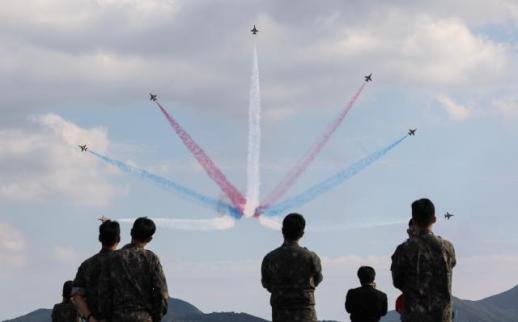 Sacheon Airshow opens with Black Eagles The Republic of Korea Air Force's aerobatic team, the Black Eagles, performs an aerial demonstration during a press day for the 2026 Sacheon Airshow at Sacheon Air Base in South Gyeongsang Province, South Korea, on Oct. 21, 2026. The four-day airshow will take place from Oct. 22 to 25, jointly hosted by the Republic of Korea Air Force, South Gyeongsang Province, Sacheon City and Korea Aerospace Industries. 2026-10-21 17:44:10
 -
 Sacheon Airshow: Black Eagles' aerial mastery The Republic of Korea Air Force's aerobatic team, the Black Eagles, performs an aerial demonstration during a press day for the 2026 Sacheon Airshow at Sacheon Air Base in South Gyeongsang Province, South Korea, on Oct. 21, 2026. The four-day airshow will take place from Oct. 22 to 25, jointly hosted by the Republic of Korea Air Force, South Gyeongsang Province, Sacheon City and Korea Aerospace Industries. 2026-10-21 17:42:56
 -
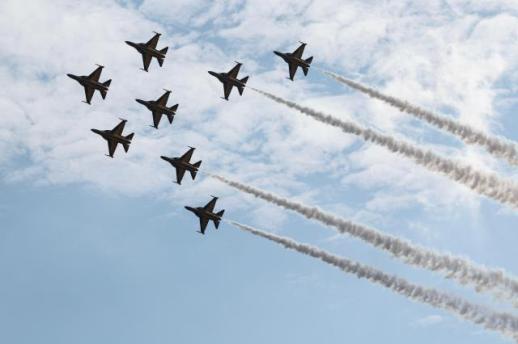 Black Eagles soar at Sacheon Airshow The Republic of Korea Air Force's aerobatic team, the Black Eagles, performs an aerial demonstration during a press day for the 2026 Sacheon Airshow at Sacheon Air Base in South Gyeongsang Province, South Korea, on Oct. 21, 2026. The four-day airshow will take place from Oct. 22 to 25, jointly hosted by the Republic of Korea Air Force, South Gyeongsang Province, Sacheon City and Korea Aerospace Industries. 2026-10-21 17:39:45
 -
 Dan Ives' Seoul investment insights A press conference featuring Dan Ives, co-founder and partner of U.S. investment bank Yorkville Ives, is held at the Conrad Seoul hotel in Yeongdeungpo-gu, Seoul, on Oct. 14, 2026. 2026-10-14 16:06:14
 -
 Seoul's Galaxy Robot Park hosts world failure day Robots perform during a special event marking World Failure Day at Galaxy Robot Park in Gangdong-gu, Seoul, on October 13, 2026. 2026-10-13 14:36:26
 -
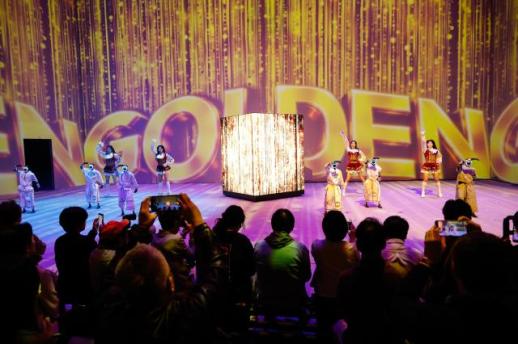 Robots shine at world failure day event Robots perform during a special event marking World Failure Day at Galaxy Robot Park in Gangdong-gu, Seoul, on October 13, 2026. 2026-10-13 14:35:05
 -
 Suwon pays homage to King Jeongjo in Hwaseong festival SUWON, South Korea, September 29 (AJP) — Nightfall turned the gates and courtyards of Hwaseong Haenggung Palace into a stage Tuesday as performers offered a preview of the 63rd Suwon Hwaseong Cultural Festival. King Jeongjo, the 22nd ruler of Korea’s Joseon dynasty, reigned from 1776 to 1800 and under his watch, Joseon enjoyed a renaissance. Remembered for his efforts to strengthen royal authority and promote scholarship, he commissioned Suwon Hwaseong Fortress, completed in 1796. The palace within its walls served as his residence during visits to Suwon and since 1997 listed as an UNESCO’s World Heritage. The festival runs from Oct. 4 to 11, bringing royal processions, military displays and nighttime performances to the historic grounds. Among the new programs is “Haenggung Yahwa,” an immersive evening performance inspired by Jeongjo’s 1795 journey to Suwon. Audiences move through the palace rather than watch from fixed seats, following scenes staged among its gates, courtyards and buildings. “Yajo” reinterprets the nighttime military drills of the king and his royal guards. At Yongyeon Pond, “Seonyumong” combines water, light, music and media art, making the waterside setting part of the performance. The celebrations extend beyond the palace. On Oct. 4, a large-scale reenactment of Jeongjo’s royal procession will follow a route from Seoul through Suwon to Yungneung Royal Tomb in neighboring Hwaseong. For international visitors, a new “Royal Route 1795” shuttle will connect Seoul and Suwon, alongside interpretation services and cultural activities. 2026-10-03 15:51:29
 -
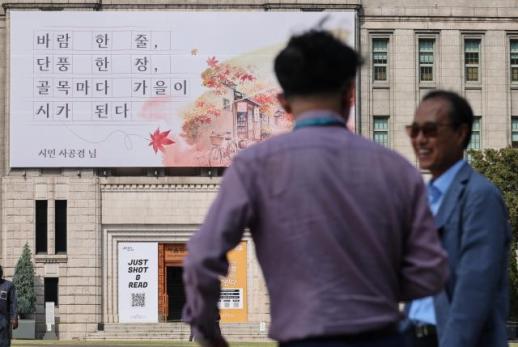 Seoul library's autumn poetry A message reading, "A line of breeze, a leaf of autumn foliage, and autumn becomes poetry in every alley," is displayed on the exterior wall of Seoul Metropolitan Library in central Seoul, Sept. 30, 2026. AJP Yoo Na-hyun 2026-09-30 16:28:00
 -
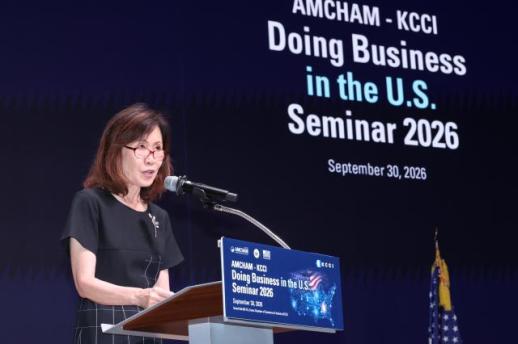 U.S. Ambassador Michelle Steel speaks at AMCHAM-KCCI Seminar Michelle Steel, U.S. ambassador to South Korea, delivers congratulatory remarks during the 2026 Doing Business in the U.S. Seminar at the Korea Chamber of Commerce and Industry in central Seoul, Sept. 30, 2026. 2026-09-30 16:26:16
 -
 Rei captivates at rom'u photocall in Seoul Rei of K-pop girl group IVE poses for photos during a photocall event for global color contact lens brand rom’u at MUSINSA Beauty Hongdae in Mapo District, Seoul, Sept. 29, 2026. AJP Yoo Na-hyun 2026-09-29 20:07:46