

Journalist
Yoo Na-hyun유나현
shooting@ajupress.com
PhotographerGeopolitics, Culture, History, People & Photo Journalist
Photojournalist, AJU PRESS (AJP) Covering news, culture and society in South Korea through an Asian perspective.
"Every moment is worth documenting."
Latest by Yoo Na-hyun
-
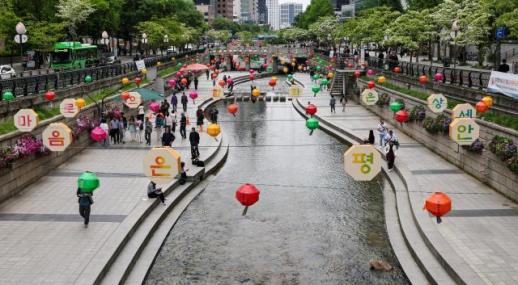 Seoul prepares for Buddha's birthday celebrations SEOUL, May 11 (AJP) - Colorful lanterns light up along Cheonggye Stream in central Seoul on Monday as Buddha's birthday approaches, with preparations underway for the annual lotus lantern festival, known as Yeondeunghoe. Large traditional installations and rows of glowing lotus lanterns have been set up around the stream and nearby walking paths, drawing attention from both locals and foreign tourists. Large traditional decorations and glowing lotus installations have been set up along the stream and nearby walking paths, attracting attention from both locals and foreign tourists. Yeondeunghoe is the country's traditional Buddhist festival with a history spanning more than 1,000 years. Recognized as a UNESCO Intangible Cultural Heritage of Humanity in 2020, it symbolizes peace, hope, and enlightenment through lantern-lighting ceremonies and public celebrations. Beginning with an annual parade of lotus-shaped lanterns scheduled for this weekend, this year's festival will feature various celebratory programs for Buddha's birthday across downtown Seoul through late this month. 2026-05-11 17:49:24
 -
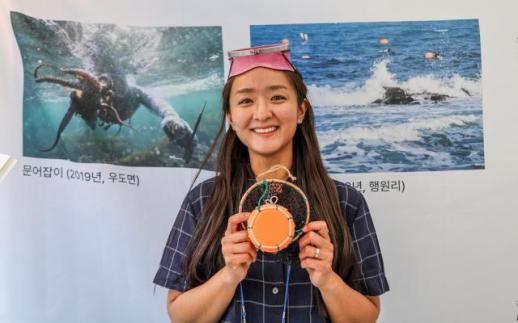 Festival brings taste of rural coastal life to Seoulites SEOUL, May 11 (AJP) - A fishing village-themed festival kicked off on Monday at Gwanghwamun Square, offering city residents a taste of coastal life and a glimpse into rural relocation opportunities. Hosted by the Ministry of Oceans and Fisheries and the Korea Fisheries Infrastructure Public Agency, the three-day festival provides information for those interested in relocating to fishing villages, along with details on government policies, support programs, and fisheries-related job opportunities. Visitors can get consultations and learn more through dedicated booths. They can also take part in various hands-on programs and events featuring residents who have relocated to fishing villages. Additional activities include seafood tasting events and meditation programs inspired by coastal life. The festival runs daily from 11 a.m. to 8 p.m. at Gwanghwamun Square in Seoul until Wednesday. 2026-05-11 17:28:04
 -
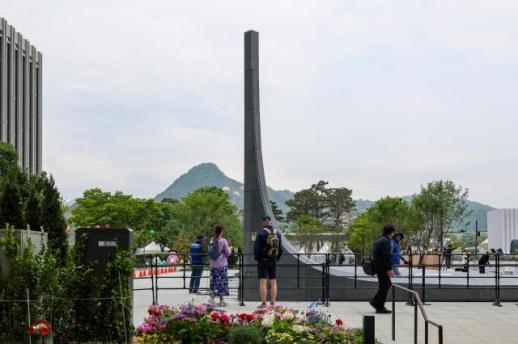 Memorial space for Korean War heroes set to open at Gwanghwamun SEOUL, May 11 (AJP) - A memorial garden honoring soldiers who died in the Korean War and other war veterans is set to open this week at Gwanghwamun in central Seoul, according to the Seoul Metropolitan Government. City officials and workers were busy making final preparations on Monday, just a day ahead of the opening of the space, dubbed the "Garden of Gratitude," which commemorates the sacrifices and contributions of around 22 countries that sent troops and provided support during the 1950–53 Korean War. The space also features an installation selected through a public competition. The 6.25-meter-tall piece includes 23 rifle-shaped sculptures, symbolizing the countries that assisted during the war. City officials said the space is expected to give visitors a place to reflect on the history of the Korean War and international solidarity. Earlier in 2024, the city government initially proposed erecting a 100-meter-tall flagpole to hoist a giant national flag as a new symbol meant to inspire patriotism. But the plan immediately sparked controversy, with critics arguing it would be excessive and a waste of public funds, and was eventually scrapped. 2026-05-11 16:58:05
 -
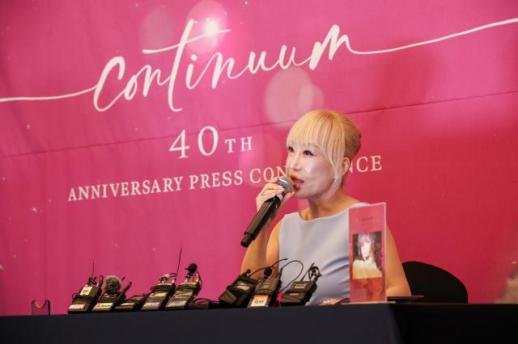 Jo Sumi marks 40th anniversary debut with vision for young artists SEOUL, May 06 (AJP) - World-renowned soprano Jo Sumi marked the 40th anniversary of her international debut Wednesday, outlining a forward-looking vision focused on nurturing young artists while expanding her musical scope through new collaborations. The milestone signals a strategic shift for South Korea's most iconic classical figure as she integrates her legacy with modern entertainment structures. "What I can do now is share what I have with as many people as possible," she said at a press conference held at InterContinental Grand Seoul Parnas in Seoul. The event featured the signing of an exclusive recording contract with SM Classics, a classical label under SM Entertainment, bridging the gap between classical and mainstream music. Jo Sumi, who debuted in 1986 at Italy's Teatro Verdi, has performed at leading global venues including La Scala, the Metropolitan Opera and the Salzburg Festival. She is widely regarded as the first South Korean classical musician to establish a dominant global presence at a time when Asian vocalists were rare on major opera stages. She was also recently named the recipient of the Samsung Ho-Am Prize in the Arts, one of South Korea's most prestigious honors. The award ceremony is scheduled for June 1. The soprano's remarks focused primarily on supporting the next generation rather than her own historical achievements. "It is not just about discovering talented singers, but about creating real opportunities for them to perform," she said. "I want to help young musicians sustain their careers." This philosophy drives the second Sumi Jo International Singing Competition, scheduled for July at the Chateau de la Ferte-Imbault in France's Loire Valley. The inaugural competition drew 500 applicants from 47 countries, while this year's edition has attracted participants from 55 nations. The event coincides with the 140th anniversary of diplomatic relations between South Korea and France. Jo Sumi emphasized that she hopes young musicians will grow into "artists who serve as messengers of peace." Her 40th-anniversary project includes a special album titled CONTINUUM, which she described as one that looks ahead rather than back. "I am still in progress," she said. "I wanted to reinterpret my life and experiences through a new musical language." Lee Sung-soo, chief administrative officer of SM Entertainment, said the partnership carries broad significance for South Korea's music industry. He noted that Jo Sumi introduced South Korean music to the global stage long before the international rise of K-pop. "We hope this collaboration becomes a meaningful convergence of classical music, K-pop and the broader cultural industry," Lee Sung-soo said. He added that bringing Jo Sumi on board as an exclusive recording artist represents a symbolic step for the country's cultural ecosystem. The album features a duet with Suho of the K-pop group EXO, whom Jo Sumi described as a "very stable artist." She praised his dedication and focus throughout the recording process. A nationwide tour will kick off on Saturday in Changwon, followed by performances in more than 20 cities including Seoul, Busan and Gwangju. Jo Sumi chose Changwon as the opening venue as a tribute to her late parents. "Although they are no longer with me, I wanted them to hear this music first," she said. Throughout the event, she repeatedly identified "freedom" as the defining value of her artistic life. "For an artist, the most important thing is freedom," she said. 2026-05-06 18:18:46
 -
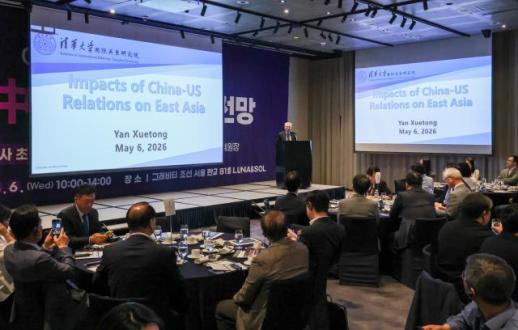 Prelude to U.S.-China summit, scholars discuss fault lines in Korea SEOUL, May 06 (AJP) -Scholars from South Korea and China gathered in Seongnam on Tuesday to dissect the shifting balance between Washington and Beijing ahead of a closely watched meeting between U.S. President Donald Trump and Chinese President Xi Jinping due next week. At Gravity Pangyo in Gyeonggi Province, academics and policy experts filled the conference hall for a special seminar examining how intensifying U.S.-China rivalry is reshaping diplomacy, technology and security across East Asia. Hosted by the Gyeonggi Research Institute under the theme “Changes and Prospects in U.S.-China Relations,” the event unfolded against the backdrop of prolonged tensions in the Middle East and growing uncertainty over global supply chains. Participants exchanged views on South Korea’s strategic options as geopolitical competition between the world’s two largest powers deepens. Among the keynote speakers was Yan Xuetong, honorary dean of the Institute of International Relations at Tsinghua University, who joined Korean scholars in discussing the evolving regional order and the diplomatic challenges facing Seoul. 2026-05-06 14:34:11
 -
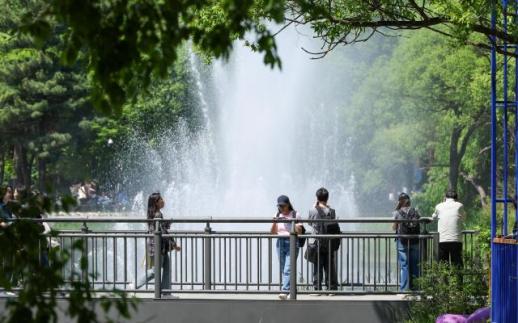 Seoul converts downtown into massive garden for international exhibition SEOUL, May 04 (AJP) - Seoul transformed into a massive public garden as the 2026 Seoul International Garden Show opened Friday in the Seoul Forest and Seongsu, the western district of hipsters and foreign tourists. The exhibition is scheduled to run through October 27. The event spans approximately 90,000 square meters and features 167 distinct gardens, making it the largest horticultural show in the history of the capital. According to the Seoul Metropolitan Government, the project serves as a centerpiece for the "Garden City Seoul" initiative. The show includes "Garden Under the Flowing Forest" by French landscape architect Henri Bava, located on the eastern side of the Seoul Forest lawn. South Korean designer Lee Nam-jin contributed "Garden of Waiting," which was installed in the Seongsu Handmade Shoe Park. Major South Korean construction firms and public agencies participated in the development of the site. Gardens sponsored by Daewoo Engineering and Construction, GS Engineering and Construction, HDC, Hoban Construction, Kyeryong Construction, and SH Corporation are featured throughout the Seoul Forest lawn area. The exhibition also includes a collaborative installation by Pokémon Korea titled "Pokémon Secret Forest." This experience-based exhibition will operate until June 21 with no admission fee. Opening day drew over 40,000 visitors to Seoul Forest and the Seongsu station area, forcing officials to temporarily suspend operations in certain sections to manage the flow of people. By 3:00 p.m. on Friday, the population in the Seongsu-dong area reached approximately 50,000 people, reaching the "crowded" alert level. 2026-05-04 18:31:04
 -
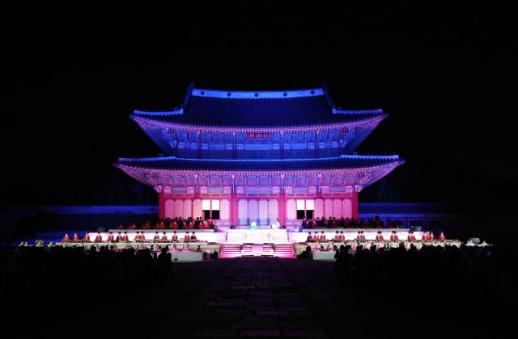 Royal night revived through open-air concert at Changdeok palace SEOUL, May 03 (AJP) -The glow of lanterns and the sound of centuries-old melodies filled Changdeokgung as a 100-member traditional Korean music ensemble transformed the royal palace into an open-air nighttime stage during a rare spring performance in central Seoul. Held from May 1 to 3 at Injeongjeon Hall, the palace’s main throne hall, the “2026 Royal Palace Concert: Music of Great Peace” invited visitors to step into a royal setting once reserved for kings, court ceremonies and state rituals of the Joseon Dynasty. The concert marked the first time the annual spring gugak performance was staged at the palace’s central ceremonial court, adding fresh life to the UNESCO World Heritage site after sunset. One hundred musicians — including professors, students and alumni from Ewha Womans University’s Korean music department — performed beneath the palace rooflines in an ensemble led by artistic director Kwak Eun-a. The program opened with the stately court piece “Sujecheon,” followed by “Cheonnyeonmanse,” “Suryong-eum” and “Taepyeongga,” alongside a geomungo solo in the style of Han Gap-deuk. A contemporary gayageum composition, “Sound of the Night,” added a modern layer to the historic atmosphere. As cool spring air swept through the stone courtyard, the palace’s wooden halls amplified the deep resonance of strings, drums and wind instruments, blurring the distance between past and present. The night concluded with all 100 musicians joining in a finale performance of “Arirang,” as audience members quietly sang along beneath the illuminated palace eaves — reviving, if only briefly, the soundscape of a royal Korean night centuries ago. 2026-05-04 14:05:21
 -
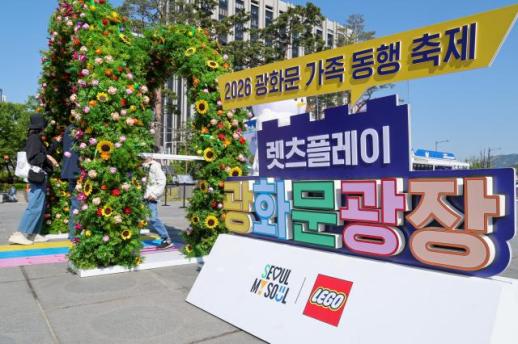 No Children's Day without LEGO: Gwanghwamun turns into brick playground SEOUL, May 04 (AJP) -For Koreans, Children’s Day and LEGO are nearly inseparable — a pairing as familiar as balloons, picnic mats and spring sunshine. At Gwanghwamun Square over the weekend, that bond unfolded on a citywide scale as the “2026 Gwanghwamun Family Festival – Let’s Play Gwanghwamun” transformed the heart of Seoul into a sprawling outdoor LEGO playground packed with families, strollers and towering brick creations. Organized with the Seoul Metropolitan Government and LEGO Korea, the festival featured installations made from some 6 million LEGO bricks, turning one of Seoul’s busiest civic spaces into a colorful landscape of imagination and noise. Children crouched over giant building tables assembling miniature cities, while parents — many appearing just as absorbed — helped snap pieces into place with competitive seriousness. Elsewhere, families raced LEGO cars down custom-built tracks or hurried through relay-style missions designed to turn play into teamwork. The square moved with the rhythm of a holiday carnival. Giant mascots wandered through crowds, stage performances echoed against surrounding government buildings and long lines formed at photo zones where children posed proudly beside oversized LEGO sculptures. The festival’s free-flowing layout encouraged visitors to wander without a fixed course, allowing families to drift naturally between activities much like children moving from one toy to another at home. For many parents in their 30s and 40s, the festival also carried a layer of nostalgia. LEGO, once a prized Children’s Day gift of their own childhoods, has become a shared ritual passed to another generation — one of the rare toys capable of surviving changing trends, screens and short attention spans. The festival continues through May 5 from 11 a.m. to 7 p.m., keeping central Seoul briefly suspended in the bright logic of childhood: build freely, play loudly and never underestimate the power of a small plastic brick. 2026-05-04 10:50:42
 -
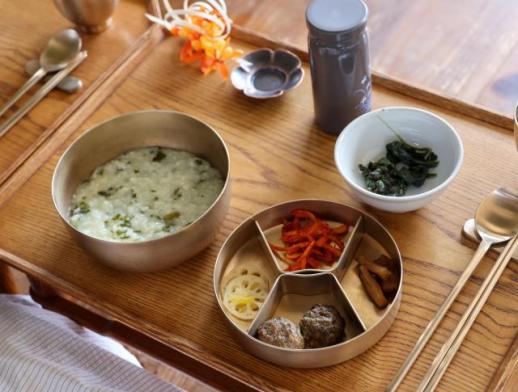 Visitors taste bitter exile at Gyeongbokgung royal kitchen SEOUL, April 30 (AJP) - Visitors gather at the Saenggwabang kitchen inside Gyeongbokgung Palace on April 30 to participate in a program exploring the life of Danjong, the sixth ruler of the Joseon Dynasty. The event, titled "Yuju: Spring in the Saenggwabang," runs from April 27 to May 3. This historical program has gained significant attention following the massive success of the film The King's Warden. The movie, which depicts the tragic isolation of the young monarch, has surpassed 16 million admissions to become the second most-watched film in South Korean history. The current "Danjong syndrome" has transformed the palace kitchen into a space for historical empathy. While Saenggwabang is typically known for serving elaborate royal desserts, this event pivots to the modest diet the king endured during his exile. Danjong was a child monarch who was deposed by his uncle and sent into a lonely exile in Yeongwol. The program uses food to bridge the gap between modern visitors and the king's final, difficult years. The centerpiece of the experience is a simple porridge made from eosuri. This wild herb was a staple for the king when refined palace ingredients were no longer available to him. The dish offers a sensory connection to the past. Visitors are encouraged to reflect on the king's humanity through the bitter, earthy flavors of the greens, a stark contrast to the surrounding palace grandeur. Expert commentaries provided during the meal detail the historical context of the food. These stories help guests visualize the young king's life away from the capital. The special event is managed by the Korea Heritage Service and the Royal Palaces and Tombs Center. The program is scheduled to conclude its limited run on May 3. 2026-04-30 16:06:01
 -
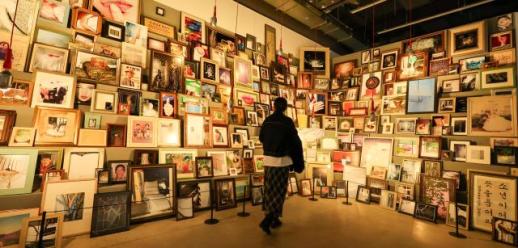 Seoul Photo Festival reimagines home after 5-year hiatus SEOUL, April 29 (AJP) -Photography has become second nature in everyday life — instantly shared, endlessly consumed — yet its deeper resonance often remains elusive. It brings us face to face with moments we have never lived, lives we have never known, making the medium feel at once intimate and distant. Against this backdrop, a festival that returns to the essence of photography has come back after a five-year pause. The Seoul Photo Festival, themed “Come Back Home,” is underway at the Seoul Museum of Photography in northern Seoul. Suspended since 2021, the festival’s return carries added weight this year. It marks the first edition to be held at Korea’s first public museum dedicated exclusively to photography — a milestone that signals a broader effort to reposition photography within the city’s visual arts landscape. Rather than anchoring “home” to a fixed place, the exhibition approaches it as something more fluid — shaped by memory, relationships and movement. Bringing together 23 artists across generations, it unfolds across four sections — “What Makes a Home,” “Moving Homes,” “On the Road,” and “Our Home” — each tracing a different emotional and conceptual path through the idea. The experience extends beyond viewing. The festival expands its participatory programs, inviting visitors not only to look, but also to read, talk, create and share — turning photography into a space of interaction rather than observation. Running through June 14, the festival is open to the public free of charge. 2026-04-29 15:26:56