
Journalist

Lee Hugh
=
-
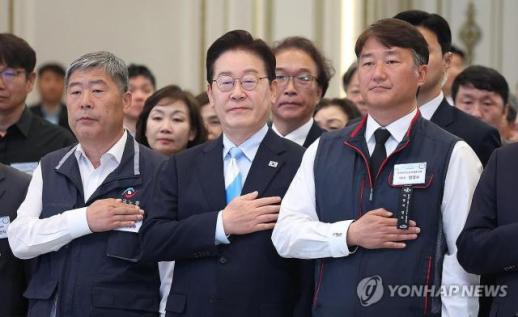 Lee Jae-myung Calls for Labor-Business Coexistence, Urges Policy Follow-Through President Lee Jae-myung delivered a clear message at a Labor Day ceremony on Thursday: the country should move beyond what he called an outdated binary that treats pro-labor policies as anti-business, and pro-business policies as anti-labor. He said a society that respects workers and a country that is good for business can coexist, creating a virtuous cycle of growth and distribution, and of fairness and innovation. The direction is clear. The central question is what comes next: how to turn the declaration into workable institutions. South Korea’s economy is facing pressure on two fronts at once. On one side, advanced industries such as semiconductors, artificial intelligence and biotechnology are demanding massive investment. On the other, labor-market gaps and job insecurity are deepening. In that environment, choosing only one side is no longer viable. As Lee noted, labor cannot exist without companies, and companies cannot exist without labor. The task, then, is not simply “coexistence,” but designing rules that make it possible. Lee’s emphasis on “growth with labor” points to a core challenge. The era when the gains from growth were automatically shared is over. If productivity rises but workers do not feel the benefit, conflict is likely to persist. That is why the country needs a system in which corporate performance and worker compensation move together — with a structure that automatically shares part of increased profits, and also spreads burdens when conditions worsen. It must be built into the system, not left as rhetoric. Lee also cited the principle of “fair pay for equal work,” which requires clearer definition. It does not mean standardizing wage systems across individual companies. Rather, it aims to set minimum standards across the labor market so work of equal value is treated fairly. Within companies, differences tied to performance and productivity are inevitable. Across society, however, a baseline is needed to curb excessive disparities. The two principles are not in conflict, but serve different purposes; without a clear distinction, policy will drift into confusion. Lee’s call for shared growth, too, cannot remain a declaration. South Korea’s labor-management relations have long relied on dialogue and negotiation, but in sharply divided disputes, talks alone often fall short. Making cooperation real requires structural tools — such as profit-sharing arrangements, conflict-mediation bodies, and incentives that link long-term investment to employment. Institutions can build trust, and trust can make cooperation possible. The relationship between labor compensation and investment also needs a reset. A simple claim that higher pay inevitably reduces a company’s capacity to invest does not fully explain reality. The issue is how compensation is structured. Wage systems centered on fixed costs can raise burdens, while performance-linked pay or stock options can reduce cash pressure while expanding workers’ share. The cooperation Lee described, the argument goes, should be realized through innovation in how capital is allocated. The government’s role is also critical. If labor policy and industrial policy move separately, shared growth will be difficult. Pushing investment in advanced industries while labor regulations constrain it — or strengthening worker protections in ways that dampen investment appetite — creates internal policy collisions. The government needs a single framework: provide incentives that tie expanded investment to jobs and compensation, while establishing fair rules for competition in the labor market. The meaning of this year’s Labor Day event was clear: labor and management leaders gathered in one place, signaling change. But symbolism is only a start. If the president’s message does not translate into policy, it risks ending as another statement. Lee posed the right question. What remains is to build an answer. Coexistence between labor and business will not be achieved by slogans, but by institutions that work in practice. 2026-05-02 08:22:26
 -
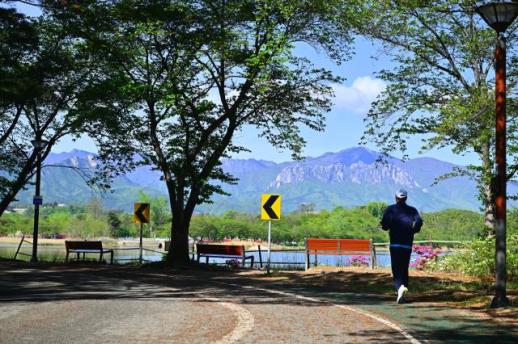 Holiday Weekend Day 2: Mostly Cloudy Nationwide; Rain Overnight in Seoul Area Saturday the nation was expected to be mostly cloudy, with rain starting overnight mainly in the Seoul metropolitan area and inland Gangwon Province. The Korea Meteorological Administration said very dry conditions would persist around Seoul as well as inland parts of the Chungcheong and North Gyeongsang regions. Rain was forecast to begin in some areas overnight Saturday and spread nationwide between daytime Sunday and Monday. Forecast rainfall totals were 5-30 millimeters for Seoul, Incheon and Gyeonggi; 10-40 mm for Gangwon; 10-40 mm for North Chungcheong; 5-30 mm for Daejeon, Sejong and South Chungcheong; and 10-40 mm for Gwangju, South Jeolla and North Jeolla. The South Jeolla coast and the Busan and South Gyeongsang south coast were expected to get 20-60 mm, while Ulsan and inland South Gyeongsang were forecast at 10-40 mm. Daegu, North Gyeongsang, Ulleungdo and Dokdo were forecast at 5-30 mm. Jeju Island was expected to see 30-80 mm of rain in all areas except the north. Morning lows were forecast at 8.4-13.3 C, with daytime highs of 19.7-24.8 C. Forecast highs included 22 C in Seoul, 20 C in Incheon, 22 C in Suwon, 23 C in Chuncheon, 23 C in Wonju, 22 C in Gangneung, 24 C in Cheongju, 23 C in Daejeon, 23 C in Jeonju, 23 C in Gwangju, 26 C in Daegu, 22 C in Busan, 26 C in Ulsan and 21 C in Jeju. Seas were forecast at 0.5-2.5 meters. In the Yellow Sea, waves were expected at 0.5-1.0 meters in nearshore and inner offshore waters and 0.5-1.5 meters farther offshore. The South Sea was forecast at 0.5-1.5 meters. In the East Sea, waves were expected at 0.5-1.5 meters nearshore, 0.5-2.0 meters in inner offshore waters and up to 2.5 meters farther offshore. Fine dust levels were forecast to be moderate nationwide.* This article has been translated by AI. 2026-05-02 08:21:18
 -
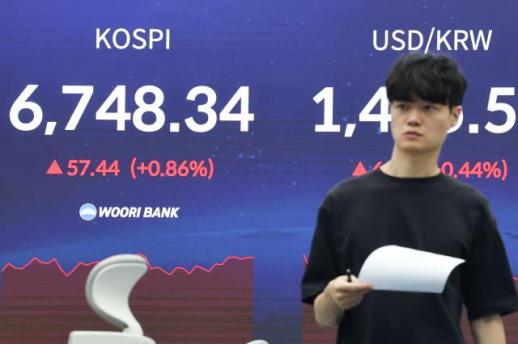 No One Is Selling: Leverage Surges as South Korea’s KOSPI Rallies "Sell in May and go away." It is one of Wall Street’s oldest sayings, built on the idea that returns tend to lag from May through October. The phrase traces back to 19th-century London, when aristocrats left the market during the social season. In South Korea’s market in 2026, the saying lands differently: There is no one eager to leave, because many investors believe prices will keep rising. The KOSPI surged 30.61% in April, quickly recouping losses from an earlier drop tied to the war involving the United States and Israel and Iran. It pushed past 6,700 intraday to set a new record. Combined operating profit at Samsung Electronics and SK hynix topped 95 trillion won, and expectations of an AI semiconductor “supercycle” have helped lift the broader market. The issue is not the rise itself, but the speed. Stocks are climbing while the won and bonds are unsettled. The won-dollar exchange rate has remained highly volatile around 1,480 won. Government bond yields are rising again. Gasoline prices in Seoul have topped 2,000 won per liter, and the consumer sentiment index has slipped below 100 for the first time in a year. Manufacturing output growth slowed sharply, to 0.3% from 5.3%, nearly stalling. As the real economy cools and equities race ahead, the gap leaves the market on weaker footing. Leverage stands out. Outstanding margin loans in the domestic stock market hit a record 35.6895 trillion won, rising for 13 straight trading sessions. About 2.7 trillion won was added in April alone. Retail investors are not just buying shares; they are borrowing to chase the rally. NH Investment & Securities, KB Securities and Korea Investment & Securities have moved to restrict credit, a sign that market heat is outpacing brokerages’ risk controls. The combined market capitalization of the KOSPI and KOSDAQ has climbed to about twice South Korea’s gross domestic product. The so-called Buffett indicator is nearing 200. Warren Buffett has called the measure “the best single measure of where valuations stand.” Some note that U.S. stocks have also sustained a high Buffett indicator since the era of ultra-low rates. Still, the key point is less the level than how quickly the market got there. Only weeks ago, the Korean market was rattled by fears tied to war, oil prices, the exchange rate and slowing growth. Now even the war is being treated as a positive. Investors have grown comfortable with the idea that “a market that rises on bad news is strong.” As prices keep climbing, confidence hardens — and that confidence can invite more borrowing. Bubbles often begin with psychology, not numbers. The “sell in May” strategy is not a rule. Over the past 33 years, U.S. stocks rose 25 times during the May-to-October period, and Deutsche Bank has dismissed the approach as a “coin toss.” This rally also has an earnings foundation: Profit growth at Samsung Electronics and SK hynix is real, and the AI-driven expansion in power and memory demand looks closer to a structural shift. Even so, markets often get excited before fundamentals fully catch up. Financial markets repeatedly overheat in familiar ways: belief that “this time is different,” debt starting to look normal, and rising prices dulling a sense of risk. Economist Hyman Minsky described the dynamic as “stability breeds instability,” arguing that long periods of calm encourage greater risk-taking until a small shock can topple an overleveraged system. That does not mean South Korea’s market is on the verge of collapse. A further rally toward 7,000 on the KOSPI remains possible. The concern is the pace, not the direction. Markets rarely climb in neat steps; more often they sprint on enthusiasm and then, without warning, regain caution. What is needed now is neither fear-driven selling nor the belief that the AI era guarantees endless gains. It is a willingness to question the speed. * This article has been translated by AI. 2026-05-02 08:18:21
 -
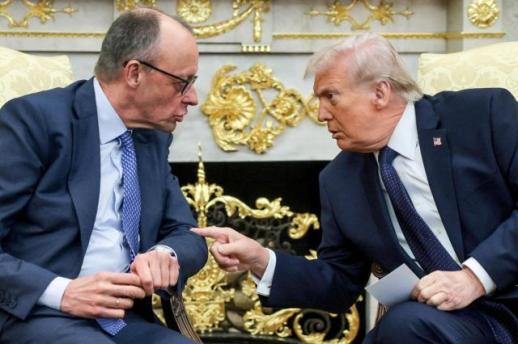 As U.S. Links Iran War Response and Tariffs, South Korea Faces a Hard Choice The United States’ response to the war involving Iran and its tariff talks are increasingly converging into what amounts to a single front. The era when military, security and trade policy moved on separate tracks is ending. Washington is pressing allies on both security contributions and trade rules as it seeks to reshape the international order. After President Donald Trump appeared to target the European Union’s lack of cooperation on the Iran war by floating a review of withdrawing 5,000 U.S. troops stationed in Germany, he announced plans to restore a 25% tariff on EU-made cars. The sequence was no coincidence. It was an explicit signal that security and trade will be negotiated together. “America First” is no longer a campaign slogan; it is becoming an operating principle of global dealings. South Korea cannot treat this as someone else’s problem. It is among the allies most dependent on U.S. security guarantees, while also relying on exports as an open economy. With geopolitical shocks from the Middle East and U.S. tariff pressure arriving at the same time, South Korea faces one of its hardest equations, caught between two conflicts. Core industries such as autos, semiconductors, batteries and shipbuilding are deeply tied to the U.S. market and supply chains. Each shift in U.S. tariff policy can rattle investment plans, production strategies and profitability. If tensions around the Strait of Hormuz drag on, South Korea could also face higher energy import costs and logistics disruptions. For companies, it becomes a double burden: a “tariff war” alongside an “energy war.” In such conditions, the priority is not emotion but clear-eyed realism. Anti-American sentiment or vague calls for self-reliance will not resolve a complex crisis. Nor is unconditional compliance with U.S. demands a solution. What matters is a carefully calibrated diplomacy centered on national interests. U.S. demands can be summarized in three areas: shifting supply chains to the United States, expanding allies’ strategic contributions, and increasing investment in the U.S. Japanese and European companies have already moved quickly to expand local production and make large investments. South Korea, too, needs a practical negotiating strategy to minimize corporate damage, rather than an emotional approach. First, Seoul should separate investment in strategic industries in the United States from the risk of hollowing out domestic industry. Even if some U.S. investment is unavoidable, it must prevent core technologies and high value-added production bases from moving offshore. Domestic research and development capacity, advanced materials and equipment ecosystems, and the pipeline of future talent should remain at home. Second, security contributions should be designed in stages and within realistic limits. On the Strait of Hormuz, for example, policymakers should first consider practical steps that manage risk, such as intelligence sharing, dispatching liaison officers and joining international coordination, rather than committing excessive military assets. National interests are not protected by principles alone; they require strategic action within what the country can sustain. Third, South Korea should raise the level of its trade diplomacy. Today’s negotiations are not simply about tariffs. Security, energy, investment and technology competition are intertwined. The time when the Industry Ministry, Foreign Ministry and Defense Ministry could act separately is over. A unified strategy should be built around an economic security control tower. Above all, Seoul should guard against partisan framing. It is risky to denounce any compromise as capitulation, or to portray acceptance of U.S. demands as patriotism. In a harsher international environment, what matters is not pride but survival, not slogans but calculation. The global order is rapidly shifting toward power politics. The United States is sending a clear message that there will be no more “free security” and no “unconditional free trade.” South Korea must face that reality. Minimizing corporate damage, protecting industrial competitiveness and securing as much negotiating space as possible within the alliance framework is the difficult, unavoidable task now facing the South Korean government. * This article has been translated by AI. 2026-05-02 08:09:26
 -
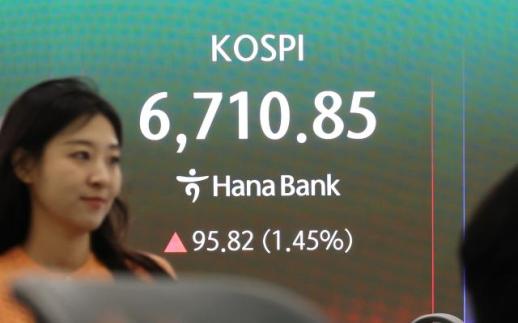 How to Use Korea’s RIA Account as the Kospi Hits Record Highs Korea’s Domestic Market Return Account, known as the RIA, has marked its first month on the market, introduced to steer money back into local stocks. With the Kospi repeatedly setting record highs, investor interest in the account has also grown. Experts say investors should weigh the benefit structure, restrictions and the direction of the local market, rather than signing up solely for tax breaks. The RIA is a special account the government introduced on a limited-time basis this year to help stabilize the exchange rate and invigorate Korea’s capital markets. It launched March 23. Investors can move overseas stocks into the account, sell them, convert proceeds into won and reinvest in domestic assets; if the money is kept invested for at least one year, they can receive a deduction on capital gains tax from overseas stock sales. If overseas stocks held before Dec. 23, 2025, are transferred into an RIA, sold, and the proceeds are reinvested for at least one year in domestically listed stocks, Korea-focused equity funds and ETFs, investors can receive a capital gains tax deduction of up to 100%. The benefit is capped at 50 million won per person, based on the overseas stock sale amount. The deduction rate is 100% for sales by the end of May, 80% by the end of July, and 50% by year’s end. As the Kospi has regained strength compared with the period around the product’s launch, interest in using the RIA has risen. Inquiries have increased, centered on large blue chips such as SK hynix, Samsung Electronics and Hyundai Motor, as well as ETFs like the KODEX 200, according to the report. Still, investors need to check key conditions to fully secure the tax benefit. The 50 million won threshold is based on sale proceeds, not capital gains. For investors holding multiple overseas stocks, using the account first for positions with lower purchase prices and higher returns can increase tax savings. After overseas stocks are transferred into the RIA and sold, the converted funds must be invested only in domestic assets such as locally listed stocks or Korea equity ETFs. Even if an ETF is listed in Korea, the benefit does not apply if it tracks an overseas index. There is also an early-termination risk. If funds are withdrawn or the account is closed before one year, all tax benefits received are canceled. Switching among domestic stock holdings within the account, however, is allowed. Experts said the RIA should be viewed less as a stand-alone tax product and more as a supplemental account for investors who already intend to invest in Korean equities. A financial industry official said, “If you want to keep holding overseas growth stocks right now or plan to use the money in the short term, the practical benefit may not be large.” The official added, “For investors considering taking profits on overseas stocks and looking for a timing to re-enter the domestic market, it can be an option to use the tax benefit.”* This article has been translated by AI. 2026-05-02 07:03:40
 -
 Theme Parks Roll Out Children’s Day Events With Safaris, MapleStory and Fireworks Major theme parks in South Korea are stepping up Children’s Day programming on May 5, offering expanded attractions, content tied to popular intellectual property and large-scale fireworks shows. ◆Everland targets families with revamped safari and kids club Everland is promoting an “Ever Kids Club” theme day aimed at children and parents. Across the park — including Panda World and Sky Garden Road — it is running 10 hands-on programs such as “Little Animal Explorers” and “French Little Chef School.” While children take part, parents can leave them with instructors and take a break at nearby cafes. Everland is also offering promotions for three-generation family visits, including special discounts and priority boarding passes for Safari World. Everland said its animal-focused “exploration course” has been upgraded with a newly renovated Safari World after about a year of preparation. The park added natural features such as waterfalls and ponds and focused on improving animal welfare conditions. It also installed high rocks designed to stimulate lions’ instincts and created habitat-based themed areas, including a lions’ “Savanna Grassland” and a tigers’ “Predator Forest,” to help preserve wild traits and allow visitors to observe more dynamic behavior. A “Walking Zoo Stamp Tour,” where visitors seek out animals such as giraffes and elephants while learning about ecology, is also being offered. Everland is also highlighting nighttime entertainment and water attractions. “Wings of Memory,” produced in collaboration with Canada-based circus production company Eloize, features an art circus performance. The multimedia show “Guardians of Light” combines thousands of fireworks with drones and 3D video. Starting May 1, Caribbean Bay is additionally opening “Mega Storm,” described as one of the water park’s signature thrill attractions. Through May 28, Everland visitors can enter Caribbean Bay for free from 1 p.m. under an “Ever to Cabi” event. ◆Lotte World rolls out MapleStory, Cookie Run and Star Wars tie-ins Lotte World is staging parkwide events built around the MapleStory IP. At Magic Island, it has opened a roughly 600-pyeong “Maple Island Zone” as part of the “MapleStory in Lotte World” festival running through June 14, recreating key in-game villages. New attractions including “Stone Express” and “Arcana Ride,” along with a gift shop, have drawn long lines. A daily signature show, “Let’s Play! Lotty’s Adventure Parade,” is held at 2 p.m. on the Adventure 1st-floor parade route and now includes new elements themed on MapleStory’s toy kingdom “Ludibrium.” Characters including Orange Mushroom and Slime lead the procession, with toy-concept dancers such as Pink Tenny and Blockpus. The boss monster “Pink Bean” appears atop a Ludibrium-themed vehicle with special effects including gears and propellers. Lotte World is also running a twice-daily photo time, “Smile with MapleStory,” at 12:30 p.m. and 5:30 p.m. around the Adventure 1st-floor meeting plaza. Lotte World Aquarium and Seoul Sky are also hosting collaborations. The aquarium is working with “Cookie Run” through June 7, decorating the venue with an undersea palace concept and offering an augmented reality stamp tour that includes limited-edition photo cards. From May 1 to May 10, aquarists will stage underwater performances twice daily, and an “Aqua Family Camp” overnight program is also being operated. At Seoul Sky, a “Star Wars”-themed experience space is being offered, and a large character parade is planned on May 4 for “Star Wars Day.” ◆Legoland extends hours, adds lights and fireworks for a five-day special Legoland is holding a “Children’s Day Special Day” from May 1 to May 5, extending operating hours to 9 p.m. With night operations, visitors can take in views of Uiam Lake and downtown Chuncheon from the 43-meter Legoland Observatory. At 7:30 p.m., 2,000 Lego LED lights in Miniland will turn on at once. Fireworks — billed as the festival’s highlight — are scheduled for 8:30 p.m. on May 3 and May 4 across the park. The park is also offering participatory events aimed at children. At the Bricktopia Lounge, a “Build Contest” themed “Make Your Own Ninja” will select a daily winner at 4 p.m. and award a special prize. To mark Ninjago’s 15th anniversary, Legoland is running a stamp tour offering limited-edition badges and an SNS event, “Find the Ninja,” across Miniland. Performances are scheduled both indoors and outdoors. The “Whip Around Dance Party,” previously held outside, has moved to the indoor Bricktopia Performance Theater with upgraded staging, lighting and video effects. At 8 p.m. daily, “Ceremony of Ninja” will be held at the Brick Street outdoor stage, ending the day with a pledge ceremony to become a brave ninja. * This article has been translated by AI. 2026-05-02 06:03:25
 -
 Japan Steps In to Support Yen, Sending Dollar Rate From 160s to 155s Until the day before, many in the market had played down the likelihood of intervention. Within a day, that view flipped. Japan’s government and the Bank of Japan moved on April 30 to curb yen weakness, buying yen and selling dollars. The Nikkei newspaper reported the yen slid into the high 160s per dollar during trading, then fell to the 155 range within hours, a swing of about 5 yen. A Japanese government official also acknowledged the intervention to Nikkei. It was the first such action in about 1 year and 9 months since July 2024. The timing was unusual. Japan is in its Golden Week holiday stretch from April 29 to May 6. April 30 and May 1 are not official holidays, but participation typically drops and trading thins. Nikkei said authorities acted pre-emptively to counter speculative yen selling that can intensify when liquidity is low. Just before the move, sentiment had pointed the other way. Many expected the yen to keep weakening, citing a surge in oil prices and a widening U.S.-Japan interest-rate gap. Some in Japan’s financial markets also argued any intervention would have limited impact. Officials, however, moved faster than many expected. Ahead of the market swing, Finance Minister Satsuki Katayama said the time to take “decisive measures” was drawing near. Atsushi Mimura, the Finance Ministry’s top currency diplomat, called it a “final warning.” Within minutes, the exchange rate shifted sharply, and markets treated it as a de facto intervention. The Asahi Shimbun reported that yen-buying accelerated after the remarks and the rate dropped to the 155 range, adding that government and BOJ intervention appeared to have occurred. The Yomiuri Shimbun also reported the roughly 5-yen drop from the 160s to the 155s raised the likelihood of intervention. Nikkei said the speed of the move caught traders off guard: the rate fell more than 1 yen in just five minutes and continued sliding, nearing a 5-yen move in a short time. It attributed the drop in part to speculators switching to yen buying to limit losses. By U.S. Commodity Futures Trading Commission data, speculative funds’ net short yen positions had already built to their largest level in 1 year and 9 months. With positions heavily one-sided, intervention triggered short covering that amplified the move. Questions remain about how long the effect will last. Nikkei said yen-weakening pressure could strengthen again if Middle East instability persists and oil prices keep rising. It also cited the U.S. Federal Reserve’s cautious stance on rate cuts as a factor supporting the dollar. The U.S. response is another variable. Nikkei reported a U.S. Treasury spokesperson said Washington is in close communication with Japan’s Finance Ministry. U.S. Treasury Secretary Scott Bessent told Katayama in a January meeting that excessive exchange-rate volatility is undesirable, Nikkei said. The Treasury has generally signaled tolerance for Japan’s yen-buying moves, Nikkei added, because they run counter to the kind of currency-weakening policies the Trump administration has criticized. Many analysts described the action as buying time rather than signaling a lasting shift. Yuya Yokota, senior vice president at Mitsubishi UFJ Trust and Banking’s New York branch, said it bought time until Middle East turmoil eases. Mark Chandler, chief market strategist at Bannockburn Capital Markets, said it would take time before speculators resume trades that bet on a weaker yen. After the intervention, the yen gave back part of its gains and has traded around the 156 range. Mimura told reporters on May 1 that the holiday period is still in its early stages, maintaining vigilance against speculative moves, but said he would not comment on whether authorities intervened. Some in the market also pointed to a “learning effect” from intervention during Golden Week in 2024. Terumasa Kawakami, an analyst at Mitsubishi UFJ Bank, said memories of that episode could make traders more reluctant to bet against the yen during the holiday period. Outlooks diverge. Yoshimasa Maruyama, an economist at SMBC Nikko Securities, said repeated intervention could leave room for the rate to fall into the 140s. Others say there is still capacity for renewed yen selling. Nikkei reported that just before the July 2024 intervention, speculators’ yen short positions swelled to 180,000 contracts, about double the level just before this latest move (94,460 contracts). If Middle East tensions do not ease and oil prices rise another step, Nikkei said, pressure for a weaker yen could return. Only a day earlier, skepticism about intervention had been widespread. The remaining question is whether this move signals a turning point or proves to be a temporary shock.* This article has been translated by AI. 2026-05-01 22:24:23
 -
 Lee Jae-myung Marks Labor Day; Unions Rally, Exports Top $80B Again, PPP Picks By-Election Candidates 'Former child factory worker' Lee says growth without labor is only half a success Lee Jae-myung said Thursday, Labor Day, that “growth with labor is growth with a future.” Speaking at a Labor Day ceremony at the Blue House’s Yeongbin-gwan, Lee said respect for labor “is not simply a matter of consideration or charity.” “Growth without labor is only half a success and is not sustainable,” he said, pledging to build “a win-win ecosystem” where labor and management can “respect each other and hold dialogue.” He added that a society that respects labor and a country that is good for doing business “are not mutually exclusive,” saying, “There are no workers without companies, and no companies without workers.” First Labor Day holiday in 63 years draws major rallies; unions call for basic labor rights Large-scale rallies were held across central Seoul on Thursday as labor groups marked Labor Day, the first since the day was designated a public holiday for the first time in 63 years. The two major umbrella unions called for guarantees of basic labor rights. Korea Federation of Trade Unions and the Korean Confederation of Trade Unions held separate Labor Day events near Yeouido in Yeongdeungpo-gu and near Gwanghwamun Station in Jongno-gu. Kim Dong-myung, chair of the Korea Federation of Trade Unions, told a Yeouido rally marking the 136th anniversary of International Workers’ Day that the spread of artificial intelligence is changing jobs and that the climate crisis and industrial shifts are changing how people work. He said the union would pursue a “just transition” in which labor is not excluded and participates in decision-making. Yang Kyung-soo, chair of the Korean Confederation of Trade Unions, said at its 2026 Labor Day rally that while Labor Day had “reclaimed its name,” he could not attend with an unreservedly happy heart. He urged that basic labor rights be guaranteed through laws and institutions and that workers be empowered to unite through unions to respond to “capital’s offensive.” AI chip boom lifts exports above $80 billion for second straight month South Korea’s exports stayed above $80 billion in April after topping that level for the first time in March, driven largely by strong growth in semiconductors amid an artificial intelligence boom. The performance came as the Middle East war sent shock waves across industries, with exports seen as a key support for the economy. The Ministry of Trade, Industry and Energy announced April trade figures Thursday. Exports rose 48.0% from a year earlier to $85.89 billion despite the Middle East war. After never having reached even $70 billion in monthly exports, South Korea exceeded $80 billion in March for the first time and stayed above that mark for a second consecutive month. PPP names candidates in 7 districts for June 3 by-elections; one race put on hold The People Power Party on Wednesday selected candidates in seven constituencies holding June 3 parliamentary by-elections, including Daegu Dalseong. Lee Jin-sook, identified as a former chair of the Korea Communications Commission, will run in Daegu Dalseong, and Lee Yong, identified as a former lawmaker, will run in Gyeonggi’s Hanam Gap. The nomination was put on hold in South Chungcheong’s Gongju-Buyeo-Cheongyang, where Chung Jin-suk, identified as a former presidential chief of staff, applied for the nomination. The party’s nomination committee met at its Yeongdeungpo-gu headquarters in Seoul and decided on single-candidate nominations for Lee in Daegu Dalseong; Park Jong-jin, Incheon party chair, in Incheon Yeonsu Gap; Shim Wang-seop, chair of the Environmental Landscaping Development Foundation, in Incheon Gyeyang Eul; Ahn Tae-wook, identified as a former Gwangju party chair, in Gwangju Gwangsan Eul; Kim Tae-gyu, identified as a former vice chair of the Korea Communications Commission, in Ulsan Nam Gap; Lee in Gyeonggi Hanam Gap; and Ko Gi-cheol, Jeju party chair, in Jeju Seogwipo. The party said its candidate in Busan Buk Gap, where Han Dong-hoon is running as an independent, will be chosen through a primary between Park Min-sik, identified as a former minister of Patriots and Veterans Affairs, and Lee Young-poong, identified as a former KBS reporter.* This article has been translated by AI. 2026-05-01 22:15:26
 -
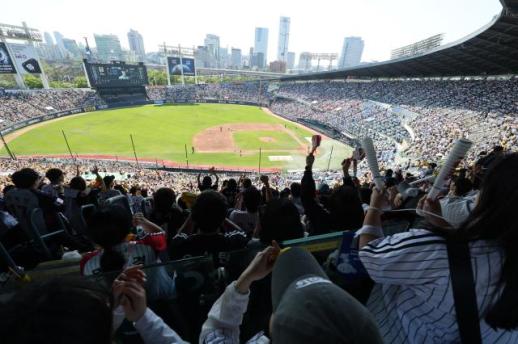 KT Wiz First to 20 Wins, Hold 1.5-Game Lead Over LG in KBO KT Wiz became the first team to reach 20 wins this season, beating the Kia Tigers 4-3 on Thursday in Gwangju. KT improved to 20-9 and maintained a 1.5-game lead over second-place LG Twins (18-10). KT led 2-0 after scoring in the third and fourth innings, then traded runs with Kia to go up 3-1. Kia tied it 3-3 on Kim Do-yeong’s RBI single in the sixth and a bases-loaded walk in the eighth. In the ninth, Jang Seong-woo delivered the go-ahead single to right with one out and runners on first and second, bringing home Choi Won-jun from second. Kia failed to answer in the bottom of the inning. In Daegu, the Samsung Lions rallied past the Hanwha Eagles 4-3. Samsung fell behind 3-0 on Heo In-seo’s three-run homer in the second, but Lewin Diaz hit a two-run RBI single in the sixth and Park Seung-gyu put Samsung ahead with a two-run homer in the seventh. Park also secured the final out in the ninth by snagging a bloop hit by Heo with two outs and a runner on second. In Incheon, the Lotte Giants beat the SSG Landers 10-7 in 10 innings. Tied 6-6 after nine, Lotte scored four runs in the top of the 10th, and SSG managed only one in the bottom half. At Jamsil in Seoul, LG beat the NC Dinos 5-1. Austin Dean and Song Chan-ui hit two-run homers in the third, and Hong Chang-gi added a sacrifice fly in the fourth. The Doosan Bears routed the Kiwoom Heroes 16-6 at Gocheok Sky Dome in Seoul, piling up 15 hits to move into a three-way tie for fifth with NC and Kia. Kiwoom issued 12 walks and hit batters. Historically, the first KBO team to reach 20 wins has gone on to win the regular-season title 24 times in 37 seasons, a 64.9% rate. For KT, it was the club’s first time reaching 20 wins ahead of the rest of the 10-team league since joining the KBO in 2015. 2026-05-01 22:12:23
 -
 Democratic Party’s Jeong tours sites as PPP’s Jang wages online fight on holiday Jeong Cheong-rae, leader of the Democratic Party, and Jang Dong-hyeok, leader of the People Power Party, took sharply different approaches on May 1, the first day of the holiday period. Jeong spent the day on the ground, while Jang kept no public schedule and continued his attacks on the ruling camp through social media. Jeong visited the Pyeongtaek Port Vessel Traffic Service Center in Pyeongtaek, Gyeonggi Province, and encouraged staff on duty. He then traveled to South Chungcheong Province, stopping at the Seosan Fire Station, the Seosan City Cultural Center and the Hongseong traditional market. At the Pyeongtaek center, Jeong said, “We passed a law thinking even public officials should be able to rest on Labor Day, but there are public officials who still can’t.” He added that he visited to “encourage and support those who protect our daily lives through noble work in places we don’t see.” Jeong’s itinerary was widely seen as aimed at backing Democratic Party candidates ahead of the June 3 local elections and National Assembly by-elections. The inclusion of Pyeongtaek, in particular, was attributed to the area emerging as a battleground as a multi-candidate race takes shape in the by-election there. While Jeong visited four locations in a single day — Pyeongtaek, Seosan, Hongseong and Jeonju in North Jeolla Province — Jang posted three messages on Facebook. On the Dec. 29 Muan Airport Jeju Air passenger plane disaster, Jang wrote, “If they can’t even properly manage the debris, there’s no way the investigation and probe were done properly.” He said it had long been revealed that an embankment installed under a Democratic Party government was the cause of the accident, but that the investigation “remains stalled” and “no one is taking responsibility.” He added, “The Democratic Party dragged out the Sewol ferry disaster and the Itaewon disaster for years, but is turning away as if the Muan Airport disaster never happened,” calling it “immoral politics” that divides even tragedies into “our side” and “their side.” Jang also criticized a bill introduced the previous day by the Democratic Party titled the “Act on the Appointment of a Special Prosecutor to Determine the Truth of Allegations Including Manipulated Investigations and Manipulated Indictments by the Yoon Suk Yeol administration.” He wrote, “Now that he has become president, he is rushing in saying he will cancel indictments and erase all trials,” calling it “a betrayal of the people” and “outright robbery.” On Unification Minister Jeong Dong-young, Jang wrote, “It is outrageous that Minister Jeong sees ‘unification as violent.’” He added, “Anti-American, pro-North Korea and pro-China tendencies are deeply embedded in the DNA of President Lee Jae-myung and the Democratic Party. The public must stay alert and judge them.” Jang is scheduled to attend the opening of campaign offices for Park Hyung-joon, a Busan mayoral candidate, on May 2, and Choo Kyung-ho, a Daegu mayoral candidate, on May 3. However, he is not expected to join on-the-ground stumping. Party chief spokesperson Park Sung-hoon said the decision reflected a strategic judgment that adding unnecessary events after the openings could reduce attention focused on the candidates.* This article has been translated by AI. 2026-05-01 21:00:13