

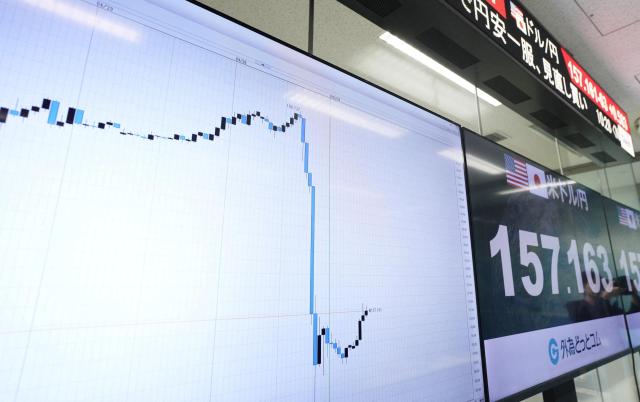
Until the day before, many in the market had played down the likelihood of intervention. Within a day, that view flipped.
Japan’s government and the Bank of Japan moved on April 30 to curb yen weakness, buying yen and selling dollars. The Nikkei newspaper reported the yen slid into the high 160s per dollar during trading, then fell to the 155 range within hours, a swing of about 5 yen. A Japanese government official also acknowledged the intervention to Nikkei. It was the first such action in about 1 year and 9 months since July 2024.
The timing was unusual. Japan is in its Golden Week holiday stretch from April 29 to May 6. April 30 and May 1 are not official holidays, but participation typically drops and trading thins. Nikkei said authorities acted pre-emptively to counter speculative yen selling that can intensify when liquidity is low.
Just before the move, sentiment had pointed the other way. Many expected the yen to keep weakening, citing a surge in oil prices and a widening U.S.-Japan interest-rate gap. Some in Japan’s financial markets also argued any intervention would have limited impact.
Officials, however, moved faster than many expected. Ahead of the market swing, Finance Minister Satsuki Katayama said the time to take “decisive measures” was drawing near. Atsushi Mimura, the Finance Ministry’s top currency diplomat, called it a “final warning.” Within minutes, the exchange rate shifted sharply, and markets treated it as a de facto intervention. The Asahi Shimbun reported that yen-buying accelerated after the remarks and the rate dropped to the 155 range, adding that government and BOJ intervention appeared to have occurred. The Yomiuri Shimbun also reported the roughly 5-yen drop from the 160s to the 155s raised the likelihood of intervention.
Nikkei said the speed of the move caught traders off guard: the rate fell more than 1 yen in just five minutes and continued sliding, nearing a 5-yen move in a short time. It attributed the drop in part to speculators switching to yen buying to limit losses. By U.S. Commodity Futures Trading Commission data, speculative funds’ net short yen positions had already built to their largest level in 1 year and 9 months. With positions heavily one-sided, intervention triggered short covering that amplified the move.
Questions remain about how long the effect will last. Nikkei said yen-weakening pressure could strengthen again if Middle East instability persists and oil prices keep rising. It also cited the U.S. Federal Reserve’s cautious stance on rate cuts as a factor supporting the dollar.
The U.S. response is another variable. Nikkei reported a U.S. Treasury spokesperson said Washington is in close communication with Japan’s Finance Ministry. U.S. Treasury Secretary Scott Bessent told Katayama in a January meeting that excessive exchange-rate volatility is undesirable, Nikkei said. The Treasury has generally signaled tolerance for Japan’s yen-buying moves, Nikkei added, because they run counter to the kind of currency-weakening policies the Trump administration has criticized.
Many analysts described the action as buying time rather than signaling a lasting shift. Yuya Yokota, senior vice president at Mitsubishi UFJ Trust and Banking’s New York branch, said it bought time until Middle East turmoil eases. Mark Chandler, chief market strategist at Bannockburn Capital Markets, said it would take time before speculators resume trades that bet on a weaker yen.
After the intervention, the yen gave back part of its gains and has traded around the 156 range. Mimura told reporters on May 1 that the holiday period is still in its early stages, maintaining vigilance against speculative moves, but said he would not comment on whether authorities intervened. Some in the market also pointed to a “learning effect” from intervention during Golden Week in 2024. Terumasa Kawakami, an analyst at Mitsubishi UFJ Bank, said memories of that episode could make traders more reluctant to bet against the yen during the holiday period.
Outlooks diverge. Yoshimasa Maruyama, an economist at SMBC Nikko Securities, said repeated intervention could leave room for the rate to fall into the 140s. Others say there is still capacity for renewed yen selling. Nikkei reported that just before the July 2024 intervention, speculators’ yen short positions swelled to 180,000 contracts, about double the level just before this latest move (94,460 contracts). If Middle East tensions do not ease and oil prices rise another step, Nikkei said, pressure for a weaker yen could return.
Only a day earlier, skepticism about intervention had been widespread. The remaining question is whether this move signals a turning point or proves to be a temporary shock.
* This article has been translated by AI.
Copyright ⓒ Aju Press All rights reserved.