
Journalist

Lee Hugh
=
-
 WSJ: Saudi PIF to End LIV Golf Funding After This Year Saudi Arabia-backed LIV Golf is facing its biggest test after reports that the kingdom’s Public Investment Fund plans to stop funding the league, putting its future in doubt. The Wall Street Journal and Bloomberg News reported on April 30 (Korean time) that PIF has decided to maintain financial support for LIV Golf only through this year and then end it. The reports said players and staff could be formally notified as soon as April 30 local time. LIV Golf, launched in 2021 with Saudi backing, has poured more than $5 billion (about 7.4 trillion won) into the venture over four years. It drew attention by signing many top-ranked players and breaking with PGA Tour traditions, including 54-hole, three-round events and allowing players to wear shorts. The league has struggled, however, to attract spectators and television viewers. Questions have also emerged about governance. Sports Business Journal, citing an internal source, reported that PIF Gov. Yasir Al-Rumayyan, a central figure in LIV’s creation and a key financial backer, has stepped down as chair of LIV’s board. Signs of disruption have appeared on the schedule. LIV Golf said April 29 it is postponing its Louisiana tournament, originally set for late June in New Orleans, until the fall. The league said its “LIV Golf Korea 2026” event, scheduled to open May 28 at Asiad Country Club in Busan, will proceed as planned.* This article has been translated by AI. 2026-04-30 17:58:36
 -
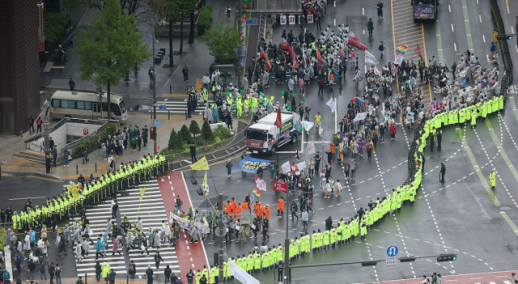 May Day Rallies to Snarl Traffic in Central Seoul and Yeouido Seoul is expected to face near gridlock across the city center on May 1, Workers’ Day, as large rallies and marches are planned around Sejong-daero and Yeoui-daero, with traffic controls on major arteries. The Seoul Metropolitan Police Agency said the Korean Confederation of Trade Unions and the Federation of Korean Trade Unions will each hold rallies and marches drawing tens of thousands of participants in central Seoul and the Yeongdeungpo area. With events running at the same time and overlapping in some hours, widespread congestion could hit key business districts. In central Seoul, preliminary gatherings are set to begin at 1 p.m. around Jongno, Eulji-ro and Yulgok-ro. A main rally is scheduled for 3 p.m. on the Sejong Intersection-to-City Hall Intersection stretch. Marchers are then expected to move from 4 p.m. along Jongno and Namdaemun-ro, passing the Bank of Korea Intersection and Sogong-ro before continuing around City Hall. Police expect sequential lane closures or partial occupation of lanes on Sejong-daero and in the Jongno area, slowing traffic significantly. In Yeongdeungpo, a large rally is planned from 2 p.m. around Yeoui-daero. The area is typically busy, and police said congestion could spread to nearby roads if crowds concentrate. With some overlap with the downtown events, simultaneous bottlenecks could develop along major routes linking central and western Seoul. Police warned travel times could rise sharply where disruptions coincide with commuting hours. Bus routes may be detoured or delayed, and heavy pedestrian traffic in some areas is expected to further reduce vehicle speeds. To limit disruption, police plan to deploy about 200 traffic officers around rally sites and use reversible lanes and phased vehicle controls. They also plan to station personnel at key intersections and detour points to help disperse traffic. Residents can check detailed information on rally times and controlled sections through police traffic updates, the traffic information center website and mobile channels. Police said additional controls may be imposed depending on conditions, making real-time updates important. With large crowds expected, significant congestion is likely. Police urged drivers passing through core corridors such as Sejong-daero, Jongno and Yeoui-daero to plan ahead, as travel times may vary widely depending on detours.* This article has been translated by AI. 2026-04-30 17:57:26
 -
 Asian stocks fall across the board as oil prices surge SEOUL, April 30 (AJP) - South Korea's benchmark KOSPI fell 1.38 percent to close at 6,598.87 on Thursday as rising oil prices dragged Asian markets lower. Brent crude futures jumped more than 5 percent in Asian trading, pushing regional stocks down over 1 percent. The junior KOSDAQ also dropped, closing at 1,192.35, down 2.29 percent. The main index rose to as high as 6,750.27 during the intraday session, setting a new intraday record. However, it later fluctuated and declined, falling below the 6,600 level. It ended lower for the first time in four days. The index briefly hit a new intraday high of 6,750.27 before falling back to close below 6,600, ending its upward streak for the first time in four days. Most major stocks fell. Samsung Electronics closed at 220,500 won (about $149.60), down 2.43 percent, while SK Hynix ended at 1,286,000 won, down 0.54 percent. Hyundai Motor fell 4.5 percent to 531,000 won, LG Energy Solution dropped 2.64 percent to 460,500 won, and Doosan Enerbility declined 1.63 percent to 127,100 won. Among entertainment stocks, HYBE rose more than 4 percent, while other companies declined. HYBE closed at 263,000 won, up 4.16 percent. JYP fell 2.48 percent to 62,900 won, SM dropped 0.92 percent to 96,600 won, and YG declined 1.82 percent to 54,000 won. Japan's Nikkei 225 stood at 59,111.55 as of 3:40 p.m., down 1.35 percent. Hong Kong's Hang Seng fell 1.19 percent to 25,800.75. 2026-04-30 17:46:09
 -
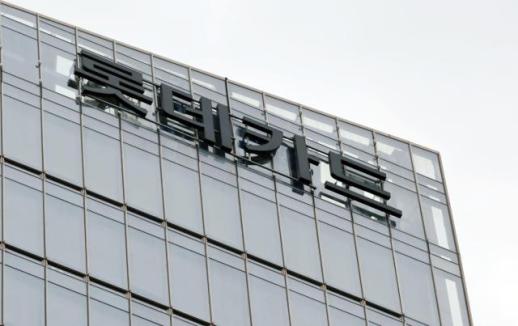 South Korea watchdog confirms 4.5-month business suspension for Lotte Card; FSC to decide Lotte Card, which suffered a large-scale customer data leak in a hacking incident last year, has been ordered by South Korea’s Financial Supervisory Service to suspend business for 4.5 months. According to the financial industry on Wednesday, the FSS confirmed the 4.5-month suspension in a sanctions review committee meeting held that day. Lotte Card said about 2.97 million customers — roughly one-third of its total — had information exposed in a hack in September last year. Of those, 280,000 customers had key data leaked, including card numbers, expiration dates and CVC codes, creating a risk of fraudulent card use. Earlier this month, the FSS gave Lotte Card advance notice of a sanctions package that included the 4.5-month suspension, a 5 billion won fine and personnel penalties. The sanctions will be finalized after a vote at a regular meeting of the Financial Services Commission. A Lotte Card official said the hacking case differs from a 2014 data leak involving an employee and called a business suspension for a hacking incident “an unprecedented level of sanction.” The official said follow-up steps remain, including an FSC vote, and the company will explain its objections to what it views as an enhanced penalty, its post-incident response and that no secondary harm occurred.* This article has been translated by AI. 2026-04-30 17:43:43
 -
 LG Chem narrows Q1 operating loss as petrochemicals rebound; targets 75% NCC run rate LG Chem said Thursday it posted first-quarter consolidated revenue of 12.2468 trillion won and an operating loss of 49.7 billion won. Revenue fell 6.2% from a year earlier, while the operating loss narrowed. By business, the petrochemicals division posted revenue of 4.4723 trillion won and operating profit of 164.8 billion won, which the company linked to the impact of the Middle East war. LG Chem said profitability improved from the previous quarter on a positive inventory lagging effect from higher naphtha prices and one-time income from refunds of European anti-dumping duties. The company said it returned to profit in February, before the outbreak of the war, citing aggressive cost cuts and portfolio improvements pursued since last year. For the second quarter, LG Chem expects lower sales volume and revenue due to a temporary shutdown of its Yeosu naphtha cracker center, or NCC, No. 2 plant. Still, it forecast profitability similar to the first quarter, citing continued naphtha lagging effects and ongoing cost reductions. On a government-led restructuring of commodity petrochemicals, LG Chem said on its first-quarter earnings call that its goal of securing final approval for business reorganization within the year remains unchanged. It said it is continuing detailed talks with partners GS Caltex and Hanwha TotalEnergies on integrating NCC operations at the Yeosu and Daesan industrial complexes. LG Chem said domestic NCC restructuring alone would be unlikely to resolve global oversupply in the short term, but said its partnership model would strengthen its refinery-based feedstock competitiveness while allowing partners to internalize LG Chem's petrochemical capabilities in a short period. To respond to ethylene shortages at home and abroad tied to the Middle East war, LG Chem said it kept average NCC utilization around 60% in March. It said it aims to lift the rate to at least 75% in the second quarter by securing additional feedstocks such as naphtha, though the Yeosu NCC No. 2 shutdown is expected to continue into the quarter. The advanced materials division posted revenue of 843.1 billion won and an operating loss of 43.3 billion won. LG Chem said revenue rose on higher cathode-material volumes for batteries and the launch of new semiconductor materials, and the loss narrowed. It said electronics and engineering materials are expected to remain solid in the second quarter on higher-value products, and it expects the division to return to profit as cathode-material volumes increase. LG Chem said it has completed development of a high-density LFP (lithium iron phosphate) cathode material and is in talks with customers, targeting mass production from late 2027 to early 2028. For sodium-battery cathode materials, it said pilot verification is under way, with mass production targeted for the first half of 2028 for high-output products and 2029 to 2030 for energy storage system use. The life sciences division posted revenue of 312.6 billion won and operating profit of 33.7 billion won. Revenue fell from the previous quarter due to differences in export shipment timing, but profitability improved as research and development and marketing costs declined. LG Chem expects second-quarter revenue growth on higher volumes of key products, while R&D investment is expected to continue for global clinical trials and other work. Subsidiary FarmHannong posted revenue of 266.2 billion won and operating profit of 34.8 billion won. LG Chem said results improved on higher domestic sales of crop protection products and increased demand for fertilizer pre-purchases tied to the Middle East war. For the second quarter, it expects higher crop protection sales but forecasts weaker revenue and profitability due to reduced exports from higher fertilizer raw-material costs and higher R&D spending. LG Chem CFO Cha Dong-seok said that despite uncertainty from unstable raw-material supply, profitability improved from the previous quarter on positive inventory lagging effects from higher petrochemical feedstock prices and recognition of one-time income, narrowing the companywide operating loss. He said external uncertainty, including Middle East geopolitical risks and weak demand in the North American electric vehicle market, is likely to persist, but the company will accelerate a shift toward a higher-value, higher-profit portfolio to build a business structure more resilient to rapid economic cycles.* This article has been translated by AI. 2026-04-30 17:37:01
 -
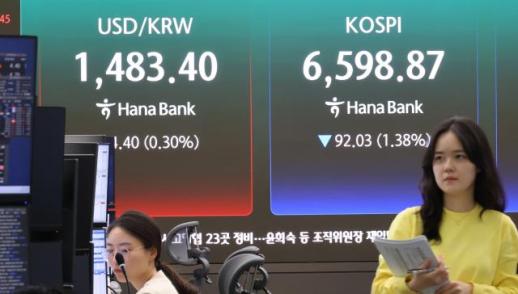 South Korean Won Weakens to 1,480s as Oil Surges and Fed Turns More Hawkish The won weakened against the U.S. dollar as international oil prices jumped on global supply-chain disruptions and expectations for U.S. rate cuts faded. In Seoul trading on April 30, the won closed at 1,483.3 per dollar in onshore trading at 3:30 p.m., up 4.3 won from the previous session. The currency opened at 1,486.5, up 7.5 won, and briefly climbed to 1,488.0 soon after the market opened before paring gains later in the day. A day earlier, the won ended at 1,488.5, up 9.5 won from the prior onshore close, nearing the 1,490 level. Since the outbreak of war in the Middle East, the strongest catalyst for the won’s decline has been oil. Volatility has increased as concerns grow that supply disruptions could be prolonged. Overnight, Brent crude briefly surged to $119.76 a barrel, the highest since June 2022, early in the Russia-Ukraine war. For energy-dependent South Korea, higher oil prices raise import costs and fuel worries about a weaker current account, adding pressure on the won. Another key variable is the combination of Middle East risk and the Federal Reserve’s stance. After the Middle East war pushed the exchange rate above 1,500 last month, markets appeared to gradually absorb the shock. But the Fed has now formally warned of inflation risks tied to the conflict, reinforcing investor concerns. In its latest Federal Open Market Committee statement, the Fed said the Middle East situation is a factor that is increasing inflation concerns and adding to high uncertainty around the economic outlook. With the Fed holding rates, expectations for a rate cut this year have effectively faded. Although the policy rate was left unchanged, the decision was viewed as a hawkish hold after three officials issued a dissenting view seen as aimed at blocking expectations for future cuts. According to CME Group’s FedWatch Tool, interest-rate futures markets priced in about a 12% chance that the Fed will raise rates by at least 0.25 percentage point by December. A day earlier, that probability was 0%. The shift has supported demand for the dollar as a safe-haven asset. The foreign exchange market is expected to remain volatile as it reacts to external factors. With talk of renewed military clashes in the Middle East, oil prices have risen again. On April 30 (Korea time), Brent futures for June delivery on London’s ICE Futures Exchange briefly topped $120 a barrel. Still, some expect pressure on the won to ease if the Bank of Korea raises rates later this year. Moon Da-un, a researcher at Korea Investment & Securities, said higher-than-expected domestic growth and interest rates would increase downward pressure on the exchange rate. He forecast the central bank will raise its policy rate by 0.25 percentage point each in August and November, citing solid growth and war-driven inflation pressure. Moon added that the Korea-U.S. policy rate gap would narrow to minus 0.75 percentage point from minus 1.25 percentage points, slowing overseas investment that had been rising in search of higher expected returns and leading to a more gradual accumulation of net external financial assets than previously expected.* This article has been translated by AI. 2026-04-30 17:35:22
 -
 Wild Turkey Brings ‘Kentucky in Seoul’ Bourbon Pop-Up to Seongsu-dong Moontz Barbecue in Seongsu-dong, Seoul, was transformed on April 30 into a setting meant to evoke a classic American pub, complete with a pinball machine and a “wisdom wall.” The smoky barbecue aroma and oak-forward notes were part of a brand showcase for American bourbon whiskey Wild Turkey. The venue is hosting “Kentucky in Seoul,” a pop-up store organized by Campari Korea, the Italian premium liquor importer and distributor, to introduce Wild Turkey’s new global campaign. The pop-up is set to open to the public May 1, after a media tasting event on April 30. The campaign’s slogan is “WHEN YOU KNOW IT’S RIGHT, DON’T CHANGE A DAMN THING,” a sharper extension of the brand’s earlier message about trusting one’s beliefs. The company said it reflects Wild Turkey’s emphasis on sticking to fundamentals rather than chasing trends. Wild Turkey has maintained traditional methods for more than 100 years, including barreling at a lower proof and using longer aging periods. The brand has also kept its alcohol content at 50.5 degrees, positioning it as a benchmark for classic bourbon. A tasting class led by brand ambassador Kim Tae-wan featured three expressions: Wild Turkey 101, “101 8 Years” made with spirits aged 8 to 9 years, and the single-barrel “Kentucky Spirit,” drawn from one selected oak barrel. Kim said the brand’s heritage is underscored by having “the world’s only master distiller with more than 70 years of service,” adding, “I’m proud and grateful to be able to introduce a brand like this.” The event paired the bourbon with Texas-style barbecue from Moontz Barbecue. Beef rib and brisket platters were served with a house barbecue sauce made by simmering a base of Wild Turkey 101. Guest bartenders from Zest (Kwon Yong-jin), Le Chamber (Lee Jae-ung) and Soko Bar (Park Ju-seong) — bars listed in “Asia’s 50 Best Bars 2025” — presented cocktails reinterpreting Wild Turkey 101 in their own styles. Photo booths and a merchandise area displayed limited-edition items including T-shirts, feather caps and motorcycle helmets. Campari Korea CEO Kim Hyosang said the company plans to create more opportunities for consumers to engage directly with the brand. “We will continue to set up more places where we can meet consumers and offer experiences so Wild Turkey can establish itself as a brand that can grow further,” he said. The “Kentucky in Seoul” pop-up will run from May 1 to 29. Entry is available through advance reservations on CatchTable or by walk-in visits. Some menu items will be sold in limited quantities. The tasting class is available by advance reservation only. 2026-04-30 17:33:25
 -
 Why Not Having 100 Million Won in Your 30s Doesn’t Mean You’re Behind, Data Show “I’m in my 30s — if I still haven’t saved 100 million won, am I already behind?” Anxiety about building savings is growing among office workers. Personal-finance videos and online communities repeatedly cite “average assets for people in their 30s,” “saving 100 million won,” and “minimum money before marriage,” treating a certain level of financial assets as a yardstick for stability. The short answer is no: Not having 100 million won in financial assets in your 30s does not automatically mean it is “too late.” Asset statistics are not the same as an individual bank balance. Official household asset figures are compiled by household, not by person, and they reflect the heavy weight of real estate and the influence of high-asset households. According to the National Data Center’s “2025 Household Finance and Welfare Survey,” as of the end of March 2025, average assets per household stood at 566.78 million won, up 4.9% from a year earlier. Average debt was 95.34 million won, up 4.4%, and net assets — assets minus debt — rose 5.0% to 471.44 million won. Average household income in 2024 was 74.27 million won, with disposable income at 60.32 million won. On the surface, household wealth increased. But it is not appropriate to compare the 566.78 million won average directly with an individual’s deposits, stocks or cash-like holdings. As of the end of March 2025, average household financial assets were 136.9 million won, while nonfinancial assets were 429.88 million won — meaning much of household wealth is tied up in real estate and other tangible assets rather than cash. The survey also highlights the “average trap,” in which high-asset households pull up the mean. The top 10% by net assets accounted for 46.1% of total household assets. The net-asset Gini coefficient, a measure of inequality, rose to 0.625 from 0.612 a year earlier. That helps explain why a higher average does not mean conditions improved for all households. Younger households, in particular, did not share in the gains. The National Data Center said assets increased across all age groups except households headed by someone 39 or younger, where assets fell 0.3% from a year earlier. Data for households in their 30s show the strain. According to the Korean Statistical Information Service (KOSIS), average assets for households headed by someone in their 30s were 359.58 million won, down 0.6% from a year earlier — even as overall average household assets rose 4.9% and assets increased for households headed by those 29 or younger, in their 40s, 50s and 60 or older. For households in their 30s, income rose but assets fell. KOSIS data showed ordinary income increased 2.6% from a year earlier, but financial assets fell 0.5% and nonfinancial assets fell 0.7%. Savings also declined 1.3% to 69.89 million won. Meanwhile, average debt for households in their 30s rose to 108.98 million won, and net assets fell 1.3% to 250.6 million won. That trend aligns with what many workers describe as “account anxiety.” Even with higher pay, fixed costs such as housing, loan repayments, wedding expenses and family support can limit the ability to save. Whether someone lives with parents, pays rent or provides living expenses to family can also make saving speeds differ sharply even at the same salary level. The anxiety is difficult to explain as a matter of spending habits alone. While overall household assets are rising, younger households are building wealth more slowly, and debt burdens for those in their 30s are increasing. The question “Did you save 100 million won in your 30s?” has become a symbol of broader worries tied to marriage, housing and retirement preparation. In the end, the answer to “Is it too late if you don’t have 100 million won in your 30s?” is “not necessarily.” Average asset figures can make personal finances look stronger than they are. Because the statistics are household-based, heavily shaped by real estate and lifted by high-asset households, they are hard to compare directly with an individual’s financial assets. The concerns are not baseless: Conditions for young people to build assets remain challenging, and the wealth gap is widening. Still, what matters more than comparing yourself with an average is reviewing your own financial structure — not just how much you earn each month, but how much you can consistently set aside and whether your assets are growing while you manage debt and fixed costs. For building a lump sum, managing cash flow should come before taking on risky investments. With income growth difficult, practical checks include adjusting housing and fixed expenses, managing debt, automating savings and seeking additional sources of income. * This article has been translated by AI. 2026-04-30 17:28:33
 -
 Korea-China Forum Seeks Ways to Draw Young Talent to Aging Rural Communities Korean and Chinese agriculture experts met in Beijing to discuss policy directions for attracting more young people and skilled workers to rural areas in both countries, amid deepening rural aging and weak youth inflows. The discussion took place at the 33rd Korea-China Agriculture Forum, hosted by the Korea Rural Economic Institute (KREI) China office. Zeng Junxia, an associate researcher at the Chinese Academy of Social Sciences, said in a presentation that many young people in China have recently returned to rural hometowns to start businesses. She said government programs such as a rural CEO system and a science and technology commissioner system are gradually showing results. Zeng called for stronger legal foundations, an integrated long-term training system, expanded market-based incentives and stronger support for existing young farmers. Park Mi-seon, an associate research fellow at KREI, said South Korea has continued to expand policies to foster successor farmers and young farmers. She said the government has built a comprehensive support system covering income and financial assistance — including settlement support payments and financing for young smart farms — as well as farmland, education and housing. Park said the government aims to foster 30,000 young farmers by 2027 and is strengthening step-by-step support. To raise settlement rates, she said, South Korea needs a system to verify management performance, expanded management-base support linked to agricultural policies, stronger pre-entry exploration for prospective farmers and locally tailored talent development. In a subsequent discussion, experts from both countries agreed that expanding the number of young farmers will require comprehensive policies that link income, living conditions, education and access to farmland, rather than stand-alone support. Lim Young-a, head of KREI’s China office, said the institute will continue to expand Korea-China exchanges on agricultural policy and pursue joint research and cooperation to develop young farmers and rural talent. * This article has been translated by AI. 2026-04-30 17:27:17
 -
 Democratic Party Says ARS Outage Claim in Runoff Was Resolved by Candidate Agreement The Democratic Party of Korea on Wednesday dismissed Jeonnam Gov. Kim Young-rok’s call for a reinvestigation into an alleged ARS phone-voting outage in the runoff for the Jeonnam-Gwangju Integrated Special Mayor primary, saying the issue had already been addressed through an agreement among the candidates. Kim lost the race to Min Hyung-bae, a former lawmaker. Party Secretary-General Cho Seung-rae told reporters at the National Assembly after a party affairs committee meeting that Kim appeared to have misunderstood the facts. Cho said the party confirmed that 2,308 votes from Jeonnam-area voters were excluded during the first round of outgoing calls, and that a second round of calls was made to those 2,308 voters after agreement by the candidates’ representatives. Cho added that the party apologized to the candidates’ sides for the problem and took immediate steps to remedy the impact. He said he was speaking based on a review of the raw data, and stressed that the party conducted a thorough investigation and confirmed there was no issue. Kim, speaking at a news conference Tuesday at the Gwangju Metropolitan Council, called for a full party reinvestigation of the primary process and broader reforms to prevent a recurrence. He said two weeks after the primary ended, the party headquarters had still not provided a responsible explanation for the concerns he raised. He alleged serious problems with fairness and transparency, citing 2,308 ARS outages in Jeonnam during the runoff, inadequate voting guidance for the electorate, duplicate voting by party members, and a lack of disclosure of information about the overall primary process.* This article has been translated by AI. 2026-04-30 17:22:38