
Journalist

Lee Hugh
=
-
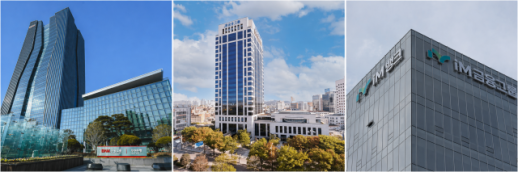 BNK and JB Post Solid Q1 Profit Gains as iM Stalls; Nonbank Units Lift Results Results diverged among South Korea’s three major regional financial holding companies in the first quarter. BNK Financial Group and JB Financial Group posted steady net profit growth, while iM Financial Group’s net profit was essentially flat despite expansion in scale. According to the financial sector on Wednesday, combined first-quarter net profit for BNK, JB and iM totaled 532 billion won, up 9.9% from 483.7 billion won a year earlier. By group, BNK reported 211.4 billion won in net profit for the quarter, a 26.9% increase from a year earlier. JB posted 166.1 billion won, up 2.1%, and iM recorded 154.5 billion won, up 0.1%. Nonbank businesses drove the three groups’ results. Even as earnings at their core banking units lagged, a larger share of profit came from nonbank units, led by capital businesses, supporting overall growth. At BNK, net profit from the banking segment rose 20.6 billion won from a year earlier to 175.6 billion won. BNK Busan Bank increased profit by 22.5 billion won, while BNK Kyongnam Bank fell 1.9 billion won. The nonbank segment posted 59.6 billion won in net profit, up 25.3 billion won, with all major affiliates contributing, including capital (10.7 billion won), investment securities (3.6 billion won), savings bank (1.0 billion won) and asset management (7.5 billion won). At JB, nonbank affiliates offset weaker bank earnings. Jeonbuk Bank and Gwangju Bank posted net profit of 39.9 billion won and 61.1 billion won, down 22.5% and 8.7%, respectively, from a year earlier. JB Woori Capital reported 72.7 billion won in net profit, up 24.3%, leading the group’s performance. Cambodia’s Phnom Penh Commercial Bank (PPCBank) posted 12.4 billion won, up 21%. iM also leaned on nonbank units. iM Bank’s first-quarter net profit fell 3.6% from a year earlier to 120.6 billion won. Nonbank affiliates iM Life and iM Capital posted net profit of 16.5 billion won (up 63.4%) and 19.3 billion won (up 31.3%), respectively. The share of group profit from nonbank affiliates rose to 34% from 30.3% in the first quarter of last year. The three groups also outlined shareholder return policies alongside their first-quarter earnings releases. BNK said its board approved a quarterly cash dividend of 150 won per share, up 25% from last year. It also decided to buy back and cancel 60 billion won worth of treasury shares in the first half of the year. JB said its board on April 23 approved a quarterly dividend of 311 won per share, about double the 160 won paid in the first quarter of last year. It also set a goal of raising its shareholder return ratio to 50% by the end of this year. iM said it plans to buy back and cancel 150 billion won worth of treasury shares by 2027, after announcing a 40 billion won buyback-and-cancellation plan in February. It also said it aims by 2027 to reach a return on equity of 9%, a common equity tier 1 (CET1) ratio of 12.3% and total shareholder return (TSR) of 40% to strengthen the foundation for shareholder returns.* This article has been translated by AI. 2026-04-30 16:19:32
 -
 Ha Jeong-woo Faces Backlash Over Hand-Wiping Gesture After Shaking Voters’ Hands Ha Jeong-woo, who has signaled he will run in the Busan Buk-gu Gap by-election, is facing criticism over video showing him rubbing or shaking his hands after greeting voters. On the 29th, Ha, identified as a former presidential office senior secretary for AI Future Planning, visited Gupo Market in Busan’s Buk-gu district and greeted merchants. Footage captured him appearing to rub or shake his hands after handshakes, and the clips spread quickly online. Opposition figures responded by asking whether he thought voters’ hands were “dirty.” A former party leader preparing an independent bid in the district wrote on Facebook that he was prompted by a Democratic Party incumbent deputy spokesperson’s on-air remark that “Ha Jeong-woo’s hand-shaking gesture does not affect the overall trend.” He asked whether the party believed it could “disrespect Buk-gu citizens” without consequences. Park Min-sik, a former minister of Patriots and Veterans Affairs who is preparing to run as the People Power Party candidate, said the hands of Gupo Market’s mothers were not “filth” to be wiped away but a “medal” that raised the country, calling the incident an unconscious display of “deep-rooted elitism and arrogance.” People Power Party leaders and lawmakers aligned with Han Dong-hoon also criticized Ha. Supreme Council member Kim Jae-won said at a party meeting that Ha shook hands with several market merchants and then “shook off his hands as if something filthy had gotten on them,” calling him someone who “treats voters like bugs.” As the controversy grew, Ha held a news conference at the Busan City Council and denied any intent to insult voters. He said it was his first time shaking hands with “hundreds, close to a thousand” people in a day and that his hand began to ache, leading to an unconscious motion. He added that some merchants shook hands while wearing wet gloves, but said he never acted with that meaning and criticized what he called negative campaigning in politics.* This article has been translated by AI. 2026-04-30 16:16:22
 -
 Vietnam Jewelry Gold Demand Hits Record as Bullion Buying Slumps; PM Urges Less Hoarding Vietnam posted a record for gold jewelry demand in the first quarter, even as demand for gold bars and coins fell sharply, highlighting a split between consumer buying and investment flows. The government says it will continue to recognize citizens’ right to hold gold as an asset, while seeking to curb hoarding and speculation and steer money toward the real economy. Vietnamese media on April 30, citing the World Gold Council’s first-quarter report, said Vietnam’s gold jewelry demand totaled $472 million, the highest on record. That was up 28% from the fourth quarter of last year, bucking a broader cooling in consumption across many markets. Analysts said tight supplies of gold bars also pushed some demand toward alternatives such as pure-gold rings. Globally, first-quarter gold jewelry demand fell 23% from a year earlier to 300 tons. The decline was widespread, led by drops of 32% in China, 19% in India and 23% in the Middle East. Within ASEAN, the pullback in investment demand was especially notable. Vietnam’s first-quarter demand for gold bars and coins fell 24% from a year earlier to 9 tons, diverging from the global trend in which retail demand for bars and coins rose 42% to 474 tons. The government is moving to tighten institutional oversight of the gold market. At a meeting with the State Bank of Vietnam on April 29, Prime Minister Le Minh Hung told the banking sector to “develop a roadmap suited to reality and build mechanisms to effectively control the gold market.” While affirming that people have the right to hold gold as an asset, he said, “We must minimize gold hoarding and speculation.” He added that as macroeconomic fundamentals stabilize and the legal framework becomes more transparent, funds held by households and businesses could shift naturally into production and business activity or bank deposits, helping mobilize resources for growth. Le also laid out broader principles for economic management. “Macroeconomic stability is like the foundation of a house,” he said, adding that before adding floors, remodeling or rebuilding, “you must first strengthen that foundation.” He said exchange rates, interest rates and credit policy should all be managed within the overarching goals of maintaining stability, controlling inflation and ensuring the safety of the financial system. In late January, the government asked the central bank to quickly complete its review of documents related to a proposal to establish a national gold exchange or gold trading platform. The push to overhaul the gold market is tied to a broader effort to secure funding for growth. The National Assembly has set targets of average annual growth of at least 10% through 2030 and entry into the world’s top 30 economies by GDP. To meet those goals, the total capital required is projected to rise by about 1.7 to 2 times compared with the previous term. With the state budget expected to cover only 20% to 22%, mobilizing private funds is seen as critical. Against that backdrop, the prime minister also outlined credit-policy directions aimed at redirecting money concentrated in gold into the real economy. He called for flexible management of credit growth depending on conditions, while guiding funds toward production and business. He also urged a review of rules to allow above-limit lending for strategic and nationally important projects, tighter supervision of credit to potentially risky sectors, and stronger support for social housing and industrial park development.* This article has been translated by AI. 2026-04-30 16:15:05
 -
 Da Nang Apartment Presale Prices Jump as New Supply Shifts to Luxury Units Da Nang’s apartment market is increasingly centered on high-end and luxury projects, pushing prices higher even as sales show signs of slowing amid high borrowing costs. All newly launched units were in the luxury segment, and presale prices posted double-digit gains, Vietnamese media reported Thursday, citing industry data. CBRE said 100% of apartments newly introduced in Da Nang in the first quarter were luxury units. The average initial presale price was about 83 million dong per square meter (about 4.67 million won), up about 12% from a year earlier. A report by Vietnam’s Ministry of Construction put the city’s average presale price at about 91 million dong per square meter (about 5.12 million won), up about 10%, attributing the rise to expanding luxury supply and price adjustments in later sales phases of already-launched projects. The shift upmarket has become more pronounced. While about 60% of last year’s new supply was in the high-end segment priced at 60 million to 120 million dong per square meter, all new supply last quarter was priced above 120 million dong per square meter. Avison Young said about 20 projects have been launched over the past two years, most in the high-end and luxury tiers. Current primary-market asking prices are about $3,570 per square meter, or above 90 million dong. Supply is concentrated along the Han River in the Hoa Xuan and An Hai areas. Projects there posted an absorption rate of about 60%, with most buyers coming from Hanoi and Ho Chi Minh City. Still, as prices climbed, the average absorption rate for new projects has remained around 50% to 60%. Experts said absorption appears to have stalled or edged down compared with the peak late last year. Analysts also pointed to a mismatch between supply and demand. Buyers ages 23 to 39 seeking long-term residence in Da Nang tend to prefer more affordable or mid-priced housing, but the market is dominated by high-end and luxury offerings. Duong Thuy Dung, CEO of CBRE Vietnam, said absorption is the market’s biggest challenge in a high-interest-rate environment, especially because many local buyers are investing rather than purchasing for occupancy. New supply is expected to ease. Real estate services firm DKRA forecast 1,000 to 1,500 units will be released in the second quarter, slightly fewer than in the first quarter, with supply concentrated in the Ngu Hanh Son area, which still has room for development. DKRA said buyers are becoming more cautious and selective, and market liquidity could weaken compared with 2025. Even so, developers’ presale prices remain elevated. Higher land and material costs, along with market pricing, are expected to keep prices near current levels. CBRE forecast Da Nang’s apartment segment will continue to grow 10% to 12% annually, citing scarce land in the city center, riverfront and coastal areas, as well as plans to open a Vietnam international financial center, establish a free trade zone and advance major infrastructure projects. Experts said the market needs better balance across segments to avoid supply piling up in specific areas and price bands. Industry observers warned that localized oversupply could undermine buyer sentiment and confidence.* This article has been translated by AI. 2026-04-30 16:13:59
 -
 Comprehensive Special Prosecutor Seeks Discipline of Acting Prosecutor General for Alleged Probe Obstruction Kwon Chang-young’s second comprehensive special prosecutor team has asked the Justice Ministry to begin disciplinary proceedings against Ku Ja-hyeon, the acting prosecutor general, over alleged obstruction of its investigation. According to legal sources on the 30th, the team requested that the ministry open discipline procedures against Ku and others in connection with what it described as interference with the comprehensive special prosecutor’s probe. In a notice to the media, the team said it sought investigative cooperation from the Supreme Prosecutors’ Office, including submission of related materials, while investigating the Dec. 3 emergency martial law. It said the office refused, stating without legal grounds that “all materials requested by the comprehensive special prosecutor cannot be provided under relevant regulations,” despite an obligation to comply under Article 6(6) of the comprehensive special prosecutor law. The team said the refusal violated the law and “seriously obstructs” its investigation. It said it asked Justice Minister Jeong Seong-ho, under the law, to initiate disciplinary procedures against Ku and Kim Seong-dong, head of the Supreme Prosecutors’ Office inspection division, as those responsible for the alleged obstruction. The team said it would respond strictly, without exception, if similar cases occur in the future, and would continue working to ensure a transparent and fair investigative environment. * This article has been translated by AI. 2026-04-30 16:12:15
 -
 Samsung Electro-Mechanics tops 3 trillion won in first-quarter sales on AI demand Samsung Electro-Mechanics said it posted record quarterly results, with sales topping 3 trillion won for the first time, helped by expanding demand tied to artificial intelligence infrastructure. The company said momentum is expected to continue in the second quarter, led by higher-value industrial and automotive products. In a regulatory filing on Wednesday, the company reported first-quarter consolidated sales of 3.2091 trillion won and operating profit of 280.6 billion won. Sales rose 470.5 billion won, or 17%, from a year earlier, while operating profit increased 80.1 billion won, or 40%. The company said demand for industrial and automotive components rose as AI servers and autonomous driving expanded. It said increased supply of high-value products such as multilayer ceramic capacitors, or MLCCs, and flip-chip ball grid array substrates, or FC-BGA, supported the improvement. It added that demand for high-spec parts is rising quickly as data centers upgrade infrastructure and AI servers consume more power. By business, the components division posted sales of 1.4085 trillion won, up 16% from a year earlier, as revenue grew in areas such as AI servers, power and networks and as shipments of automotive MLCCs increased. The package solutions division recorded 725 billion won in sales, up 45%, driven by expanded supply of substrates for AI accelerators, server CPUs and networking to global big-tech customers. The optical solutions division reported sales of 1.0756 trillion won. The company said mass production ramped up for high-performance camera modules, including 200-megapixel cameras and slim folded zoom, and that supply of automotive products such as electric-vehicle and in-cabin cameras also increased. For the second quarter, Samsung Electro-Mechanics said growth in industrial and automotive components is expected to continue as global big tech increases AI investment and autonomous driving technology advances. It said demand for FC-BGA substrates has expanded to a level that exceeds its supply capacity. "As agentic AI spreads, demand for high-performance semiconductors is surging, and FC-BGA demand is exceeding our production capacity," the company said. "We are cautious about the full-year outlook due to external variables, but we expect significant growth in the FC-BGA business as AI investment expands." The company said MLCC demand is also rising across applications, particularly for higher-capacity parts as next-generation AI server platforms draw more power. It said it has launched new products with double the capacity of existing ones for graphics processing units and power modules. It added that it is pursuing long-term supply contracts with customers to ensure stable supply. Samsung Electro-Mechanics said it is expanding MLCC supply beyond AI servers to the aerospace sector. "We will secure an early lead in the aerospace MLCC market to strengthen our mid- to long-term growth foundation," it said. In optical products, the company said it is moving into new markets by pursuing camera-module supply for next-generation physical AI areas such as robotaxis and humanoids. It plans to launch products for robotaxis in the second quarter and camera modules for humanoids in the second half of the year. Samsung Electro-Mechanics said it expects performance growth in the second quarter from both the previous quarter and a year earlier, adding that results should improve further in the second half as AI data center investment and automotive demand continue to expand.* This article has been translated by AI. 2026-04-30 16:09:19
 -
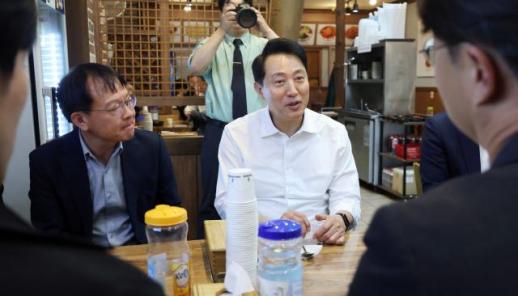 Seoul Mayor Oh Se-hoon Pledges Citywide Mental Health Plan to Fight Loneliness Oh Se-hoon, the People Power Party’s candidate for Seoul mayor, said April 30 he would pursue a policy package called “Seoul Mind Fitness Recovery” so that “Seoul residents can be healthy not only in body but also in mind.” Oh announced the mental health pledge at the Seoul Mind Convenience Store Gwanak branch inside Seongmin Comprehensive Social Welfare Center in Sillim-dong, saying he would “overwhelmingly complete” changes launched under the city’s “Loneliness-Free Seoul” policy initiative. The plan is his second official campaign pledge and his second health-related promise, following the “Steel Stamina, Vibrant Seoul” proposal released a day earlier. Oh said health should be enjoyed equally “regardless of wealth or social achievement,” and argued that income and asset gaps should not lead to health gaps that widen differences in happiness. At the center of the proposal is building a “mental safety belt” under which the city would directly manage invisible risks such as isolation and loneliness to strengthen residents’ mental resilience. Oh said he would accelerate what he called “heart-ware” — beyond hardware and software — building on results from the Loneliness-Free Seoul program introduced in 2024, when he was Seoul mayor. For older residents, the plan links the health app “Sonmok Doctor 9988” with a mobile app called “Brainfit 45” to offer self-checks for dementia risk and tailored missions such as cognitive training and walking. It also calls for closer management of men in their 50s and 60s, described as the group at highest risk of social isolation. Using administrative data such as job loss or divorce, the city would identify households in crisis earlier and set up an always-on check-in system combining artificial intelligence and KakaoTalk. Oh also pledged to expand a project for isolated and reclusive young people, investing a total of 109 billion won by 2030. The plan includes opening dedicated mental health clinics at facilities such as Eunpyeong Hospital and operating a family-support living lab to help relatives take part in recovery. Psychological counseling, previously limited to high-risk groups, would be expanded to all residents under a “citywide mind rebuilding project.” Oh said 16 billion won would be used to provide private professional counseling vouchers to 100,000 people a year. Support would cover up to eight sessions per person, at 80,000 won per session, to help manage mild mental health issues before they worsen. Offline support hubs would also be expanded. “Mind Convenience Stores,” which offer counseling and simple food, would grow from four locations to at least one in each district, and mobile versions would operate in areas with many one-person households. Oh also said he plans to create an urban healing space in the Seongsu-dong area using Seoul Forest. “Loneliness is a condition that any modern person can carry,” Oh said, adding that two years of policy experiments gave him confidence it can be reduced. He said the city would expand programs such as the Mind Convenience Store so any Seoul resident can use them, and repeated his pledge to “overwhelmingly complete” changes already underway.* This article has been translated by AI. 2026-04-30 16:07:18
 -
 LG Uplus to Retire 5.4 Million Treasury Shares in 80 Billion Won Cancellation LG Uplus said Wednesday it will cancel all about 5.4 million treasury shares it bought last year, as it moves to accelerate its “value-up plan” aimed at boosting shareholder value. In a regulatory filing, the company said it will cancel treasury stock worth about 80 billion won in book value on May 15. The cancellation covers all roughly 5.4 million shares acquired since last year, equal to 1.26% of total shares outstanding. LG Uplus previously canceled about 6.78 million shares, worth about 100 billion won in book value, on Aug. 5 last year. The company announced its value-up plan in November 2024, outlining mid- to long-term financial targets, steps to reach them and shareholder return policies. “This treasury share cancellation is part of our value-up plan to enhance shareholder value and strengthen investor trust,” a company official said. “Following last year, we are canceling previously acquired treasury shares again this year and carrying out our shareholder return policy without disruption.” * This article has been translated by AI. 2026-04-30 16:06:22
 -
 Visitors taste bitter exile at Gyeongbokgung royal kitchen SEOUL, April 30 (AJP) - Visitors gather at the Saenggwabang kitchen inside Gyeongbokgung Palace on April 30 to participate in a program exploring the life of Danjong, the sixth ruler of the Joseon Dynasty. The event, titled "Yuju: Spring in the Saenggwabang," runs from April 27 to May 3. This historical program has gained significant attention following the massive success of the film The King's Warden. The movie, which depicts the tragic isolation of the young monarch, has surpassed 16 million admissions to become the second most-watched film in South Korean history. The current "Danjong syndrome" has transformed the palace kitchen into a space for historical empathy. While Saenggwabang is typically known for serving elaborate royal desserts, this event pivots to the modest diet the king endured during his exile. Danjong was a child monarch who was deposed by his uncle and sent into a lonely exile in Yeongwol. The program uses food to bridge the gap between modern visitors and the king's final, difficult years. The centerpiece of the experience is a simple porridge made from eosuri. This wild herb was a staple for the king when refined palace ingredients were no longer available to him. The dish offers a sensory connection to the past. Visitors are encouraged to reflect on the king's humanity through the bitter, earthy flavors of the greens, a stark contrast to the surrounding palace grandeur. Expert commentaries provided during the meal detail the historical context of the food. These stories help guests visualize the young king's life away from the capital. The special event is managed by the Korea Heritage Service and the Royal Palaces and Tombs Center. The program is scheduled to conclude its limited run on May 3. 2026-04-30 16:06:01
 -
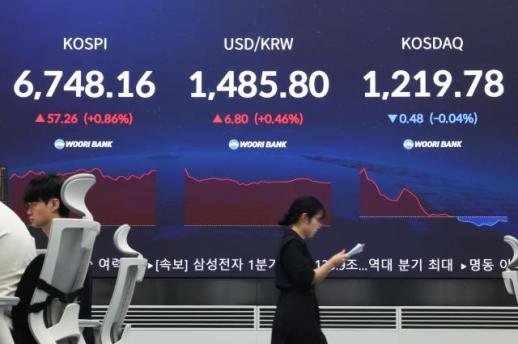 At War 60 Days: Decoupling deepens in Korean markets as stocks rally alone SEOUL, April 30 (AJP) — Decoupling across South Korean asset markets has intensified over the past two months of war in the Middle East, with equities extending a solo rally while the currency and bond markets remain under pressure. With few safe havens in a wartime environment, equities have emerged as the primary risk asset. In contrast, the won and government bonds — more exposed to macroeconomic stress — have been weighed down by disruptions to the Strait of Hormuz and now, the uncertainty over the Federal Reserve’s policy path. On Wednesday, the benchmark KOSPI closed at a record 6,690.90, supported by stronger-than-expected 1.7 percent first-quarter growth and blockbuster earnings from Samsung Electronics and SK hynix, whose combined operating profit exceeded 95 trillion won ($63.9 billion). The earnings surge has fed directly into share prices. Samsung Electronics rose above 220,000 won on Wednesday, while SK hynix hit a record high above 1.3 million won on Thursday. Market volatility has eased from March’s shock levels. After swinging more than 10 percent following the de facto blockade of the Strait of Hormuz on March 4, the KOSPI has trended steadily higher since mid-April. The last “buy sidecar” was triggered on April 9, when the index jumped 6.9 percent. The KOSPI Volatility Index (VKOSPI), which spiked to a record 80 on March 4, eased to around 54 on Thursday, suggesting investors are increasingly treating the conflict as a persistent backdrop rather than an acute shock. “Geopolitical threats are episodic; over time, markets revert to corporate fundamentals,” said Lee Kyung-min, a researcher at Daishin Securities. The mood in foreign exchange and bond markets, however, remains fragile. The Korean won has shown elevated volatility, with daily swings averaging 0.55 percent between April 11 and Thursday — higher than those of the South African rand (0.47 percent) and the Turkish lira (0.50 percent). Although the won has recovered from its March 31 low of 1,530 per dollar, it averaged 1,487 in April, weakening about 2 percent from January’s 1,458. The currency remains vulnerable to energy shocks, as South Korea imports roughly 70 percent of its crude oil via the Strait of Hormuz. Fuel prices are already reflecting the strain. Gasoline in Seoul has climbed above 2,000 won per liter, while the Consumer Sentiment Index fell below 100 in April for the first time in a year. Industrial activity is also showing signs of stress. Mining and manufacturing output rose just 0.3 percent in March, sharply slowing from 5.3 percent growth in February. Policy uncertainty in the United States has added another layer of pressure. The Federal Reserve on Wednesday left its benchmark rate unchanged, with the upper bound at 3.75 percent. Chair Jerome Powell, in his final meeting, signaled the possibility of rate cuts, even as incoming leadership under Kevin Warsh is expected to lean more hawkish. The decision exposed divisions within the 12-member committee, drawing four dissenting votes. Governor Steven Myron called for immediate cuts, while three regional presidents pushed back against what they viewed as overly dovish guidance. Reflecting the uncertainty, the won opened at 1,486.5 per dollar on Thursday, weakening by 7.5 won. Government bonds have also come under pressure. The three-year Treasury yield rose 4.3 basis points to 3.568 percent in Thursday morning trade, the highest since November 2023, while the five-year yield climbed 4.1 basis points to 3.888 percent. Gains from South Korea’s inclusion in the World Government Bond Index (WGBI) on April 1 have effectively been erased by geopolitical risk. “If markets scale back expectations for U.S. rate cuts, bond prices will fall further, adding pressure on the currency,” said Ahn Jae-kyun, a researcher at Shinhan Securities. “This trend is likely to persist until the bottleneck in the Strait of Hormuz is resolved.” 2026-04-30 16:04:39