
Journalist

Lee Hugh
=
-
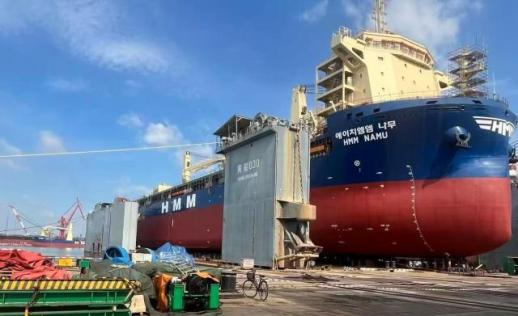 Fire-stricken HMM's cargo vessel to be towed to Dubai for investigation SEOUL, May 6 (AJP) - South Korea's shipping and logistics company HMM's Panama-flagged cargo vessel Namu, which was disabled after a fire while anchored near the Strait of Hormuz, is expected to be towed to a port in Dubai, United Arab Emirates (UAE), as early as Thursday for investigation and repair work. According to industry insiders, HMM has secured tugboats for the vessel and will begin a full-scale towing operation late this afternoon. If all goes as planned, the vessel is expected to arrive at the Port of Jebel Ali in Dubai on Thursday or early Friday. HMM has already dispatched an investigation team to the area and plans to send additional personnel in time for the vessel's arrival. "As soon as the vessel is towed, a team of experts will be deployed to determine the exact cause of the fire, as well as the extent of the damage," an HMM spokesperson said. The fire broke out at around 8:40 p.m. on Monday following an explosion on the port side of the engine room while the Namu was anchored in the strait, north of Sharjah in the UAE. The vessel has 24 crew members on board including six South Korean nationals and 18 foreign nationals. No injuries were reported. It remains to be seen whether the vessel was struck by an object such as a drifting sea mine, suffered an internal malfunction, or was the target of an external attack, as U.S. President Donald Trump has claimed, alleging Iran was responsible. Five HMM vessels are currently held up in the strait including two tankers carrying crude oil and petroleum products, two bulk carriers, and one container ship. 2026-05-06 14:13:32
 -
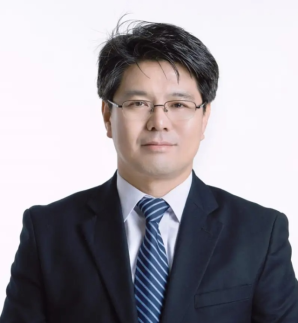 Ahn Young-cheol Appointed Head of Korea Maritime Transportation Safety Authority The leadership vacancy at the Korea Maritime Transportation Safety Authority (KOMSA) has been filled after about six months, following the end of Kim Jun-seok’s term. The Ministry of Oceans and Fisheries said Tuesday it appointed Ahn Young-cheol, a professor at Busan University of Foreign Studies, as KOMSA’s fourth chairman. His three-year term runs from Tuesday through May 5, 2029. Kim’s term ended Nov. 30 last year, but no successor was named, leaving the agency without a permanent chairman for months. Ahn earned a doctorate in public finance and economics from the University of Wuerzburg in Germany. He has served as an adviser to the Presidential Committee on Balanced National Development and as chairman of the Korea Climate Economy and Social Research Institute, building expertise in public policy. He is known for work on climate economics, environmental, social and governance management, and balanced regional development. The ministry and the authority said they expect Ahn to help stabilize the organization and respond proactively to changes in the policy environment, drawing on his public policy background. Ahn said he would “carefully assess the policy conditions the authority faces” and strengthen its policy response and execution so its evolving roles and functions match current needs. He also pledged to “build leadership that unites the organization based on expertise and communication.” * This article has been translated by AI. 2026-05-06 14:12:13
 -
 Hyundai Motor Group revamps labor command at Mobis SEOUL, May 06 (AJP) - Hyundai Motor Group has reportedly created a vice president-level post dedicated to labor affairs at parts affiliate Hyundai Mobis and tapped Jeong Sang-bin, head of Hyundai Motor's policy development office, to fill it, as the country's largest automaker tightens its grip on union risk across the supply chain. The group also elevated oversight of labor relations to the president level, naming Kia President Choi Jun-young as the new chief of the policy development office, the group's top labor post, according to industry sources on Wednesday. The reshuffle follows the March enactment of the so-called Yellow Envelope Law, a revision to articles 2 and 3 of the Trade Union Act that broadens the scope of lawful industrial action and has heightened the threat of walkouts at Hyundai's affiliates. The Korea Metal Workers' Union has since demanded direct bargaining with Hyundai Motor, Mobis and three other affiliates over the wages and conditions of subcontractor staff, a push that analysts warn could feed into parts costs and chip away at the group's global cost competitiveness. Sending Jeong, a policy development veteran, to Mobis may reflect the group's drive to contain labor flare-ups at parts units before they ripple into assembly-line stoppages at the carmaker, sources said. "The personnel order has not been formally issued, so we are not in a position to confirm the matter at this time," said a Hyundai Mobis spokesperson when asked for confirmation. 2026-05-06 14:08:01
 -
 Korea’s Q1 DRAM Exports Jump 249% as NAND Surges 378% After Trade Code Revamp AI server-related chip shipments drove a sharp rise in South Korea’s first-quarter memory semiconductor exports, with DRAM exports up 249.1% and NAND flash up 377.5%, the government said. System semiconductors rose 13.5%, lagging far behind memory chips. Overall exports in the first quarter climbed 37.8% to $219.9 billion, the highest first-quarter total on record. The surge has fueled expectations South Korea could rank fifth globally in exports. The Ministry of Trade, Industry and Energy said Tuesday it revised its MTI product codes used for trade analysis and released first-quarter 2026 export and import trends based on the updated system. MTI codes are the ministry’s reclassification of the globally used HS codes to better reflect Korea’s industrial structure. The revision was the first since 2020. The ministry expanded its list of “top export items” from 15 to 20, adding five categories that have recently shown growth: electrical equipment, nonferrous metals, agricultural and fisheries products, cosmetics and household goods. Officials said the change is intended to provide more consistent statistics and make trends easier to track. An industry ministry official said the 2020 overhaul expanded the list to 15 items by adding biohealth and secondary batteries, and the latest revision will allow more detailed monthly explanations of fast-growing categories, including consumer goods. The ministry also adjusted subcategories for major exports such as semiconductors, autos and biohealth. Semiconductors had previously combined memory and system chips under a single integrated-circuit code; the revised statistics separate them, and further break memory chips into DRAM and NAND memory. Autos were reorganized into four upper-level categories by vehicle type, such as passenger and cargo vehicles, and six lower-level categories by powertrain, and the statistics now distinguish new and used vehicles. Biohealth received a new MTI code, with subcategories split into pharmaceuticals and medical devices. For steel, items previously included under steel materials, such as other steel products and parts and materials, were moved into a new category for other steel and metal products. For batteries, the ministry created a separate code for lithium-ion batteries, reflecting recent export growth. Natural materials and items such as bags, shoes and belts were moved into textiles. General machinery subcategories were aligned with actual industry classifications. To maintain consistency, the government will apply the revised system retroactively to statistics from 2022 onward. The ministry said the global HS code standard changed in 2022, and the retroactive application is intended to prevent statistical mismatches within Korea’s MTI-based system. Based on the revised statistics, exports rose in 14 of the 20 major categories in the first quarter. Semiconductor exports jumped 139% to $78.5 billion. With memory prices rising, DRAM exports climbed 249.1% to $35.79 billion and NAND flash surged 377.5% to $5.39 billion. System semiconductors increased 13.5% to $12.11 billion. Auto exports fell 0.3% to $17.2 billion. Cargo vehicle exports rose to $710 million, up 63.9%, but passenger car exports slipped 2.2% to $16.3 billion and vans dropped 31.7% to $70 million. Biohealth exports rose 9.6% to $4.2 billion, driven largely by pharmaceuticals, which increased 11.9% to $2.73 billion. Electrical equipment exports rose 2.5% to $4.05 billion, which the ministry attributed to sustained demand for transformers and power cables amid expanded global investment in power grids. Nonferrous metal exports rose 28.9% to $4.09 billion, reflecting higher prices for minerals such as copper and aluminum. Textile exports slipped 0.6% to $2.52 billion. However, textile product exports rose 7.1% to $1.0 billion, which the ministry linked to stronger demand for K-fashion. Cosmetics exports increased 21.5% to $3.13 billion amid rising preference for K-beauty. Agricultural and fisheries product exports rose 7.4% to $3.11 billion, and household goods increased 3.9% to $2.1 billion. The ministry expects the semiconductor upturn to continue for now. “Semiconductors typically show a weaker first half and stronger second half, so the first quarter is usually the off-season,” an official said. “This year, demand for AI server-related products has pushed exports above $30 billion for two consecutive months, and with DRAM contract prices high, the likelihood of continued strength is very high.” South Korea’s global export ranking is also in focus. Under World Trade Organization data, Korea ranked fifth in exports in January and February, behind China, the United States, Germany and the Netherlands. That marked a rise from about seventh last year, surpassing Japan and Italy. An industry ministry official said converting Japan’s March export figure, released by Japan’s Ministry of Economy, Trade and Industry in yen, into dollars suggests Japan’s exports were about $30 billion lower than South Korea’s. The official said this was the first time Korea ranked fifth in quarterly global exports. Risks include the war in the Middle East. Officials said if a negative scenario persists — with the conflict affecting the second half of the year and pushing oil prices into next year — export trends could become difficult to predict. The possibility of a strike by Samsung Electronics’ labor union also remains. Trade Minister Kim Jung-kwan said export conditions remain challenging due to higher oil prices tied to the Middle East war, global supply chain instability and uncertainty over U.S. tariffs. He said the government will expand trade finance and export insurance to ease companies’ funding burdens and continue measures to stabilize transport and supply chains to prepare for logistics disruptions, aiming to sustain the first-quarter export momentum.* This article has been translated by AI. 2026-05-06 14:03:16
 -
 Gwangju Police to Review Whether to Release Suspect’s Identity in Teen Killing Gwangju police are weighing whether to publicly release the identity of a man in his 20s accused of fatally stabbing a high school girl and attacking a high school boy with a knife on a street at night. The Gwangju Metropolitan Police Agency said Tuesday it plans to review whether to disclose the suspect’s personal information — a 24-year-old identified by the surname Jang — on May 7 or 8. Jang was arrested on an emergency basis on suspicion of murder and attempted murder. Police allege Jang stabbed a 17-year-old girl, identified only as A, killing her on a sidewalk along a major road in Wolgye-dong, Gwangsan-gu, at about 12:11 a.m. Tuesday. He is also accused of swinging the weapon at a 17-year-old boy, identified as B. Under South Korea’s law on disclosing information about suspects in certain serious crimes, authorities may release a suspect’s identity if conditions are met, including severe harm, the brutality of the method, sufficient evidence, the public’s right to know and the public interest. Police said they consider Jang eligible for review and are forming a panel of up to 10 members, including internal and external participants. They plan to seek an arrest warrant later Tuesday, and a hearing to review the warrant is scheduled for May 7. Police said Jang fled after the attack and was arrested at about 11:24 a.m. Tuesday near his home in Wolgye-dong. In questioning, Jang told police, “Life wasn’t fun, so I was thinking about suicide and decided to commit the crime,” according to investigators. Police said he decided to attack after seeing A walking alone. A was taken to a hospital but died. B was injured but was reported to be in no life-threatening condition. The report said A had hoped to become an emergency medical technician and was attacked while returning home after studying late. 2026-05-06 14:01:07
 -
 US Moves to Pursue Separate Digital Tariff-Free Deal as WTO Talks Stall WTO negotiations over whether to keep a moratorium on customs duties for e-commerce have remained deadlocked, and the United States plans to pursue a separate “digital tariff-free” arrangement with countries including South Korea and Japan, Reuters reported. Citing diplomats in Geneva, Reuters said on May 5 (local time) that there was little chance the standoff between the United States and Brazil and Turkey would be resolved ahead of a WTO General Council meeting in Geneva on May 6, and that Washington has prepared an alternative. The U.S. proposal is a plurilateral agreement under which participating WTO members would pledge not to impose tariffs on electronic transmissions between them. A draft text says that starting May 8, “we,” as co-sponsors of the document, will continue not to levy duties on electronic transmissions among ourselves. A senior diplomat told Reuters that if positions do not change at the General Council, the United States plans to press ahead with the agreement based on support so far from countries including South Korea, Japan, Australia and New Zealand. Reuters said it was not immediately clear how many WTO members would join the U.S. initiative. The e-commerce moratorium, often described as “digital tariff-free,” was first adopted at a WTO ministerial meeting in 1998 and has been renewed regularly. It bars tariffs on cross-border electronic transmissions such as music and movie streaming and software downloads. But an extension failed in March at a WTO senior-level meeting in Yaounde, Cameroon. The previous moratorium had been valid through March 31, but the collapse of talks meant the multilateral trade mechanism lost effect. The United States and other large digital-economy members including the European Union, Canada and Japan have argued the moratorium should be made permanent, saying it provides predictability for global digital trade. South Korea, too, has a growing share of exports in digital content such as webtoons, games and software, making the question of e-commerce tariffs a potentially important trade variable. Andrew Wilson, deputy secretary-general for policy at the International Chamber of Commerce, warned that failing to restore the multilateral moratorium would damage the WTO’s credibility. “This sends a clear signal that WTO rules are slowly weakening,” he said, adding that a plurilateral deal would be only a second-best option, would not apply universally and could add uncertainty for businesses.* This article has been translated by AI. 2026-05-06 14:00:07
 -
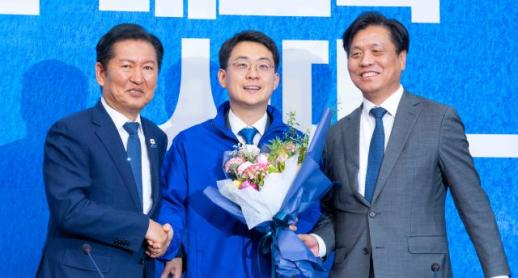 Democratic Party taps Park Ji-won, Lim Moon-young for likely by-election strategic nominations The Democratic Party on Tuesday named Supreme Council member Park Ji-won and Lim Moon-young, standing vice chair of its AI Strategy Committee, as internal talent picks, signaling strategic nominations for upcoming by-elections. Park is expected to be nominated in the North Jeolla Province district of Gunsan-Gimje-Buan, and Lim in Gwangju’s Gwangsan-eul district. At a welcome event at the National Assembly, party leader Jeong Cheong-rae said the core principles for strategic nominations in the parliamentary by-elections were recruiting outside talent and elevating internal talent. He called Park “a model” internal pick, noting Park rose from the rank-and-file and won election as a supreme council member after a 115-to-1 competition. Jeong said Park was elected last September through an all-member vote, becoming the first to move from an ordinary party member to the supreme council. He described Park as a symbol of the “one person, one vote” system and “a next-generation leader” who could reshape the party. Jeong also urged Lim to help support the Lee Jae-myung government’s AI policy at the National Assembly and within the party, asking Lim to play a major role in AI legislation alongside Ha Jeong-woo, who is running in Busan’s Buk-gap district. Lim previously served as an operator of Nowcom’s Nownuri service and as head of the iMBC media center, and worked as a policy aide when Lee was mayor of Seongnam and as an informatization policy official when Lee was governor of Gyeonggi Province. Both candidates highlighted ties to their expected districts. Lim said he decided to run in the Gwangju Gwangsan-eul by-election after accepting the party’s proposal and pledged to help transform Gwangju into a leading city in the AI era. Park said he would “build momentum for victory” starting in North Jeolla Province, where he said he was born and raised. Asked whether tapping presidential office figures who helped design national AI policy, including Ha and Lim, could disrupt policy work, Kim Young-jin, deputy chair of the party’s talent recruitment committee, said coordination among the party, government and presidential office would continue and could produce greater synergy. Kim said follow-up work would include legislative and policy support in the National Assembly, adding that having the two active in parliament would have a bigger impact in shaping a nationwide direction. 2026-05-06 13:51:16
 -
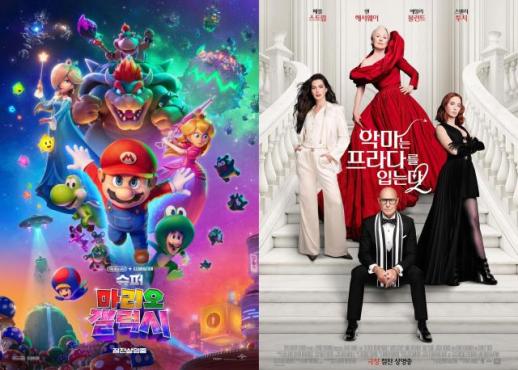 Foreign Films Lead Korea Box Office Over May Holiday as 'Super Mario Galaxy' Tops Charts Foreign films clearly dominated South Korea’s theaters over the May holiday. From May 3 to 5, “Super Mario Galaxy” and “The Devil Wears Prada 2” ranked No. 1 and No. 2 at the box office, while the long-running Korean film “Salmokji” followed at No. 3. According to the Korean Film Council’s integrated ticketing network, “Super Mario Galaxy” led the box office for May 3-5, drawing 283,287 moviegoers. Its cumulative audience reached 1,110,698. After passing 1 million admissions on its seventh day in theaters, it continued to gain momentum through the Children’s Day holiday period, attracting family audiences. “Super Mario Galaxy” follows brothers Mario and Luigi, who grow from Brooklyn plumbers into heroes who save the world. In this installment, they rescue Yoshi, who gets lost while on a mission in the Sand Kingdom, and set off on a new adventure. Analysts said its appeal as a family-friendly animated film fit well with May’s focus on family outings. “The Devil Wears Prada 2” placed second, with 124,693 admissions over the same period and a cumulative total of 959,139. The film centers on Miranda, editor-in-chief of the legendary fashion magazine Runway, Andy, who returns as a planning editor after 20 years, and Emily, now a luxury brand executive, as they reunite and compete for influence in the fashion world amid a changed media landscape. The reunion of Meryl Streep and Anne Hathaway after 20 years helped drive audience interest. In third place, Korean horror film “Salmokji” drew 108,222 moviegoers from May 3 to 5, bringing its cumulative audience to 2,836,231. Released April 8, it has sustained a long run, holding its ground even as foreign titles led the holiday box office. “Salmokji” depicts what happens after a mysterious figure appears on a road-view image and a film crew heads to a reservoir for reshoots, only to encounter something in the dark, deep water. Directed by Lee Sang-min, it stars Kim Hye-yoon, Lee Jong-won, Kim Jun-han, Kim Young-sung, Oh Dong-min, Yoon Jae-chan and Jang Da-a. The film has exceeded its break-even point on the strength of immersive scares and word of mouth, and continued to draw audiences through the holiday. “Project Hail Mary” ranked fourth, with 30,811 admissions over May 3-5 and a cumulative total of 2,706,646. Since opening March 18, it has remained near the top on word of mouth. Demand for premium-format screenings and repeat viewings helped it surpass 2.7 million admissions during the holiday period. The holiday box office showed distinct audience splits, from families to women in their 20s and 30s. “Super Mario Galaxy” benefited from broad family appeal, while “The Devil Wears Prada 2” rode the strength of a familiar franchise. “Salmokji” continued to draw steady crowds through its long run and word of mouth. Observers are watching whether the trend through the end of the holiday will shape the broader box-office landscape for May.* This article has been translated by AI. 2026-05-06 13:36:15
 -
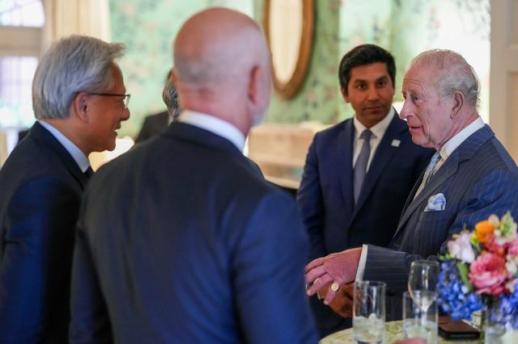 Jensen Huang’s AI Security Stance Signals a New Government-Big Tech Pact Jensen Huang’s remarks were more than a CEO’s political view. They amounted to a signal of how governments and big tech may align in the AI era. Speaking recently at the Milken Global Conference in Los Angeles, he said he “fully trusts the government to use technology properly.” He also said he would not “stand in the way” of a country using technology to protect families. Those comments land in the middle of a debate roiling the U.S. tech sector: How far should AI companies go in meeting national security demands, and how much distance should private firms keep from government power? At the center of the dispute is Anthropic. While working with the U.S. Department of Defense, Anthropic has maintained that use of its AI models should be restricted for “mass surveillance of Americans” and “fully autonomous weapons,” arguing that ethical boundaries are needed. The U.S. government viewed that stance as a national security risk. The Pentagon ultimately designated Anthropic a “supply chain risk company,” and President Donald Trump and Defense Secretary Hegseth publicly criticized it. Nvidia took a different path. Nvidia joined OpenAI, Google, Microsoft and Amazon Web Services in a Defense Department classified work agreement, effectively accepting the U.S. government’s use of its technology for “lawful purposes.” The broader point is that the United States no longer treats AI as just an industrial technology. Like semiconductors, AI has become a strategic national asset. If nuclear technology defined Cold War power competition, today’s AI race is reshaping military, economic and diplomatic order. That is why Washington is pressing AI companies for stronger cooperation. The risks begin there. National security matters, but an overly close relationship between government and big tech can create new dangers. AI is not only a weapon. It can enable surveillance, intelligence analysis, behavior prediction and even public opinion manipulation, placing it directly in some of democracy’s most sensitive domains. Anthropic’s concern reflects that reality. Fully autonomous weapons and large-scale surveillance systems can slip beyond human control. Ethical debate over AI-based weapons is spreading quickly worldwide, and international standards remain unclear on how far to allow systems that do not require a person’s final judgment. At the same time, proponents argue the United States cannot tie its own hands as China and Russia accelerate AI militarization. Huang’s remarks align with a pragmatic view: private companies may not be able to refuse national security demands outright. History offers parallels. The internet began as a U.S. Defense Department project, and GPS was also military technology. Much of today’s civilian infrastructure originated in security needs. AI is moving along the same track. But AI differs from earlier technologies. While the internet and GPS mainly provided connectivity and location, AI can intervene in human decision-making itself — predicting choices, shaping behavior and combining information to produce new conclusions. That makes AI more politically and socially consequential than many past military technologies. What is needed, then, is not a simple yes-or-no argument but clear standards and principles. First, the principle of human control should be preserved. Modern battlefields are already moving at extreme speed, with hypersonic missiles, drone swarms and real-time cyber conflict making it difficult for humans to approve every tactical decision. Still, unlimited acceptance of weapons that fully exclude humans carries serious risk. At minimum, the world needs shared understanding that human responsibility must remain in areas such as mass destruction and strategic weapons. Second, democratic oversight matters. National security depends on secrecy, and military operations and intelligence work cannot be fully public. But placing government-big tech cooperation behind total secrecy also clashes with democratic principles. Limited checks — through legislatures, courts and independent oversight — are needed. Neither full disclosure nor total secrecy is a workable answer. Third, discussion of international norms should begin. A comprehensive agreement will be difficult amid U.S.-China-Russia competition. Yet during the Cold War, the United States and the Soviet Union pursued the Nuclear Non-Proliferation Treaty and strategic arms limitation even as they competed. Competition and rules can advance together as risks grow. AI should be no different, starting with narrow areas such as banning fully autonomous nuclear strike systems. South Korea is not insulated from these pressures. AI and semiconductors have already become national security industries, and companies such as Samsung Electronics and SK hynix sit at the core of the global AI supply chain. South Korean firms may increasingly face pressure to choose between the United States and China. The issue goes beyond exports, tying together diplomacy, security and technological sovereignty. Huang’s remarks, then, are not simply a personal statement. They underscore that in the AI era, technology companies may find it harder to remain purely private actors. They also serve as a warning that governments cannot justify every use of technology under the banner of “security.” The central challenge of the AI era is where to draw the line between national security and technology ethics, and between military efficiency and democratic control. The world is now entering a more intense phase of competition and debate over that new boundary. 2026-05-06 13:30:18
 -
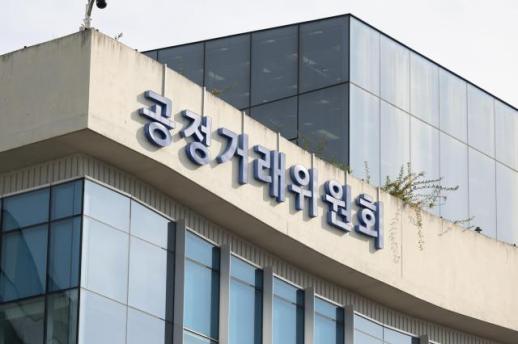 Korea FTC Orders Concert Membership Refund, Cancellation Terms Revised South Korea’s competition watchdog has ordered changes to what it called unfair terms that limited refunds for paid performance memberships, including clauses that blocked annual-fee refunds after a single use of discount or early-ticket benefits. It also moved to fix terms that made it easy to join online but required cancellation only by phone. The Korea Fair Trade Commission said Tuesday it reviewed membership terms used by 19 venues and ticketing platforms, including the Seoul Arts Center and Lotte Concert Hall, and required corrections to unfair provisions. The review was conducted to prevent consumer harm as public interest in culture and the arts has grown. According to the FTC, some operators had maintained clauses stating refunds were not allowed once service began. Lotte Concert Hall specified that refunds were unavailable if a paid member had received benefits, while Gangneung Arts Center said refunds were not allowed after 15 days from sign-up or if there was any booking history. The FTC said using membership benefits alone does not necessarily mean the operator suffers losses equal to the full annual fee. It required terms to allow full refunds within 14 to 30 days of joining, while permitting only a penalty equivalent to the benefits used to be deducted, with the remainder returned. The agency also cited cases of excessive deductions during refunds. The Seoul Arts Center deducted both an amount based on elapsed time and a fee after two weeks, and the National Gugak Center said refunds were not allowed if the value of discounts exceeded the membership fee. The FTC said such clauses infringed on consumers’ legitimate refund rights and required revisions so that only the larger of the amount corresponding to the period of use or the value of benefits provided can be deducted. Unfair limits on how members could cancel or withdraw were also targeted. Lotte Concert Hall and Interpark allowed sign-ups through easy channels such as online registration but required withdrawals to be made only by phone. The FTC said that improperly restricted how customers could express their intent and ordered changes to allow withdrawal through various methods, including online, phone and written requests. The FTC said it also corrected clauses covering exemptions from liability when user fault overlaps, unilateral deletion of member posts without a chance to explain, and unfair refusals of membership or limits on service use. Kwak Go-eun, director of the FTC’s Division for Standard Form Contracts and Special Transactions, said the changes are expected to reduce consumers’ burdens during refunds. She said the FTC will continue to inspect and correct unfair contract terms and trading practices in areas closely tied to daily life.* This article has been translated by AI. 2026-05-06 12:04:09