
Journalist

Lee Hugh
=
-
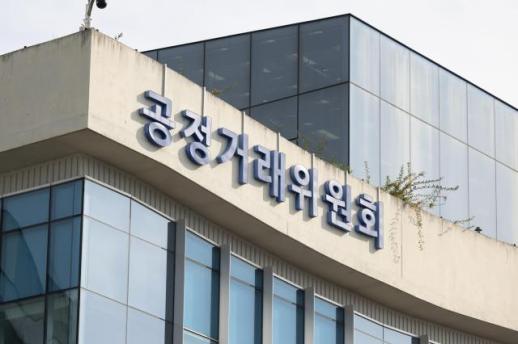 South Korea FTC to Base Fines on Last Full Year Before Violation Ends; Retaliation Penalty Up to 30% South Korea’s competition watchdog will change how it calculates administrative fines, shifting the sales base period from the business year immediately before a violation to the business year immediately before the violation ends. It will also raise penalties for retaliation in the agency and franchise sectors, allowing fines to be increased by up to 30% when businesses retaliate over reports to the Fair Trade Commission. The Fair Trade Commission said April 30 it will seek public comment on proposed amendments to enforcement decrees under the subcontracting, franchise and distribution laws from that day through June 9. It also said it will issue an administrative notice through May 20 on revisions to its fine guidelines under the subcontracting, franchise, distribution and agency laws. The changes are part of the fine-system overhaul announced last year. To deter repeat violations, the FTC will strengthen the cap on fine increases so that even a single prior violation within the past five years can raise a fine by up to 50%, and repeated violations can raise it by up to 100%, depending on the number of offenses. The agency said the move is aimed at preventing repeated illegal conduct such as collusion. The FTC will also tighten its response to retaliation. It already increases fines when a business retaliates because someone reported it to the FTC or sought dispute mediation. In the agency sector, the maximum increase for retaliation will rise to 30% from 20%. In the franchise sector, where there had been no separate rule, the FTC will add a basis to increase fines by up to 30% for retaliation. Grounds and ranges for fine reductions will be narrowed. Previously, companies could receive reductions of 10% each — up to 20% total — for cooperating with investigations and deliberations. Under the revision, a reduction of up to 10% will apply only when a company cooperates throughout both the investigation and deliberation stages. The FTC will also cut the reduction available for voluntary corrective action. A reduction of up to 50% had been possible, but it will be limited to up to 10% and only when the effects of the violation have been substantially removed. In addition, the FTC will create a basis to revoke, on its own authority, a reduction granted for cooperation if a company later reverses its statements during litigation. * This article has been translated by AI. 2026-04-30 10:07:39
 -
 Korea Fair Trade Commission Warns of Refund Delays as Prepaid Installment Firms Drop to 76 South Korea’s Fair Trade Commission said Thursday the number of registered prepaid installment transaction companies fell to 76 in the first quarter, down from 77. The commission said two companies canceled their registrations during the quarter and one newly registered. Four companies reported changes to key information such as executives or addresses. A Plus Life and Baramil Good Life changed their representatives, The Better Life changed its address, and Utopia Future changed its email address, the commission said. The commission urged consumers signing prepaid installment contracts to closely review notices from the consumer damage compensation insurance institution to help prevent losses tied to closures or registration cancellations. It also warned that companies that frequently change their name or address may pose a higher risk of weak operations or business suspension. It said consumers should be especially cautious with companies that have not signed a consumer damage compensation contract, because there is no safeguard to recover payments if the company shuts down or another incident occurs. The commission said some companies have failed to refund payments — excluding penalties — within three business days after consumers cancel prepaid installment contracts for mutual-aid services and savings-type travel products, or have delayed payment. Consumers who suffer losses such as delayed refunds can seek counseling or file for relief through the Korea Consumer Agency, it said.* This article has been translated by AI. 2026-04-30 10:06:45
 -
 National Fire Agency, Pediatric Emergency Society to Upgrade 119 Child Emergency Response The National Fire Agency said April 30 it confirmed practical cooperation steps with the Korean Society of Pediatric Emergency Medicine after holding a meeting the previous day to strengthen response systems for pediatric emergency patients and improve transport. The agency said the talks were arranged as hospitals face growing difficulty accepting pediatric emergency patients amid regional imbalances in pediatric medical resources and a shortage of residents. It said the goal is to combine firefighters’ pre-hospital response capabilities with the society’s expertise to find more fundamental solutions. The two sides agreed on three priority tasks aimed at improving survival rates for pediatric emergency patients and said they would move immediately to implement them. First, they will fully revise the 119 emergency call consultation manual to reflect children’s physiological characteristics, which differ from adults. The agency said it will refine phone-triage protocols and symptom-specific transport guidance — including for seizures and foreign-body ingestion — with advice from the society to help field crews make faster, more accurate decisions. Second, they will overhaul training for paramedics to raise and standardize pediatric emergency care skills. The agency said it will actively cooperate as the society designs its own pre-hospital pediatric emergency care education program, and will develop and distribute customized simulation training content based on surveys of field training needs. Third, they agreed to make more active use of 119 air ambulances (firefighting helicopters) to address limits in pediatric specialty infrastructure, which is heavily concentrated in the Seoul metropolitan area, and to reduce transport delays. The agency and the society said they will work to improve the efficiency of using firefighting aviation resources so critically ill children can be transported quickly, within the golden time, to the most appropriate hospital anywhere in the country. Commissioner Kim Seung-ryong of the National Fire Agency said pediatric emergency response requires more careful and precise expertise, and that cooperation with the society would help strengthen the nation’s safety net. “By combining field experience with the society’s specialized skills, we will do everything we can so our children can receive optimal emergency medical services anywhere in the country,” he said.* This article has been translated by AI. 2026-04-30 10:05:39
 -
 LG’s EXAONE AI to Power Korea’s Safety Report System, Pilot Service Due This Year LG AI Research is accelerating the use of artificial intelligence in public safety services. LG AI Research said April 30 that it has completed the first phase of development of an “AI Safety Report System” based on its EXAONE model, in cooperation with the Korea Electronics Technology Institute (KETI), and will launch a pilot service within the year. The system is designed to analyze more than 39,000 safety reports filed each day and automate the full workflow — from intake to screening and classification, transfer to the responsible department, and sending a reply. The current Safety Report System uses some keyword-based automatic classification, but accuracy can drop when reports include typos or unclear wording. Reports with photos or videos are handled by staff who review the material and then route it to the relevant agency. LG AI Research said its vision-language model, EXAONE 4.5, addresses those limits by understanding and reasoning over visual information such as photos and videos to improve screening and classification. KETI plans to use the refined report text generated by EXAONE to further break down key categories, shorten transfer times for high-urgency cases and reduce administrative workload. For example, if a user uploads a photo of a clogged storm drain, EXAONE analyzes the image and automatically generates the report text. If the case is classified as high priority — such as a flood risk during the rainy season — it can be sent directly to the response department without intermediate steps, enabling faster action. The two organizations said that as more safety-report data accumulates, they expect to analyze patterns by time, region, type and frequency, and use the results to help develop policies that respond proactively to emerging safety risks. “Through cooperation with LG, we will be able to reduce the administrative burden and operating costs of public services and strengthen citizen safety,” KETI President Shin Hee-dong said. “We will create a model case of AI transformation that people can feel.” Lim Woo-hyung, co-head of LG AI Research, said, “By using EXAONE, we will improve both the speed and quality of safety administration and contribute to improving people’s quality of life.” Separately, LG AI Research said it is also developing “K-EXAONE” and is participating in the Ministry of Science and ICT’s “Independent AI Foundation Model (Dokpamo)” project. It said K-EXAONE earned the top technology score in the first evaluation and ranked first in contributions within the open-source ecosystem. 2026-04-30 10:04:40
 -
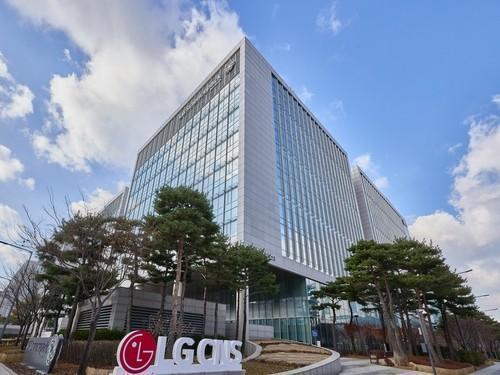 LG CNS Q1 operating profit surges 19 pct on AI, cloud growth SEOUL, April 30 (AJP) - South Korean IT services firm LG CNS posted first-quarter operating profit of 94.2 billion won ($63.4 million), up 19.4 percent from a year earlier, as surging demand for artificial intelligence and cloud services fueled growth across its business lines. According to regulatory filing released Thursday, revenue for the January to March period climbed 8.6 percent on-year to 1.315 trillion won, with the company's AI and cloud division accounting for about 58 percent of the total at 765.4 billion won. The segment grew 6.7 percent year-on-year, buoyed by the expansion of agentic AI-based multi-agent services into defense, finance, manufacturing and biopharmaceuticals. Net profit jumped 41.2 percent to 80.9 billion won, while the operating margin widened 0.7 percentage points to 7.2 percent. "Despite heightened global uncertainty stemming from U.S.-Iran geopolitical risks, energy price volatility and swings in interest rates and exchange rates, LG CNS expanded its external business on the back of solid technology and execution capabilities," said CFO Song Kwang-ryun said during an earnings call. Its digital business services division recorded revenue of 321.9 billion won, a 11.9 percent year-on-year rise driven by next-generation IT system buildouts for major financial institutions including NH NongHyup Bank and Shinhan Investment. The smart engineering segment also gained 10.4 percent to 227.8 billion won on the back of factory automation and logistics projects. The company is also betting on physical AI, investing in U.S. robotics firm Dexmate to build a lineup spanning bipedal humanoids, quadrupeds and wheeled robots, and plans to publicly launch a proprietary robot training platform next month. Its first overseas AI data center in Indonesia is slated for completion by year-end. LG CNS has moved to ride the broader AI boom by forging partnerships with global heavyweights such as OpenAI and Palantir, supplying ChatGPT Enterprise to about 10 corporate clients since February while co-developing high-value AI projects through a joint engineering team with the U.S. data analytics firm. Shares of LG CNS traded at 66,000 per stock at 10:00 a.m., 1.05 percent lower than the day before. 2026-04-30 10:03:23
 -
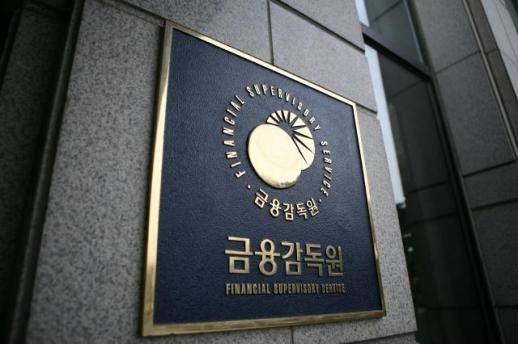 Welcome, KB Savings Bank Receivables Loan Fraud Exposes Oversight Gaps The accounts receivable-backed loan fraud tied to auto parts transactions at Welcome Savings Bank and KB Savings Bank is difficult to dismiss as a routine financial incident. The cumulative volume handled reached 300 billion won, and estimated losses are around 100 billion won. More troubling, the case exposed weak links in the financial system, showing what can happen when regulatory loopholes and on-the-ground control failures collide. The causes should be stated clearly. The first responsibility lies in how the system was designed. Treating auto repair estimates as accounts receivable and issuing loans on that basis was intended to ease cash shortages for small and midsize firms. But once such claims were accepted as “paper-based receivables” without sufficiently verifying the underlying transactions, the door to fraud was already open. Assuming a transaction is genuine simply because a system exists was a structural vulnerability. A second problem was layered on top: weak screening and oversight by financial companies. Receivables financing is not a simple collateral loan. It requires verifying both whether the transaction is real and whether repayment is likely. Even so, some lenders relied too heavily on system data and failed to closely examine individual deals. Responsibility also lies in not filtering out warning signs during efforts to expand business. The door was open, and controls were loose. The core tactic in the case — using special purpose companies to evade lending limits — also cannot be brushed aside. Splitting entities to avoid rules on loans to the same borrower is a long-used technique. The problem was the failure to screen out in advance that this “formal dispersion” often points to the same underlying party. Paper checks alone cannot block such structures. Any remedy must be designed on two tracks. First, a verification system to determine whether transactions are real. The article calls for linked data that can cross-check the full chain — Insurance Development Institute estimates, actual repairs and insurance payouts. Second, a management system that tracks the true borrower. Loans should be consolidated and managed based on the ultimate controlling party, not just corporate names. Only when transaction verification and borrower tracing work together can structural fraud be prevented. The case also raises questions about what “trust” means in finance. The industry has long operated on trust built on systems and documents. This episode shows how easily trust collapses without verification. What is needed, the article argues, is trust grounded in checks — built through data and cross-verification. At the same time, presenting tougher regulation as the only answer carries risks. Receivables-backed lending was created to support small and midsize firms that struggle to raise funds. If screening standards and procedures are tightened across the board, companies that genuinely need financing could be pushed out. The goals of blocking crime and maintaining access to credit can conflict. The article calls for more precise, differentiated rules. Procedures could be simplified for strong firms with established transaction histories, while new deals or cases showing risk signals would face stricter review. Linking public and private data could also reduce verification costs while improving accuracy. The goal should be a system that targets risk, not one that shuts every door. Regulators also have a key role. The Financial Supervisory Service should go beyond inspections of individual firms and overhaul standards for receivables financing more broadly, the article says. It urges adoption of new supervisory tools, including data linkage, consolidated borrower management and systems to detect unusual transactions. As the financial environment changes, oversight methods must change as well. Ultimately, the case is a reminder of financial fundamentals: Finance runs on trust, but that trust holds only when backed by rigorous verification. Closing loopholes, strengthening accountability in the field and balancing regulation with access are necessary to prevent a repeat. More important than immediate losses, the article concludes, is restoring damaged trust. It calls for a fundamental review of the foundations of receivables financing in the wake of the case.* This article has been translated by AI. 2026-04-30 10:00:33
 -
 Queen Camilla Meets Sarah Jessica Parker at New York Public Library Event After two days in Washington, King Charles III and Queen Camilla traveled to New York, drawing a lineup of public figures including New York City Mayor Zoran Mamdani. Local media including The New York Times reported that on April 29 (local time), Charles visited the 9·11 Memorial in Lower Manhattan. At the memorial pools, the king and queen paid tribute to the victims and laid flowers. Michael Bloomberg, chairman of the memorial, stood with Charles during the wreath-laying. Charles’ appearance also highlighted the 67 Britons who died in the Sept. 11 attacks, now at the 25th anniversary. The New York Post reported that Mamdani attended and greeted the king. Before the event, Mamdani had told reporters he would ask Charles to return the Koh-i-Noor diamond, which he said Britain took from India. The ceremony ended without incident, and Mamdani stayed about an hour before leaving, the reports said. Camilla held a separate event at the New York Public Library to promote literacy. The New York Times said the library’s holdings include a copy of the Declaration of Independence, a 1775 map of New York City, and a letter written in 1812 by Jane Austen (1775-1817), whose 250th birth anniversary was marked last year. Camilla read “Winnie-the-Pooh” to children at the event. Sarah Jessica Parker, the star of the U.S. television series “Sex and the City,” accompanied Camilla during the library visit. People magazine reported that Camilla, a longtime supporter of reading who has founded a charity to promote books, and Parker, who has focused on literacy efforts, share common interests. Vogue editor Anna Wintour and Jenna Bush Hager, a news anchor and daughter of former U.S. President George W. Bush, also attended. Page Six, an entertainment outlet, described the gathering of Camilla, Parker and Wintour as looking like “a scene from ‘Sex and the City.’” The New York Times reported, however, that Charles and Camilla were not expected to meet Prince Harry and his wife, Meghan Markle, during the U.S. trip, saying the king’s schedule included no separate plan to see Harry. Buckingham Palace declined to comment. Harry said in a statement that a state visit is a tightly scheduled working trip funded by British taxpayers, adding that it would be neither expected nor possible to add personal engagements. 2026-04-30 09:58:53
 -
 Star Alliance Opens New Lounge at Guangzhou Baiyun Airport Terminal 3 Asiana Airlines said Thursday that Star Alliance, the airline group it belongs to, officially opened a dedicated lounge on April 28 at the new Terminal 3 of Guangzhou Baiyun International Airport in China. The new facility is Star Alliance’s second lounge in Guangzhou, following its first location opened in 2024. The lounge covers about 1,400 square meters (about 15,070 square feet) and has 245 seats. It also includes a 700-square-meter (about 7,535-square-foot) outdoor garden, designed to let passengers relax in a natural setting before boarding. The lounge operates 24 hours a day and includes dedicated rest areas, sleeping capsules, private rooms and a work zone, the airline said. An opening ceremony at Terminal 3 was attended by Ambar Franco, Star Alliance vice president for customer experience, and Chi Yaoming, deputy general manager of Guangzhou Baiyun International Airport, along with representatives from member airlines and the airport. “Lounges are a key element in delivering a smooth and comfortable journey for our member airlines’ customers,” Franco said. “In line with Guangzhou’s growing role as an international hub, this lounge offers more space and upgraded facilities to provide a distinct level of comfort.” Star Alliance said the design reinterprets Guangzhou’s Lingnan culture and natural scenery in a modern style, with a centerpiece inspired by the city flower, the kapok. The lounge also offers a tea experience area run by a professional tea artist. Food options were developed in collaboration with Pullman Hotel and include Chinese and Western dishes, the airline said. The lounge is available to first- and business-class passengers on Star Alliance member airlines departing from Terminal 3, as well as Star Alliance Gold members. A total of 10 Star Alliance member airlines, including Asiana Airlines, Air China and ANA, currently serve Guangzhou Airport. The alliance operates more than 1,500 flights a week from Guangzhou, connecting 52 cities in 10 countries, Asiana said.* This article has been translated by AI. 2026-04-30 09:53:51
 -
 HDC Labs Presents AI-Driven Golf Course Management Platform GDX at 2026 AI Service Trends Conference Space AIoT platform company HDC Labs, led by CEO Lee Jun-hyeong, presented a case study on AI-based service innovation. At the '2026 AI Service Trends Conference' held on April 29, HDC Labs introduced its GDX platform, describing how it has shifted golf course operations from experience-based decisions to a data-driven management system. The conference, themed "Digital transformation and innovation completed by AI services," was organized to share real-world operating cases and key AI technology trends, centered on winners of the 2025 AI Service Awards. Working-level leaders from award-winning projects and industry executives presented service results and operating strategies. Sessions covered AI-based golf course management, high-performance AX strategies and AI security, along with practical know-how for deploying AI services in the field. Special lectures also addressed changes in an era of AI collaboration, as well as AI service startups and success cases. HDC Labs said GDX won the grand prize in the AI service category at i-AWARDS KOREA 2025, a domestic digital and AI awards program. The company said the platform was recognized for its innovation and completeness, including drone-based remote course inspection technology that supports digitalized course management. The company said GDX is built around AI-based turf data inference. Using more than three years of drone and multispectral data, HDC Labs developed algorithms to quantify turf conditions and signs of disease and to forecast future conditions through time-series analysis. HDC Labs said the approach enables proactive management rather than after-the-fact responses, helping improve turf quality and reduce operational risk. The company said GDX is being used at operating golf courses. It has deployed the platform at major golf courses at I'Park Resort, which has 90 holes in South Korea, and is integrating and managing large-scale turf data at Seongmunan CC and Oak Valley CC to help maintain premium course quality. "We will continue to expand the commercialization of GDX and keep setting a new standard for data-driven course management," said Park Jong-min, a managing director at HDC Labs' AIoT & Platform Lab.* This article has been translated by AI. 2026-04-30 09:52:56
 -
 Samsung Electronics Hits Intraday 230,000 Won, Sets 52-Week High on Strong Q1 Results Samsung Electronics climbed to a new 52-week high in intraday trading on strong semiconductor-driven earnings, while SK hynix also rose. According to the Korea Exchange, Samsung Electronics was trading at 229,000 won as of 9:33 a.m., up 3,000 won, or 1.33%, from the previous session. It briefly touched 230,000 won early in the session, setting a fresh 52-week high. The move followed the company’s earnings announcement, which lifted investor sentiment. At the same time, SK hynix was up 24,000 won, or 1.78%, at 1,317,000 won. Samsung Electronics said preliminary consolidated operating profit for the first quarter totaled 57.2328 trillion won, up 756.1% from a year earlier. Revenue rose 69.2% to 133.8734 trillion won, and net profit increased 474.3% to 47.2253 trillion won. The company said both revenue and operating profit were record highs on a quarterly basis, surpassing the previous peaks by a wide margin. By division, the Device Solutions (DS) semiconductor business posted revenue of 81.7 trillion won and operating profit of 53.7 trillion won, leading the gains. The Device Experience (DX) business, which covers finished products, reported revenue of 52.7 trillion won and operating profit of 3 trillion won.* This article has been translated by AI. 2026-04-30 09:51:50