
Journalist

Lee Hugh
=
-
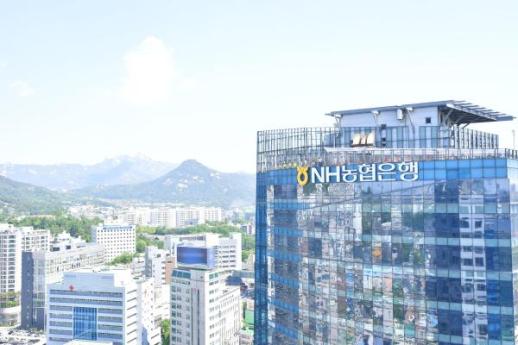 NH NongHyup Bank Issues 4 Trillion Won in Hybrid Capital Securities to Bolster Growth NH NongHyup Bank said it successfully issued hybrid capital securities, or perpetual bonds, despite heightened market volatility tied to the Middle East situation. The bank said April 30 it completed a 4 trillion won issuance. The deal came as uncertainty grew at home and abroad, including geopolitical risks in the Middle East and a sharp rise in interest rates following a surprise in South Korea’s first-quarter gross domestic product. Through investor relations efforts, the bank set the spread at 65 basis points, down 11 basis points from the 76 basis points on last year’s issuance. One basis point equals 0.01 percentage point. Demand was strong. The bank initially sought 3 trillion won, but increased the size to 4 trillion won as institutional orders surged. The final yield was set at 4.33%. The securities are structured as perpetual bonds with a five-year call option, allowing early redemption at a specified time. “Even in a market environment with significant rate volatility, we achieved meaningful issuance results through proactive investor relations and an expanded investor base,” Lee Sang-seon, the bank’s executive vice president for the financial markets division, said. “Based on the strengthened capital, we will enhance our stable growth foundation through preemptive capital ratio management.”* This article has been translated by AI. 2026-04-30 09:04:39
 -
 Kang Hoon-sik Meets Qatar Trade Minister to Expand Investment Cooperation in AI, Other High-Tech Sectors Kang Hoon-sik, the president’s chief of staff, met with Qatar’s Minister of State for Foreign Trade Ahmed bin Mohammed Al Sayed to discuss ways to expand investment cooperation in advanced industries. Kang disclosed the meeting in a Facebook post on April 29, saying the two sides agreed to broaden ties beyond natural gas trade and orders for liquefied natural gas carriers to investment cooperation in high-tech sectors such as artificial intelligence, semiconductors and biotechnology. Kang previously visited Qatar on April 13 as the president’s special envoy for strategic economic cooperation, meeting with Emir Tamim bin Hamad Al Thani to discuss expanding bilateral cooperation. Kang said he told the emir it was time to extend cooperation centered on energy into investment in advanced industries such as AI, and that the emir promised to send a delegation promptly. “Indeed, within two weeks, a large delegation led by Minister of State Al Sayed visited South Korea,” Kang wrote, adding it included officials from Qatar’s Ministry of Commerce and Industry, the Ministry of Communications and Information Technology, and the sovereign wealth fund. Kang said Al Sayed is also a leading investment expert who previously served as CEO of the Qatar sovereign wealth fund, which he described as the world’s eighth-largest by assets and managing $580 billion. Kang said Al Sayed thanked the South Korean government for arranging meetings with many advanced-technology companies during the visit, saying it is most important to meet companies directly when making investment decisions. Kang said he told Al Sayed to contact him at any time and that he would move first to resolve any difficulties related to investment in South Korea. Kang said investment fund officials traveling with the Qatari delegation were holding detailed talks with potential investee companies, and he expressed hope that “win-win” investment cooperation cases would emerge soon.* This article has been translated by AI. 2026-04-30 09:03:08
 -
 Naver posts 16% revenue jump as AI-driven growth accelerates in Q1 SEOUL, April 30 (AJP) - Naver reported a 16.3 percent rise in first-quarter revenue, buoyed by robust demand for AI-integrated services and a sharp uptick in its consumer-to-consumer commerce business. The company reported through regulatory filings Thursday that consolidated revenue for the January to March period climbed to 3.24 trillion won ($2.17 billion), while operating profit edged up 7.2 percent to 541.8 billion won, as heavier infrastructure spending to bolster AI capabilities tempered bottom-line gains. Naver's platform segment, the company's bread-and-butter search and commerce engine, generated 1.84 trillion won in revenue, up 14.7 percent from a year earlier. Advertising revenue grew 9.3 percent, with the company noting that AI now accounts for more than half of its ad revenue growth through enhanced targeting tools. Service revenue, driven by Naver Plus Store, its membership program and proprietary logistics network, surged 35.6 percent. Its financial arm also gained momentum, with Npay transaction volume climbing 23.4 percent year-on-year to 24.2 trillion won, as the platform expanded its presence in offline payments through the Npay Connect terminal. The standout performer was the global ventures division, where revenue jumped 18.4 percent to 941.6 billion won, powered by a 57.7 percent spike in C2C revenue following the full consolidation of Spanish marketplace Wallapop and steady growth at Poshmark, Kream and Soda. Enterprise revenue, bolstered by AI, digital twin and Line Works-related projects, rose 18.8 percent. "Naver is a uniquely positioned platform that integrates search, commerce and payments into a single pipeline — the core competitive edge of the AI agent era," Naver CEO Choi Soo-yeon said, adding that the company would pursue its "action-oriented AI" strategy to build a virtuous cycle of user satisfaction and monetization while accelerating global expansion through C2C and sovereign AI offerings. The results come as Naver deepens its AI pivot on multiple fronts. In March, CEO Choi held a high-profile meeting with AMD chief Lisa Su at Naver's headquarters to explore collaboration in AI data center infrastructure, signing a memorandum of understanding to jointly develop next-generation GPU infrastructure aimed at expanding their artificial intelligence ecosystems. Earlier this month, Naver signed a strategic partnership with India's Tata Consultancy Services to jointly develop AI and cloud services, and co-launched a 1 trillion won targeting investment fund with Krafton and Mirae Asset to back AI and fintech startups in India. Shares of Naver opened at 222,000 won per stock, 0.91 percent higher than the day before. 2026-04-30 09:00:59
 -
 Daol Investment Raises Doosan Bobcat Target Price 23% on U.S., Europe Growth Daol Investment & Securities said Wednesday it raised its target price for Doosan Bobcat to 100,000 won from 81,000 won, a 23% increase, citing simultaneous growth in the U.S. and European markets and improving earnings. It maintained a “buy” rating. Choi Kwang-sik, an analyst at Daol Investment & Securities, said the U.S. market was solid in the first quarter, as it was for peers, while Europe posted growth. He said the firm raised its fair value estimate after results beat guidance and as it expects the market recovery cycle to continue over the next two years. Doosan Bobcat reported first-quarter consolidated revenue of 2.2473 trillion won and operating profit of 207.0 billion won, topping market expectations. The operating margin recovered to the high-7% range even excluding one-off factors, supported by price increases and cost controls, the report said. By region, both the U.S. and Europe expanded. The company had expected a U.S. decline this year after factoring in front-loaded demand tied to tariff effects, but sales instead rose 3%. The EMEA region, covering Europe, the Middle East and Africa, grew 18%, helping drive the improvement. By product, compact construction equipment and industrial vehicles posted $1.211 billion and $223 million, respectively, maintaining steady performance. The portable power business, where some shipments were deferred, is expected to be reflected in second-quarter results. The company also implemented additional price increases to offset the burden of steel and aluminum tariffs. Choi said low dealer inventories were another positive factor, adding that if retail demand continues to recover this year, the second half could outperform the first and signal entry into a recovery cycle. Daol also said the stock remains undervalued. Doosan Bobcat’s price-to-earnings ratio is about 13 times for 2026 and 10 times for 2027, below global peers’ 20 to 30 times. If the company maintains a 40% shareholder return ratio this year, the dividend yield is expected to be about 3.1%. * This article has been translated by AI. 2026-04-30 09:00:19
 -
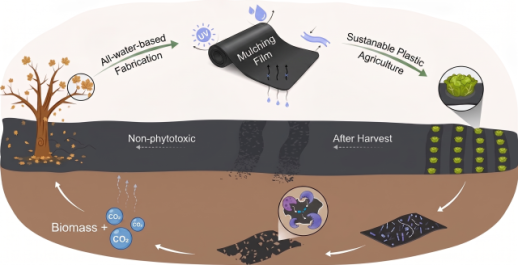 KAIST researchers develop biodegradable farming film from fallen leaves SEOUL, April 30 (AJP) - Researchers at the Korea Advanced Institute of Science and Technology have developed a biodegradable agricultural mulching film using fallen leaves collected from campus grounds and nearby riverbanks. The development offers a potential solution to soil pollution caused by conventional plastic films, the institute said Thursday. Agricultural mulching films are used to suppress weeds and maintain soil moisture. However, most commercial films are made of polyethylene (PE), a petroleum-based plastic that is difficult to recover after use. These films often break down into microplastics that remain in the soil, posing long-term environmental risks. The research team, led by Professor Myung Jae-wook at KAIST's Department of Civil and Environmental Engineering, extracted nanocellulose from fallen leaves using a green solvent composed of citric acid and choline chloride. This plant-derived fiber was combined with polyvinyl alcohol (PVA), a biodegradable polymer, to create a composite film. The entire manufacturing process utilized water as a medium instead of toxic organic solvents. In performance tests, the leaf-based film effectively blocked ultraviolet radiation and maintained soil moisture, with only a 5 percent loss of water over 14 days. Ryegrass grown using the film showed better development compared to crops grown without any covering. Biodegradability tests conducted in soil conditions showed that the film decomposed by 34.4 percent within 115 days, a rate faster than existing biodegradable alternatives. The researchers also confirmed that the decomposition process produced no plant toxicity, ensuring no negative impact on the germination or early growth of crops like ryegrass and bok choy. "This research is significant because it transforms fallen leaves into a functional material that protects the agricultural environment," Professor Myung Jae-wook said. "Because it uses non-edible biomass that does not compete with food resources and employs a water-based process, it can serve as a sustainable replacement for agricultural plastics." The study, with doctoral student Pham Thanh-trung-ninh as the first author, was published in the journal Green Chemistry on February 6, 2026. (Reference Information) Journal/Source: Green Chemistry Title: All-water-based fabrication of biodegradable mulch films from dead leaves via complex hydrogen-bonded networks Link/DOI: https://pubs.rsc.org/en/content/articlelanding/2026/gc/d5gc06616f 2026-04-30 09:00:12
 -
 Hyundai Motor Group Unveils Pleos Connect Next-Gen In-Car Infotainment System 현대차그룹이 차량을 '움직이는 스마트 기기'로 전환하는 차세대 인포테인먼트 시스템을 공개했다. 현대차그룹은 지난 29일 서울 강남구 UX 스튜디오 서울에서 미디어데이를 열고 다음 달 선보일 차세대 인포테인먼트 시스템인 플레오스 커넥트의 개발 콘셉트와 주요 기능, 향후 적용 계획을 발표했다. 플레오스 커넥트는 현대차그룹이 개발자 컨퍼런스 플레오스 25에서 공개한 연구개발 모델을 양산형으로 구현한 시스템이다. 그룹은 이를 소프트웨어중심차량(SDV) 체제 전환을 이끄는 핵심 플랫폼으로 보고 있다. 시스템은 대화면 디스플레이와 슬림 디스플레이, AI 음성 어시스턴트 '글레오 AI', 개방형 앱 마켓을 기반으로 구성됐다. 운전자는 터치와 음성 명령으로 차량 기능을 제어하고 내비게이션, 미디어, 외부 앱 서비스를 이용할 수 있다. 대화면 디스플레이는 주행 정보와 앱 기능을 분리해 직관성을 높였다고 회사는 설명했다. 화면 왼쪽에는 속도와 경고등 등 핵심 주행 정보를, 오른쪽에는 내비게이션과 콘텐츠 등 기능을 배치했다. 앱 화면은 분할해 여러 기능을 동시에 실행할 수 있다. 현대차그룹은 AI 기능을 핵심으로 내세웠다. 글레오 AI는 대규모 언어모델(LLM)을 기반으로 사용자의 의도와 상황을 파악해 차량 제어, 길 안내, 정보 검색 등을 수행한다. 여러 명령을 한 번에 처리하거나 모호한 표현도 인식하는 음성 인터페이스를 제공한다고 밝혔다. 또 차량 내에서 음악, 영상, 내비게이션, 웹 검색 등 외부 서비스를 이용할 수 있는 앱 마켓을 도입한다. 향후 게임과 엔터테인먼트, 차량 관리 서비스로 확대할 계획이다. 현대차그룹은 5월 출시 예정인 더 뉴 그랜저에 플레오스 커넥트를 처음 적용하고, 글로벌 시장에 순차적으로 확대해 2030년까지 약 2000만대 차량에 적용할 계획이다. 이종원 현대차·기아 피처&CCS사업부 전무는 "플레오스 커넥트는 모바일 친화적으로 구성된 플랫폼에 고도화된 인공지능 기술을 결합해 이용자에게 한 차원 높아진 이동 경험을 제공할 것"이라고 말했다. 2026-04-30 08:59:08
 -
 Samsung Electronics posts record first-quarter operating profit of 57.2 trillion won Samsung Electronics posted its biggest quarterly results on record in the first quarter of 2026. The company said April 29 that, on a consolidated basis, it recorded revenue of 133.9 trillion won and operating profit of 57.2 trillion won. From the previous quarter, revenue rose 43% and operating profit jumped 185%. The semiconductor (DS) division led the gains, as stronger AI-related demand lifted sales of higher-value memory chips and prices rose. DS posted revenue of 81.7 trillion won and operating profit of 53.7 trillion won. The mobile and home appliances (DX) division reported higher revenue on stronger flagship smartphone sales, but profitability improved only modestly due to higher costs and the impact of tariffs. DX posted revenue of 52.7 trillion won and operating profit of 3.0 trillion won. A weaker won also supported results. Samsung said the stronger U.S. dollar produced an earnings improvement effect of about 1.8 trillion won. Samsung forecast that the semiconductor-led improvement will continue in the second quarter. The company said, "As AI infrastructure investment expands, strong memory demand will persist," adding it will "push to maximize profitability centered on high value-added products." * This article has been translated by AI. 2026-04-30 08:58:08
 -
 Jipyeong Wins Constitutional Ruling Against Mandatory Patent Attorney Association Membership Law firm Jipyeong said on April 30 it helped secure a Constitutional Court ruling of constitutional nonconformity against a provision of the Patent Attorney Act that requires mandatory membership in the Korea Patent Attorneys Association. The petitioners were registered as patent attorneys based on their attorney licenses but did not join the association. In November 2018, the association disciplined them for violating the membership requirement. The petitioners then filed a lawsuit seeking to invalidate the disciplinary action and also filed a constitutional complaint challenging Article 11 of the Patent Attorney Act, which mandates membership for registered patent attorneys. Jipyeong, retained by the Korean Bar Association, submitted multiple opinions arguing the mandatory membership system was unconstitutional and sought to persuade the court. The constitutional complaint was filed in January 2020, and after more than six years of dispute with the association, the court issued the constitutional nonconformity decision, the firm said. The Constitutional Court found that the current association engages in activities representing the interests of patent attorneys who are not lawyers, and that forcing lawyer-patent attorneys to join infringes their freedom of association and freedom of occupation. The court also accepted the argument that a less restrictive alternative exists: allowing lawyer-patent attorneys to form a separate patent attorney group and requiring membership there. Jipyeong said it has previously won a series of constitutional rulings in high-impact cases, including challenges involving multiple provisions of the Public Official Election Act, the Court Organization Act, and Civil Act provisions on statutes of limitations and lease terms. Park Seong-cheol, an attorney who heads Jipyeong’s Constitutional Petition Center and led the case, said, “Although there were two prior rulings upholding the same provision, it was effective that we did not give up and persuaded the Constitutional Court with reasoning that went beyond the limits of the earlier decisions.” He said the team aimed to present specific grounds showing the provision excessively restricts lawyer-patent attorneys’ freedom of association and freedom of occupation. Park said changes in legislation could bring major shifts in how lawyers conduct patent attorney work, calling the decision one that will help companies and the public receive diverse and sufficient legal services. * This article has been translated by AI. 2026-04-30 08:57:16
 -
 Seoul Apartment Jeonse Deposits Rise 7.6% in Q1; Gangdong Up Nearly 20% Seoul apartment jeonse deposits rose 7.6% in the first quarter (January-March) from a year earlier, with increases in 24 of the city’s 25 districts, excluding Jongno, according to a report released by real estate information platform Dabang. Dabang said its Q1 2026 “Dabang Yeojido” data put the average jeonse deposit for an 84-square-meter apartment in Seoul at 710.68 million won, up from 660.64 million won in the first quarter of last year. The average sale price for an 84-square-meter apartment in Seoul was 1.19476 billion won, down 293.71 million won, or 19.7%, from the first quarter of 2025. Seocho District had the highest average jeonse deposit at 1.09906 billion won, 388.38 million won above the Seoul average, or 155% of it. Other districts above the citywide average included Gangnam (142%), Songpa (126%), Jongno (120%), Seongdong (114%) and Mapo (112%), with 10 districts in total exceeding the average. Seocho also posted the highest average sale price, at 2.86190 billion won, 1.66714 billion won above the Seoul average, or 240% of it. A total of 12 districts were above the citywide average, including Gangnam (233%), Songpa (181%), Yongsan (180%), Seongdong (151%) and Gwangjin (148%). Gwangjin recorded the biggest year-on-year increase in sale prices, with the average rising 256.91 million won, or 17.0%. Gangdong saw the largest increase in jeonse deposits, up 114.16 million won, or 19.8%. * This article has been translated by AI. 2026-04-30 08:51:16
 -
 Actor Choi Jae-won Reflects on Finale of 'My Baby’s Romance 2' With Daughter Choi Yu-bin Actor Choi Jae-won shared his thoughts as tvN STORY and tcast’s E Channel wrapped up the variety series ‘My Baby’s Romance 2.’ The jointly produced program follows parents as they watch their children date, offering a relationship-observation format seen through a parent’s eyes. Choi appeared with his daughter, Choi Yu-bin, drawing viewer attention with candid, relatable reactions as a father. On the show, he openly showed emotions ranging from surprise to pride while watching his daughter’s dates. His spontaneous responses and quick wit added to the program’s appeal, while his careful, parent’s perspective resonated with audiences. Choi said, “Watching my daughter on the broadcast, I felt proud, and it was a precious time that made me realize she has grown up this much.” He added, “I sincerely thank everyone who related to my honest reactions and sent warm support.” He continued, “As I watched my daughter date, I got immersed without even realizing it, and I even surprised myself with my reactions.” He added, “Through this program, I think I received an unforgettable, precious memory with Yu-bin. Thank you again to the production team who worked with us and to the viewers who watched.” Choi also mentioned future plans. He said Yu-bin will continue communicating through videos of her daily life on a YouTube channel she has been preparing, and that he will also greet audiences through a range of activities. He added, “Please continue to show warm support for our father-daughter pair.” * This article has been translated by AI. 2026-04-30 08:48:24