
Journalist

Lee Hugh
=
-
 Bitcoin Slips to Mid-$75,000s as Rate-Cut Hopes Fade and Mideast Risks Weigh Virtual asset prices, led by bitcoin, weakened broadly after a short-term rise, as investors turned cautious amid fading expectations for interest-rate cuts and ongoing geopolitical uncertainty. According to CoinMarketCap, bitcoin was trading at $75,912 as of 8 a.m. on the 30th, down 0.39% from the previous day. Ethereum fell 1.24% to $2,257. Binance Coin (BNB), Solana and XRP also slipped 0.82%, 0.71% and 0.65% to $617, $83 and $1.36, respectively. Market watchers cited profit-taking as prices cooled from an overbought condition following the recent surge. Macro factors also weighed on sentiment. With geopolitical risks such as tensions in the Middle East persisting, expectations for U.S. Federal Reserve rate cuts have weakened, dampening appetite for risk assets. Analysts also said momentum has eased on the demand side, with U.S. buying interest softening and short-term selling pressure increasing. In South Korea, bitcoin was trading at about 113.71 million won ($75,929) on the won-based exchange Bithumb as of 8 a.m., down 0.34% from the previous day. The so-called “kimchi premium” stood at 0.573%, indicating domestic prices were higher than overseas levels.* This article has been translated by AI. 2026-04-30 08:39:15
 -
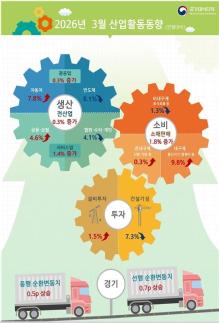 South Korea’s March Output, Spending and Investment Rise Together for First Time in Six Months In March, production, consumer spending and facility investment all rose, marking a “triple increase.” It was the first time the three indicators climbed together since September last year. According to the National Data Agency’s “March 2026 Industrial Activity Trends” released on the 30th, all-industry output rose 0.3% from the previous month, led by gains in services (up 1.4%) and mining and manufacturing (up 0.3%). All-industry output increased 1.2% in December, fell 0.8% in January, rebounded 2.1% in February, and extended the rise in March. Mining and manufacturing output rose 0.3% as increases in autos (up 7.8%) and other transport equipment (up 12.3%) offset a drop in semiconductors (down 8.1%). The agency said the semiconductor decline reflected base effects after a 28.2% surge the previous month, while overall conditions remained favorable. Services output climbed 1.4%, driven by finance and insurance (up 4.6%) and transportation and warehousing (up 3.9%). Still, the impact of the Middle East war was visible in some industries. Petroleum refining output fell 6.3% from the previous month, and chemicals slipped 0.3%. The agency cited a combination of war-related uncertainty in crude supply and seasonal factors such as scheduled maintenance. Consumption continued to recover. Retail sales rose 1.8% from the previous month, led by higher sales of durable goods such as communications devices and computers, supported by new smartphone launches and stronger back-to-school PC demand. Facility investment increased 1.5% from the previous month on expanded investment in transport equipment, including aircraft purchases. Construction investment remained weak. Construction completed fell 7.3% from the previous month as civil engineering (down 13.7%) and building construction (down 4.5%) both declined. Business-cycle indicators improved. The coincident composite index (cyclical component) rose 0.5 point from the previous month, and the leading composite index (cyclical component) gained 0.7 point. A National Data Agency official said March data appeared to reflect the Middle East war only in a limited way, adding that the impact could become more pronounced after April in related industries and would require further monitoring. For the first quarter, all-industry output rose 1.7% from the previous quarter, supported by gains in mining and manufacturing (up 2.7%) and services (up 1.2%). Consumption and investment also improved: retail sales rose 2.4%, and facility investment jumped 12.6%. Construction completed increased 1.2%, returning to growth. The government said the figures showed a broadly based recovery across production, consumption and investment, consistent with the first-quarter gross domestic product growth rate of 1.7% announced last week. It said the recovery that has continued since the second half of last year was again confirmed in the industrial activity data. The government added that despite the external shock of the Middle East war, measures to support the domestic recovery and invigorate capital markets, along with a price cap system, helped limit the impact. It said it would step up efforts to sustain the recovery by minimizing the war’s economic spillover effects. It also said it would swiftly execute supplementary budget programs, including support payments for damage from high oil prices, and push initiatives such as an “eco-friendly green consumption and tourism boost” and a “youth New Deal implementation plan,” while preparing additional measures, including an economic growth strategy for the second half of the year. 2026-04-30 08:37:46
 -
 NH Investment Raises EcoPro BM Target on Expected Hungary Plant Expansion NH Investment & Securities said April 30 it expects EcoPro BM to expand its second plant in Hungary in the second half of the year, raising its target price 14% to 280,000 won and maintaining its “buy” rating. In a report, NH analyst Joo Min-woo said customer strategies are being revised to reflect Europe’s IAA rules and the TCA (EU-U.K. trade agreement), which he said is increasing the likelihood of winning orders from new customers, including CATL. Joo said EcoPro BM is a key cathode-material supplier to Samsung SDI and is expected to benefit as Samsung SDI expands European electric-vehicle sales for models including the Ioniq 3, EV2, Audi, Benz and BMW. He added that EcoPro BM is also expected to benefit directly from a recovery in sales of cylindrical batteries used in BBU and power tools. Joo said EcoPro BM’s first-quarter revenue fell 4% from a year earlier to 605.4 billion won, while operating profit was 20.9 billion won, beating the market consensus. He attributed the results to the start of mass production of nickel-cobalt-manganese-aluminum (NCMA) cathode materials for Samsung SDI’s new European volume models, including the EV2 and Ioniq 3, and improved non-EV sales as demand for Samsung SDI’s power tools and BBU strengthened. He said sales to SK On totaled about 4,000 tons, rising from the previous quarter as volumes for the Europe-bound Volkswagen ID.4 gradually recovered. Joo said the factors behind the strong first quarter are expected to persist, with both selling prices and volumes continuing to grow.* This article has been translated by AI. 2026-04-30 08:31:11
 -
 Wall Street Ends Mixed as Oil Jumps and Fed Split Widens; Dow Falls, Nasdaq Flat U.S. stocks finished mixed on Tuesday, pressured by a sharp rise in oil prices and higher Treasury yields, while the Federal Reserve held interest rates but revealed unusually deep internal divisions. The Dow fell, and the Nasdaq ended little changed. The Dow Jones Industrial Average closed down 280.12 points, or 0.57%, at 48,861.81. The S&P 500 slipped 2.82 points, or 0.04%, to 7,135.98. The Nasdaq composite added 9.44 points, or 0.04%, to 24,673.24. The Russell 2000, which tracks smaller companies, fell 0.6%. Oil surged as U.S. pressure on Iran and tensions in the Middle East persisted. Brent crude rose as high as $111.84 a barrel intraday and settled at $110.44, up 5.8%. The jump revived inflation worries and pushed yields higher, dampening sentiment. The 10-year Treasury yield rose to 4.41%, and the 2-year yield climbed to 3.92%. The Fed added to investor caution by holding its benchmark rate at 3.5% to 3.75% on an 8-4 vote, its widest split since 1992. Three officials opposed leaving room in the statement for possible rate cuts, while one argued for a 0.25 percentage point cut. Markets read the outcome as a signal that expectations for rate cuts this year may be pushed back. By sector, energy stocks led on the oil rally, while utilities and materials fell. Starbucks rose 8.5% and Visa gained 8.3% after strong results. NXP Semiconductors jumped 25.5% on a robust earnings outlook. Robinhood slid 13.2% after disappointing results. After the close, big tech traded in different directions. Alphabet rose more than 3% in after-hours trading, while Meta Platforms, Microsoft and Amazon were lower. Investors are watching oil, interest rates and major tech earnings as key drivers for near-term market moves. 2026-04-30 08:23:51
 -
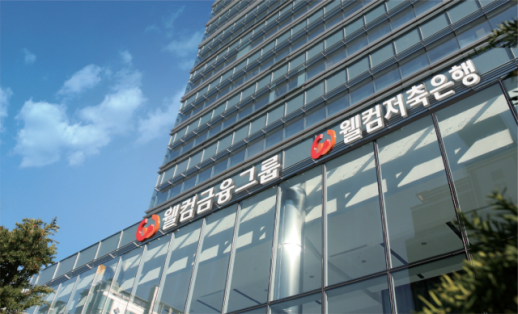 Welcome, KB Savings Banks Probed Over Auto Parts Loan Fraud; Losses Estimated at 100 Billion Won Welcome Savings Bank and KB Savings Bank have been hit by alleged loan fraud involving auto parts sales receivables used as collateral, prompting a financial regulator probe, officials said. According to financial authorities and the finance industry on the 30th, Welcome Savings Bank detected irregularities in the lending process in November last year, voluntarily reported the case to the Financial Supervisory Service and halted the product entirely. KB Savings Bank also disclosed in January that it had incurred losses of about 4.5 billion won. The product in question was a “win-win” financing program designed to provide working capital to repair shops and parts suppliers. It treated repair estimates issued through the Insurance Development Institute’s vehicle repair claim or loss-adjustment system (AOS) as sales receivables and extended loans on that basis. Once repairs were completed, the banks recovered the loans from insurance payouts. Authorities said fraudsters exploited the structure by obtaining false repair estimates through AOS to secure loans. To evade lending limits applied to a single borrower, they also set up multiple special-purpose companies. The finance industry estimates cumulative lending tied to the scheme at 300 billion won, with about 200 billion won recovered. The final damage is estimated at around 100 billion won. Welcome Savings Bank said the FSS investigation was already completed last year and that the actual losses would be less than 90 billion won. The FSS is currently conducting an inspection of KB Savings Bank. It also carried out an industrywide review of auto parts receivables-based lending at savings banks and found no additional cases of fraudulent loans, officials said. Police are continuing to investigate the parts supplier and others suspected of fraud.* This article has been translated by AI. 2026-04-30 08:22:36
 -
 LG Innotek CEO Moon Hyuk-soo, Applied Intuition CEO discuss expanding physical AI ties LG Innotek said April 30 that CEO Moon Hyuk-soo met April 29 with Applied Intuition co-founder and CEO Qasar Younis at the company’s Magok headquarters in Seoul to discuss cooperation in physical AI. The meeting followed the companies’ strategic partnership in autonomous driving announced in March. The two are working to advance autonomous-driving solutions by combining LG Innotek’s sensing modules with Applied Intuition’s software. Attendees included Moon and LG Innotek Chief Technology Officer Min Joon, along with Younis and Will Lin, head of Applied Intuition’s automotive business. Executives reviewed progress in their autonomous-driving collaboration, including joint responses to key customers and promotion plans. They also discussed expanding cooperation in physical AI areas such as robots and drones. Citing LG Innotek’s sensing capabilities and Applied Intuition’s experience building physical AI software across industries including defense, construction and agriculture, the companies said they plan to broaden collaboration in areas such as mobility and robotics. “Applied Intuition is a leader in physical AI trusted by global companies,” Moon said. “Through this cooperation, LG Innotek will leap forward to become a global top-tier player in sensing that leads the physical AI era.” * This article has been translated by AI. 2026-04-30 08:21:19
 -
 South Korea Opens K-Tourism Roadshow in Fukuoka to Target Japan’s Golden Week South Korea’s Culture, Sports and Tourism Ministry is stepping up efforts to attract Japanese visitors during Japan’s Golden Week holiday period (April 29 to May 6). The ministry said it will hold a “K-tourism roadshow” on Wednesday in Fukuoka to spur local interest in travel to South Korea. It is the third on-site promotion this month, following events in Osaka on April 9 and in Tokyo from April 10 to 12. ◆ “Shall we go today? Korea!” — Hwang Min-hyun to headline The Fukuoka roadshow is aimed at positioning South Korea as a nearby country that is easy to visit. Organizers set the theme as “Shall we go today? Korea!” Singer and actor Hwang Min-hyun, who organizers said has a strong fan base in Japan, is scheduled to appear for a special performance and a “Korea tourism story show.” The ministry said he has 6.75 million Instagram followers. Ahead of the main program, the four-member Busan-based band “Girin” will open the event. Promotional booths will be set up around the venue under the theme of “a preview of a Korea trip in Fukuoka.” Local governments including Busan and Jeju will take part, along with airlines such as Air Busan and Jin Air. Local food and cosmetics companies, including Sato Foods and Tito, will also join to offer Japanese consumers hands-on experiences tied to K-culture. ◆ Vice minister dispatched to deepen ties with travel industry To maximize demand during Golden Week, Kim Daehyeon, second vice minister of culture, sports and tourism, visited the Fukuoka event site. The ministry said Kim will meet with officials from major local travel agencies, including H.I.S., to discuss cooperation on developing tailored travel products. He also plans to outline the government’s K-tourism strategy and efforts to expand arrivals in an interview with the Mainichi Shimbun. “Japan is one of the key markets for inbound tourism to Korea,” Kim said. “I hope more Japanese people will visit Korea during this long holiday.” He added that the ministry will prepare thoroughly so both first-time visitors and repeat travelers can experience a wider range of regional tourism products.* This article has been translated by AI. 2026-04-30 08:19:45
 -
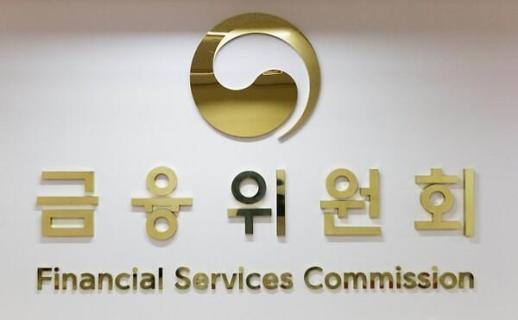 South Korea to Ease Mutual Finance Rules, Offer Incentives for Inclusive Lending Interior view of the Financial Services Commission building in Jongno-gu, Seoul. South Korea’s financial authorities are moving to ease regulations on the mutual finance sector to expand inclusive lending, including incentives for cooperatives that increase loans to local communities and working-class borrowers. The Financial Services Commission said it held a kickoff meeting on April 29 for a task force on institutional improvements for mutual finance and discussed measures to strengthen inclusive finance. The meeting was aimed at helping mutual finance institutions reinforce their role as community- and working-class-focused lenders. The government is pursuing reforms after concluding that lending by mutual finance institutions has increasingly shifted away from their founding purpose and toward real estate and loans to nonmembers. According to the FSC, the share of loans by mutual finance cooperatives — including credit unions, agricultural cooperatives, fisheries cooperatives and forestry cooperatives — tied to real estate and construction rose to 23.7% in 2025 from 4.9% in 2015. Over the same period, the share of loans to nonmembers increased to 40.7% from 32.0%. To encourage more inclusive lending, the FSC said it will review incentives such as adjusting the weighting of loans to local residents and working-class borrowers when calculating regulatory ratios, including the nonmember-loan ratio and the loan-to-deposit ratio. It is also considering additional regulatory relief for cooperatives that actively provide inclusive finance. To promote social solidarity finance, the FSC said it will also review legal and institutional changes, including amending the Credit Union Act to allow credit unions to invest in other corporations. The commission said it plans to set up a structure in which central federations support “inclusive cooperatives,” including by offering preferential interest rates, to prevent risks from rising as inclusive lending expands alongside regulatory easing. It also said it will examine steps to strengthen credit assessment, including upgrading internal credit scoring systems, and to reflect inclusive finance performance in management evaluations. Starting with the kickoff meeting, the task force plans to draft a tentative plan in June and, after consultations with relevant agencies, announce a final package in July. Kim Jin-hong, director general of the FSC’s Financial Industry Bureau, said, “Along with soundness, inclusiveness is a key pillar that will drive the mutual finance sector’s restoration of trust,” and urged cooperatives to take an active role in expanding inclusive finance by leveraging their strength in member ties. * This article has been translated by AI. 2026-04-30 08:18:25
 -
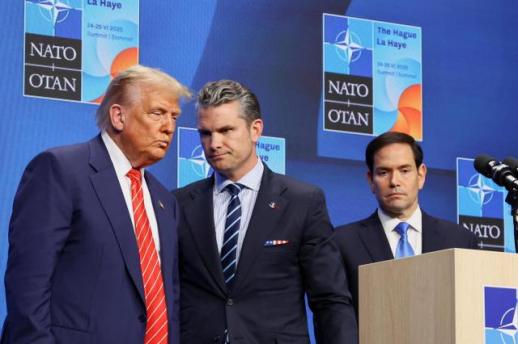 Trump's hint of troop rollback in Germany likely to worry Seoul, Tokyo SEOUL, April 30 (AJP) - U.S. President Donald Trump on Wednesday said Washington is reviewing a possible reduction of American troops in Germany, a brief one-sentence warning that could have wider repercussions across the Pacific, including in South Korea, where large-scale U.S. military deployments underpin regional security. “The United States is studying and reviewing the possible reduction of troops in Germany, with a determination to be made over the next short period of time,” Trump said on Truth Social. The statement followed an exchange of remarks with German Chancellor Friedrich Merz over the Iran conflict. Merz earlier said Iran was “humiliating” Washington in negotiations, prompting Trump to respond that the German leader “doesn’t know what he’s talking about.” The United States maintains its largest military presence in Europe in Germany, with about 34,547 troops as of 2025, according to available data, although estimates vary depending on rotations. These forces serve as a central hub for U.S. operations across Europe, including logistics and NATO coordination. Prior to Trump’s post, the U.S. State Department said Secretary of State Marco Rubio spoke with German Foreign Minister Johann Wadephul by phone, discussing Iran and the importance of securing freedom of navigation in the Strait of Hormuz. Any discord between Washington and Berlin — a central pillar of NATO — could carry implications beyond Europe, including in the Indo-Pacific. About 28,500 U.S. troops are stationed in South Korea under the bilateral alliance, while roughly 50,000 troops are based in Japan. These forces form a key part of U.S. deterrence posture in the region, particularly in relation to North Korea. Both countries are also linked to the Strait of Hormuz through energy supply chains. Before the recent conflict disrupted the waterway, South Korea depended on the strait for roughly 70 percent of its crude oil and about 20 percent of its natural gas, while Japan relied on it for about 93 percent of its crude imports. Earlier in April, Washington asked several countries, including South Korea and Japan, to consider supporting efforts related to security in the Strait of Hormuz. According to Seoul’s foreign ministry, Rubio spoke with Foreign Minister Cho Hyun on April 16 and referred to cooperation for long-term security in the area. The United States has previously reviewed troop levels in allied countries, including Germany, during earlier phases of the Trump administration. U.S. forces in Germany play a central role in logistics, command operations and support for NATO missions across Europe. No timeline or specific scale for a potential reduction in Germany has been announced. 2026-04-30 08:13:24
 -
 Fed Holds Rates Again; Statement Fuels Doubts About Cuts This Year The Federal Reserve held its benchmark interest rate steady again, but investors did not treat the move as a simple pause. With the Fed sharpening its language on inflation and flagging overseas risks, markets read the decision as pushing expectations for rate cuts later this year further out. The Fed said on April 29 (local time) that the Federal Open Market Committee kept its target range at 3.5% to 3.75%. The statement said economic activity is expanding at a solid pace, but noted that inflation remains high and that recent global energy price increases have been partly reflected. It also cited the Middle East situation as a factor adding to elevated uncertainty in the economic outlook, signaling greater caution than in March. The bigger story was the split among policymakers. Governor Steven Miran dissented in favor of a 0.25 percentage-point cut. Beth Hammack, Neel Kashkari and Lorie Logan supported holding rates but opposed the statement’s wording, saying it still left the impression that cuts remained possible. The 8-4 vote marked the widest disagreement since October 1992, underscoring that the Fed is less inclined to treat rate cuts as the next automatic step. Chair Jerome Powell said the U.S. economy remains resilient despite the energy price shock. He said consumer spending and business investment are holding up, while housing is weak. On the labor market, Powell said the unemployment rate has held around 4.3% with little change and that job growth has slowed from earlier levels. Powell was more cautious on inflation. He put March’s personal consumption expenditures inflation at 3.5% and core PCE inflation, excluding food and energy, at about 3.2%. With higher oil prices stirring inflation expectations, energy costs — more than tariffs — emerged as a key factor making rate cuts harder, he said. Markets reacted quickly. U.S. Treasury yields rose and expectations for rate cuts this year weakened. In New York trading, the Dow Jones Industrial Average fell 0.57% and the S&P 500 slipped 0.04%. The Nasdaq edged up 0.04%. The two-year Treasury yield rose 10.7 basis points to 3.951%, and the 10-year yield climbed 7.6 basis points to 4.43%. Overall, the statement, the voting pattern and Powell’s remarks were seen as a signal the Fed will keep watching inflation trends for now. The meeting also drew attention as a transition point for the Fed. It was the last FOMC news conference under Powell’s chairmanship. On the same day, the Senate Banking Committee approved Kevin Warsh’s nomination as Fed chair and sent it to the full Senate. Powell said he would remain on the Fed’s board for some time after his term as chair ends.* This article has been translated by AI. 2026-04-30 08:04:51