
Journalist

Lee Hugh
=
-
 South Korea Forecast: Clouds in Central Regions; Rain Possible in Jeju and Parts of the South The Korea Meteorological Administration forecast that Thursday the central region will see intermittent clouds, with rain possible in some areas. In a briefing Wednesday, the agency said the central region will be “cloudy at times,” while the southern region and Jeju Island will be mostly overcast. It said rain is expected in parts of Jeju from noon to 6 p.m. From 3 p.m. to 6 p.m., rain is forecast in southern North Chungcheong Province and in parts of eastern Jeolla and the Gyeongsang region, it said. The agency added that, depending on conditions, a trace of drizzle of less than 0.1 millimeter could fall in parts of the southern coasts of South Jeolla and South Gyeongsang from midnight to 6 a.m. Morning lows are forecast at 9 C in Seoul, 8 C in Suwon, 9 C in Incheon, 13 C in Busan, 11 C in Ulsan, 11 C in Daegu, 10 C in Gwangju, 8 C in Jeonju, 9 C in Daejeon, 9 C in Cheongju, 10 C in Gangneung, 6 C in Chuncheon and 10 C in Jeju. Afternoon highs are expected to reach 23 C in Seoul, 22 C in Suwon, 21 C in Incheon, 18 C in Busan, 18 C in Ulsan, 21 C in Daegu, 20 C in Gwangju, 21 C in Jeonju, 22 C in Daejeon, 22 C in Cheongju, 19 C in Gangneung, 22 C in Chuncheon and 16 C in Jeju. Fine dust and ultrafine dust levels are forecast to be “moderate” nationwide in both the morning and afternoon.* This article has been translated by AI. 2026-04-29 18:04:09
 -
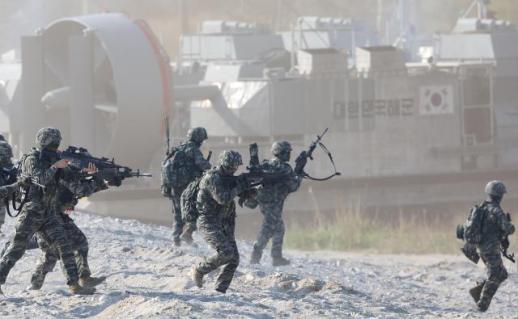 Seoul, Tokyo echo self-defense amid U.S. distraction in Gulf SEOUL, April 29 (AJP) - Self-sufficiency has shifted from a strategic choice to an absolute necessity for U.S. allies in East Asia. As American military resources become increasingly overextended in the Middle East, leaders in South Korea and Japan have begun harmonizing their rhetoric, placing a renewed emphasis on independent self-defense capabilities. During a cabinet meeting on Tuesday, President Lee Jae Myung delivered a lecture on the imperative of national self-reliance. "A nation must be able to defend itself. Why should we rely on others?" Lee bolstered his reasoning by citing South Korea’s current military standing: the world’s fifth-largest defense capability (independent of U.S. assets) and its position as the fourth-largest global arms exporter. The entrenched U.S. engagement in the Middle East after attacks on February 28, 2026 has precipitated this urgency. The financial burden on Washington is mounting; as of early April, the U.S. is estimated to have spent $35 billion on the conflict. Analysts project that total costs could exceed $1 trillion if the war continues to drag on. Amid this distraction, North Korea has ramped up its military provocations. In April alone, Pyongyang conducted four ballistic missile launches from Wonsan on April 8 and from the Sinpo area on April 19, raising the possibility of submarine-launched ballistic missile (SLBM) testing. The North also claimed to have tested short-range ballistic missiles equipped with cluster munitions between April 6 and 8. On paper, South Korea maintains a significant conventional advantage; its annual defense budget exceeds North Korea’s entire GDP. However, as the contemporary wars in Ukraine and Iran have demonstrated, firepower alone does not guarantee victory. Professor Kim Houng-yu of the Korea Defense Industry Association notes that "no country conducts war operations in isolation in modern conflict." He argues that military rankings are often deceptive, pointing to the Russia-Ukraine war as proof that even major powers face grueling uncertainty on the battlefield. "Alliances and coalition operations remain essential for national security," Kim concluded. Despite the rhetoric of self-reliance, several "anchors" keep the U.S.-ROK alliance in place. Under the U.S. National Defense Authorization Act, the number of U.S. troops stationed in South Korea is capped at 28,500, making any abrupt reduction difficult without congressional approval. Some analysts also note that the U.S. 2026 National Defense Strategy calls for maintaining “primary responsibility” for deterring North Korean conventional threats while continuing close coordination with the United States. Strain in traditional trilateral ties Recent months have seen visible friction in bilateral coordination. In January, Seoul requested a reschedule of trilateral air drills with the U.S. and Japan, citing the Lunar New Year and Japan's provocative "Takeshima Day." The U.S. ultimately proceeded with the drills alongside Japan only. Further tension surfaced on February 18–19, when U.S. Forces Korea conducted independent operations over the Yellow Sea. This prompted a standoff with Chinese fighter jets and a subsequent protest from South Korean Defense Minister Ahn Gyu-back regarding a lack of prior consultation. General Xavier Brunson reportedly issued an apology, and the drills were truncated from four days to two. Japan’s recent policy shifts add a layer of complexity. With roughly 55,000 U.S. troops on its soil, Tokyo is revising export rules to allow for the transfer of lethal weapons. This signals a move toward active combat readiness. Professor Hosaka Yuji of Korea University suggests this is a calculated alignment with Washington. "The Takaichi administration is leaning into cooperation with the Trump administration," he noted, highlighting that Japan is seeking a partnership that covers not just Chinese containment, but also the securing of critical resources like rare earths. As the U.S.-Iran conflict shows no sign of abating, South Korea is caught in a delicate balancing act. The trajectory of the alliance will be defined by how well Seoul can reconcile its goal of a self-reliant defense with the harsh realities of geopolitical interdependence. 2026-04-29 18:03:24
 -
 Justice Minister Jung Sung-ho Orders Panel to Review Prosecutors’ Human Rights Concerns Justice Minister Jung Sung-ho has instructed the Justice Ministry to set up a tentatively named “Prosecutors’ Human Rights Respect and Future Committee” to review cases that have sparked public suspicion of human rights violations or abuse of authority during prosecutorial investigations and indictments. The ministry said April 29 that Jung ordered the committee’s creation and explained the rationale. It said prosecutors established a human rights violation review task force at the Seoul High Prosecutors Office in September last year and investigated allegations of rights abuses and overreach, but the effort was deemed insufficient to resolve public doubts. The ministry added that additional suspicions have persisted after new facts emerged during a subsequent parliamentary investigation, leaving many people questioning the legality and appropriateness of the investigative process at the time. Taking those circumstances into account, Jung directed the ministry to establish an independent committee made up of outside members, it said. According to the ministry, Jung instructed the committee to select cases for review where public doubts have been raised about investigations and indictments; devise a plan to form an investigative body to independently examine related allegations arising from prosecutors’ work; and report findings and recommend follow-up steps to prevent recurrence if rights violations or abuse of authority are confirmed. A ministry official said it “takes seriously the criticisms and reprimands” raised during the parliamentary investigation’s agency briefings, on-site inspections and hearings, and pledged to “systematically review and correct” past prosecutorial practices and errors so the prosecution can fulfill its responsibilities as a core criminal justice institution and regain public trust.* This article has been translated by AI. 2026-04-29 18:03:07
 -
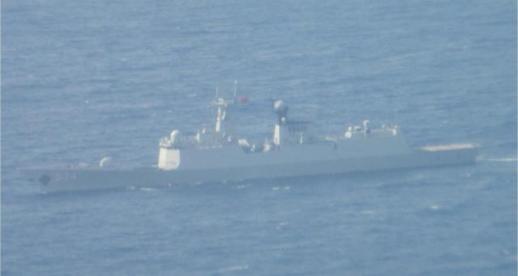 China's maritime push emboldens, raising strategic stakes in Korean waters SEOUL, April 29 (AJP) - China’s naval activity across Asian waters — including areas off the Korean Peninsula — has surged markedly, according to data obtained by a South Korean lawmaker, raising questions over the intent behind the sudden uptick. Chinese aircraft carriers entered waters under South Korean jurisdiction eight times in 2025, the highest annual figure since the Joint Chiefs of Staff began compiling such data in 2020, the office of People Power Party Rep. Yu Yong-weon said Wednesday. Warship movements showed a similar trajectory. Chinese naval vessels entered South Korean jurisdiction roughly 350 times in 2025, up from about 330 the previous year. Military aircraft also increased their presence, entering South Korea’s air defense identification zone more than 100 times, compared with over 90 in 2024. Carrier activity has steadily built over time: two entries in 2020, seven in 2022, five in 2023, six in 2024 and eight in 2025. The momentum has carried into this year. In the first quarter alone, a Chinese naval vessel approached within about 50 kilometers of South Korea’s territorial waters off the Taean Peninsula — roughly 140 kilometers from Seosan Air Base and about 180 kilometers from U.S. installations at Osan Air Base and Camp Humphreys. While remaining outside territorial waters, such proximity allows Chinese vessels to potentially collect radar, communications and other electronic signals linked to South Korean and U.S. military operations. The area sits near key approaches to Seoul, major air bases and critical U.S. facilities central to any contingency involving North Korea or Taiwan. Officials across South Korea, Japan and Southeast Asia say the pattern is forcing closer surveillance of Chinese ships and aircraft, even when encounters stop short of direct violations. In Seoul, concerns are growing that Beijing is seeking to normalize its presence in nearby waters while extending its naval reach deeper into the Pacific. The buildup coincides with China’s expansion of its carrier fleet, enhanced amphibious capabilities and more assertive claims in contested seas. China, for its part, maintains that its maritime operations are lawful and defensive, frequently accusing the United States and its allies of heightening tensions through increased military cooperation near its coastline. To governments from Seoul to Tokyo to Manila, however, the pattern increasingly resembles not routine patrols but the emergence of a new maritime order in Asia. South Korea defines “jurisdictional waters” as areas where it exercises sovereignty or sovereign rights, including territorial waters, the exclusive economic zone and the continental shelf. While international law permits foreign warships to transit EEZs, the South Korean military tracks such movements closely and deploys patrol assets when vessels approach sensitive zones. The Yellow Sea has long been strategically sensitive, given Chinese naval and missile facilities positioned along its coastline facing the Korean Peninsula. Han Ki-ho, a member of the National Defense Committee and a former army lieutenant general, said the growing activity should be viewed within a broader strategic context. China’s effort to expand its control in the Yellow Sea “should not be viewed narrowly as targeting South Korea alone,” Han said. “We must be firm in protecting our maritime sovereignty in the West Sea,” he added. Ksenia Kirkham, a scholar at King’s College London, offered a more cautious interpretation. "China’s increased naval activities in the South China Sea and in the West Sea, near the borders of South Korea, although perceived by South Korea as ‘aggressive’ and as being contrary to international law, should not be understood as aggression against Seoul itself, but rather as a response to what China interprets as provocative US military build-up in the region," she said. She added that Seoul should handle any breaches of airspace or territorial waters through diplomatic channels while maintaining stable relations with Beijing and avoiding entanglement in escalating great-power rivalry. Her assessment underscores a deeper dilemma for South Korea. China remains a key trading partner, creating strong incentives to avoid escalation. At the same time, Seoul’s alliance with the United States leaves little room to ignore repeated Chinese military activity near its coast, airspace and critical infrastructure. For policymakers, the immediate challenge lies in distinguishing lawful passage from strategic signaling. A single carrier transit through an EEZ may be legal, but repeated operations — combined with rising warship entries and air incursions — carry broader military and political implications. Experts broadly agree that the trend should not be viewed as a series of isolated incidents but as part of a wider maritime strategy. Sarah Tzinieris of King’s College London said “China’s naval expansion is about shifting from coastal defense to sustained power projection in the Indo-Pacific,” noting that the Chinese military is “designed not just to defend its shores, but rather to shape the strategic environment beyond them.” Central to this effort is control over maritime approaches and sea lanes, reinforced by what she described as an “expansionist dimension,” including land reclamation that has turned reefs into fortified outposts equipped with runways and radar systems. The use of maritime militia and fishing fleets further enables China to operate at scale while maintaining plausible deniability. “China’s naval build-up is not just about capability; it is about changing the rules of the game at sea,” Tzinieris said, with incremental actions — often described as “salami-slicing” — gradually normalizing its presence in contested waters. 2026-04-29 18:02:52
 -
 South Korea Says It Is Consulting Iran on Korean Ships’ Passage Through Strait of Hormuz Cheong Wa Dae said Tuesday it is actively seeking ways to resolve navigation issues involving South Korean vessels in the Strait of Hormuz, including through consultations with the Iranian government. Senior presidential spokesperson Kang Yu-jung made the remarks at a briefing at the Chunchugwan press center, responding to a question about whether there had been progress for South Korean ships after reports that a Japanese tanker had made its first passage through the strait with Iranian authorization. Kang said the matter requires consideration of multiple factors, including ship safety and the position of the shipping company, and noted that more than one country is often involved, requiring broad communication and cooperation. She added that the South Korean government maintains that, within international norms, freedom of navigation and safety must be guaranteed for all vessels in the Strait of Hormuz, including South Korean ships, and said talks are underway based on that position. According to foreign media reports, a Japanese tanker was confirmed to have transited the Strait of Hormuz on the morning of April 28 local time.* This article has been translated by AI. 2026-04-29 18:01:16
 -
 Cafe24 PRO Launches Automated SMS and Kakao Friend Talk Messaging for Online Stores Global e-commerce platform Cafe24, led by CEO Lee Jae-seok, is offering an automated messaging service for SMS and Kakao Friend Talk through its premium operations support service, Cafe24 PRO. The service is designed to help online store operators more easily send marketing messages to customers, including promotions, new product launches and re-purchase campaigns. Previously, operators typically had to handle key steps themselves, such as setting recipient groups, writing copy, choosing a channel and checking rules for advertising messages. For small and midsize shopping malls with limited staff, those steps often became a burden. Cafe24 said it now supports the process through its system, from message registration to channel settings and delivery, reducing the time and procedural load for operators. To use it, operators enter the purpose, target audience and preferred schedule under “Message Sending Request” in the “Work Request” menu within the Cafe24 admin page. Cafe24 PRO customers can request and use the function from the admin page without additional complicated procedures. The supported channels are SMS and Kakao Friend Talk. SMS can be sent to members who have agreed to receive messages, while Kakao Friend Talk can be used for Kakao channel friends. For long messages, three SMS credits are deducted; for image-type Kakao Friend Talk messages, 2.2 SMS credits are deducted. Cafe24 also applies a compliance check for advertising messages. The service helps verify items that could lead to legal penalties, including whether recipients have consented, required advertising wording and handling of an 080 opt-out number. Because commercial advertising messages require prior consent and a way to opt out or withdraw consent, Cafe24 said it aims to automate related steps and reduce operators’ burden. A fashion brand manager using the service said, “We were able to reduce resources needed to prepare promotional sends and focus on product planning.” A food shopping mall manager said, “Because required advertising text rules are reflected together, it eased the burden of noncompliance.” A Cafe24 official said some businesses delay new product and promotion notices because the messaging process is complex. “Through the automated messaging service, we plan to support operators so they can communicate with customers on time without procedural burdens and connect that to real sales,” the official said.* This article has been translated by AI. 2026-04-29 18:00:10
 -
 UCI MTB World Series Opens May 1 in Pyeongchang, First Asia Stop The 2026 WHOOP UCI Mountain Bike (MTB) World Series — Mona Yongpyong opens May 1. The event runs May 1-3 at Mona Yongpyong in Pyeongchang, Gangwon Province, as the official opening round of the 2026 season under the Union Cycliste Internationale (UCI) and Warner Bros. Discovery Sports (WBD) framework. It is the first time the MTB World Series, long centered on Europe and North America, has been held in Asia. The organizing committee said delegations and officials from about 40 countries, including the United States, Canada, France, Britain and Switzerland, totaling about 1,000 people, have entered South Korea so far. Among the arrivals are U.S. cross-country (XCO) standout Christopher Blevins and Austrian downhill (DHI) contender Valentina Höll. Riders are setting up equipment in team areas and completing official training ahead of the season’s first races. South Korea’s 14-member team has been finalized. The Korea Cycling Federation selected seven riders each for XCO and DHI through national team trials. The XCO lineup is Heo Seung-su (Korea Armed Forces Athletic Corps), Cheon Seong-hun (Gyeongbuk Sports Council), Na Deok-jin (Eumseong County Office, elite), Kang Dong-hyeon (Jeonju City Hall), Hwang Ui-chan (Catholic Kwandong University), Song Myeong-gwan (Changwon National University) and Je Hwan-jun (Korea Land and Geospatial Informatix Corp., under-23). The DHI team includes Park Jong-yoon (Maru MTB Racing), Bae Jun-ho and Lee Jin-hyeong (both Dirt Yami, elite), along with junior riders Kang Ha-jun, Seok Min-jae, Song Yeon-ho and Ahn Seung-ha. Organizers said the main venue courses on Mount Balwang have been readied. The 1.86-kilometer DHI course was built to international standards with steep grades and rocky terrain, with hazardous sections addressed after test rides. The XCO course, featuring climbs, technical descents and artificial obstacles, has also been finalized. Broadcast and media preparations are in final checks. Coverage is to be carried worldwide on platforms including Eurosport, TNT Sports and HBO Max, and in South Korea on KBSN Sports. The committee said it is also conducting full rehearsals and emergency response drills ahead of an expected crowd of about 15,000. "Everything is moving smoothly as planned, from team arrivals to venues, broadcasting, transportation and safety operations," an organizing committee official said. "We will prepare thoroughly to the very end so this Pyeongchang event can be a top stage for athletes and a memorable festival for fans."* This article has been translated by AI. 2026-04-29 17:54:44
 -
 LG Electronics posts record first-quarter revenue; home appliances and auto parts top 10 trillion won LG Electronics said improving results in its core home appliance and vehicle components businesses pushed combined quarterly revenue from the two units above 10 trillion won for the first time. The company said it plans to sustain growth by focusing on future businesses such as data center cooling and commercialization of home robots. In a final earnings release on Tuesday, LG Electronics reported first-quarter operating profit of 1.6737 trillion won, up 32.9% from a year earlier. Revenue rose 4.3% to 23.7272 trillion won. It was the company’s highest first-quarter revenue on record and its third-highest first-quarter operating profit. Despite economic uncertainty, key businesses including home appliances and TVs supported the results, the company said. Its vehicle components business, a key driver of business-to-business growth, also continued to expand steadily. On an earnings conference call Tuesday afternoon, an LG Electronics official said operating profit faced headwinds from higher prices for some raw materials and tariff effects that have intensified since the second half of last year, but the company maintained solid profitability by expanding higher-margin businesses. Growth also continued in B2B, platform and direct-to-consumer experience businesses that the company said are driving quality growth based on profitability. First-quarter B2B revenue was 6.5 trillion won, up 19% from the previous quarter and up 1% from a year earlier, accounting for 36% of companywide revenue. Subscription business revenue, including product and service sales, rose 8% from the previous quarter and 15% from a year earlier to 640 billion won. The Home Appliance Solution (HS) division, which makes products such as washing machines and refrigerators, posted revenue of 6.9431 trillion won and operating profit of 569.7 billion won. Revenue was the highest across all quarters, and the division posted an operating margin of 8.2% despite higher raw material costs and the impact of U.S. tariffs. The company said its strategy of targeting both premium and midrange segments while expanding online sales and appliance subscriptions helped results. The Media Entertainment Solution (MS) division, which includes TVs, reported revenue of 5.1694 trillion won and operating profit of 371.8 billion won. Operating profit rose sharply from a year earlier and returned to the black from the previous quarter. The Vehicle Solution (VS) division posted revenue of 3.0644 trillion won and operating profit of 211.6 billion won, setting quarterly records for both. The company said sales increased, led by European automakers, as in-vehicle infotainment solutions moved upmarket and were adopted in more models. The Eco Solution (ES) division reported revenue of 2.8223 trillion won and operating profit of 248.5 billion won. Both fell from a year earlier due to weaker consumer sentiment tied to the Middle East war and higher labor costs from staffing increases in key businesses, the company said. LG Electronics said it will prioritize securing opportunities in data center cooling. The company said its chiller business, part of its data center cooling push, is expected to reach its 2027 revenue target of 1 trillion won ahead of schedule. It also said data center-related revenue, though still at an early stage, grew to about three times the prior year’s level last year. The company said certification processes for key products are progressing smoothly with major customers, including global big tech firms, and it expects to share visible results soon. The company also said it is accelerating commercialization of home robots, which it described as a future core business. An LG Electronics official said proof-of-concept demonstrations for its CLOi humanoid business are being carried out systematically this year, and that mass production of initial volumes of actuators, a key robot component, is set to begin in the first half of the year. The official said demonstrations will start in the first half and expand gradually into industrial and home uses, adding that the company will use its home-related expertise from its appliance business to lay the groundwork for commercialization of home robots in 2028.* This article has been translated by AI. 2026-04-29 17:53:04
 -
 Rep. Lee Hoon-gi to Introduce Bill Naming K-Content a National Strategic Industry Rep. Lee Hoon-gi of the Democratic Party said April 29 he will introduce a bill next month to designate K-content as a national strategic industry. Lee made the remarks at a forum titled “Policies and Strategies to Strengthen the Global Competitiveness of the K-Media Content Industry,” co-hosted with the Korea Broadcasters Association at the National Assembly Members’ Office Building. He said the current governance structure is limited because responsibilities are split among the Korea Communications Commission, the Ministry of Science and ICT, and the Ministry of Culture, Sports and Tourism. The forum was organized to assess what participants called a structural disconnect in which K-content’s global success has not translated into growth for South Korea’s domestic media industry, and to explore policy directions. “We need to look back at what we were doing while the world was going wild over ‘K-pop Demon Hunters,’” Lee said, adding that laws and policies supporting K-content’s global competitiveness remain weak. Korea Broadcasters Association President Bang Moon-shin also said the belief that the K-culture boom is leading to industrial growth is “an illusion,” and argued that asymmetric regulation is constraining content production. The forum included a presentation by Kyung Hee University professor Lee Sang-won and drew experts from academia and industry. Participants shared concerns about a broader industry downturn, citing falling terrestrial broadcasters’ revenue, fewer drama slots and a loss-making structure for over-the-top streaming services. * This article has been translated by AI. 2026-04-29 17:51:49
 -
 Appeals court sentences Yoon Suk Yeol to 7 years for blocking arrest warrant execution Former President Yoon Suk Yeol was sentenced to seven years in prison on appeal for charges including obstructing the execution of an arrest warrant by the Corruption Investigation Office for High-ranking Officials. On April 29, the Seoul High Court’s Criminal Division 1, a panel dedicated to insurrection-related cases led by Presiding Judge Yoon Seong-sik, sentenced Yoon to seven years for aggravated obstruction of official duties, abuse of power and related offenses. The term is two years longer than the five-year sentence in the first trial, but below the 10 years sought by the special prosecutor. The appeals court, unlike the first trial, found Yoon guilty on most charges. It upheld guilty verdicts on counts including abuse of power for infringing Cabinet members’ deliberation rights; violating the Presidential Records Act and damaging official documents; instructing abuse of authority under the Presidential Security Act involving a secure phone; and aggravated obstruction tied to blocking the execution of the arrest warrant. The court said it viewed as especially serious Yoon’s use of Presidential Security Service personnel to physically block CIO prosecutors from executing the warrant. Yoon’s side had argued the CIO lacked authority to investigate insurrection and that executing a warrant at the official residence, designated a protected military facility, would be illegal without a commander’s consent. The court rejected those claims. “The CIO has authority to investigate abuse-of-power offenses by high-ranking officials, and insurrection is a related offense discovered in the course of that investigation and therefore falls within the scope,” the court said. Citing the relationship between Article 110 of the Constitution and the Military Bases and Installations Act, it added that when national security conflicts with finding the substantive truth, “the president must not use national security as a shield to evade his own criminal responsibility.” The court also criticized security officials for forming a scrum to block prosecutors’ entry. It called it an act that “mobilized security service employees, who are state officials, as if they were the defendant’s private soldiers to obstruct the lawful duties of other state officials,” and said it undermined the foundations of the rule of law. The appeals court also reversed parts of the first ruling, finding Yoon guilty of infringing the deliberation rights of two Cabinet members — former Land, Infrastructure and Transport Minister Park Sang-woo and Industry and Trade Minister Ahn Duk-geun — and of ordering an overseas public relations secretary to draft and distribute press guidance, or PG. The first trial had found guilt only as to seven members who did not receive any notice to attend. The appeals court took a stricter view, saying Cabinet meetings require sufficient governmentwide deliberation and that notice must be given to all members with enough time to realistically attend. It said giving formal notice at a time when attendance was effectively impossible amounted to depriving members of their deliberation rights and hollowing out the constitutional role of the Cabinet through abuse of power. On the PG count, which the first trial had acquitted, the court cited the special prosecutor’s findings that Yoon instructed the overseas public relations secretary to distribute false claims to foreign media, including that access to the National Assembly had not been blocked and that there was no intent whatsoever to destroy the constitutional order. “Government press releases must be based on objective facts and must not exaggerate or state uncertain matters as definitive,” the court said, stressing a duty of good faith. It said spreading information contrary to the facts to foreign media dealt a major blow to South Korea’s international credibility and deceived the public’s right to know, constituting an abuse of power. The court, however, upheld not-guilty verdicts on charges of using a falsely prepared official document related to an after-the-fact department and on allegations of collusion with Kim Shin, head of the security service’s family protection division. In explaining the sentence, the court said Yoon, despite being president with a duty to uphold the Constitution and protect the nation, hollowed out constitutional procedures and obstructed judicial action with physical force to avoid legal responsibility. It also cited what it described as a lack of remorse after the investigation began, saying his repeated legal claim that the CIO lacked investigative authority weighed against him in sentencing. After the seven-year sentence was announced, Yoon left the courtroom with a blank expression. His lawyers said they could not accept the ruling and would appeal. Earlier, the court and police tightly controlled access by Yoon supporters. The National Court Administration blocked entrances to the West Building of the Seoul Central District Court, where the courtroom is located, using police buses and barricades, and deployed riot police nearby. Reporters and spectators entered through the East Building.* This article has been translated by AI. 2026-04-29 17:50:12