
Journalist

Lee Hugh
=
-
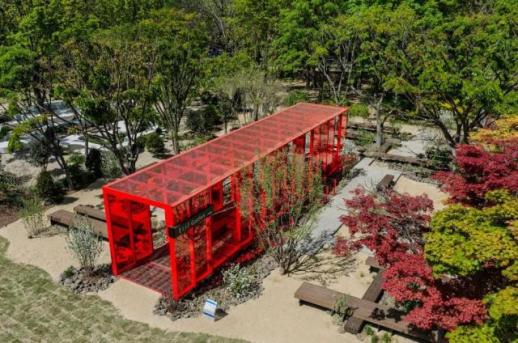 Gyeryong Construction to Unveil ELIF Garden at 2026 Seoul International Garden Show Gyeryong Construction said Tuesday it will take part in the 2026 Seoul International Garden Show, running May 1 through Oct. 27 at Seoul Forest, where it will present a corporate garden called ELIF Garden. The garden was planned around the theme of “harmony among people, nature and space,” reflecting the values of the company’s ELIF housing brand through a garden setting. Inspired by the “madang,” a courtyard central to traditional Korean gardens, the space is designed to let city residents linger and share moments of rest. Red tempered glass used on the pavilion’s exterior is intended to recast familiar scenery and visually underscore the brand’s design philosophy. To coincide with the opening, the company plans to run interactive programs for 10 days starting May 1, offering pavilion content meant to engage the senses. Participants will receive ELIF sachets and coffee drinks, the company said. “Through ELIF Garden, we want to share the value of living in coexistence with nature,” a company official said, adding that Gyeryong Construction will “continue to strengthen its role as an eco-friendly construction company through sustainable landscaping technology and differentiated design.”* This article has been translated by AI. 2026-04-29 17:19:06
 -
 KOSPI Hits Record 6,690.90 for Third Straight Session Despite OpenAI Jitters South Korean stocks pushed to fresh highs for a third straight session, shaking off overnight weakness on Wall Street tied to concerns about OpenAI and the pace of artificial intelligence growth. The benchmark KOSPI closed at 6,690.90, setting another all-time high, according to the financial investment industry on April 29. In the main board market, individual investors bought a net 167.4 billion won, and institutions were net buyers of 477.7 billion won. Foreign investors sold a net 613.6 billion won, taking profits. U.S. stocks fell overnight, led by technology shares, as uncertainty around OpenAI weighed on sentiment. Reports said OpenAI failed to meet internal targets ahead of a planned initial public offering, and investors also raised concerns that slower revenue growth could make it harder to cover AI data center costs. OpenAI said its business was operating normally, but the comments did not fully ease market worries. AI-related shares were hit. Nvidia fell 1.6%, while Oracle and CoreWeave, key cloud partners for OpenAI, slid 4.1% and 5.8%, respectively. The Philadelphia Semiconductor Index dropped 3.58%. South Korean shares also came under pressure early. Samsung Electronics and SK hynix fell 1.13% and 1.23% at the open, and the KOSPI started the session down 0.33% at 6,619.00. Buying demand picked up later, lifting the index into positive territory. Lee Kyung-min, an analyst at Daishin Securities, said, “Despite OpenAI-related concerns, Samsung Electronics maintained a solid price trend, keeping the KOSPI strong.” Brokerages at home and abroad have been increasingly vocal about expectations for the index to reach 7,000. Hana Securities projected the KOSPI’s upper range in the second half at 7,540 to 8,470 depending on scenarios. Goldman Sachs set a 12-month target of 8,000, and JPMorgan left room for as high as 8,500. Japan’s Nomura Securities also set a first-half target of up to 8,000. Some analysts, however, warned of a pullback after a sharp run-up. The KOSPI has surged more than about 30% in April, quickly building technical 부담. May is often seen as seasonally weak under the “Sell in May” pattern, which could strengthen a wait-and-see stance among investors. Byun Jun-ho, an analyst at IBK Investment & Securities, said, “The KOSPI’s monthly gain in April is around 31%, the biggest surge since January 1998,” adding, “The market is nearing, or has already entered, a 부담 zone, and short-term profit-taking demand could grow.” 2026-04-29 17:15:23
 -
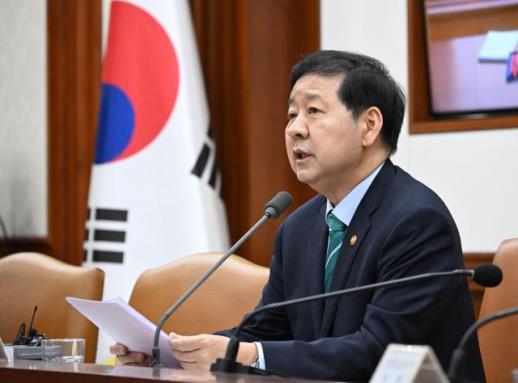 South Korea’s Treasury Bond Issuance Tops 200 Trillion Won for First Time; Foreign Share Hits Record South Korea’s issuance of Treasury bonds topped 200 trillion won for the first time last year, setting a record high. The Ministry of Economy and Finance said Tuesday it published a government bond white paper, Government Bonds 2025, summarizing last year’s Treasury bond market trends and key statistics. According to the report, Treasury bond issuance totaled 226.2 trillion won last year, up 68.5 trillion won from 157.7 trillion won a year earlier. It was the first time annual issuance exceeded 200 trillion won. Foreign investment in government bonds was tallied at 58.7 trillion won, the largest on record. The foreign share of government bond holdings rose to a record 25.7%, and foreign holdings of Treasury bonds reached an all-time high of 297.4 trillion won. In a foreword, Deputy Prime Minister and Minister of Economy and Finance Koo Yun-cheol said the government “successfully issued 226.2 trillion won in Treasury bonds last year, surpassing 200 trillion won in annual issuance for the first time,” adding that the issuance served as “a solid backstop” for efforts to support the economy, including a supplementary budget and rapid fiscal execution. Koo said the government worked to attract foreign funds ahead of inclusion in the World Government Bond Index, citing overseas investor briefings and institutional changes to improve convenience for foreign investors. The government said it will focus in 2026 on upgrading market infrastructure to ensure foreign investment tied to WGBI inclusion proceeds smoothly. It also said it will set up a dedicated team to analyze market trends and respond to risks, strengthening risk management to support stable bond issuance and oversight of the government bond market.* This article has been translated by AI. 2026-04-29 17:14:06
 -
 Lee orders review to allow high-oil-price aid at gas stations with over 3 billion won in sales President Lee Jae-myung on April 29 ordered a review of allowing high-oil-price relief funds to be used at gas stations with annual sales of more than 3 billion won. Lee Kyu-yeon, the presidential office’s senior secretary for public relations and communication, said in an afternoon interview on KBS radio’s “All Politics in the World” that Lee directed aides to consider easing the rules. “Because it’s high-oil-price relief funds, we thought people should at least be able to put in gas, so he told us to review a direction to loosen it,” he said. The relief funds are currently limited mainly to small merchants such as traditional markets and neighborhood shops, and can be used only at businesses with annual sales of 3 billion won or less. Complaints were raised over restrictions at some gas stations, prompting the president to order a review of possible changes. Lee said the sales cap was designed to support small businesses and struggling people, adding that “if that’s the purpose, it’s right not to use it at gas stations with more than 3 billion won” in sales. But he said the program’s name could invite criticism: “Because it’s ‘high-oil-price’ relief funds, people can say, ‘Why can’t I buy gas?’” He said that as complaints emerged, the president asked senior secretaries to share their views. A presidential office official told reporters at the Chunchugwan press center that media reports highlighted the issue and that the president “accepted in a forward-looking way” that people could misunderstand it. The official said the program is livelihood support related to high oil prices, not a fuel subsidy, but that the name could still cause confusion. The president therefore asked aides to review a temporary easing of the criteria so the funds could be used regardless of business size. * This article has been translated by AI. 2026-04-29 17:13:12
 -
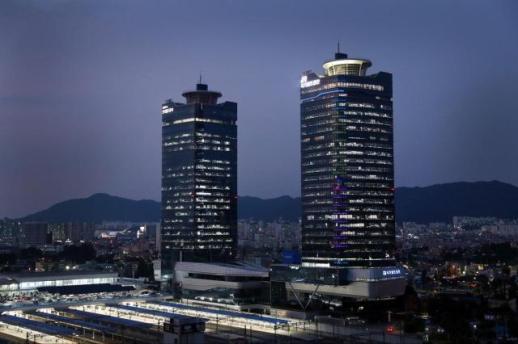 Korea Rail Network Authority to Auction Two Commercial Parcels in Suseo Station District The Korea Rail Network Authority said Tuesday it will supply two commercial parcels in the Suseo Station public housing district through competitive bidding. The sites are Block C1-1 (1,663 square meters) and Block C1-3 (759 square meters). Both allow building coverage of up to 60% and a floor area ratio of up to 800%, enabling high-density development. Based on appraisals, the planned supply prices are 41.1 billion won for C1-1 and 18.2 billion won for C1-3. Payments will be made in interest-free installments over two years and six months. After a 10% down payment, the remaining interim and final payments can be split into five equal payments every six months. Early payment before the scheduled date qualifies for a prepayment discount at an annual rate of 5% under current standards. The Suseo Station area is described as a major transportation hub in southeastern Seoul, linking the SRT high-speed rail, the GTX-A line, Seoul Subway Line 3 and the Suin-Bundang Line, with the planned Suseo-Gwangju Line expected to make it a "five-line" transfer area. A complex transfer center at Suseo Station is also planned, with facilities such as a department store, hotel and offices, the authority said. The schedule begins with a notice Wednesday, followed by bid applications on May 18, bid opening on May 19 and contract signing on May 26. Details are available on the authority’s website and on OnBid. Lee An-ho, acting chairman of the Korea Rail Network Authority, said the Suseo Station area combines a strong regional transport network with significant development potential. He said he hopes the offering will help energize the station area and strengthen local competitiveness, providing an opportunity for end users focused on future value.* This article has been translated by AI. 2026-04-29 17:08:59
 -
 With Won Near 1,500 per Dollar, Expert Urges Stronger Foreign-Exchange Defenses Bank of Korea Gov. Shin Hyun-song took office April 20. The central bank’s most important tasks are price stability and defending the exchange rate, the author wrote. The won has trended weaker over decades, from the 200-won range in the 1970s to about 2,000 won during the IMF foreign-exchange crisis and 1,600 won during the global financial crisis. South Korea depends on trade, with a trade-to-GDP ratio of about 75%, the world’s second-highest, the author said. That makes exchange-rate swings from external shocks more than a market indicator, he wrote, calling on the government to build a stronger foreign-exchange “breakwater” on three fronts. First, the author urged building foreign-exchange reserves toward $1 trillion. South Korea’s reserves stand at $420 billion, which he said is insufficient in a crisis and equals about 23% of gross domestic product. He compared that with Taiwan, Hong Kong and Switzerland, which he said hold reserves equal to 80% to 130% of GDP. He cited Taiwan’s experience in the 1997 Asian financial crisis, saying its stockpiled reserves helped it remain stable. South Korea should expand reserves to $1 trillion, or about 50% of GDP, to provide psychological stability to markets, he wrote, arguing that readily deployable cash is the most practical shield against speculative attacks on the won. Second, he called for restoring and expanding currency swap lines with the United States and Japan on a standing basis. If reserves are a country’s own capital, he wrote, swap lines are a second line of defense, like an overdraft. The $60 billion Korea-U.S. swap line has ended, and the Korea-Japan swap line has shrunk to about $10 billion from a previous $70 billion, he wrote. Swap lines with reserve-currency countries, he added, can convince markets that “Korea will not run short of dollars,” helping curb sharp exchange-rate spikes. Third, he urged stricter debt management and stronger fiscal discipline. The IMF has warned about 2030, when South Korea’s government debt ratio is expected to reach 60%, he wrote. Including contingent liabilities such as civil servant and military pensions, he said broader public debt has already reached 181%. If fiscal weakness erodes external confidence, he warned, the won’s long-term weakening could accelerate. The author also called for attracting more foreign investment by cutting South Korea’s corporate tax rate from 26% to the global average of 21% and easing regulations tied to the fourth industrial revolution. He wrote that new industries such as Uber, Airbnb and Tada have all been banned in South Korea, adding that the exchange rate is “the price of national credibility.” He argued the government must also avoid injecting excessive liquidity. The government has finalized a 26 trillion won supplementary budget. Last year, South Korea posted 1% economic growth and 2% inflation, and he wrote that an appropriate money-supply increase would be about 3%. But he said the minimum wage was raised 2.9%, the annual budget was increased 8.1%, and including the 26 trillion won “war” supplementary budget would push the total above 9%. More won liquidity would fuel demand, lift prices and lead to a weaker currency, he wrote. South Korea’s ratio of money supplied relative to GDP is 154%, he said, compared with 71% for the United States. Only preemptive action can prevent a “second IMF,” he wrote. Companies and individuals have accumulated more than $1 trillion in dollars, he said, but low-income households holding assets only in won would face greater hardship in an exchange-rate crisis. With war and global supply-chain restructuring, he added, exchange-rate stability is no longer solely the Bank of Korea’s task. He urged an all-of-government push to build reserves, expand swap lines and strengthen fiscal discipline. The government, he wrote, should not miss the “golden time” to protect the economy and break what he described as an 86% probability that the exchange rate will keep rising. He called for a responsible choice between repeating a foreign-exchange crisis and protecting livelihoods through early action.* This article has been translated by AI. 2026-04-29 17:07:58
 -
 Appeals court increases ex-president's martial law-related sentence to 7 years SEOUL, April 29 (AJP) - Former President Yoon Suk Yeol was sentenced to seven years in prison on Wednesday over one of several charges related to his botched martial law debacle as an appeals court stiffened the initial five-year sentence handed down in January. In a televised verdict, the Seoul High Court in southern Seoul found him guilty of obstructing official duties, fabricating official documents, and other charges related to his declaration of martial law on Dec. 3, 2024. It was Yoon's first appellate ruling among a string of cases related to the debacle including the main charges of insurrection and abuse of power, for which he was sentenced to life in prison in the first trial in February, which is also under appeal. Prosecutors had earlier sought 10 years in prison for Yoon. Wednesday's ruling came just a day after his wife and former first lady Kim Keon Hee was sentenced to four years in prison on multiple charges including bribery and involvement in a stock manipulation scheme, in an appellate ruling, more than twice the 20-month sentence handed down in the first trial, leaving the disgraced couple with their sentences increased on appeal. 2026-04-29 17:05:16
 -
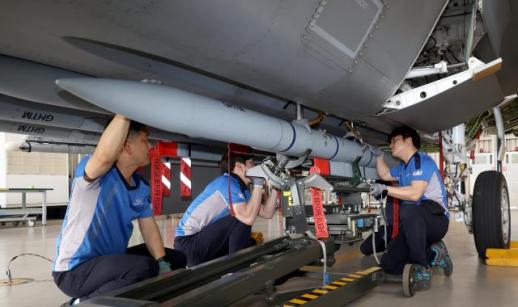 Hanwha Aerospace to develop homegrown meteor-class missile by 2033 SEOUL, April 29 (AJP) - Hanwha Aerospace has launched the development of a homegrown air-to-air missile comparable to the Meteor, as part of efforts to localize advanced aerial weapon systems. The company unveiled its localization roadmap at the “Hanwha Tech Academy 2026” event in central Seoul on Wednesday. The Meteor, developed by European defense firm MBDA, is known for its top speed of Mach 4 and an interception range exceeding 200 kilometers, making it one of the most advanced long-range air-to-air missiles currently in service. Hanwha Aerospace said it aims to complete development of the indigenous missile by 2033 in cooperation with the Agency for Defense Development (ADD), with mass production expected after 2036. The missile is intended for deployment on South Korea’s indigenous fighter jet, the KF-21 Boramae. A key focus of the project is the development of a "Ducted Ramjet Propulsion," a core technology that enables extended range and high maneuverability. The system generates propulsion by burning solid fuel using air intake during flight, significantly improving fuel efficiency. “The Ducted Ramjet Propulsion is what has made the Meteor missile recognized as one of the world’s most advanced long-range air-to-air missiles,” said Cho Bok-ki, a senior researcher at Hanwha Aerospace’s PGM Research Center. “Our goal is to apply this propulsion method while pursuing even greater performance.” The company said it plans to leverage more than two decades of experience in propulsion-related research, including work on propellants, gas generators and combustors under projects led by the ADD since 2005. Hanwha Aerospace also expressed expectations that integrating domestically developed air-launched weapons with Korean fighter jets such as the KF-21 and offering them as package deals could strengthen competitiveness in global markets. “We will continue working with the government and industry partners to localize advanced defense technologies, while boosting self-reliance and expanding defense exports,” a company official said. 2026-04-29 17:05:15
 -
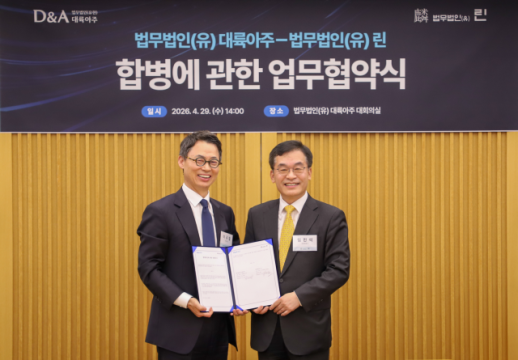 Daeryuk & Aju and Lin Launch Merger Committee to Pursue Combined Law Firm Daeryuk & Aju Law Firm and Lin Law Firm have launched a consultative body to pursue a merger, formally beginning integration talks. The firms on April 29 held a signing ceremony for a business agreement in a conference room at Daeryuk & Aju’s offices in Seoul’s Gangnam district and agreed to form a merger promotion committee. About 50 people, including partner attorneys from both sides and journalists, attended. The committee will oversee merger discussions from April 29 until the merger is registered, including the merger structure, decision-making system and the name of the combined firm. Under an equal-merger principle, each firm will appoint one overall co-managing representative and the committee will have the same number of members from each side. Decisions will be made unanimously. If completed, the deal would be the largest combination in South Korea’s law-firm history, the firms said. The two firms have a combined 393 lawyers in South Korea — 260 at Daeryuk & Aju and 133 at Lin. Their 2025 revenue totaled 143.7 billion won, including 102.7 billion won for Daeryuk & Aju and 41.0 billion won for Lin. Based on those figures, the merged firm would rank sixth domestically by number of lawyers and in the eighth tier by revenue. The firms said they expect synergies by combining Daeryuk & Aju’s strengths in litigation, advisory work and new-industry sectors with Lin’s corporate advisory capabilities. Lee Gyu-cheol, managing partner at Daeryuk & Aju, said the integration is a strategic decision aimed at building “a new model of a comprehensive law firm” able to respond to rapidly changing industrial structures and the global environment, rather than simply expanding in size. Lim Jin-seok, managing partner at Lin, said the firms will combine their “innovation DNA” with professional expertise and organizational capabilities to provide more advanced legal services to clients at home and abroad, adding that the goal is to become a market-leading firm.* This article has been translated by AI. 2026-04-29 17:02:57
 -
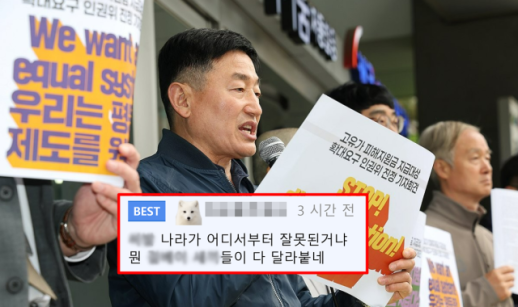 Migrant Rights Groups File Complaint Over Exclusion From Korea’s High Fuel Price Aid Migrant rights groups have filed a complaint with the National Human Rights Commission of Korea, saying most migrants were excluded from government payments meant to offset damage from high fuel prices. Groups including the Migrant Workers Equality Solidarity held a joint news conference on the 28th in front of the commission’s office in Seoul’s Jung District and then submitted the complaint. The groups said that of about 2,167,000 migrants who had stayed in South Korea for at least three months as of March, about 1,785,000 were excluded from the payments, except for marriage migrants, permanent residents and recognized refugees. Udaya Rai, chair of the Migrants’ Trade Union, said, “Damage from high fuel prices does not discriminate by nationality,” adding that migrant workers should be treated equally because they work and live alongside Koreans. Attorney Lee Jin-hye, of the migrant center Chingu and acting as the groups’ representative, argued that excluding foreigners because they are not listed on a resident registration record or do not hold permanent residency or marriage-migrant status amounts to arbitrary discrimination. The Ministry of the Interior and Safety has said exceptions apply to foreigners listed on a resident registration record that includes at least one Korean national, as well as permanent residents, marriage migrants and recognized refugees, if they are enrolled in national health insurance, are dependents, or receive medical aid. Applying those standards, the groups said more than 80% of long-term migrants — about 1,785,000 of the roughly 2,167,000 — were excluded as of the end of last month. Migrant rights groups have raised similar concerns over COVID-19 relief payments and “livelihood recovery” consumption coupons. At the time, they said migrants pay taxes such as earned income tax, comprehensive income tax and local resident tax, but are excluded from social security programs because they are not citizens. Online commenters, however, posted more than 500 comments each on related posts, with many expressing opposition. Comments included: “Where did the country start going wrong?” “Please go back to your own country and be treated there,” “Even 30% of citizens can’t get it. Ask your country,” “If you don’t like it, leave,” “You’ve adapted perfectly to the country of complaints,” “We should abolish the human rights commission,” “Next they’ll give it to Tom and Mary overseas,” and “So that means none of them are marriage migrants, permanent residents or recognized refugees, right?” 2026-04-29 17:01:41