
Journalist

Lee Hugh
=
-
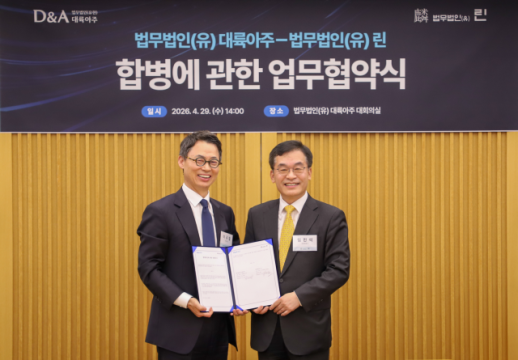 Daeryuk & Aju and Lin Launch Merger Committee to Pursue Combined Law Firm Daeryuk & Aju Law Firm and Lin Law Firm have launched a consultative body to pursue a merger, formally beginning integration talks. The firms on April 29 held a signing ceremony for a business agreement in a conference room at Daeryuk & Aju’s offices in Seoul’s Gangnam district and agreed to form a merger promotion committee. About 50 people, including partner attorneys from both sides and journalists, attended. The committee will oversee merger discussions from April 29 until the merger is registered, including the merger structure, decision-making system and the name of the combined firm. Under an equal-merger principle, each firm will appoint one overall co-managing representative and the committee will have the same number of members from each side. Decisions will be made unanimously. If completed, the deal would be the largest combination in South Korea’s law-firm history, the firms said. The two firms have a combined 393 lawyers in South Korea — 260 at Daeryuk & Aju and 133 at Lin. Their 2025 revenue totaled 143.7 billion won, including 102.7 billion won for Daeryuk & Aju and 41.0 billion won for Lin. Based on those figures, the merged firm would rank sixth domestically by number of lawyers and in the eighth tier by revenue. The firms said they expect synergies by combining Daeryuk & Aju’s strengths in litigation, advisory work and new-industry sectors with Lin’s corporate advisory capabilities. Lee Gyu-cheol, managing partner at Daeryuk & Aju, said the integration is a strategic decision aimed at building “a new model of a comprehensive law firm” able to respond to rapidly changing industrial structures and the global environment, rather than simply expanding in size. Lim Jin-seok, managing partner at Lin, said the firms will combine their “innovation DNA” with professional expertise and organizational capabilities to provide more advanced legal services to clients at home and abroad, adding that the goal is to become a market-leading firm.* This article has been translated by AI. 2026-04-29 17:02:57
 -
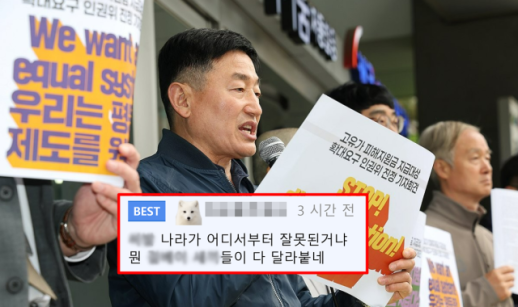 Migrant Rights Groups File Complaint Over Exclusion From Korea’s High Fuel Price Aid Migrant rights groups have filed a complaint with the National Human Rights Commission of Korea, saying most migrants were excluded from government payments meant to offset damage from high fuel prices. Groups including the Migrant Workers Equality Solidarity held a joint news conference on the 28th in front of the commission’s office in Seoul’s Jung District and then submitted the complaint. The groups said that of about 2,167,000 migrants who had stayed in South Korea for at least three months as of March, about 1,785,000 were excluded from the payments, except for marriage migrants, permanent residents and recognized refugees. Udaya Rai, chair of the Migrants’ Trade Union, said, “Damage from high fuel prices does not discriminate by nationality,” adding that migrant workers should be treated equally because they work and live alongside Koreans. Attorney Lee Jin-hye, of the migrant center Chingu and acting as the groups’ representative, argued that excluding foreigners because they are not listed on a resident registration record or do not hold permanent residency or marriage-migrant status amounts to arbitrary discrimination. The Ministry of the Interior and Safety has said exceptions apply to foreigners listed on a resident registration record that includes at least one Korean national, as well as permanent residents, marriage migrants and recognized refugees, if they are enrolled in national health insurance, are dependents, or receive medical aid. Applying those standards, the groups said more than 80% of long-term migrants — about 1,785,000 of the roughly 2,167,000 — were excluded as of the end of last month. Migrant rights groups have raised similar concerns over COVID-19 relief payments and “livelihood recovery” consumption coupons. At the time, they said migrants pay taxes such as earned income tax, comprehensive income tax and local resident tax, but are excluded from social security programs because they are not citizens. Online commenters, however, posted more than 500 comments each on related posts, with many expressing opposition. Comments included: “Where did the country start going wrong?” “Please go back to your own country and be treated there,” “Even 30% of citizens can’t get it. Ask your country,” “If you don’t like it, leave,” “You’ve adapted perfectly to the country of complaints,” “We should abolish the human rights commission,” “Next they’ll give it to Tom and Mary overseas,” and “So that means none of them are marriage migrants, permanent residents or recognized refugees, right?” 2026-04-29 17:01:41
 -
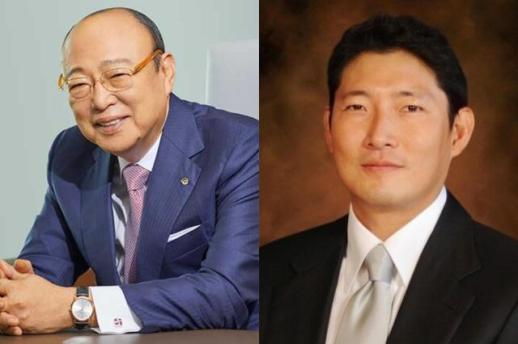 Hanwha Jumps to No. 5 in Korea Conglomerate Rankings; Hyosung Rises on Power Gear Boom Hanwha Group and Hyosung Group have expanded rapidly, reshaping South Korea’s top-30 conglomerate rankings, which have typically seen limited movement. According to the Fair Trade Commission’s disclosure on large business groups released on the 29th, Hanwha rose to fifth from seventh. Hyosung also moved up, to 28th from 31st. Hanwha’s total assets increased by about 24 trillion won, to 149.6 trillion won this year from 125.7 trillion won last year, overtaking Lotte Group and POSCO Group. The rise was attributed to combined growth across defense, shipbuilding and energy businesses. In defense, expanded orders at Hanwha Aerospace were a key driver. As of the end of 2025, its backlog for ground-defense systems stood at 37 trillion won, and its annual operating profit topped 3 trillion won. In shipbuilding, Hanwha Ocean’s turnaround stood out. It posted operating profit of 441.1 billion won in the first quarter of 2026, up more than 70% from a year earlier. Analysts cited a strategy focused on high-value LNG carrier orders and increased investment aimed at entering the U.S. naval maintenance and repair (MRO) market as factors behind the asset gains. Energy and infrastructure also contributed. Hanwha Solutions expanded its foothold in the North American solar market, supported by operations at its U.S. “Solar Hub.” Hyosung’s rise was largely attributed to improved performance at Hyosung Heavy Industries, which helped drive growth as its total order backlog exceeded 15 trillion won. The company benefited from a transformer boom tied to rising global demand to replace aging power infrastructure. In the United States, demand for grid upgrades has surged, and supplies of extra-high-voltage transformers have not kept pace. With shortages strengthening pricing power, profitability has been assessed as improving sharply. The spread of artificial intelligence data centers was also cited as a factor. As global big tech companies expand data center construction, demand for large-scale power supply equipment has increased, lifting demand for Hyosung Heavy Industries’ power solutions. A business community official said the top-30 rankings usually do not shift much, but this round of changes was heavily influenced by strong conditions in energy, defense and shipbuilding. The official added that defense-related demand has also been significant due to the prolonged Iran war.* This article has been translated by AI. 2026-04-29 16:56:41
 -
 South Korea's Cho Hyun, Azerbaijan foreign minister discuss cooperation and regional issues South Korean Foreign Minister Cho Hyun spoke by phone Tuesday afternoon with Azerbaijani Foreign Minister Jeyhun Bayramov to exchange views on overall bilateral ties, practical cooperation and regional developments, the Foreign Ministry said. Cho thanked Azerbaijan for helping South Korean nationals evacuate safely during heightened tensions in the Middle East in June last year, and asked for continued attention and cooperation to protect South Koreans in connection with the situation in the region. Cho also said South Korea is actively pursuing the continuation and development of its New Northern Policy, including plans to host the first Korea-Central Asia summit in September as part of its diplomatic diversification efforts. He said the two sides agreed to maintain close communication with Azerbaijan, which has recently been strengthening its connectivity with Central Asia. The two ministers shared the view that it is important to advance mutually beneficial South Korea-Azerbaijan relations and agreed to further expand practical cooperation, including high-level exchanges, the ministry said. * This article has been translated by AI. 2026-04-29 16:55:53
 -
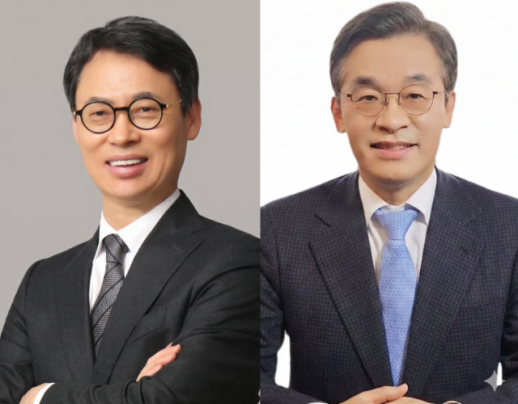 Daeryuk & Aju and Lin to Merge, Citing Limits for Mid-Sized Law Firms Daeryuk & Aju and Lin said they will merge, saying mid-sized firms face structural limits in moving into the top ranks of South Korea’s legal market. Lee Gyu-cheol, managing partner at Daeryuk & Aju, said in an interview after the firms signed a merger memorandum of understanding on the 29th that “in the current law firm market structure, it is virtually impossible for a mid-sized firm to rise into the top tier through organic growth alone.” He described the gap in scale: “If a top firm grows 10%, that’s an additional 10 billion won, but for a mid-sized firm it’s only 1 billion won,” he said, adding that “under this structure, it’s hard to narrow the gap.” Lee said Daeryuk & Aju, which he described as remaining in “Tier 2,” saw a risk of stagnating or falling behind. That assessment led to the merger push. “There are limits to recruiting individual talent, so we had no choice but to choose a merger,” Lee said. “I think this decision is our last big bet.” Lim Jin-seok, managing partner at Lin, voiced a similar view, focusing on practical constraints. “At the level of a mid-tier firm, there are clear limits to the size of cases and deals you can handle,” he said, adding that “for some large matters, the structure makes it difficult even to apply.” Lim said Lin concluded it had reached a “ceiling” at its current size. He pointed to barriers to entry. “First-tier financial institutions such as banks, and major fair-trade cases, move around the Big 6 firms,” Lim said. “Even with capability, if you’re small, you often aren’t included among the options.” Lim said Lin pursued a merger not for simple expansion but for a “tier jump.” He said Daeryuk & Aju was “the most proactive” and best-aligned partner among firms Lin contacted. Both firms said the post-merger strategy will focus on “synergy.” “A merger matters only if 1 plus 1 becomes 3, not 2,” Lim said. “If we secure scale and a brand, we can compete 충분히 with top firms.” Lee said the next task will be improving revenue per lawyer. He said the merger should broaden the range of matters the combined firm can take on. The firms plan to combine Daeryuk & Aju’s strengths in litigation and criminal matters with Lin’s strengths in corporate advisory work and mergers and acquisitions, aiming to build a “one-stop service” system. Lim said Lin has been relatively weaker in criminal work, sometimes leaving it unable to handle related matters for corporate clients in-house. After the merger, he said, the firm expects to respond to clients’ criminal, litigation and advisory needs under one roof. Lee said the firms will also prepare for risks that can come with a large merger. “Conflicts of interest can inevitably arise during the merger process, but we can minimize them through 충분한 discussion,” he said. “What matters is that the number of matters we can handle increases.” On differences in organizational culture, Lee said Lin has many lawyers who previously worked at large firms, adding that there is “a lot to learn.” He said the firms plan to integrate through collaboration and personnel exchanges. Lim said “the most important thing in a merger is will,” adding that the goal is to grow the firm and have its members prosper together. Both also addressed artificial intelligence. Lee said it would be difficult to generate direct revenue from AI and that it would mainly be used to improve efficiency. He said reducing costs and raising productivity will shape competitiveness. Lim said AI is a variable affecting the entire legal industry and warned that firms that fail to prepare could be left behind. The merger process is at an early stage. The firms said they have formed a merger promotion committee to discuss the combined firm’s name and decision-making structure, with a goal of filing merger registration in October. “Today’s agreement is only a starting point,” Lee said, stressing the need to create synergy by combining strengths. He said the long-term goal is to reach more than 200 billion won in revenue. Lim said the merger would create a foundation to compete with top firms, adding that the combined firm would now have the conditions to compete head-on on the same stage.* This article has been translated by AI. 2026-04-29 16:53:51
 -
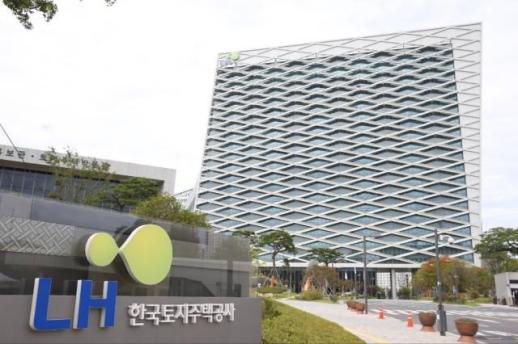 LH Signs Implementation Deal for Seoul’s Myeonmok District 9 Public Redevelopment Korea Land and Housing Corp.’s Seoul metropolitan redevelopment unit said Tuesday it signed an implementation agreement with the residents’ representative council for the Myeonmok District 9 public redevelopment project in Seoul. Myeonmok District 9 failed to make the cut in 2021 under the city’s fast-track planning program and the first round of public redevelopment candidates. It was later selected as a second-round public redevelopment candidate in 2022, backed by strong resident participation, with a 55% consent rate. LH said coordination with the local government accelerated the process. After the plan cleared review by the Seoul Metropolitan Government’s Urban Planning Commission in December, the district designation was completed about a month later. In January, LH said it also completed administrative steps including designation of the project implementer and formation of the residents’ representative council. LH said it plans to complete contractor selection this year through a public bidding process and to pursue approval of the project implementation plan next year. Under the current redevelopment plan, the area would be rebuilt into a large complex of 1,057 households, with a floor area ratio of 275.2% and buildings up to 30 stories, or 135.5 meters. LH said it also plans to reflect possible changes tied to the legislative track of the so-called “9.7 measures,” including a higher floor area ratio and a shorter project timeline, to improve project feasibility. “LH will bring its extensive public redevelopment capabilities to keep the Myeonmok District 9 project on track,” Park Hyeon-geun, head of LH’s Seoul metropolitan redevelopment unit, said in a statement. He said LH will work closely with the residents’ council to deliver faster housing supply and improved living conditions. * This article has been translated by AI. 2026-04-29 16:52:55
 -
 Daewoo Elcrew Ilsan Private Rental Project in Deogi-dong Advances Land Acquisition, Planning Steps A private rental apartment project known as “Daewoo Elcrew Ilsan,” planned for the Deogi-dong area of Goyang, Gyeonggi Province, is moving ahead with land acquisition and preparations for required administrative procedures. Real estate industry officials said on the 29th that the developer is pursuing land acquisition while also preparing steps tied to a district unit plan. Industry observers note that early-stage projects often hinge on factors such as urban planning standards, population allocation and whether land can be secured. They said progress should be assessed in context, citing similar developments that moved forward after administrative consultations and plan adjustments, ultimately leading to approvals and supply. Some past projects initially faced concerns about delays or procedural risks, but later became viable as district unit plans were revised, agencies consulted and land acquisition advanced. Experts advise against judging prospects based on limited early information, and instead recommend reviewing administrative steps, project structure and land acquisition status together. Daewoo Elcrew Ilsan is being promoted as a private rental project. Unlike typical local housing cooperative projects, where land acquisition rates, member recruitment and project plan approvals can introduce multiple uncertainties, private rental projects can vary in land-use documentation requirements and follow-up steps depending on structure and permitting stages. As a result, land acquisition progress and administrative procedures are seen as key indicators of stability. The developer said it has secured about 91% of the total project site. However, final permitting and the supply schedule may change depending on subsequent steps, including district unit plan revisions, consultations with relevant agencies and approval of the project plan. Park Byeong-rok, CEO of Yason Architecture Co., which is handling the design, said of the site, “There is no major problem in changing it in a direction that allows apartment construction through a district unit plan application.” He added, “We plan to complete the related preparations by the end of April, and then adjust the filing timing to fit the situation.” Daewoo Elcrew Ilsan is providing consultations through a promotional office set up in Dongpae-dong, Paju, Gyeonggi Province. 2026-04-29 16:48:03
 -
 LG Electronics Says AI Data Center Cooling Business Nearing Visible Results LG Electronics said on Tuesday that it has made progress in its AI data center cooling solutions business and expects to share tangible results soon. In a conference call on its first-quarter earnings, the company said certification procedures for key products are moving smoothly with major customers, including global big tech firms. LG Electronics said it is moving quickly to secure next-generation cooling technologies and develop products, while expanding cooperation to deliver total solutions that include cooling software and power management systems. The company also said it expects to reach its 2027 target of 1 trillion won ($1 trillion) in chiller sales earlier than planned, citing steady growth. It added that although its data center business remains in an early stage, sales last year rose about threefold from a year earlier.* This article has been translated by AI. 2026-04-29 16:47:17
 -
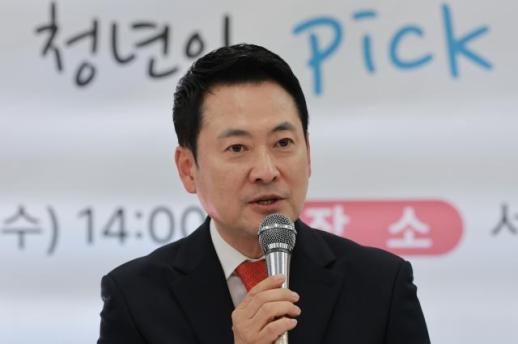 Kim Moon Soo Gains Prominence in June 3 Local Elections as Jang Dong-hyeok Keeps Low Profile Ahead of the June 3 local elections, People Power Party leader Jang Dong-hyeok has kept a low profile, avoiding regional campaign events, as former Labor Minister Kim Moon Soo’s presence has grown. With People Power Party candidates for metropolitan and provincial governor and mayor posts in Busan, Daegu and North Gyeongsang Province (TK), Gangwon and other areas asking Kim to serve as campaign chair, Jang has appeared to step back. Jang on April 29 announced regional economy and livelihood pledges at the National Assembly. “We will energize local economies so people’s lives improve,” he said, proposing steps including narrowing the housing market gap between the Seoul area and the rest of the country, introducing a production-boosting tax system described as a “Korean version of the IRA,” building a safety net for small-business succession, and cutting road occupancy fees. Later, he met with young people at a cafe in Seoul’s Seodaemun district for a discussion on everyday policy proposals. “Young people have stronger capabilities than any generation before them, but the stage to show them is narrow,” Jang said. He added that the party would “be reborn as a true youth party” where young people’s voices reach policymakers first and quickly become policy. The moves were seen as a minimal return to policy messaging after a recent controversy over a U.S. trip subsided. Kim, the party’s presidential candidate last year, has been taking on a larger role as candidates turn to him rather than Jang for campaign leadership. Kim is currently serving as honorary campaign chair for five election camps: the Busan, Daegu and Sejong mayoral races and the North Gyeongsang and Gangwon gubernatorial races. The decision to put Kim at the forefront has been interpreted as an effort to rally conservative voters. Rep. Jung Sung-kook, a lawmaker aligned with Han Dong-hoon, said on SBS radio that Kim’s broader appeal than Jang’s appeared to be a factor. “It seems there is a judgment that bringing in Kim, who has a wider spectrum than Jang, will help the election,” Jung said. A party official also said local elections typically draw lower turnout, making it difficult to bring disappointed conservative supporters to the polls, which is why candidates appear to be calling on Kim. * This article has been translated by AI. 2026-04-29 16:46:29
 -
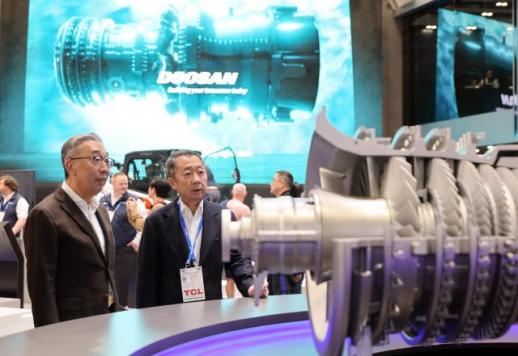 Doosan posts strong Q1 gains, ramps up semiconductor and energy investments Doosan Group is posting a sharp early-year performance lift, driven by strength in its core energy business and growth in semiconductor-related materials, parts and equipment seen as a future growth engine. The group plans to accelerate that semiconductor expansion through large-scale investment and mergers and acquisitions. According to industry officials on Tuesday, Doosan Corp. reported first-quarter consolidated revenue of 5.0603 trillion won and operating profit of 340.8 billion won, up 17.71% and 71.68% from a year earlier. Net income came to 101.5 billion won, swinging from a 106.4 billion won loss in the previous quarter. The surge was led by its Electronics BG unit, industry officials said. Demand jumped for high value-added products such as high-performance copper-clad laminate, or CCL, which is essential for printed circuit boards used in artificial intelligence semiconductors. Related results were reported to be up about 40% from a year earlier. Doosan Corp. said it will invest about 180 billion won to build a new production base in Thailand to get ahead of rising CCL demand. The company plans to break ground on a plant on a roughly 73,000-square-meter site in the Araya industrial complex in Samut Prakan province, aiming to begin mass production of CCL locally in the second half of 2028. Doosan Group also said Monday it will pursue about 400 billion won in facility investment and capacity expansion led by Doosan Tesna, as it seeks a stronger position not only in semiconductor materials but also in the back-end processing market. Doosan Tesna plans to buy about 190.9 billion won worth of semiconductor test equipment from suppliers including SEMES, a Samsung Electronics affiliate, to expand test infrastructure. A previously disclosed equipment investment plan of 171.4 billion won, announced in October, was raised to 205.3 billion won. The company also plans to invest a total of 230.3 billion won to build new facilities for a second plant in Pyeongtaek, targeting completion in November 2027. The acquisition of SK Siltron, the world’s fourth-largest wafer maker, is in its final stages. Investment banking industry officials expect Doosan Group and SK Group to announce a deal in early May after finalizing the purchase price. If the SK Siltron acquisition is completed, Doosan Group is expected to broaden its semiconductor footprint across materials such as PCBs and wafers, back-end testing and automation, including robots, in line with Chairman Park Jeongwon’s plan. Doosan’s energy business is also benefiting from growth in nuclear power and related equipment, along with expectations tied to contract manufacturing for SMRs, or small modular reactors. Doosan Enerbility posted first-quarter revenue of 4.2611 trillion won and operating profit of 233.5 billion won, up 13.7% and 63.9% from a year earlier. Net income was 60.2 billion won, turning positive from a 21.1 billion won loss a year earlier. Doosan Enerbility is working with the Ministry of Trade, Industry and Energy and Korea Electric Power Corp. as part of “Team Korea” to win an order for Vietnam’s Ninh Thuan Unit 2 nuclear power plant. To support the effort, Park Jiwon, chairman of Doosan Enerbility, joined President Lee Jae-myung’s economic delegation during a Vietnam trip on the 23rd and discussed cooperation on new nuclear power projects with Vietnamese government and energy industry officials. 2026-04-29 16:44:52