
Journalist

Lee Hugh
=
-
 India’s L&T Enters Industrial Electronics Manufacturing With Coimbatore Plant India’s construction and engineering company Larsen & Toubro (L&T) said on the 24th it has entered industrial electronics manufacturing, with two production lines beginning trial operations at its plant in Coimbatore in the southern state of Tamil Nadu. The company plans to supply industrial electronic products in India and overseas. The business will be run through a newly established unit, L&T Electronic Products & Systems (LTEPS). Manufacturing will be based in Coimbatore, while LTEPS’ headquarters functions will be located in Bengaluru in southern India. Building on expertise developed in strategic electronic equipment for defense and government customers, LTEPS will develop and manufacture products in areas including power electronics, mobility, industrial robots and automation systems, communications platforms, and electronic system design and manufacturing, known as ESDM. LTEPS said it will expand the business in stages. It plans to build out the full industrial electronics value chain at its Coimbatore site, covering about 40 acres (about 16.2 hectares), from research and development and product development to ESDM, contract manufacturing, design and engineering support, procurement and testing.* This article has been translated by AI. 2026-04-29 15:20:54
 -
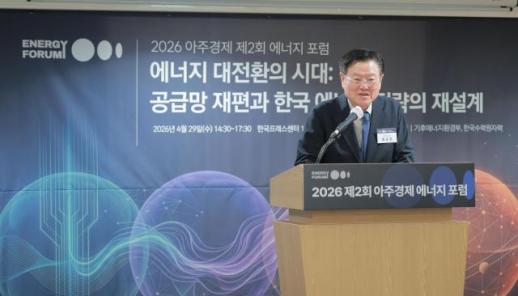 Aju Business Daily CEO urges new power supply strategy as energy security risks grow Lim Gyu-jin, CEO of Aju Business Daily, said securing a stable power supply has become “a core task for national competitiveness, no longer a matter of choice,” and called for a new strategy to manage energy supply and demand. Lim made the remarks in opening comments at the “2026 Aju Business Daily Energy Forum” on April 29 at the Korea Press Center in Jung-gu, Seoul. The forum was held under the theme “Reshaping the energy supply chain and redesigning South Korea’s energy strategy.” He pointed to rapid shifts in the global energy landscape, saying “geopolitical risks surrounding the Middle East, supply-chain instability and the spread of global protectionism are further underscoring the importance of energy security.” Lim also highlighted the impact of artificial intelligence and industrial change on energy markets. “As power demand surges due to the spread of AI, energy security, the power system and industrial competitiveness are now intertwined,” he said, adding, “We are at a point where we must seek a new strategy for energy supply and demand.” The forum was organized into two sessions aimed at practical solutions. The first session examines South Korea’s response strategy and structural challenges amid an energy security crisis. The second session focuses on a realistic energy mix and policy direction. Lim said Aju Business Daily would continue to serve as a bridge between industry, policy and the field by providing a venue for in-depth discussion on key issues including energy, supply chains and trade. He said he hoped the forum would help participants review response strategies and identify workable solutions, and serve as a starting point for strengthening South Korea’s energy security and finding a sustainable growth strategy.* This article has been translated by AI. 2026-04-29 15:20:21
 -
 Man Who Helped Rescue Victims in 2022 Itaewon Crush Found Dead After 10-Day Search A man in his 30s who took part in rescue efforts at the Oct. 29, 2022, Itaewon crowd crush was found dead 10 days after he went missing, according to reports. According to the Incheon Ilbo and other outlets, police said they found the body of A (37) at about 11:57 a.m. on April 29 in the area of Wangbangsan in Seondan-dong, Pocheon. A friend reported him missing to police on April 25, saying they had been unable to reach him since April 20. He was believed to have lost contact with family and acquaintances after leaving home that day. Seoul’s Guro Police Station, which received the initial report, traced his last known location to near Wangbangsan. Police, riot units and firefighters conducted a joint search and found him 10 days after he disappeared. Police said rigor mortis had set in when he was found, suggesting he had been dead for some time. Reports said A ran a business near the Hamilton Hotel in Seoul’s Yongsan district, where the Itaewon disaster occurred, and helped move injured people during the rescue effort. He was said to have suffered severe post-traumatic stress disorder after the disaster and to have complained of trauma and depression while also struggling financially amid a downturn in the area’s commercial activity. ※ If you or someone you know is struggling with depression or thoughts of self-harm, help is available 24 hours a day through the suicide prevention hotline 109 or via social media counseling “Madeleine” (an online friend who listens). 2026-04-29 15:19:39
 -
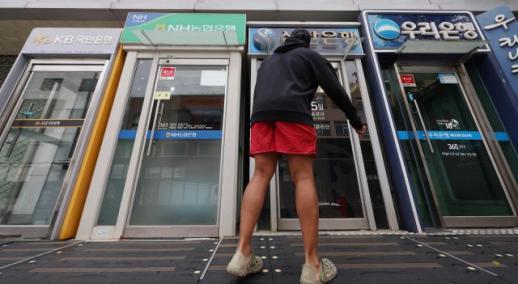 South Korea Variable-Rate Mortgages Near 40% as Borrowers Chase Lower Rates Variable-rate mortgages at South Korean banks climbed to nearly 40% last month, a shift that could leave more borrowers exposed as market rates rise. The jump is widely attributed to a widening gap between fixed and variable mortgage rates after market rates spiked in the short term amid tensions in the Middle East. With mortgage rates rising quickly, the growing share of variable-rate loans is also fueling concerns about a chain of financial stress among vulnerable borrowers and heavily leveraged households. According to the Bank of Korea on Tuesday, variable-rate loans accounted for 39.2% of deposit-taking banks’ mortgage balances as of the end of March, up 10.3 percentage points from 28.9% a month earlier. The share has risen sharply this year, from 13.4% at the end of last year to 24.4% at the end of January, then 28.9% in February, and higher again in March. Variable-rate loans reset periodically in line with market rates. Typically, when rates are rising, borrowers prefer fixed-rate loans because they lock in interest costs and make budgeting more predictable. Even so, borrowers have been gravitating toward variable rates because they are cheaper upfront. The view is that many are choosing to cut near-term interest costs even if they face higher payments later, as the rate gap is close to 1 percentage point. As of Tuesday, fixed-rate mortgages at the five major banks — KB Kookmin, Shinhan, Hana, Woori and NH Nonghyup — were quoted at 4.28% to 6.88% annually for products that reset every five years. Variable-rate mortgages that reset every six months were 3.65% to 6.05%. Fixed rates were higher by 0.83 percentage points at the top end and 0.63 points at the bottom end. The concern is that the shift toward variable-rate borrowing could translate into heavier repayment burdens. Because variable rates reflect market moves at set intervals, borrowers’ interest costs tend to rise in a tightening cycle. Mortgage rates have already been climbing. The Bank of Korea said the average rate on newly issued bank mortgages in March was 4.34% annually, up 0.02 percentage point from February, extending gains for a sixth straight month since October. The outlook remains uncertain, with Middle East tensions still unsettled and war-driven oil price spikes potentially feeding into inflation and higher interest rates. Korea Investment & Securities said in a report Monday that it expects the central bank to raise its policy rate twice in the second half of this year, in August and November. A financial industry official said variable-rate loans are structured to increase borrowers’ interest burdens if rates keep rising. If higher rates coincide with a weakening economy, the official said, repayment capacity could deteriorate among self-employed people and low-income, vulnerable borrowers, pushing delinquency rates sharply higher. 2026-04-29 15:18:47
 -
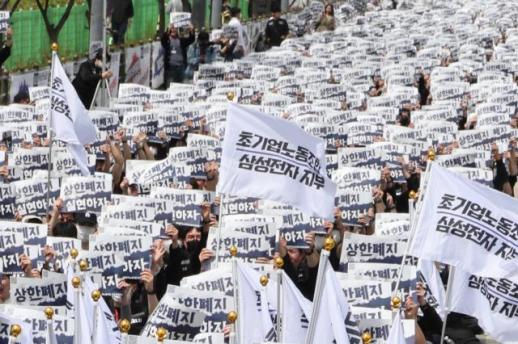 Court to rule on Samsung Electronics' injunction against strike by mid-May SEOUL, April 29 (AJP) - A South Korean court said Monday it will decide by May 20 whether to grant an injunction filed by Samsung Electronics to block what the company describes as "illegal" industrial action by its labor unions. The decision by the Suwon District Court is expected just one day before the unions’ scheduled general strike on May 21. During a closed-door hearing, Samsung Electronics management argued that any work stoppage would cause "irreparable damage" to the semiconductor manufacturing process, emphasizing the need to maintain essential personnel to prevent the spoilage of silicon wafers. The company further claimed that a production halt could damage high-cost equipment, noting that major global competitors have maintained operations despite labor disputes. In response, legal representatives for the unions stated they have no intention of damaging facilities and that their planned activities are within legal bounds. The unions argued they are willing to cooperate on safety protocols but accused management of failing to specify the minimum personnel required for such tasks. Addressing concerns over earlier rhetoric regarding "criminal punishment," the unions clarified that such comments were intended to show their resolve to continue collective bargaining rather than an intent to engage in unlawful acts. The legal tension follows a massive rally on Thursday, where approximately 40,000 union members gathered in Pyeongtaek to demand 15 percent of the company's operating profit as performance bonuses. The unions have signaled an 18-day general strike starting May 21, including a protest at the Pyeongtaek office. The court will hear the unions’ formal defense on May 13 before issuing its ruling in the following days. 2026-04-29 15:17:11
 -
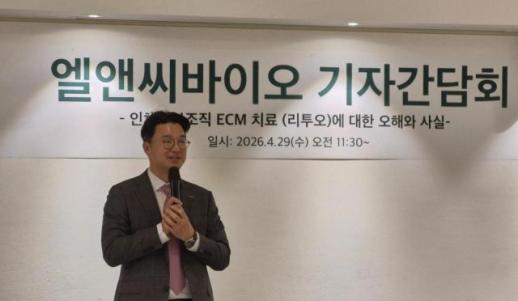 L&C Bio says Re2O skin booster uses acellular donated dermis, addresses ethics and oversight L&C Bio said its human tissue-based extracellular matrix (ECM) skin booster, Re2O, is made from acellular dermal matrix (ADM) derived from donated human tissue, pushing back against controversy over regulation and ethics. The company held a press briefing on the 29th at Conference House Dalgaebi in Jung-gu, Seoul, to explain ECM structure, Re2O’s characteristics and how human tissue is used. Re2O has recently faced claims and misunderstandings, including suggestions it involves injecting “cadaver skin,” as well as ethical questions about using donated tissue for cosmetic purposes. Re2O is based on ECM biomaterial composed of collagen, elastin and glycosaminoglycans (GAG), the company said. By removing cells, it aims to minimize immune reactions while providing an environment needed for skin tissue regeneration. Lee Ju-hee, L&C Bio’s vice chairman, said ADM has been used for decades in fields including dentistry, head and neck cancer and breast cancer reconstruction. Re2O, she said, applies ADM as a skin booster and is differentiated from existing products by its ability to reduce immune response while promoting tissue regeneration. Company officials also addressed oversight, saying human tissue is not in a regulatory blind spot but is managed under a system separate from pharmaceuticals and medical devices. Han Bang-hee, an L&C Bio vice president, said strict standards apply, including donor screening tests, sterile management and full life-cycle traceability. He said tracking is possible at the donor level, allowing causes to be identified if adverse events occur. The company said it ensures safety through nine test items in the United States and eight in South Korea. On the ethics debate over cosmetic use, the company cited donor consent and legal standards. Chairman Lee Hwan-cheol said the Human Tissue Act is aimed at “physical stability and restoration of physiological function,” and that restoring skin structure also falls under that purpose. He said the company submitted related materials to the Ministry of Food and Drug Safety and that on-site inspections have been completed. Lee said the core of ethics is not emotional judgment but donor consent and the appropriateness of medical use. He said Re2O uses only tissue from donors who provided prior consent that includes cosmetic use.* This article has been translated by AI. 2026-04-29 15:15:04
 -
 How ‘Super Shoes’ Helped Break the 2-Hour Marathon Barrier in Official Racing The men’s marathon “two-hour barrier,” long treated as a limit of human endurance over 42.195 kilometers (26.2 miles), has been broken in an official race. The milestone has renewed attention on the rapid evolution of “super shoes,” a showcase of sports science designed to maximize performance. For decades, marathon running was seen as a test of the body with minimal help from equipment. A defining example was the late Abebe Bikila of Ethiopia, who won the 1960 Rome Olympics marathon in a world record after running barefoot rather than in new shoes that did not fit. Running shoes later became standard, but for years their role was largely limited to protecting the foot and cushioning impact. Elite runners wanted lighter shoes, yet manufacturing constraints forced trade-offs between shock absorption and weight. That changed in the late 2010s, when major brands introduced shoes combining lightweight carbon-fiber plates with specialized foam, ushering in the super-shoe era. By returning energy like a spring with each stride, the technology has sharply reduced times. Reuters and other foreign media reported that since the super-shoe era began, the pace of world-record improvement has shifted from seconds to minutes over the past nine years. The gains also fueled accusations of “technology doping.” The debate intensified in 2019 when Kenya’s Eliud Kipchoge broke two hours in an unofficial event while wearing Nike shoes with three carbon-fiber plates in the sole. After criticism that the shoes went beyond an athlete’s natural ability, World Athletics in 2020 limited elite racing shoes to a maximum sole thickness of 40 millimeters and restricted carbon-fiber plates to one. Even under those tighter rules, super shoes kept advancing — and produced a historic result at the 2026 London Marathon in London on April 26 (Korean time). Sebastian Sawe of Kenya crossed the line in 1 hour, 59 minutes, 30 seconds to become the first person to run an official sub-2 marathon. Yomif Kejelcha of Ethiopia also broke the barrier, finishing in 1:59:41. As the once-unthinkable times arrived back-to-back, questions about reliance on shoe technology resurfaced. Sawe rejected the suggestion. “It’s true the shoes are very light and you feel like they push you forward, but it’s not (doping) at all. I ran in fully approved shoes that comply with the rules,” he said, according to Reuters on April 28. Sawe’s coach told Britain’s The Guardian that Sawe’s ability, along with the shoes and proper nutrition, had helped push the marathon into a new era. Sawe and other top finishers, including women’s world-record setter Tigist Assefa of Ethiopia (2:15:41), wore Adidas’ Adizero Adios Pro Evo 3. The shoe weighs 97 grams in a 270-millimeter size — about the weight of two eggs — and is designed with carbon materials and a customized build to reduce energy use and maximize rebound, according to the report. With the two-hour barrier now broken, competition among global brands is expected to continue. Reuters reported that shoe performance can improve running efficiency by 2% to 4% — a small figure on paper but a major difference over 42.195 kilometers. It added that while World Athletics limits sole thickness and the number of carbon plates, it still allows innovation, making comparisons of records across generations increasingly difficult.* This article has been translated by AI. 2026-04-29 15:14:00
 -
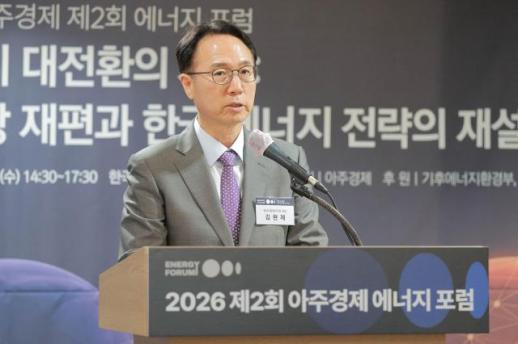 Energy Think Tank Chief Says Secure Energy Supply Is Key to National Competitiveness Kim Hyeon-je, president of the Korea Energy Economics Institute, said a stable energy supply is no longer just an issue for individual industries but a core task that affects national competitiveness and the broader economy. Speaking in opening remarks at the “2026 Aju Business Second Energy Forum” held April 29 at the Korea Press Center in Jung-gu, Seoul, Kim said the world is “creating a new energy order” as geopolitical conflict, supply-chain restructuring and the push toward carbon neutrality converge. “Electricity, in particular, is the most basic infrastructure that powers industry and daily life,” he said, adding that as advanced industries expand and electrification accelerates, the ability to provide stable power supply is directly tied to a country’s growth capacity. Kim said efforts should move in parallel to diversify energy sources, strengthen supply-chain resilience and expand infrastructure such as power grids and storage systems. He also called for using a range of clean energy sources, including renewables and nuclear power. “Energy transition and energy security are not opposing goals, but tasks of our time that must be achieved together,” he said, expressing hope the forum would help sharpen the direction of Korea’s energy strategy and seek practical, sustainable solutions.* This article has been translated by AI. 2026-04-29 15:13:02
 -
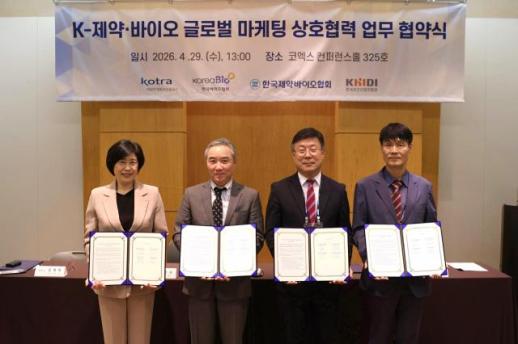 Four Korean pharma, bio bodies forge 'one team' to accelerate global push SEOUL, April 29 (AJP) - Four of South Korea's leading pharmaceutical and biotechnology organizations signed a memorandum of understanding to consolidate their fragmented overseas-support programs under a single coordinated framework, dubbed the "K-Pharma Bio One Team." The Korea Pharmaceutical and Bio-Pharma Manufacturers Association (KPBMA), the Korea Health Industry Development Institute, the Korea Biotechnology Industry Organization and the Korea Trade-Investment Promotion Agency inked the agreement at COEX in Seoul Wednesday, establishing a joint support structure for domestic firms seeking to expand abroad. Under the MOU, the four bodies will pool resources to conduct shared market analysis, identify and resolve export bottlenecks, gather overseas market intelligence, and coordinate marketing efforts at international trade events — replacing what had previously been a patchwork of institution-by-institution programs. The alliance plans to kick off operations in earnest at BIO International Convention, set for June in San Diego, California. More than 250 South Korean companies are expected to attend the event this year, making Korea the second-largest national contingent after the United States. The four organizations will jointly support Korean exhibitors at BIO USA and co-host a consolidated "Korea Night" reception expected to draw more than 600 industry officials, investors and potential partners. "This MOU marks a significant step forward in upgrading the support framework for the global expansion of Korea's pharmaceutical and biotech industry," said KPBMA president Noh Yun-hong, adding that the alliance would work to sharpen corporate competitiveness and raise the sector's international profile. 2026-04-29 15:12:41
 -
 KOSME Chair Kang Seok-jin Visits Cheonan SMEs for Fifth On-Site Meeting This Year The Korea SMEs and Startups Agency (KOSME) said Tuesday it held an on-site meeting, billed as “KOSME that visits and solves problems,” at the Cheonan, South Chungcheong Province, facility of KMF. KOSME said the session marked the fifth such visit this year by Chairman Kang Seok-jin. Since January, Kang has visited the Gwangju Regional Headquarters, the Western Gyeongnam Branch, the Overseas Expansion Division and the Seoul Western Branch, holding talks with companies in areas including the Gwangju High-Tech National Industrial Complex, domestic shipbuilding, exports and future industries such as artificial intelligence. The Cheonan meeting was organized to support small and midsize companies preparing for risks tied to the Middle East war and for artificial intelligence transformation (AX). Attendees included Kang; Lee Jeong-gu, head of the South Chungcheong “Strongly Studying Businesspeople Association”; and representatives from eight member companies. Participants shared concerns including difficulties related to exports to the Middle East and discussed possible responses. They cited rising logistics costs, sharp increases in raw material prices, growing uncertainty in exports, labor shortages and the burden of adopting AI transformation. One company official said delays in exports to the Middle East had led to a steep drop in sales and higher shipping costs, creating what the official described as a severe management crisis and an urgent need for government support. Another official said companies agree on the need for AI transformation but are struggling to adopt it because of upfront investment costs and a lack of specialized workers. KOSME said it will strengthen follow-up support tailored to on-the-ground needs, including policy financing and export vouchers, measures to ease logistics-cost burdens and assistance in responding to export contracts, to help companies overcome the crisis and advance digital transformation. Kang said small and midsize companies are facing heavier management burdens amid an uncertain trade environment, including the Middle East situation, and the accelerating pace of AI transformation. “Based on what we hear in the field, we will prepare practical support measures and take the lead in resolving business difficulties through ‘KOSME that visits and solves problems,’” he said.* This article has been translated by AI. 2026-04-29 15:09:18