
Journalist

Lee Hugh
=
-
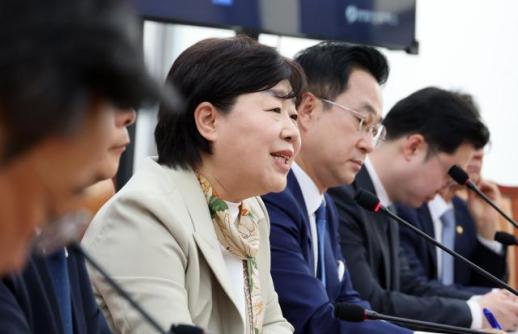 Ruling Party Panel Says Probe Found Prosecutorial Misconduct in Alleged Fabricated Indictments Democratic Party lawmakers serving on a National Assembly special committee investigating allegations of politically motivated, fabricated indictments under the Yoon Suk Yeol administration reported on their work April 29, a day before the panel is set to end its activities. They also said they would push for a special prosecutor to pursue accountability. At a morning news briefing at the National Assembly, the committee said its probe had brought to light what it described as prosecutorial fabrication and other illegal conduct, and it outlined what it called key findings so far. Committee Chair Seo Young-kyo said a review of investigative processes in the Ssangbangwool North Korea remittance case and the Daejang-dong case showed “fabrication” and “illegal acts.” She said the highlight of the April 28 hearing was testimony from former Ssangbangwool Chairman Kim Seong-tae, who appeared and said, “I have never met or even seen Lee Jae-myung.” Seo said the Yoon Suk Yeol administration had mobilized state power to try to remove the organizations of President Lee Jae-myung and former President Moon Jae-in. She said matters that had proceeded secretly within the prosecution were revealed through the parliamentary probe, and pledged to keep working to uncover remaining facts. Rep. Lee Ju-hee described what she said the committee confirmed through its work, including what she called a pattern of “fabricated indictments” in which investigators select targets and use coercion and inducements to produce false statements. She added that cases examined by the committee showed alleged fabrication and concealment of evidence, contamination and bargaining over testimony, and clear violations of constitutional basic rights. Lee said the probe showed the prosecution’s ability to police itself had reached its limits, arguing that a special prosecutor is needed. She said the Democratic Party would use a special prosecutor to determine the full scope of alleged fabricated indictments and bring those responsible before a court of judgment. The committee also said it plans to file complaints against witnesses and participants it says committed perjury during hearings and the investigation. Rep. Lee Geon-tae, the committee’s secretary, said he plans to hold a briefing at 11 a.m. April 30 to explain planned perjury complaints. He said committee members are still sorting the cases and that details would be provided April 30.* This article has been translated by AI. 2026-04-29 11:54:21
 -
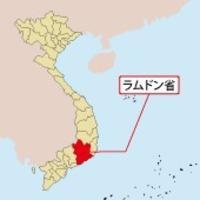 Vietnam’s Sun Group Breaks Ground on Phan Thiet Airport Civilian Facilities Vietnam real estate and resort developer Sun Group began construction April 27 on the civilian-use portion of Phan Thiet Airport in central Lam Dong Province. Total project costs are expected to exceed 3.9 trillion dong (about 23.5 billion yen), with completion projected in 2028. Phan Thiet Airport will be a joint military-civil facility. Sun Phan Thiet Airport Co., a Sun Group unit, is responsible for developing the civilian section. The company will build an airport meeting the International Civil Aviation Organization’s “4E” standard on about 75 hectares in the Mui Ne area. The passenger terminal, a 13-story domed structure with 18,000 square meters of floor space, will incorporate cultural elements of the Champa Kingdom, which is believed to have flourished from the 2nd to the 15th centuries. Sun Group aims to complete the civilian section within two years and to reach annual passenger capacity of 2 million by 2030. Phan Thiet Airport will be Lam Dong Province’s second airport after Lien Khuong Airport. Once it opens, travel times to Lam Dong are expected to be significantly reduced from major domestic cities such as Hanoi, Ho Chi Minh City and Da Nang, as well as key tourist destinations including Phu Quoc Island, boosting visitor numbers to the province.* This article has been translated by AI. 2026-04-29 11:48:16
 -
 Annual film fest set to kick off in Jeonju, featuring over 200 films SEOUL, April 29 (AJP) - The annual Jeonju International Film Festival (JIFF) is set to kick off with a red-carpet event in the southwestern city on Wednesday. According to organizers, this year's festival, now in its 27th year, will run for 10 days until May 8 and feature some 236 films from 54 countries. The festival's curtain-raiser is American filmmaker Kent Jones' "Late Fame," which tells the story of a poet whose secluded life is suddenly thrown into the spotlight after young admirers rediscover his long-neglected work. A special retrospective event is also scheduled in honor of the late actor Ahn Sung-ki, who died in December last year after battling blood cancer. Around seven lesser-known films from his decades-long career will be screened. The festival, known for its lineup of offbeat and indie films, will close with director Kim Hyun-ji's "Namtaeryeong," a documentary that follows farmers who ride tractors to Seoul to demand the impeachment of then-President Yoon Suk Yeol after he abruptly declared martial law on Dec. 3, 2024, which ended in a brief overnight fiasco. 2026-04-29 11:38:29
 -
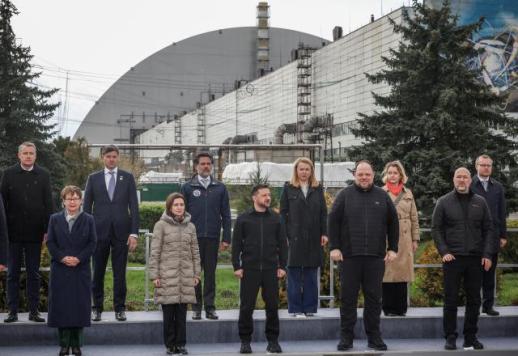 Chernobyl at 40: Nuclear Power Recast as a Strategic Asset Amid Energy and AI Demand On April 26, 1986, the explosion of Unit 4 at the Soviet-era Chernobyl nuclear plant was more than an environmental disaster. The radioactive cloud darkened not only Europe’s soil but also public trust in nuclear power for a generation. In 2026, as the disaster reaches its 40th anniversary, the world is paradoxically turning back toward nuclear energy. Geopolitical instability in the Middle East continues to rattle energy markets, and Russia’s invasion of Ukraine has exposed Europe’s energy-security vulnerabilities. At the same time, surging electricity demand tied to the artificial intelligence boom and the urgency of the climate crisis are driving a reassessment of nuclear power — from a symbol of fear to a strategic asset. “Chernobyl was an outlier” — engineers weigh what has changed For decades, Chernobyl served as the ultimate warning for opponents of nuclear power. More recently, expert debate has shifted from broad claims that “nuclear is dangerous” to closer analysis of which reactor designs are risky and under what conditions. Jacopo Buongiorno, a professor of nuclear engineering at MIT, described Chernobyl as “an outlier” caused by a flawed RBMK design without a containment structure and reckless actions. Sarah A. Pozzi, a University of Michigan professor and president of the IEEE Nuclear and Plasma Sciences Society, said no modern reactor approved under Western regulatory systems includes all of the defects present at the time. Some experts also point to changes in reactor physics. Steven Lyman, a University of Michigan professor, cited the Soviet graphite-moderated RBMK design as central to the Chernobyl disaster. He said modern water-moderated reactors cannot experience a Chernobyl-style meltdown, describing a physical safety mechanism in which overheating causes water coolant to boil off and naturally slows the nuclear reaction. Lyman added that, as the Fukushima accident showed, the principle does not eliminate risk but can reduce the severity of an accident. He said nuclear power matters as “scalable clean baseload power,” but high upfront costs remain the biggest obstacle. If small modular reactors, or SMRs, can bring initial costs down to a manageable level, he said, that barrier could be overcome. Nuclear’s return in numbers: “An answer for energy security” Nuclear power currently supplies about 10% of global electricity and about 25% of low-carbon power. More than 400 reactors are operating in 31 countries, and about 70 more are under construction. The United States, the world’s largest nuclear-power nation, operates 94 reactors and plans to quadruple capacity by 2050. Thomas DiNanno, a U.S. State Department deputy assistant secretary, recently said, “The world cannot power industry, meet AI demand, or secure its energy future without nuclear power.” China is building about 40 reactors, signaling it could surpass the United States. Even Germany, long a symbol of anti-nuclear sentiment, is showing signs of reconsideration. European Commission President Ursula von der Leyen, referring to the past rise in reliance on fossil fuels, acknowledged that turning away from nuclear power was a “strategic mistake.” Warnings remain: “System complexity and human error” Not all experts share the optimism. R. Scott Kemp, director of MIT’s Nuclear Security and Policy Program, urged caution, noting that nuclear safety is based in large part on simulation models. “In a complex system like a reactor, it is difficult to fully predict every interaction,” he said. Kemp emphasized that human misjudgment has played a role in major accidents and warned that “a Chernobyl-type accident is absolutely possible even today.” Even if modern plants are safer, he said, unexpected accidents cannot be ruled out if human understanding of the system is incomplete. A new front: SMRs and South Korea’s challenge The next battleground in the nuclear market is SMRs. The factory-built, on-site “plug-and-play” approach promises lower costs and faster deployment. But the BBC and other foreign media have cautioned that SMRs’ commercial viability has not yet been fully proven. That is where South Korea is drawing attention. The country has a top-tier supply chain capable of building standardized reactors such as the APR-1400 on budget and on schedule. But domestic conditions are complicated, with lingering fears after Fukushima, local opposition known as NIMBY sentiment, and policy uncertainty still weighing on the sector. Experts including Lee Jeong-ik, a professor at KAIST, have said South Korea’s 12th Basic Plan for Long-term Electricity Supply and Demand still falls short of delivering a full revival of the nuclear industry. Forty years after Chernobyl, the international order around nuclear power has shifted. Nuclear energy is increasingly framed not as an automatic object of fear, but as a practical option tied to survival. With climate pressures, energy security and AI-driven electricity demand converging in 2026, the question being asked is no longer whether societies can afford to live with nuclear power, but whether they can afford to live without it. 2026-04-29 11:37:29
 -
 WSJ: Trump Tells Aides to Prepare to Extend Iran Maritime Blockade President Donald Trump has instructed aides to prepare to extend a maritime blockade on Iran, The Wall Street Journal reported April 28, citing sources. The report said Trump is leaning toward keeping economic pressure on Iran through the blockade as he seeks a decisive victory but lacks a clear exit strategy. According to the report, Trump favored maintaining economic pressure through the blockade and related measures in a series of recent meetings, including a Situation Room session on April 27. Sources said he also weighed options such as resuming airstrikes and quickly declaring an end to the war, but concluded those choices carried greater risk than the current blockade. Since a ceasefire with Iran on April 7, the United States has limited military action while intensifying economic pressure through the maritime blockade, restricting the movement of tankers and other vessels to and from Iran. Bloomberg News, citing commodities analytics firm Kpler, reported the day before that the blockade has caused crude inventories to build inside Iran, leaving only about 12 to 22 days of usable oil storage capacity. A senior U.S. official said the blockade is inflicting severe damage on Iran’s economy and that Iran’s leadership, under economic strain, has offered negotiations to the United States. Over the weekend, reports said Iran, through mediators, proposed a “three-stage peace plan”: first, a halt to U.S. military action; second, talks on reopening the Strait of Hormuz; and third, discussions on Iran’s nuclear program. But sources said Trump and his national security team concluded that accepting such a proposal would weaken U.S. leverage to secure nuclear concessions from Iran. They said the administration is not willing to abandon its position that Iran must halt uranium enrichment for 20 years. In that context, the Journal said Trump is satisfied with keeping the maritime blockade in place indefinitely. Trump wrote on social media platform Truth Social, “Iran just told us they are in a ‘state of collapse,’” adding, “They want us to open the Strait of Hormuz as soon as possible while they try to resolve their leadership situation.” The Journal said that if the U.S. blockade continues, Iran could seek to pressure Washington by resuming strikes on energy facilities in the Middle East or attacking U.S. warships enforcing the blockade. It added that a prolonged blockade could also prolong high oil prices, potentially creating political headwinds for Trump and Republicans ahead of this year’s midterm elections. The report also said Trump is receiving conflicting advice from close associates about the next steps in the Iran war. Sen. Lindsey Graham of South Carolina and others have urged maintaining pressure on Iran, while business figures have called for ending the war, warning that a prolonged conflict would deepen economic damage and could be politically costly in the coming midterm elections.* This article has been translated by AI. 2026-04-29 11:36:21
 -
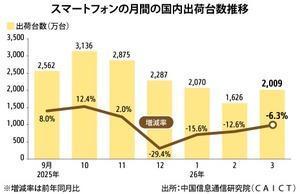 China’s March Smartphone Shipments Fall 6.3%, Down for Fourth Straight Month China’s domestic smartphone shipments in March 2026 fell 6.3% from a year earlier to 20.087 million units, according to the China Academy of Information and Communications Technology, a think tank under the Ministry of Industry and Information Technology. The pace of decline narrowed by 6.3 percentage points from the previous month, but shipments fell for a fourth consecutive month. Total mobile phone shipments, including smartphones, dropped 7.1% to 21.15 million units. Domestic brands accounted for 84.1% of the total, down 1.4 percentage points from the previous month. Shipments of models compatible with fifth-generation, or 5G, networks rose 1.3% to 19.667 million units, returning to growth and making up 93.0% of the total. Mobile phone models launched domestically in March plunged 70.3% to 19, including a 68.8% drop in smartphone models to 15. The number of 5G-compatible models released fell 60.6% to 13. For January through March, domestic smartphone shipments fell 11.6% from a year earlier to 57.04 million units. Total mobile phone shipments, including smartphones, declined 12.7% to 60.805 million units, of which 5G-compatible models fell 9.1% to 55.468 million units. Over the same period, 79 mobile phone models were launched, down 30.1%. Smartphone models released fell 22.6% to 65, and 5G-compatible models dropped 23.8% to 48.* This article has been translated by AI. 2026-04-29 11:33:00
 -
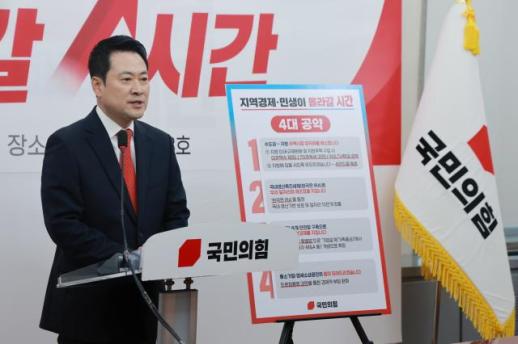 People Power Party leader Jang Dong-hyeok unveils regional economy, livelihood pledges Jang Dong-hyeok, leader of the People Power Party, announced region-specific pledges on the 29th, saying he would revive local economies and people’s livelihoods with policies that “open up” opportunities rather than “block” them. Speaking at a news conference at the National Assembly, Jang said he would “energize regional economies so that people’s lives improve.” He said South Korea’s economy faces an “unprecedented crisis,” citing surging prices and a falling potential growth rate, and warned that stagflation is becoming reality. He said repeated shocks to the national economy have hit regional economies and households even harder. Jang also criticized the Lee Jae-myung administration, saying it is continuing a “runaway” course without brakes and pushing the country “to the edge.” He said the People Power Party would “stop it and set things right.” As key pledges on regional economies and livelihoods, he proposed steps to narrow the housing-market divide between the Seoul metropolitan area and the provinces, introduce a tax incentive to promote domestic production (a “Korea-style IRA”), build safeguards for small and midsize business succession, and expand discounts on road-occupation fees. On boosting provincial real estate, Jang said the party would gradually ease debt service ratio (DSR) rules in the provinces to match those in the Seoul area, raising loan limits and expanding homebuying opportunities for end users. He also said the party would pursue a plan to exclude purchases of unsold homes in the provinces from the home-count used in housing-demand calculations. On a “Korea-style IRA,” he said support would cover all industries at high risk of manufacturing hollowing-out, and would specify a domestic-purchase share requirement so that tax benefits extend across the domestic production ecosystem. Jang also said he would push to enact a “Special Act on Small and Midsize Business Succession,” providing institutional support for succession at companies run for at least 10 years by owners age 60 or older. He said the plan would also support third-party succession and succession through mergers and acquisitions. He added that, taking into account the share of non-tax revenue at local governments, the party would expand the scope of road-occupation fee reductions from housing to buildings and other structures. * This article has been translated by AI. 2026-04-29 11:30:35
 -
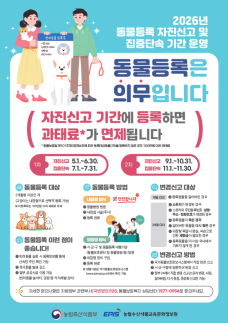 South Korea to Accept Voluntary Pet Dog Registration Reports Through June South Korea’s Ministry of Agriculture, Food and Rural Affairs said Tuesday it will run a first voluntary reporting period for animal registration through June and then carry out intensified enforcement in July. Under the Animal Protection Act, pet dogs aged 2 months or older must be registered with the local government. Owners who fail to register or do not report changes may face administrative fines of up to 1 million won or up to 500,000 won. Fines will be waived for those who register or report changes during the voluntary period. The ministry said it will also step up publicity for animal registration during the voluntary period and conduct a monthlong crackdown in July after it ends. It plans to operate a second voluntary reporting and enforcement period starting in September. “Animal registration is the first step in accepting a pet dog as a member of the family and the best way to prevent pets from going missing,” said Lee Yeon-sook, director of the ministry’s Animal Welfare Policy Division. * This article has been translated by AI. 2026-04-29 11:29:50
 -
 South Korea’s Official Apartment Prices Rise 9.13% in 2026; Seoul Up 18.60% The nationwide average of South Korea’s officially assessed prices for multi-family housing rose 9.13% from a year earlier, the Land Ministry said Tuesday, finalizing figures that affect property-related taxes. The Ministry of Land, Infrastructure and Transport said it will publish the assessed prices on April 30 for 15.85 million households nationwide, calculated as of Jan. 1. The final numbers reflect a public review and opinion-gathering period held from March 18 to April 6 for homeowners and local governments. The ministry said it readjusted prices in 1,903 cases where submitted opinions were deemed valid. A total of 14,561 opinions were filed on this year’s assessed prices, more than triple last year’s 4,132, when the increase rate was lower. The figure, however, was below the 49,601 opinions filed in 2021, when the increase rate neared 19%. Most submissions — 11,606 — asked for lower assessed prices, while 2,955 sought increases. By region, Seoul accounted for the most with 10,166 submissions, followed by Gyeonggi Province with 3,277 and Busan with 257. Requests for downward adjustments were concentrated in areas where assessed prices jumped sharply, including Seoul’s Gangnam area and neighborhoods along the Han River, amid concerns about higher property holding taxes. After the review, the nationwide average increase was set at 9.13%, down 0.03 percentage points from the draft figure of 9.16%. Seoul posted the biggest rise at 18.60%, but that was trimmed by 0.07 percentage points from the draft. Gyeonggi’s increase was 6.37%, down 0.01 percentage points. By housing type, apartments generated the most submissions with 11,887, followed by multi-unit homes with 2,281 and row houses with 393. The ministry said 13.1% of all opinions were reflected in the final prices. The finalized assessed prices will be available starting April 30 on the “Real Estate Official Price” website or at the civil service office of the relevant city, county or district office. Objections may be filed through May 29, and the ministry said it will conduct a re-investigation and reply individually with results by June 26. * This article has been translated by AI. 2026-04-29 11:29:01
 -
 Registration Opens for 2026 Seoul Foreigners Palace Walk, Set for May 31 The 2026 Seoul Foreigners Palace Walk, hosted by Aju Media Group (Aju Economy·ABC·AJP), will be held May 31 at the Play Yard of Gwanghwamun Square in central Seoul. Registration opens on the 29th on a first-come, first-served basis. The event brings together foreign residents, international students, tourists and local citizens to walk through major palaces and traditional cultural sites in downtown Seoul. The roughly 7-kilometer route starts at Gwanghwamun Square and passes Gyeongbokgung Palace, Bukchon-ro, Jeongdok Library, Changdeokgung Palace, Changgyeonggung Palace and Jogyesa Temple before returning to the square. On the day of the event, organizers will offer cultural performances and K-culture photo zones. All participants will receive commemorative items including a short-sleeve T-shirt, a hat and snacks. Participation is free, and applications will be accepted through a dedicated page on the Aju Economy website. ◇ Date/Time: May 31, 2026 (Sun.), 8 a.m.-2 p.m. (start 9 a.m.) ◇ Venue: Gwanghwamun Square Play Yard ◇ Course: About 7 km (Gwanghwamun Square→Gyeongbokgung Palace→Changdeokgung Palace→Changgyeonggung Palace→Jogyesa Temple→Gwanghwamun Square) ◇ Fee: Free (first 3,000 applicants) ◇ Souvenirs: Short-sleeve T-shirt, hat, snacks ◇ Eligible: Open to foreigners, international students, tourists and citizens ◇ Host: Aju Media Group (Aju Economy·ABC·AJP) ◇ How to apply: Dedicated application page on the Aju Economy website ◇ Link: www.ajunews.com (click the banner on the left side of the homepage) ◇ Inquiries: kkhj7782@ajunews.com* This article has been translated by AI. 2026-04-29 11:28:15