
Journalist

Lee Hugh
=
-
 Chaebi, Hyundai Motor launch EV charging subscription with 299 won-per-kWh discount Chaebi, a South Korean operator of fast EV charging infrastructure, said April 29 it has partnered with Hyundai Motor to roll out a Hyundai-only EV charging subscription plan. The plan, aimed at buyers of new Hyundai vehicles, offers a discounted rate of 299 won per kWh at Chaebi chargers and partner roaming stations. It also includes a 10% discount on Chaebi credit purchases of 10,000 won or more and discount coupons for “Chaebi Wash,” a premium hand car-wash service at Chaebi Stay. Customers can sign up through the subscription menu in the My Page section of the Chaebi app. The company said the benefits are designed to apply to all new-car buyers this year, regardless of delivery timing. With monthly fees of 19,900 won or 9,900 won, subscribers can use Chaebi’s ultra-fast and fast charging network nationwide at reduced rates for the remainder of 26. At Chaebi Stay, charging discounts, credit discounts and premium hand-wash benefits are offered as a package. “This cooperation is a starting point for Hyundai Motor and Chaebi to write a new standard for the EV charging experience together,” Chaebi CEO Choi Young-hoon said.* This article has been translated by AI. 2026-04-29 08:39:59
 -
 Korea Investment & Securities raises HPSP target price 20% on AI-driven chip spending Korea Investment & Securities on Tuesday raised its target price for HPSP by 20% to 65,000 won from 54,000 won, citing expected benefits from expanding artificial intelligence demand that is driving investment in foundry and memory chips. It maintained its “buy” rating. Researcher Chae Min-sook said TSMC’s shortage of 3-nanometer production capacity is expected to create spillover gains for Intel and Samsung Foundry, and that HPSP should benefit because it supplies equipment to all three leading-edge foundries. She added that rising AI demand is expected to lift utilization not only at 12-inch legacy foundries but also at 8-inch foundries, increasing the likelihood of revenue growth for HPSP, which has a broad base of foundry customers. HPSP has grown mainly with foundries on the back of its high-pressure hydrogen annealing equipment, and the brokerage expects its expansion into memory semiconductors to accelerate. As AI systems increase the share of NAND used, demand is rising to convert related processes, and equipment demand is expected to grow in tandem, it said. Major chipmakers are also speeding up investment as competition intensifies to stack more NAND layers. SK hynix plans to convert about half of its NAND production bits to 321-layer technology in 2026, while Samsung Electronics is accelerating process conversions at its Xi’an and Pyeongtaek plants. Kioxia and YMTC are also pursuing capacity expansion and process upgrades at the same time. The brokerage said this trend is likely to translate directly into growth in HPSP’s NAND-related revenue. Momentum is also expected in DRAM. The report said pilot-line investment in the 1d nanometer process is set to begin from late 2026, and from that stage the use of high-pressure hydrogen annealing is expected to expand. That would allow HPSP to extend growth proven in foundries into memory and strengthen its medium- to long-term earnings base, it said. The brokerage added that the global foundry market remains supportive. With AI inference demand rising, utilization is increasing not only at leading-edge foundries but also at legacy foundries that produce power management ICs, and the possibility of expanded capital spending by major players is being discussed. In a broader investment upcycle, it said, HPSP is expected to benefit given that it counts most foundry companies among its customers. * This article has been translated by AI. 2026-04-29 08:39:10
 -
 Trump Rejects Iran Proposal; Pakistan Expects Revised Plan Within Days, CNN Reports Pakistan, acting as a mediator, expects to receive a revised Iranian proposal to end the war within days as U.S.-Iran talks remain stalled, CNN reported April 28. CNN, citing a Pakistani source, said Iranian Foreign Minister Abbas Araghchi was to return to Iran that day after a trip to Russia and consult with the country’s top leadership. The source said internal coordination could take considerable time because the supreme leader’s whereabouts are not publicly disclosed, limiting communication. President Donald Trump said over the weekend that he would not accept Iran’s proposal. The plan was described as a phased approach: end the war first, then address key disputes tied to Iran’s nuclear program in follow-up talks. Sources said negotiations remain ongoing and fluid, with a central question being whether Iran will revise its offer to a level the United States can accept. Trump wrote on his social media platform, Truth Social, that Iran had just told the United States it was in a “State of Collapse.” He added that Iran, while trying to resolve its leadership situation “(I believe they can),” wants the Strait of Hormuz opened as soon as possible.* This article has been translated by AI. 2026-04-29 08:38:27
 -
 Kyobo Securities Raises Samsung SDI Target to 880,000 Won After Q1 Beat Kyobo Securities on Tuesday raised its target price for Samsung SDI to 880,000 won and maintained a “buy” rating, citing first-quarter results that beat market expectations by a wide margin. Choi Bo-young, a researcher at Kyobo Securities, said Samsung SDI posted consolidated first-quarter revenue of 3.5764 trillion won, up 12.6% from a year earlier. The company reported an operating loss of 155.6 billion won, a sharp improvement from the consensus estimate of an operating loss of 280.9 billion won, Choi said. Kyobo attributed the surprise to expanding battery demand tied to artificial intelligence data centers, improved performance in the energy storage system, or ESS, business, and the reflection of customer compensation payments. Choi said losses narrowed more than expected as demand strengthened for battery backup units, or BBUs, for AI data centers and for high-output cylindrical batteries used in power tools in the small-battery division. He added that in the ESS division, increased shipments of high value-added uninterruptible power supply, or UPS, products for data centers supported results, and compensation related to volumes from a North American customer also helped profitability. On the UPS segment, Choi said the market remains limited in size but growth visibility is improving quickly, with proactive steps underway such as converting a UPS line at the Ulsan plant. He forecast that because global competitors are limited in the high-output small BBU segment, Samsung SDI’s market share could expand faster than overall market growth.* This article has been translated by AI. 2026-04-29 08:30:16
 -
 Korea Investment & Securities Raises Kumho Tire Target Price 71% on Improved Results Korea Investment & Securities said Kumho Tire posted solid results despite production disruptions from last year's factory fire, raising its target price 71% to 7,500 won and maintaining a 'buy' rating. In a report issued Tuesday, analyst Kim Chang-ho said higher raw material costs had already been reflected in earnings estimates, but the firm raised its profitability forecast to account for stronger-than-expected sales volume and an increase in average selling prices. Kim said Kumho Tire's first-quarter operating profit rose 0.3% from a year earlier to 147 billion won, in line with the market consensus. He added that profit also increased from the previous quarter and called the result effectively robust given production setbacks after a fire at the company's Gwangju plant in May 2025. He cited expanded use of lower-cost inputs, led by stabilized natural rubber prices, along with improved product mix that supported tire price increases and higher output at other plants, including in Vietnam. He said the Gwangju plant, which has resumed production, recovered to about 10,000 tires a day in April, partially normalizing to an annual capacity of 3 million tires. Kim cautioned that higher-cost raw material inputs beginning in the second quarter will be a burden. He pointed to rising geopolitical risks in the Middle East and a sharp jump in global oil prices, which he said drove a surge in butadiene, a key feedstock for synthetic rubber. He added that with synthetic rubber prices rising and natural rubber also turning higher, material cost pressure is expected to increase from the second quarter, with the materials ratio likely peaking in the third quarter.* This article has been translated by AI. 2026-04-29 08:27:16
 -
 Bitcoin Slips to $76,000 Range as Middle East Tensions Weigh on Crypto Major cryptocurrencies, including bitcoin, weakened after a short-term rise as geopolitical tensions centered on the Middle East continued to weigh on risk assets. Bitcoin was trading at $76,221 as of 8 a.m. on the 29th, down 1.09% from a day earlier, according to global crypto market tracker CoinMarketCap. Ethereum fell 0.39% to $2,285. Binance Coin (BNB), Solana and XRP also slipped 0.31%, 1.02% and 1.25% to $623, $83 and $1.37, respectively. Analysts said rising geopolitical tensions in the Middle East and growing uncertainty in energy markets were adding downward pressure to crypto prices. As investors cut exposure to riskier assets, bitcoin and other major tokens have remained under pressure. In South Korea, bitcoin traded at about 113.40 million won ($76,223) on the won-based exchange Bithumb as of 8 a.m., up 0.44% from the previous day. The so-called “kimchi premium” stood at 0.999%, indicating bitcoin was priced higher domestically than overseas.* This article has been translated by AI. 2026-04-29 08:21:16
 -
 Wall Street Ends Lower on OpenAI Growth Concerns; Nasdaq Falls 0.9% 뉴욕증시가 오픈AI를 둘러싼 성장 둔화 우려 속에 일제히 하락 마감했다. 28일(현지시각) 뉴욕증권거래소(NYSE)에서 다우존스30산업평균지수는 전 거래일보다 25.86포인트(0.05%) 내린 4만9141.93에 거래를 마쳤다. 스탠더드앤드푸어스(S&P)500지수는 35.11포인트(0.49%) 하락한 7138.80, 나스닥종합지수는 223.30포인트(0.90%) 떨어진 2만4663.80으로 장을 마감했다. U.S. stocks closed broadly lower after negative news tied to OpenAI added to investor caution following recent record highs for the S&P 500 and Nasdaq. The Wall Street Journal reported that OpenAI missed targets for new users and revenue, and that internal concerns have been raised about whether the company can sustain massive artificial intelligence investment costs. In particular, OpenAI Chief Financial Officer Sarah Friar was reported to have told executives that if revenue growth is not fast enough, the company may not be able to cover future AI data center costs. AI chipmakers fell. Nvidia slid 1.6%, while Broadcom dropped 4.4%, AMD fell 3.4% and Micron declined 3.9%. Oracle, which is building data centers for OpenAI, sank 4.1%. Losses in tech were limited as investors looked ahead to earnings from major companies. Alphabet, Microsoft, Amazon and Meta are set to report results on 29일, and Apple is scheduled to release earnings on 30일. Investors are watching whether AI-driven demand helps deliver strong results. Chuck Carlson, CEO of Horizon Investment, told Reuters, "The OpenAI issue is giving investors more to think about in terms of whether growth is slowing and what that means for capital spending," adding, "With major hyperscalers reporting tomorrow, investors may have more incentive to take some profits." Rising oil prices also weighed on sentiment. Brent crude futures settled up 2.8% at $111.26 a barrel, and U.S. West Texas Intermediate crude rose 3.7% to $99.93. The gains came despite news that the United Arab Emirates would leave OPEC, as talks between the United States and Iran over ending the war remained stalled, fueling worries about prolonged supply uncertainty. Meanwhile, the Federal Reserve is holding a two-day Federal Open Market Committee meeting through 29일 to set monetary policy. Markets are leaning toward the benchmark rate being held at 3.50% to 3.75%, and are watching what message Chair Jerome Powell delivers on recent economic conditions, including Middle East developments, and the policy path ahead.* This article has been translated by AI. 2026-04-29 08:15:49
 -
 Online Post Recounts Aftermath of Sookmyung Girls’ High Exam Leak Case An update on the Sookmyung Girls’ High School exam paper leak case has resurfaced online. On the 29th, a post titled “Update on the Sookmyung Girls’ High exam leak twins” was uploaded to an online community. The post included a personal account from a reporter, identified only as A, who covered the case at the time. A wrote that he recently met an acquaintance who knew the family well and asked how they were doing. “I expected something, but it was more miserable than I thought,” A wrote, adding that the couple had divorced. A said the husband was the school teacher and academic affairs head implicated in the case, and that the wife also worked in education. He wrote that financial strain and stress made normal life difficult. The husband was sentenced to three years in prison and was released recently after completing his term, A said. A wrote that the man moved with the two children to a provincial area far from Seoul and now pumps gas at a service station, suggesting it was not easy to find work because of his age and career history. A also wrote that the two children, described as suffering from social anxiety, stay inside all day using their phones. “I heard they eat only when food is pushed into their room, then put the dishes back out,” he wrote. A added that he could understand why the wife chose divorce, writing that the cost of wrongdoing in one of South Korea’s most sensitive areas had been severe: the breadwinner lost his job, the family collapsed, and the children could not live normally. He wrote that they had no supporters in society. Some commenters who saw the post mentioned Cho Kuk, leader of the Cho Kuk Innovation Party, who has declared his candidacy in the Gyeonggi Province Pyeongtaek-eul by-election ahead of the June 3 by-elections. Many commenters described the situation as a “difference in power,” with some saying Cho’s family is “living well.” Other comments included: “The kids who flipped off reporters have social anxiety?” “Did the mother abandon the family by choosing divorce?” and “They’ve already been punished legally, but it’s still sad the family fell apart.” The twins, who were first-year students at Sookmyung Girls’ High School in 2024, were found to have taken exams using answer sheets their father stole on five occasions, from the first semester final exams in 2017 through the first semester finals the following year. The twins were indicted on charges of obstructing the school’s grading work. They denied the allegations from the first trial, but the courts did not accept their claims. On the 24th, the Supreme Court’s Second Division, with Justice Kim Sang-hwan presiding, upheld a lower court ruling sentencing the two daughters of former academic affairs head Hyun to one year in prison, suspended for three years. The sisters were expelled in October 2018, shortly after police announced the results of their investigation. Their father, Hyun, was tried earlier and found guilty of obstruction of business; in March 2020, the Supreme Court finalized a three-year prison sentence.* This article has been translated by AI. 2026-04-29 08:06:28
 -
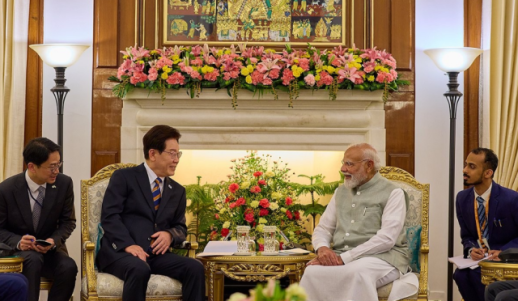 India’s Ultra-Diversity and Growth: Why South Korea Needs a 30-Year Strategy 미국의 대문호 마크 트웨인(1835~1910)은 인도를 여행한 뒤 이렇게 기록했다. “인도는 인류의 요람이며, 인간 언어의 발상지이고, 역사의 어머니이자, 전설의 할머니이며, 전통의 증조할머니입니다. 인류 역사상 가장 가치 있고 교훈적인 자료들은 오직 인도에만 소중히 간직되어 있습니다.” 한때 문명의 보고로 불렸던 인도는 이제 세계 경제 질서를 흔드는 새로운 성장 축으로 부상하고 있다. 세계 최대 인구국가이자 가장 젊은 경제 거인, 동시에 가장 복잡한 문명국가가 인도라는 평가가 나온다. 한국에서 인도는 여전히 값싼 노동력의 시장, 거대한 소비시장, 또는 중국을 대체할 생산기지로 단순화되는 경우가 많다. 하지만 인도는 하나의 대륙이자 문명권에 가깝다는 점에서, 접근 역시 단기 수출 전략이 아니라 30년을 내다보는 장기 전략이어야 한다는 지적이 제기된다. 특히 기사에서는 이재명 대통령 정부가 아시아 시대를 준비한다면, 영어 전문가뿐 아니라 힌디어 전문가를 국가 전략 차원에서 대규모로 양성해야 한다고 주장했다. 중국어와 일본어를 넘어 힌디어, 타밀어, 벵골어, 마라티어까지 이해하는 인재층이 필요하며, 외교는 언어에서 시작되고 신뢰는 문화 이해에서 출발한다는 취지다. 고대 로마의 철학자 세네카는 말했다. “어느 항구로 가는지 모르는 사람에게는 어떤 바람도 순풍이 아니다.” 기사에서는 한국이 미국과 중국 사이에서만 길을 찾을지, 새로운 성장 축으로 떠오른 인도와 함께 미래를 설계할지 선택의 기로에 서 있다고 짚었다. 『주역』의 구절 “천행건(天行健), 군자이 자강불식(君子以 自强不息)”을 인용하며, 조급함보다 지속, 단기 성과보다 장기 전략이 필요하다고 강조했다. 또 인도의 고전 『우파니샤드』의 “진실만이 승리한다. 거짓은 결코 승리하지 못한다”는 문장을 들어, 국가 간 관계도 결국 진실과 신뢰 위에서만 지속될 수 있다고 했다. 이는 인도 공화국의 국가 표어 ‘사티야메바 자야테(Satyameva Jayate)’의 뿌리로도 소개됐다. 기사에 따르면 인도 경제를 이해하려면 역사적 배경을 함께 봐야 한다. 인더스 문명은 기원전 2500년경 이미 도시 계획과 상하수도 체계를 갖춘 것으로 전해지며, 이후 베다 문명과 힌두 사상의 형성, 불교의 탄생, 마우리아 왕조와 아소카 대왕의 통치, 굽타 왕조의 황금기까지 철학과 종교, 수학과 천문학의 중심지였다고 설명했다. ‘영’의 개념, 십진법, 요가, 불교, 우파니샤드와 베단타 철학이 인도에서 나왔다는 점도 함께 언급됐다. 다만 수세기에 걸친 이슬람 왕조의 지배와 영국 식민 통치가 인도 사회를 크게 흔들었고, 영국은 철도와 행정체계를 남기는 한편 분열과 빈곤의 구조도 심었다고 평가했다. 인도는 1947년 마하트마 간디와 자와할랄 네루의 시대를 거쳐 독립한 뒤 민주주의 실험을 시작했으며, 세계에서 가장 많은 사람이 참여하는 민주주의와 복잡한 선거 시스템이 작동하는 나라가 됐다고 기사에서는 전했다. 독립 이후 오랫동안 사회주의적 계획경제와 보호무역에 묶여 성장 속도가 더뎠지만, 1991년 경제개혁 이후 시장 개방과 외국인 투자 확대, 정보기술 산업 육성이 본격화되며 방향이 바뀌었다고 했다. 현재 인도는 14억 명이 넘는 인구를 부양하면서도 식량을 자급하고, 매년 수백억 달러 규모의 농산물을 수출하는 대륙형 경제로 묘사됐다. 국제통화기금이 주목하는 6~7퍼센트대 성장률, 구매력 평가 기준 세계 3위 경제 규모, 공급망 재편의 수혜국이라는 평가도 함께 제시됐다. 기사에서는 인도를 단지 인구가 많은 나라로만 보면 본질을 놓칠 수 있으며, 인구를 움직이는 구조적 변화 속에서 읽어야 한다고 했다. 또 인도를 이해하려면 경제보다 먼저 ‘초다양성’을 봐야 한다고 강조했다. 헌법상 공용 언어만 해도 힌디어와 영어를 포함해 22개가 넘고, 실제로는 수백 개의 언어와 방언이 존재한다는 설명이다. 북부의 힌디어권과 남부의 드라비다어권은 문화적 감각부터 다르다고 했다. 종교도 힌두교가 다수인 가운데 이슬람교 인구가 세계 최상위권이며, 시크교·불교·자이나교·기독교가 함께 존재한다고 전했다. 카스트의 잔재는 법적으로 금지됐지만 현실 사회에서는 여전히 작동한다고도 했다. 지역별 특성도 다르다고 소개했다. 펀자브의 상업 감각, 구자라트의 기업가 정신, 벵갈의 지식 전통, 타밀나두의 제조업 기반, 카르나타카의 정보기술 생태계, 마하라슈트라의 금융 중심성이 각각 다르며, 인도에서는 “인도를 안다”보다 “어느 인도를 아는가”가 더 중요하다는 취지다. 이 다양성을 무시하고 접근한 기업들은 실패하기 쉽다고 기사에서는 지적했다. 대표 사례로 포스코의 오디샤 제철소 프로젝트를 들었다. 포스코는 2005년 인도 오디샤주에 대규모 일관제철소 건설을 추진했으며, 당시로서는 한국 기업의 최대 해외 투자였다고 했다. 그러나 토지 수용 문제, 주민 반발, 환경 규제, 중앙정부와 주정부 간 이해 충돌, 정치 변화가 겹치며 장기간 표류했고 사실상 실패로 귀결됐다고 전했다. 기사에서는 한국 기업들이 종종 “계약이 끝났으니 사업도 끝났다”고 생각하지만, 인도에서는 계약보다 공동체의 신뢰가 더 오래 간다고 주장했다. 법률보다 지역사회가 강하고, 속도보다 관계가 중요하다는 설명이다. 월마트는 초기 인도 진출에서 규제와 유통 구조의 장벽을 겪었고, 보다폰은 세금 분쟁으로 오랜 기간 어려움을 겪었으며, 노키아도 세무 문제와 정책 변화로 어려움을 겪었다고 사례를 들었다. 기사에서는 인도를 하나의 시장으로만 본 것이 공통된 실패 요인이라고 보고, 스와트(SWOT) 분석으로 접근해야 한다고 제안했다. 강점으로는 젊은 인구 구조를 꼽았다. 인도의 중위 연령은 약 28세로, 한국과 일본, 중국이 고령화로 흔들리는 동안 인도는 생산가능인구의 힘을 가진다고 했다. 디지털 인프라도 강점으로 제시됐다. ‘인디아 스택’은 디지털 신원 인증과 결제 시스템을 통해 금융 접근성과 행정 효율을 높였으며, 단순한 핀테크가 아니라 국가 운영 체계의 혁신으로 평가했다. 민주주의와 법치의 틀도 강점으로 들며, 느리지만 방향을 바꾸는 제도적 안전장치가 존재한다고 했다. 약점으로는 고용 없는 성장, 교육 격차, 인프라와 행정의 비효율, 카스트와 지역 격차를 제시했다. 정보기술과 서비스 산업은 성장하지만 제조업 일자리가 충분하지 않고, 숙련 인력이 부족하며, 주마다 다른 규제와 세제가 외국 기업을 지치게 만든다는 설명이다. 보이지 않는 사회적 장벽이 생산성에 부담이 된다는 지적도 포함됐다. 기회로는 미국과 중국 갈등 속 ‘차이나 플러스 원’ 전략의 핵심 수혜국이라는 점을 들었다. 애플과 폭스콘의 이동이 상징적 사례로 언급됐고, 반도체, 배터리, 자동차, 방산, 조선, 에너지 등에서 한국과 협력 여지가 크다고 했다. 위협으로는 보호무역 강화, 정치적 민족주의, 종교 갈등, 지방별 정책 변화, 예상보다 느린 개혁 속도를 들었다. 가능성은 크지만 예측이 어렵다는 평가도 덧붙였다. 이에 따라 한국의 전략은 ‘빨리 들어가자’가 아니라 ‘오래 함께 가자’여야 한다고 기사에서는 제안했다. 정부는 힌디어 전문가를 국가 전략 자산으로 육성해 외교부, 산업부, 코트라, 무역협회, 대기업 등에 인도 전문 인재 풀을 체계적으로 공급해야 하며, 단기 연수가 아니라 대학과 국책 연구기관 차원의 장기 프로젝트가 필요하다고 했다. 기업은 델리와 뭄바이만 볼 것이 아니라 주정부 단위 전략을 세워야 한다고 했다. 타밀나두는 제조업, 카르나타카는 정보기술, 구자라트는 산업 인프라, 텔랑가나는 첨단산업 중심으로 접근해야 한다는 제안이 포함됐다. 또 단순 투자보다 공동 성장 모델이 필요하다고 주장했다. 병원, 교육, 직업훈련, 농업 기술, 스마트시티, 철도와 항만 등 생활 기반 사업이 중요하며, 인도는 물건을 파는 시장이 아니라 함께 나라를 만드는 동반자라는 관점이 제시됐다. 정권이 바뀔 때마다 정책이 바뀌는 방식으로는 신뢰를 만들기 어렵다며, 30년 계획과 초정권적 장기 플랫폼의 필요성도 언급했다. 예시로 ‘한·인도 공동 미래위원회’ 같은 구상을 제시했다. 기사 말미에서는 포스코 사례를 “사업 실패가 아니라 이해 부족의 실패”로 규정하며, 앞으로 필요한 것은 자본이 아니라 인내, 계약이 아니라 우정이라고 했다. 마크 트웨인이 “전통의 증조할머니”라고 표현한 인도가 “가장 젊은 경제 거인”으로 변신하고 있으며, 인도의 1인당 국내총생산은 여전히 낮지만 미래를 결정하는 것은 숫자가 아니라 방향이라고 덧붙였다. 30년 뒤 아시아 질서가 인도를 중심으로 다시 쓰일 가능성이 높다는 전망과 함께, 한국이 단순한 거래 상대가 아니라 진정한 파트너로 남으려면 지금부터 준비해야 한다고 기사에서는 강조했다. 인도는 시장이 아니다. 인도는 미래다. 2026-04-29 07:25:14
 -
 KOSPI Hits Record High, South Korea Rises to No. 8 in Global Market Value ◆ Ajou Economy Top News ▷ Foreign and institutional investors flip from selling to buying; retail investors post record net selling of 14 trillion won - South Korea’s stock market, lifted by strength in AI-related semiconductor shares, moved ahead of the U.K. to rank eighth globally by market capitalization. - The KOSPI closed at 6,641.02, setting another all-time high after briefly topping 6,700 during the session. - Total market capitalization in South Korea rose to about 6,116 trillion won, up 53% from the end of last year. - Some brokerages cited the AI semiconductor-led rally and policy momentum in projecting the KOSPI could reach 7,000 to 8,000. ◆ Key Report ▷ Heungkuk Securities: Hyundai Steel outlook improves; target price raised - Heungkuk Securities kept its “buy” rating on Hyundai Steel and raised its target price to 55,000 won. - The company’s first-quarter results missed expectations, with revenue of 5.7397 trillion won and operating profit of 15.7 billion won, but higher sales volume confirmed a recovery in demand. - The brokerage said improved steel scrap prices, subsidiary performance and one-off gains helped cushion consolidated profitability. - It forecast results would continue improving from the second quarter, reflecting higher prices in China, better supply-demand conditions and the impact of price increases. ◆ Major filings after the close (28th) ▷ CrowdWorks: 1 billion won paid-in capital increase ▷ Aptochrom: 12 billion won paid-in capital increase ▷ GemVax: additional purchase of Korea Stem Cell Bank shares worth 12.4 billion won ▷ KBI Metal: acquisition of Wonyoung Hitech shares, raising stake to 100% ▷ SK Bioscience: share buyback worth 17.1 billion won ▷ NC: provides 21.8 billion won worth of treasury shares to employees ◆ Fund flows (as of the 27th, excluding ETFs) Domestic equity funds: 132 billion won Overseas equity funds: -5.7 billion won ◆ Key events today (Wed.) Eurozone: M3 (March), corporate loans (March), consumer confidence (April) United States: durable goods orders (March), housing starts and permits (March), remarks by Federal Reserve Chair Powell * This article has been translated by AI. 2026-04-29 06:54:24