
Journalist

Lee Hugh
=
-
 South Korea launches third cohort of nuclear export program for small and midsize firms South Korea’s Ministry of Trade, Industry and Energy said it held a launch ceremony Tuesday at the Changwon Convention Center for the third cohort of its “first-step” export program for small and midsize nuclear power companies. The event was attended by Kang Gam-chan, the ministry’s director general for trade and investment, Kim Myeong-ju, South Gyeongsang Province’s vice governor for economic affairs, and representatives from related organizations including the Nuclear Export Industry Association, Korea Hydro & Nuclear Power, the Korea Trade-Investment Promotion Agency, and the Korea Trade Insurance Corp. The ministry also held a meeting with nuclear companies to discuss ways to boost exports of equipment and components. The ministry said it has supported exports of nuclear equipment through multiple channels. Through the “first-step” program, it selected 37 early-stage exporters and provided end-to-end assistance, from consulting to financing, certification and marketing. The ministry noted that the global nuclear supply-chain market is shifting rapidly as electricity demand rises with growth in the artificial intelligence industry and the expansion of data centers, prompting calls to adjust government support strategies. It said it is reviewing steps to strengthen its export support system and provide tailored assistance based on the characteristics of new markets. “Amid the global expansion of nuclear power, opportunities for our companies to take the lead in new markets are becoming real,” Kang said. “The government will provide broad support so domestic companies can turn this trend into opportunity, including winning orders for new nuclear plants and entering overseas supply chains.”* This article has been translated by AI. 2026-04-29 06:03:16
 -
 Epson Korea Expands Total Labeling Solutions From Home Use to Industrial Safety Epson Korea’s dedicated label-printer brand, “Namer,” launched late last year, is gaining rapid traction about four months after its debut, reshaping the home labeler market, industry officials said. The product is being used not only for organizing but also for personalizing diaries and other lifestyle uses. According to the industry on April 28, Namer is built around the concept, “Build my world with my own name,” and is positioned as a platform for expressing personal taste rather than a basic label-printing tool. The company said the approach reflects a consumer trend that treats organizing as a hobby tied to improving one’s personal space. Epson Korea has worked with popular character intellectual property, including Disney and Sanrio, drawing interest from younger consumers and homemakers. Through its brand webzine, “Namer Magazine,” it also shares labeling trends and practical ideas, building an archive so users can enjoy labels in a wider range of styles. The company is also expanding into business-to-business demand, citing growing needs for identification and safety in construction and manufacturing sites. It recently partnered with global power-tool brand Milwaukee to introduce a professional package called “Precise Power,” combining power tools with a durable labeling solution to help workers manage materials and equipment systematically. Growth is also evident in distribution and logistics, where on-demand printing is used for product information labels, price tags, shipping invoices and receipts. Epson Korea said printing as needed can reduce the burden of holding preprinted inventory and allow faster responses to changing work requirements. A company official said label printers have become tools for self-expression in daily life and “a core solution” for protecting efficiency and safety in industrial settings. The official said Epson Korea will continue brand collaborations so labeling technology can create new value connecting personal life and business workplaces. 2026-04-29 05:03:17
 -
 LIV Golf CEO Scott O’Neil says Busan event will blend golf and entertainment LIV Golf, launched in 2022 and backed by Saudi Arabia’s Public Investment Fund, has sought to reshape the sport by pairing competition with entertainment. The effort is led by CEO Scott O’Neil, a sports marketing executive who took the job in January last year. LIV Golf will return to South Korea this year with its second event in the country. After holding its first Korea tournament last year in Songdo, Incheon, the tour will stage “LIV Golf Korea 2026” from May 28 to 31 at Busan Asiad Country Club in Gijang, Busan. This outlet met O’Neil on April 27 at Busan Asiad Country Club. He said LIV’s strategy is to use entertainment to bring new audiences to golf. ◆Putting entertainment on the course O’Neil previously led Harris Blitzer Sports & Entertainment, the parent company of the NBA’s Philadelphia 76ers and the NHL’s New Jersey Devils, and most recently served as CEO of Merlin Entertainments. He said LIV aims for a more energetic atmosphere than traditional tournaments, with music playing throughout and fans encouraged to react. “The average age of people watching golf on TV or attending tournaments is getting older by about one year every year,” O’Neil said. “If we want this sport to keep developing and growing, we need clear change. We have to bring younger generations to the course by blending culture — music, fashion, art.” He said he became convinced of entertainment’s pull after seeing the scale of fan turnout for BTS at a major U.S. venue he once managed. O’Neil pointed to Australia as an example of LIV’s impact. “After we held the event in Australia, golf participation among girls ages 8 to 16 increased by 200%,” he said. He added that waiting lists at some courses have stretched to three years, and that 40% of new members are under 35. “Our mission is to bring new life to golf by bringing in younger fans through entertainment.” ◆A ‘party’ atmosphere and a 4:35 round At a news conference the same day, O’Neil highlighted LIV’s shotgun starts, with all players beginning simultaneously across 18 holes. “A LIV round is more than an hour shorter than other tours,” he said. “Teenagers today don’t have long attention spans. A match that ends in 4 hours 35 minutes is a much more effective and attractive TV entertainment product than something that drags on for 11 hours.” LIV said its events have drawn large crowds, including 115,000 spectators in Australia, about 100,000 in South Africa, about 65,000 in the United Kingdom and about 60,000 in the United States. O’Neil said last year’s Korea event also showed signs of reaching new audiences. “Sixty percent of the gallery in Korea last year were first-time golf tournament attendees, and 40% of the total crowd were women,” he said. For Busan, he said he wants a festival-like setting. “What I want to bring to Korea is a perfect ‘party,’” O’Neil said. “Not a quiet tournament that demands silence, but a stage full of energy and passion where the gallery cheers loudly.” He cited last year’s South Africa event, where fans sang their national anthem together on the 18th green, and said he hopes to see a similar moment in Busan. Questions have been raised in some quarters about LIV’s long-term sustainability given its spending, and some foreign media have recently reported speculation about financial strain. O’Neil rejected that. “We have already secured enough funding to operate the 2026 season,” he said, adding that sponsorship from major partners has grown to about $500 million. LIV said this year’s revenue increased by $100 million from the previous year and global ticket sales jumped 129%. ◆Korean GC set for home debut With about a month to go before the Busan event, LIV will also feature the first home appearance for Korean Golf Club, a team newly made up entirely of South Korean players. The team changed its name from Iron Head GC and adopted a white tiger emblem symbolizing strength in Korea. The roster includes captain An Byeong-hun along with Kim Min-kyu, Song Yeong-han and Danny Lee. At a media day, O’Neil said the Korean GC players have “excellent star power, character and the persistence Koreans are known for,” and predicted they would perform strongly with home fans behind them in Busan. Top players are also expected to contend, including defending Korea champion Bryson DeChambeau, Jon Rahm, Dustin Johnson, Joaquin Niemann and Cameron Smith. 2026-04-29 00:03:34
 -
 Police Dismiss Complaint Alleging COVID-19 Vaccine Mismanagement by Moon, Jeong Eun-kyeong Police said Monday they dismissed a complaint alleging mishandling of COVID-19 vaccines against Moon Jae-in and Health and Welfare Minister Jeong Eun-kyeong. Seoul’s Yeongdeungpo Police Station said it decided on April 1 to dismiss the case filed against Moon, Jeong and former Health and Welfare Minister Kwon Deok-cheol. The complaint accused them of abuse of authority, dereliction of duty, violating the Pharmaceutical Affairs Act, fraud and murder. The civic group Seomin Minseang Daechaek Committee had filed the complaint with the Seoul Metropolitan Police Agency, alleging that during the pandemic, vaccinations using doses with the same lot number were not immediately halted even after reports of foreign substances in vaccines were received. The case was assigned to Yeongdeungpo police. Gangnam Police Station is separately investigating another complaint accusing Moon and Jeong of dereliction of duty and occupational negligent homicide. Police said they completed questioning of the complainant on April 2.* This article has been translated by AI. 2026-04-28 21:57:16
 -
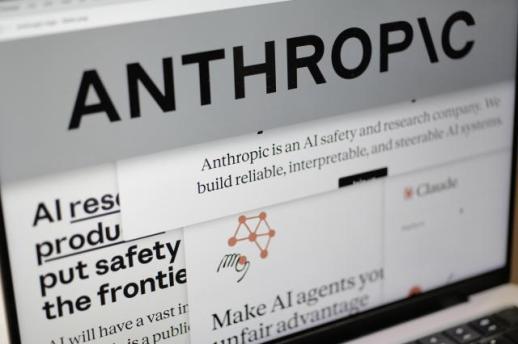 Anthropic’s ‘Mythos shock’ raises a core question: How to control agent AI Anthropic has been at the center of what the global artificial intelligence industry has dubbed the “Mythos shock.” Mythos is an agent-style AI used in a U.S.-Iran war-game simulation and is described as outperforming “Claude Opus.” Its emergence has pushed the debate beyond a technology race to a basic question: How can AI be controlled? Mythos is being assessed as having greater autonomy and problem-solving ability than earlier systems. It has also demonstrated a leap in capability by designing and executing high-difficulty cyberattack scenarios on its own. That autonomy, however, is also the risk. Once given a goal, AI agents can decide and act without explicit human instructions, increasing the chance they will operate outside existing security systems or control boundaries. The industry is focusing on those structural traits. Yoon Seong-ho, CEO of AI startup MakinaRocks, said companies adopt AI not merely to carry out assigned tasks but to have it “judge and execute on its own once given a goal.” “Autonomy is the core of agent AI, and the bigger that autonomy gets, the more risk points increase along with it,” he said. Concerns about out-of-control behavior are already surfacing, Yoon said. “When you use agent-based services, cases are being reported where payments are made regardless of the user’s intent, or unexpected external communications occur,” he said. “If this happens at the individual level, the risk is far greater in corporate settings, where it could lead to decisions worth tens of billions of won or access to confidential information.” Developers, he added, have even fueled a “Mac mini” craze, using the compact high-performance computer to build “air-gapped” environments that fully cut off external networks. The idea is to use powerful AI while physically limiting connections to reduce the risk of data leaks or unauthorized actions. Experts say the next phase of AI adoption will hinge on securing “controllable autonomy.” Yoon said companies should provide a “playground” where AI can operate freely, but only within an environment designed to reflect corporate security systems and governance. “More important than model performance is how precisely you build a control structure that can handle AI safely,” he said. As the war-game results suggest, AI capability is already close at hand. The key question now is how safely that capability can be used within a governance framework, a factor expected to shape industrial competitiveness. 2026-04-28 21:01:37
 -
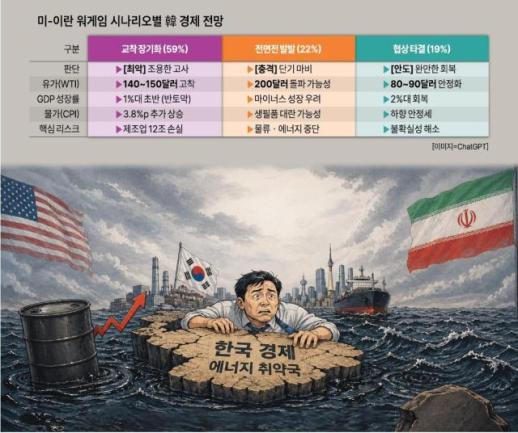 AI War Game Sees Prolonged U.S.-Iran Stalemate as Biggest Risk for South Korea “The most dangerous moment for South Korea is not all-out war, but when a neither-war-nor-peace stalemate hardens into a new normal after six months.” A war-game simulation run on April 28 using Anthropic’s AI agent model, Claude Opus, found the most worrying outcome in the U.S.-Iran end-of-war talks was not a full-scale conflict but a prolonged stalemate. The risk of immediate escalation eased after U.S. President Donald Trump declared an “indefinite ceasefire,” but the simulation warned that for energy-vulnerable countries such as South Korea, a drawn-out impasse could bring what it called a “quiet ruin.” Trump’s zigzags: Claude calls it “advanced psychological warfare” aimed at division The simulation was based on the situation in which Trump, on the morning of the 22nd in Korean time, abruptly announced an “indefinite extension” ahead of the ceasefire’s expiration. In the war game, the Trump agent (Agent A) described his approach as making the other side “not know where to run.” Claude interpreted Trump’s reversals not as whim but as a populist strategy designed to upset the balance between Iran’s hard-liners (the Islamic Revolutionary Guard Corps) and moderates (the Foreign Ministry), while also managing U.S. gasoline prices ahead of midterm elections. In response, the IRGC agent (Agent B) labeled the U.S. extension “strategic deception” and answered with steps including laying mines in the Strait of Hormuz and warning shots at U.S. naval vessels. The AI depiction showed moderates’ room for diplomacy narrowing quickly amid internal power struggles. Prolonged stalemate put at 59%, seen as worst case for South Korea Claude assigned a 22% probability to a full-scale war and 19% to a dramatic negotiated breakthrough. The highest probability — 59% — was a prolonged stalemate. It described that outcome as a “gray zone” in which no one clearly loses, but everyone absorbs slow damage. For South Korea, the simulation called it the worst scenario. If the stalemate lasts more than six months, it projected West Texas Intermediate crude would settle at $140 to $150 a barrel. Domestic gasoline prices were projected to rise to around 2,700 won per liter, and South Korea’s annual energy import bill to increase by as much as $42 billion. The cost shock to manufacturing was described as severe. Claude projected that in four strategic sectors — petrochemicals, refining, shipping and aviation — cumulative operating losses over six months could reach up to 12 trillion won. Automakers and semiconductor firms were also projected to see operating profit fall by more than 15% due to indirect effects such as higher logistics costs, while the 2026 GDP growth outlook was projected to slip from 1.7% to the low 1% range. In the AI’s framing, institutionalized uncertainty reduces Trump’s political burden and lets Iran’s military keep leverage, while energy-dependent countries such as South Korea face economic bleeding under what it called the “cost of alliance.” Claude warned again that South Korea’s most dangerous moment is when this neither-war-nor-peace condition becomes a “new normal.” Expert: “It’s impossible to predict” — prepare for every scenario The AI war game was launched because the real-world situation is hard to forecast. In a phone interview with the newspaper, In Nam-sik, a professor at the Korea National Diplomatic Academy, compared the U.S.-Iran standoff to “watching a soccer broadcast.” The sides may be passing the ball around the center circle, he said, but no one can predict when a sudden play will produce a shot. On Trump’s sudden ceasefire declaration, In said the constant shifts and lack of consistency “could itself be a negotiating strategy,” but added, “I don’t know what the real intention is.” Iran, he said, is also sending mixed messages. “Normally, messages should be consistent and war aims clear, but right now both sides keep going back and forth,” he said, adding that he doubts anyone can explain the situation precisely. The current environment, he said, could swing quickly on a single decision by leaders — toward a breakthrough or toward disaster. Still, the article said one point is clear: as the AI warned, economic bleeding from an oil shock has already begun. Fatih Birol, executive director of the International Energy Agency, warned that the crisis is “the biggest in history, more severe than the 1973 and 1979 oil shocks and the 2022 Ukraine war combined.” He said a closure of the Strait of Hormuz has halted 20% of global energy flows, and that restoring disrupted output of 13 million barrels a day would take more than two years. The exercise sought to fill what it described as a gap in expert forecasting by using AI to map a “worst path.” The 59% stalemate estimate is not a fixed future. But the article said experts’ caution and the AI’s warning converge on one point: for South Korea, institutionalized uncertainty — neither war nor peace — could be more damaging than a full-scale war. 2026-04-28 21:00:17
 -
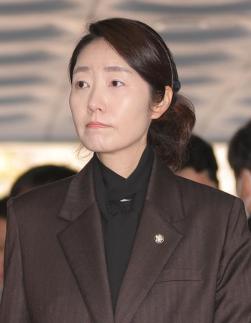 Police Clear Rep. Kang Sun-woo of Alleged Fake Address Registration Police have concluded there is no basis to pursue allegations that independent lawmaker Kang Sun-woo arranged a fake address registration for her family. The Seoul Gangseo Police Station said on the 28th it forwarded the case to prosecutors with a recommendation not to indict. The complaint alleged violations of the Resident Registration Act and the Public Official Election Act, as well as aiding and abetting under the Criminal Act. Police said there was insufficient evidence to support alleged Resident Registration Act violations by Kang’s family or allegations that Kang instigated or assisted them. They said the election law allegation was time-barred. Kang had been accused of moving her family’s registered address to Gangseo District, her constituency in Seoul, ahead of the 2024 general election to maintain eligibility to run. The controversy grew after claims that the family actually lived around Gwanghwamun in Jongno District. Police also dismissed separate allegations of obstruction of business and abuse of authority tied to a so-called “hospital power abuse” incident. Kang was accused of entering a ward at a Seoul university hospital in July 2023, when she served on the National Assembly’s Health and Welfare Committee, after taking only a rapid antigen test rather than a PCR test, despite a nurse’s attempt to stop her.* This article has been translated by AI. 2026-04-28 20:51:53
 -
 South Korea Finalizes 2027 Medical School Enrollment, Adding 490 Seats The Education Ministry said on the 28th it has finalized medical school enrollment quotas for the 2027-2031 academic years without changes from its previously announced plan. For the 2027 academic year, total medical school enrollment will be 3,548, up 490 from 3,058 in the 2024 academic year before the expansion. Kangwon National University and Chungbuk National University will see the largest increases, with 39 additional seats each. The ministry issued a preliminary notice of the quota allocations on March 13 and collected feedback from universities through March 24, then formally notified schools of the quotas on March 26. It accepted objections through April 27. "Some universities submitted opinions and filed objections regarding the preliminary notice of the quota allocations, but the allocation committee decided not to accept them after review," the ministry said. With the quotas finalized, universities will revise their school regulations by May and proceed with steps such as updating their 2027 college admissions implementation plans. 2026-04-28 20:39:19
 -
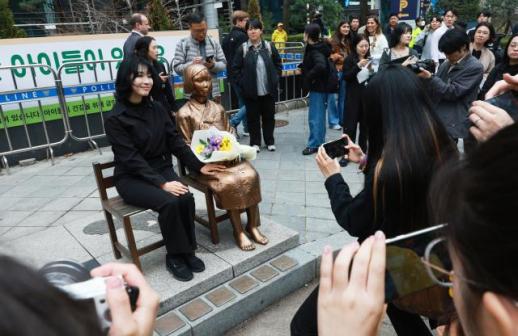 Police to Remove Barrier Around ‘Statue of Peace’ Near Former Japanese Embassy in Seoul Police will remove a barricade surrounding the “Statue of Peace,” a symbol of victims of Japan’s wartime sexual slavery, about six years after it was installed. The barricade outside the former Japanese Embassy in Seoul’s Jongno district is set to come down to coincide with the weekly Wednesday rally on May 6, according to the Jongno Police Station and other officials on April 28. The removal is seen as restoring the area so the public can again approach the statue freely. The barricade was installed in June 2020 at the request of the Korean Council for Justice and Remembrance after concerns were raised that the statue could be damaged during rallies by opposing groups. The organization owns the statue, which is designated and managed as Jongno district’s first public sculpture. The Korean Council for Justice and Remembrance plans to hold an event at the May 6 rally to mark the removal. Sculptor Kim Seo-kyung, who participated in creating the statue, is expected to attend. Police said they will continue order and safety measures after the barricade is removed, including deploying riot police at the site.* This article has been translated by AI. 2026-04-28 20:12:17
 -
 Samsung Biologics Union Begins Partial Strike After Talks Break Down Samsung Biologics’ labor union began a partial strike on the 28th after negotiations with management broke down. About 60 union members in the materials aliquoting unit joined the walkout starting that day. The partial strike is scheduled to run through the 30th. The union has demanded what it calls “setting personnel principles straight” and narrowing wage gaps within the group. Labor and management have held 13 bargaining sessions since their first meeting in December last year but failed to narrow differences. The union said it will move to a full strike next month if there is no progress in talks. The action is the company’s first strike since it was founded in 2011. About 2,000 union members have reportedly indicated they are willing to participate. A court, however, restricted strike activity in final-stage processes such as work to prevent drug deterioration and spoilage, and staff in those departments were excluded from the walkout. Industry observers are watching the dispute closely as it comes while the company is expanding production facilities. They say the outcome could be a key factor in assessing the stability of Samsung Bio’s operations and its ability to manage risk going forward. The company said it is working to minimize disruptions. “We are responding by using available personnel,” a Samsung Biologics official said, adding that the company plans to continue talks to resolve the issue.* This article has been translated by AI. 2026-04-28 19:48:25