
Journalist

Lee Hugh
=
-
 China Politburo urges readiness for external shocks, stronger energy security China’s top decision-making body, the Communist Party’s Politburo, called for a systematic response to external shocks and challenges and for stronger energy and resource security, Chinese state media reported. The message comes as uncertainty has risen in areas including energy and trade following the outbreak of the Iran war. According to Xinhua News Agency and other state outlets, the Politburo met on the 28th under the chairmanship of Chinese President Xi Jinping to review and assess the current economic situation and related work. The Politburo includes officials ranked within the party’s top 24 and typically meets once a month. Meetings held in April, July, October and December are regarded as key sessions for reviewing quarterly political and economic trends. The meeting said China’s economy “started strongly” this year, with major indicators exceeding expectations and showing “strong resilience and vitality,” praising first-quarter performance. It also said “some difficulties and challenges still exist,” and called for further consolidating the trend of improvement while maintaining stability. The Politburo urged adherence to the guiding approach of pursuing progress while maintaining stability, and called for building a new development pattern. It said China should advance technological self-reliance and strengthen independent control of industrial supply chains, while carrying out a more proactive fiscal policy and a suitably accommodative monetary policy with precision. On fiscal policy, it called for continued improvements in the structure of spending and for firmly safeguarding the minimum baseline of the so-called “three guarantees” at the grassroots level: basic livelihoods, wages and government operations. On monetary policy, it called for greater proactiveness, flexibility and precision to keep market liquidity at an adequate level. Boosting domestic demand was reaffirmed as a core task for the year. The meeting called for expanding the supply of high-quality goods and services, promoting consumption upgrades, and expanding and improving the service sector. It also listed expanded planning and construction of networks including water resources, new power grids, computing power, next-generation communications, urban water supply and drainage, logistics and other systems. The meeting also urged faster development of a modern industrial system, maintaining a reasonable share of manufacturing, building a unified national market, and addressing cutthroat low-price competition. It called for fully advancing an “AI plus” initiative to expand the integration of artificial intelligence with industry, develop a smart economy, improve AI governance, and deepen reforms of state assets and state-owned enterprises. With geopolitical risks rising, including the outbreak of the Iran war, the meeting also warned of possible deterioration in the external environment. It said China should “systematically respond to external shocks and challenges” and raise energy and resource security to address uncertainties through high-quality development. The Politburo also raised the need for measures to defuse risks in key areas including the property market, local government debt and small and medium-sized financial institutions. It called for strengthening an employment-first policy, improving management of agricultural production, and stabilizing prices for farm and livestock products including pork.* This article has been translated by AI. 2026-04-28 17:15:20
 -
 LG H&H says AI-aided study finds hair-growth compound from cnidium extract LG Household & Health Care said it has developed a new scalp and hair-care ingredient combination that significantly improves hair growth speed and durability, based on a compound extracted from the herbal medicine cnidium. The company said April 28 that its research institute used artificial intelligence to identify “cnidium-derived ferulic acid” and combined it with NMN, described as a key ingredient for extending skin longevity, to create the new formulation. The findings were published in the latest issue of Scientific Reports, a sister journal of Nature, the company said. Researchers said they have focused on cnidium since 2009 after traditional medical texts, including Donguibogam and Bencao Gangmu, described it as helping improve stagnant circulation, suggesting potential to improve the scalp environment. In the latest work, the team applied AI and molecular modeling and found that ferulic acid in cnidium activates estrogen receptors in dermal papilla cells, which it described as a key factor in hair growth. Based on that, the researchers combined ferulic acid and NMN at an optimized ratio and ran human hair-follicle culture tests. The company said the combination promoted proliferation of dermal papilla cells and helped activate mitochondrial function inside the cells. It said the mechanism boosts cellular energy metabolism needed for new hair formation and growth, maximizing hair-growth effects. In comparative tests using cultured follicles, the company said the new combination showed a higher hair growth-phase retention rate than minoxidil, a widely used hair-strengthening ingredient, demonstrating a strong hair-growth promoting effect. “This research will serve as a turning point for continuing to develop materials that can help us approach hair-growth technology that makes hair thicker and stronger,” said Kang Nae-gyu, LG Household & Health Care’s chief technology officer. He said the company will advance research on hair growth and improved volume by confirming the potential of cnidium-derived ferulic acid and expanding its work to combinations with NMN.* This article has been translated by AI. 2026-04-28 17:13:52
 -
 Time Names OpenAI, Alphabet and Three Chinese Firms Among 2026’s Most Influential AI Companies Time has named OpenAI and Google parent Alphabet, along with China’s ByteDance, Alibaba and Zhipu AI, to its list of the 10 most influential artificial intelligence companies this year. The selection reflects how the AI race is expanding beyond model performance to user scale, data centers and competition over open AI ecosystems. According to Time on April 27 (local time), the “10 Most Influential AI Companies of 2026” are OpenAI, Alphabet, Amazon, Meta, Anthropic, Hugging Face, ByteDance, Alibaba, Zhipu AI and Mistral. Time said it is publishing its Time100 Companies list by 20 industries starting this year. U.S. companies were cited for strengths in consumer reach and data-center operations. OpenAI was highlighted as driving commercialization, with more than 900 million weekly active ChatGPT users and about $2 billion in monthly revenue. Alphabet was praised for applying AI across its services, including Search, Gmail, YouTube, Maps and Waymo. Amazon stood out less as a model developer than as a provider of the infrastructure that runs AI. It is operating large-scale AI data centers using its in-house AI training chip, Trainium2. It runs infrastructure supporting Anthropic’s models and pledged to provide AI computing infrastructure to OpenAI on the condition that OpenAI uses Trainium. Meta was categorized as advancing AI advertising and recommendations using data from Facebook and Instagram users. Chinese companies also made a strong showing. ByteDance was cited as an example of mass-market AI adoption, with its AI assistant Doubao surpassing 155 million weekly active users. Alibaba is expanding into cloud and enterprise AI services with its open model Qwen. Zhipu AI was presented as a Chinese example of reducing reliance on U.S.-made chips by releasing a large AI model trained on Huawei semiconductors. Anthropic, Mistral and Hugging Face were described as another pillar of the field. Anthropic is expanding into corporate and government markets with Claude. France’s Mistral was noted as a European independent AI model company, while Hugging Face was recognized as an open platform for sharing AI models and datasets.* This article has been translated by AI. 2026-04-28 17:13:05
 -
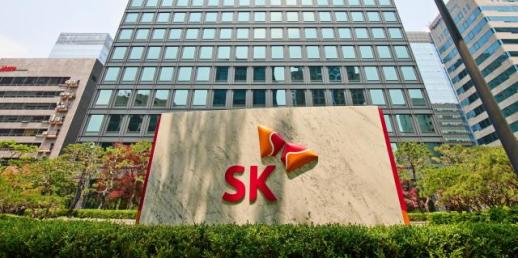 SK Inc. to Invest 400 Billion Won to Raise Stake in SK Ecoplant, Boost Chip and AI Push SK Inc. is moving to strengthen its competitiveness in semiconductor and AI infrastructure by increasing its stake in SK Ecoplant. SK Inc. said in a regulatory filing on the 28th that its board approved an investment of about 400 billion won to buy SK Ecoplant common shares and convertible preferred shares held by financial investors. The company said the move is aimed at linking SK Ecoplant’s growth potential in the semiconductor value chain to SK Inc.’s corporate value and maximizing shareholder value. If SK Inc. purchases the common shares and part of the convertible preferred shares, its stake in SK Ecoplant will rise to 71.2% from 66.7%. Also on the 28th, SK Ecoplant began procedures, including calling an extraordinary shareholders meeting, to buy the remaining convertible preferred shares worth about 650 billion won. SK Inc. said the decision builds on SK Ecoplant’s business reshuffling led by SK Inc., centered on semiconductor and AI infrastructure. SK Ecoplant has expanded its business model beyond its established EPC business for semiconductor production facilities — engineering, procurement and construction — into the AI data center sector. The company said it aims to strengthen its position as a supplier of AI infrastructure solutions. SK Ecoplant’s results reflected the shift. On a consolidated basis, 2025 revenue rose 40% to 12.1916 trillion won from 8.7346 trillion won in 2024, and operating profit jumped 40% to 315.9 billion won from 226.1 billion won a year earlier. SK Inc. said the investment will expand its stake in SK Ecoplant, a key unlisted portfolio company, and accelerate value-up efforts to enhance shareholder value. An SK Inc. official said the company, as SK Group’s holding firm, will continue to actively rebalance its portfolio around semiconductors, AI infrastructure and energy solutions to raise corporate value.* This article has been translated by AI. 2026-04-28 17:12:18
 -
 Global Tea Brand CHAGEE Enters South Korea, Pledges Focus on ‘Real Tea’ Experience Global modern tea brand CHAGEE has entered the South Korean market, pitching tea’s natural flavor and an in-store experience as an alternative in a coffee-dominated beverage scene. CHAGEE on April 28 held a media day at its Gangnam flagship store in Seoul to outline its Korea launch and brand strategy. Kim Jwa-hyeon, CEO of CHAGEE Korea, and Kim Jeong-hee, the company’s chief marketing officer, presented the brand’s philosophy, products and store concept. The company says its mission is to “connect people through a good cup of tea,” positioning itself as a modern take on premium tea. Founded in China’s Yunnan province in 2017, CHAGEE now operates about 7,000 stores across China, Southeast Asia and the United States, among other markets. Kim Jwa-hyeon said the company sees growing interest in tea as more than a drink. “There is a growing trend to expand tea into an everyday experience,” he said, adding that South Korea’s high expectations for quality and experience align with CHAGEE’s direction. CHAGEE will open three stores simultaneously on April 30: the Gangnam flagship, a Sinchon location and a store at Yongsan’s I’Park Mall. The company said the Gangnam store will concentrate the brand experience, Sinchon will target younger consumers, and Yongsan will serve as a hub for a broader customer base. CHAGEE said its product strategy centers on “the natural flavor of tea,” led by milk tea made with tea brewed in-store and fresh milk. It is emphasizing balance over intense sweetness. Kim Jeong-hee said the company designed “the entire process — from selecting tea leaves to extraction to drinking — as a single experience.” The Gangnam store is built around a tea bar and is designed for customers to stay and drink, rather than focusing only on takeout. The company said it incorporated Korean architectural elements and collaborations with artists to reflect local sensibilities. For now, CHAGEE will operate directly run stores. Kim Jwa-hyeon said the company will focus first on managing customer touchpoints and delivering a consistent brand experience, adding that franchising will be considered later depending on market response. At the stores, drinks were priced at 4,900 to 5,600 won for regular sizes and 5,600 to 6,600 won for large sizes. The menu will initially follow global standards, with localized items to be introduced later to reflect Korean tastes, the company said. CHAGEE said it is prioritizing experience-led growth over short-term buzz. Under the message “Real Tea, Real Moments,” it plans to encourage organic expansion through store experiences and customer engagement. “I believe in the power of a cup of tea, and we will sincerely share that experience with Korean consumers,” Kim Jwa-hyeon said. “I ask for your interest and expectations for the journey CHAGEE will build in Korea.” * This article has been translated by AI. 2026-04-28 17:09:48
 -
 Korean Banks Face Rising Delinquencies as Government Pushes More Corporate Lending Banks are growing increasingly concerned about asset quality as government efforts to curb household lending and expand so-called productive finance push more credit toward companies. With the economy slowing, a rapid expansion of lending to weaker firms could become a threat to banks’ balance sheets, the industry says. According to the financial sector on the 28th, the average overall delinquency rate for the four major banks — KB Kookmin, Shinhan, Hana and Woori — rose to 0.36% in the first quarter, covering both household and corporate loans. That was up 0.06 percentage points from 0.30% at the end of last year. The delinquency rate refers to the share of loans with both principal and interest overdue by more than one month. Delinquencies at regional banks, which have a higher share of lending to local small and midsize businesses, have crossed the 1% level seen as a psychological threshold. As of the fourth quarter of last year, the average delinquency rate at four regional bank affiliates under BNK Financial Group and JB Financial Group was 1.07%, up 0.29 percentage points from 0.78% a year earlier. With regional downturns persisting, analysts said the upward trend could continue this year. The challenge, bankers say, is that delinquencies are rising just as policy-driven expansion of productive finance makes loan growth hard to avoid. As corporate lending increases quickly and delinquencies climb, banks face pressure to expand credit while also tightening risk management. Unlike collateral-heavy household loans, corporate loans are more exposed to spillover defaults when the economy weakens. The industry also points to growing numbers of higher-risk borrowers as downside pressure on the economy has increased since the Middle East war, signaling weaker capacity for companies to repay debt on time. In the Bank of Korea’s survey on financial institutions’ lending attitudes, the corporate credit risk index for the second quarter rose from the previous quarter to 25 for large companies and 36 for small and midsize firms. The index measures the risk of delinquency or default, with higher figures indicating greater risk. If rising credit risk leads to more troubled borrowers and keeps delinquencies climbing, banks’ asset-quality burden could intensify. Warning signs are already showing in key indicators. The four major banks’ average nonperforming loan coverage ratio fell to 153.8% in the first quarter from 172% at the end of last year, down 18.2 percentage points. The ratio compares loan-loss reserves with substandard loans that are more than three months overdue and is a major gauge of banks’ ability to absorb losses. A lower ratio indicates weaker loss-absorbing capacity. The balance of nonperforming loans rose about 12% from the end of last year to 5.0773 trillion won. Banks also warn that aggressive corporate lending could hurt profitability. Policy projects require interest rates to be set below certain levels, and commercial banks with relatively higher funding costs can see margins shrink. In some large projects, loan rates have been set about 0.5 to 6 percentage points below the market average, making negative margins unavoidable once funding costs are considered, according to the industry. Banks also cited added burdens from expanding inclusive finance for vulnerable groups and support tied to prolonged Middle East-related risks. A financial industry official said expanding productive finance is necessary, but warned that running it at a fast pace with a focus on performance could bring side effects such as bad loans. The official added that banks face a difficult task of meeting government policy direction and social expectations while also raising shareholder returns under value-up initiatives. * This article has been translated by AI. 2026-04-28 17:07:56
 -
 SK Hynix to Redeem Remaining Exchangeable Bonds Early, Cutting Debt by 133 Billion Won SK Hynix said in a regulatory filing on 28일 that it will exercise a cleanup call to redeem the remaining portion of foreign-currency exchangeable bonds it issued overseas in 2023. The face value of the bonds to be repurchased is about 132.7 billion won, representing 5.9% of the total issuance of about 2.2377 trillion won. A cleanup call allows an issuer to redeem bonds early and end the creditor-debtor relationship once the outstanding balance falls to 10% or less. Investors can choose to exchange their bonds for shares or receive cash repayment. Given that the current share price is far above the exchange price, investors are widely expected to opt for share exchanges. With the remaining unredeemed exchangeable bonds set to be fully retired, the company expects its accounting debt to fall by about 133 billion won, which is also expected to lower its borrowing ratio. * This article has been translated by AI. 2026-04-28 17:07:13
 -
 Court Temporarily Halts FIU’s Partial Business Suspension of Coinone for One Month A partial business suspension ordered against South Korean virtual asset exchange Coinone, which had been set to take effect on the 29th, has been put off for one month. According to the legal community and the virtual asset industry on the 28th, the Seoul Administrative Court decided to temporarily suspend the effect of the sanction until May 29 in a lawsuit Coinone filed against the head of the Financial Intelligence Unit (FIU) seeking to overturn the partial suspension, along with Coinone’s request for a stay of enforcement. The court’s move pauses the sanction while it reviews the stay request and reaches a final judgment. It is not a final decision on the stay petition. The FIU held a sanctions review committee meeting on the 13th and imposed a three-month partial business suspension on Coinone from April 29 to July 28, citing violations including duties to block prohibited transactions and to verify customer identities. It also levied an administrative fine of 5.2 billion won. Coinone filed the cancellation suit and the stay request with the Seoul Administrative Court on the 27th, two days before the suspension was to begin. The decision means Coinone will not be subject to the planned partial suspension for the next month. Coinone’s legal challenge adds to a widening court fight between virtual asset exchanges and regulators. Upbit and Bithumb have also filed administrative lawsuits and sought stays to contest FIU sanctions. * This article has been translated by AI. 2026-04-28 17:05:03
 -
 Corporate Credit Downgrades Accelerate, Testing Banks’ Bad-Loan Risk Banks have begun regular corporate credit-rating reviews as Middle East-driven geopolitical risks and tougher U.S. tariff barriers add downward pressure on manufacturers’ credit profiles. Corporate delinquencies have jumped nearly fourfold in just three months, but banks, constrained by regulators’ “productive finance” policy stance, have been reluctant to raise rates or pull credit from borrowers facing downgrades. According to the financial industry on Monday, major banks started this month’s periodic reviews using companies’ 2025 year-end financial statements. The reviews cover all firms with lending relationships at each bank. Ratings are determined by factors including sales, operating profit, cash holdings, interest coverage and technology capabilities. Because the results influence future loan limits and interest rates, the process is a core task for banks’ corporate-finance units. This year’s reviews are expected to be stricter than usual, as volatility in raw-material prices tied to Middle East risks and stronger U.S. protectionism hit export-dependent manufacturers at the same time. Signs of weakening credit are already emerging across major industries. In steel, global rating agency S&P cut POSCO’s rating to BBB+ from A-. Korea Ratings lowered LG Chem’s outlook this month to negative from stable. NICE Investors Service assigned EcoPro an A- rating on its senior unsecured bonds, below its previous A level. In solar, Hanwha Solutions is under downgrade pressure with net debt of about 12 trillion won. In construction, Daewoo Engineering & Construction and others facing reduced housing move-in volumes received negative outlooks. The problem, bankers say, is that downgrades are not translating into higher financing costs as they typically would. Normally, weaker ratings lead to higher interest rates or reduced lending. But with authorities emphasizing “productive finance” to cushion the economy, banks are being pushed to maintain or extend loans even as they recognize rising credit risk. That dynamic is weighing on bank soundness. If banks cannot fully price the added risk, they struggle to secure returns commensurate with exposure. As delinquencies rise, some warn that potential bad loans could accumulate without being immediately reflected on balance sheets. Delinquency indicators are climbing quickly. At the five largest banks — KB, Shinhan, Hana, Woori and NH NongHyup — the delinquency rate for large corporations rose to 0.13% in the first quarter from 0.03% at the end of last year. The rate for small and midsize companies increased to 0.57% from 0.49%. Real estate delinquencies hit the highest levels across major banks, and the delinquency rate for sole proprietors also reached a record high of 0.56%. The outlook remains uncertain. If the recovery is delayed, some expect “delayed restructuring,” with problems at companies reliant on support surfacing later. If policy constraints ease, others warn that rate hikes and credit tightening could come at once, sharply increasing corporate burdens. A financial industry official said, “This year we have no choice but to be conservative in assigning ratings, but in reality more companies are getting their loans extended,” adding, “The gap between policy and market logic is widening.”* This article has been translated by AI. 2026-04-28 17:03:28
 -
 Hyundai Duty Free Opens New Incheon Airport DF2 Zone, Targets 1 Trillion Won in Annual Sales Hyundai Duty Free has begun operations in Incheon International Airport’s DF2 zone, expanding its footprint to three of the airport’s six duty-free areas: DF2, DF5 and DF7. The company said it is now the airport’s largest duty-free operator and the only one there offering every major category, from luxury and fashion to cosmetics and liquor. The company said Tuesday it started full-scale business in DF2 across the airport’s Terminal 1 and Terminal 2. The DF2 zone covers 4,571 square meters (about 1,382 pyeong). A total of 287 brands have moved in, including cosmetics and fragrance labels such as Chanel Beauty, Dior, Yves Saint Laurent and Estée Lauder, and liquor, tobacco and food brands including Ballantine’s, Johnnie Walker, Hennessy and CheongKwanJang. The operating term runs through June 30, 2033, and can be extended by three years to as late as April 2036, for up to 10 years in total. Stores are open daily from 6:30 a.m. to 9:30 p.m., with some cosmetics, liquor and tobacco shops operating 24 hours. Hyundai Duty Free said its existing DF5 and DF7 zones already host the airport’s widest selection of luxury brands, including Chanel, Louis Vuitton, Prada, Gucci, Loewe and Burberry. With DF2 added, the company said it is positioned to capture a broader range of high-end shopping demand. Targeting overseas travelers, the company has also set up a “K-cosmetics zone” near Gate 248 on the third floor of Terminal 2’s duty-free area. It features about 40 Korean beauty brands, including Medicube, Torriden, Wellage and Abib, and offers experiences such as AI-based skin analysis and personal color consultations. Hyundai Duty Free said it is considering joint marketing with its parent company, Hyundai Department Store. Plans include a pop-up at The Hyundai Seoul to guide customers on duty-free shopping, and a review of ways to bring Hyundai Department Store fashion, food and intellectual property content into the airport duty-free shops. The company said it posted its first full-year profit last year, seven years after launch, helped by tighter management and a recovery in passenger demand. It said the airport expansion is expected to support continued quarterly profitability and could lift annual sales at Incheon alone to more than 1 trillion won. Chief Executive Park Jang-seo said, “With the operation of the DF2 zone, we have become the largest operator at Incheon International Airport, and we expect to generate more than 1 trillion won in annual sales from the airport alone.” Park added that the company will keep a profitability-first approach at both its airport and downtown stores, while sharpening merchandising and marketing to build a stable growth structure and “lead duty-free shopping trends” as a top player in the domestic market.* This article has been translated by AI. 2026-04-28 17:01:12