
Journalist

Lee Hugh
=
-
 Yoon Ina Jumps to No. 39 in Women’s World Golf Ranking After Chevron T4 Yoon Ina climbed to No. 39 in the women’s world golf ranking after posting her best finish in a major at the LPGA Tour’s Chevron Championship. In the rankings released April 28 (Korea time), Yoon moved up 14 spots from No. 53 last week. Yoon tied for fourth at the Chevron Championship, which ended April 27, finishing at 12-under 276. Yoon, who debuted on the LPGA Tour last year, has built momentum this season. She tied for sixth at last month’s Ford Championship, then set a personal best with a solo fourth at the JM Eagle LA Championship, which ended April 20. She followed with another tie for fourth at the Chevron to record top-five finishes in consecutive weeks. The result also marked Yoon’s best showing in a major. Her previous best was a tie for 14th at last year’s U.S. Women’s Open. Nelly Korda of the United States, who won the season’s first major title, returned to No. 1 in the world ranking. Korda had surrendered the top spot to Jeeno Thitikul of Thailand in August last year and regained it after eight months. Among South Koreans, Kim Hyo-joo held at No. 3. Kim Sei-young slipped to No. 11. Lee Ye-won, who won the KLPGA Tour’s Duksin EPC Championship, rose 17 places to No. 52.* This article has been translated by AI. 2026-04-28 15:59:22
 -
 New Books Spotlight: 'The Market Was Never Cold' and 'To the Young Person Asking About Life' The Market Was Never Cold= Luigino Bruni, translated by Lee Garam and others, Bokdodum. Drawing on history, philosophy, biblical studies and anthropology, Bruni argues that mainstream economics — often symbolized by the “invisible hand” — has limits when it treats markets as purely cold and efficient. He challenges modern economic logic that prioritizes efficiency above all else and calls for restoring the market economy’s “human face.” Bruni, an economics professor at LUMSA University in Rome and a leading scholar of civil economy, traces roughly 1,000 years of history from the Middle Ages to the present. He revisits the Franciscan movement’s emphasis on fraternity and argues that ties such as trust, solidarity, friendship and mercy — often overlooked by mainstream economics — are core elements that sustain markets. He says modern economics elevated efficiency while pushing relationships and emotions out of market life. The result, he argues, was material abundance alongside broader unhappiness driven by the loss of relationships. Bruni describes market exchange as evolving over time from relationship-based giving and receiving to contract-based trade among strangers, and says trust, friendship and cooperation are decisive for economic sustainability. He calls for restoring humanity to the center of economics through “philia” — friendship among peers — and “agape,” love given without expecting anything in return, as a way to answer the basic question of how to live well together. “When the parties’ income or bargaining power objectively places them in a situation of economic inequality, can we create a market relationship with fraternity? Some may think not. To find an answer, let’s return to Smith’s example of the customer and the baker. For instance, if the baker works at a small bakery in the suburbs and the customer is a wealthy city banker, can their relationship be called ‘fraternal’? (omitted) If civil society wants to develop feelings of friendship and mutual aid, it should encourage its members to be well-disposed even toward people who are different from them in many ways, including economically. Even if we make a very critical judgment of the given social and economic system, no one can tell us not to experience certain economic encounters here and now as brothers.” (pp. 334–335) To the Young Person Asking About Life=Seo Jae-gyeong, Kimyoungsa From Hermann Hesse’s “Demian” to Yu Seong-ryong’s “Jingbirok,” the author recommends 100 books meant to serve as guides when readers lose their sense of direction. As the title suggests, the selections are aimed at young people facing questions at life’s crossroads, drawing on philosophy, history and literature. Seo says a “map of the mind” formed through reading can become both a way of seeing the world and a marker along life’s journey, offering encouragement to find direction rather than urging speed. The book is organized into seven “paths,” including: a heart that bends but does not break; light that reflects one another; the power to see beyond; reading the direction of the wind; how the world’s forces move; big waves made by small wingbeats; and skills for enduring life. Readers can choose sections based on taste or pick specific titles. Seo’s summaries are intended to help before reading and to help readers review and reflect afterward. “Kafka’s existential literature reaches its peak in ‘The Metamorphosis.’ The anxiety that, the moment a person loses a place in society, the meaning of existence can be erased as well reflects the existential condition of modern people. Gregor, turned into an insect, is not only a literary figure but can be another self-portrait of those easily labeled in the real world as incompetent, left behind, irregular workers or the unemployed. It is also a passage that overlaps with the image of an unemployed breadwinner within a modern Korean family. The work sends a gaze of compassion and understanding toward such people, while also making the reader reflect on their own gaze.” (pp. 55–56) 2026-04-28 15:55:34
 -
 Vietnam’s $67B North-South High-Speed Rail Spurs Financing Race as China Emerges Rival Vietnam is moving ahead with its North-South high-speed rail project, a national initiative estimated at $67 billion (about 98.9925 trillion won), as China emerges as a major rival in the global bidding race. With a public-private partnership, or PPP, seen as the likely approach, financing capacity is becoming a key factor in who wins contracts. Vietnam has completed a feasibility study and is drawing up plans to tender construction for some sections under a PPP model, the construction industry said April 28. The project would build a 350 kph rail line spanning 1,541 kilometers from Hanoi to Ho Chi Minh City. It also includes related infrastructure: 23 passenger stations, five freight stations and nine depots. More than half of the route is expected to pass through urban areas, and bridges are estimated to account for about 60% of construction. Under PPPs, private firms build and operate public infrastructure while the government provides compensation and policy support. Vietnam, facing costs too large to cover with public funds alone, has sought to boost investment incentives by establishing a PPP law in 2020. It also introduced a loss-sharing mechanism under which the government covers part of the shortfall if revenue falls below 75% of projections. In South Korea, a dedicated task force has been formed centered on Korea Railroad Corp., or Korail, with Korea Overseas Infrastructure & Urban Development Corp., known as KIND, assigned a financing support role. Because a PPP structure is more likely than a standard contracting model, industry officials say competitiveness will hinge not only on technology but also on the ability to raise funds. China, in particular, has become a strong competitor, leveraging its capital strength and experience in Vietnam’s infrastructure market. Chinese President Xi Jinping recently highlighted rail cooperation in talks with Vietnam’s leadership, signaling Beijing’s intent to pursue the project. China has already won and advanced the Lao Cai-Hanoi-Hai Phong railway project. Japan and France are also expected to compete, citing high-speed rail technologies such as the Shinkansen and TGV. A key concern is the scale of South Korea’s financing support. KIND can increase capital up to its statutory limit of 2 trillion won, but its paid-in capital stands at 658.6 billion won, limiting its ability to back a project of roughly 100 trillion won. Additional bond issuance is also capped at no more than five times the combined total of paid-in capital and reserves. Because KIND typically participates through equity investment, its capital ceiling effectively sets its investment limit, sharply reducing capacity as project size grows. Park Yongjeong, head of the industrial research office at Hyundai Research Institute, said large projects make it difficult for domestic companies to raise all investment funds on their own, increasing the need for government support. “Countries or companies that can bring in financing smoothly will inevitably have an advantage,” Park said. Given KIND’s overall limits, “investment capacity is not that large when viewed on a project-by-project basis,” he said, calling for stronger institutional measures to address capital constraints so equity participation and investment capacity can expand. 2026-04-28 15:54:21
 -
 H2G Green Signs MOU With Thailand’s SCN to Supply Bio LNG in ASEAN Singapore-based energy company H2G Green said it signed a nonbinding memorandum of understanding on April 24 with Thailand’s Scan Inter (SCN), which handles natural gas supply, to provide bio liquefied natural gas. The agreement aims to build a stable low-carbon fuel supply chain in the Association of Southeast Asian Nations region outside Thailand. H2G Green signed the MOU through its LNG logistics unit, GasHub United Utility. The MOU is valid for one year. GasHub United will handle distribution and supply-chain development, while SCN will supply the bio LNG. GasHub United has experience in last-mile LNG deliveries to Singapore’s industrial sector, including aviation, food manufacturing and engineering, and plans to expand its business in bioenergy using its existing supply chain.* This article has been translated by AI. 2026-04-28 15:50:15
 -
 Hyundai Engineering & Construction Q1 Operating Profit Falls 15.4% to 180.9 Billion Won Hyundai Engineering & Construction said in a regulatory filing on the 28th that its first-quarter operating profit on a consolidated basis fell 15.4% from a year earlier to 180.9 billion won, based on preliminary results. Revenue declined 15.8% to 6.2813 trillion won. Net profit rose 24.0% to 206.8 billion won. The company said it expects quarterly profit to improve gradually, citing better profitability in its housing business and the phased completion of high-cost plant projects. Its operating margin held at 2.9%, in line with its full-year target. Orders for the quarter totaled 3.9621 trillion won, with gains in the energy segment including the Pocheon pumped-storage power plant and preliminary work for the Wando Geumil offshore wind project. Hyundai Engineering & Construction said it expects major project awards to pick up from the second quarter, including a U.S. electric arc furnace steel mill, the Palisades small modular reactor (SMR) and the Bokjeong station-area development, making it likely to meet its annual order target of 33.4 trillion won. Its order backlog was tallied at 92.1237 trillion won, equivalent to about 3.4 years of work. Cash and cash equivalents, including short-term financial products, stood at 3.8515 trillion won. The current ratio was 149.8% and the debt ratio was 157.6%. The company said its credit rating is AA-, among the highest in the industry. Hyundai Engineering & Construction said it plans to pursue contracts within the year tied to nuclear power projects including the Palisades SMR and the “Matador Project,” a combined energy and artificial intelligence campus development by U.S. energy developer Fermi America. It also plans to expand its energy business in Europe, including Bulgaria, Finland, Sweden and the Netherlands. A company official said that with external uncertainty persisting, including global geopolitical risks and volatility in raw material prices, the firm is focusing on strict risk management and strengthening its business fundamentals. The official said the company plans to reinforce its energy portfolio, including nuclear power, under a proactive management system to build a resilient business structure that can withstand market shifts. * This article has been translated by AI. 2026-04-28 15:49:30
 -
 Vietnam Restarts Ninh Thuan Nuclear Project, Intensifying Competition for Early Deals President Lee Jae-myung’s recent state visit to Vietnam has sharpened attention among South Korean builders on Vietnam’s large infrastructure pipeline, as expectations grow that the country and the broader Southeast Asian market could open more fully for nuclear power plants and data centers, both still at an early stage. Industry officials expect competition to intensify as companies seek an early foothold. According to foreign media reports cited on April 28, the Vietnamese government recently completed site surveys and approval procedures for Unit 2 of the Ninh Thuan nuclear power project. The Ninh Thuan project, ordered by Vietnam Electricity (EVN), calls for building Units 1 and 2 in Ninh Thuan province with a combined capacity of 4 to 6.4 gigawatts. Unit 1 is targeted to begin operating in 2030 and Unit 2 in 2035. Russia has secured preferred bidder status for Unit 1. The competitive landscape for Unit 2 has shifted after Japan withdrew, citing construction schedule burdens. Korea Electric Power Corp. has moved to enter the bidding, signing a memorandum of understanding with EVN on cooperation in power infrastructure and pushing a “one-team” approach. Unit 2 is planned at 2 to 3.2 gigawatts, with an estimated cost of about $22 billion, or roughly 32 trillion won. South Korean companies are seeking an edge by pointing to experience from the UAE’s Barakah nuclear plant and the Dukovany nuclear project in the Czech Republic. Construction firms are also repositioning. Daewoo Engineering & Construction created a new Global Infrastructure Division by integrating its overseas business and nuclear units to support expansion in nuclear projects. Hyundai Engineering & Construction and POSCO E&C are also preparing to enter the Southeast Asian nuclear market. Companies view the contest as more than a single contract, describing it as a bridgehead into Southeast Asia’s nuclear market. Vietnam’s power generation mix is about 10% gas, 47% coal and 0% nuclear, leaving room for a shift. Under its eighth national power development plan, known as PDP8, the Vietnamese government has set diversification of energy sources, including nuclear, and modernization of power infrastructure as key tasks. Malaysia and Thailand have also formally stated plans to introduce nuclear power, raising expectations that the regional market could expand. With energy security drawing more attention after geopolitical risks in the Middle East, demand for nuclear power is also rising, the article said. “Because Southeast Asia’s nuclear market is still in its early stages, this bidding round will be a turning point that determines who secures an early lead,” an official at the International Contractors Association of Korea said. South Korean builders also cite accumulated experience in Vietnam as a competitive advantage, built through housing and commercial projects as well as plants, bridges and roads. Daewoo E&C pointed to its Hanoi Starlake City mixed-use development, where it handled development, investment and construction, as a flagship success. GS Engineering & Construction has expanded its presence through the Ho Chi Minh City Nha Be new town development and the NSRP refining and petrochemical plant project. Data centers are emerging as another growth area. In line with Vietnam’s digital transformation strategy, builders are pursuing projects that combine data centers with urban infrastructure. Daewoo E&C and GS E&C, working with SaigonTel and FPT Corp., respectively, plan to start with data centers of several dozen megawatts and expand in phases, while also pursuing smart city development. A Daewoo E&C official said Starlake City is a large mixed-use project expected to host relocated central government ministries and major companies, adding that follow-on development is being pursued not only in Hanoi but also in key areas including Ho Chi Minh City. 2026-04-28 15:48:26
 -
 Naver Launches Beta ‘AI Tab’ to Shift Search Toward Chat-Style Answers Typing into Naver’s search bar, “Recommend a cafe near Seoul Station that’s good to visit with my parents,” produced a conversational list of suggestions a few seconds later. Instead of simply listing links, the service interpreted the request’s context and returned an answer. Naver said Monday it has launched its AI Tab for Naver Plus Membership users. The feature provides customized responses based on a user’s intent and context, and the company plans to expand it to all users and to the mobile main screen in the first half of the year. Unlike traditional keyword search that displays a results list, AI Tab is built as a chat-style exchange. In testing, it showed an on-screen workflow — “answer planning → information search → answer generation → summary” — and took about five seconds to analyze and produce a response. The recommendations differed from simple popularity rankings. For the “good with parents” condition, it suggested places based on factors such as spacing between seats, store atmosphere and accessibility, and attached a summarized digest of visitor reviews to each listing. The review summaries focused mainly on recent posts written from February through April, the company said. AI Tab generates answers using Naver’s own services, including Place, blogs and cafes, and draws heavily on detailed visitor reviews to produce results. The report also compared the feature with “Gemini in Chrome.” For the same query, Google drew on a wide range of outside sources such as blogs, social media and travel platforms, but some results cited 2024 posts, raising limits on timeliness. Naver’s internal tests reportedly reached a similar conclusion: It may be difficult to claim a clear edge over global AI for general questions, but the company sees stronger competitiveness in local services such as finding places and making reservations, supported by links to its existing platforms. Naver is positioning AI Tab as more than an added feature, calling it a “shift in the search paradigm.” The company aims to move beyond keyword-based search by combining AI with separate services — including shopping, maps and finance — into a single integrated experience. It plans to expand use by connecting domain-specific AI agents, including for shopping and finance, to AI Tab. The service is currently a beta limited to membership users, with constraints on features and access. Naver said it will incorporate user feedback to improve response speed and deliver more precise answers to complex, multi-step follow-up questions. * This article has been translated by AI. 2026-04-28 15:42:47
 -
 Sumitomo Mitsui Banking Corp. Signs MOU With Philippines’ BOI and RCBC to Promote Investment Sumitomo Mitsui Banking Corp. signed a memorandum of understanding on the 27th with the Philippines’ Board of Investments (BOI), an agency under the Department of Trade and Industry, and local lender Rizal Commercial Banking Corp. (RCBC) to cooperate on promoting business ties, including encouraging foreign direct investment in the Philippines. Under the MOU, the three parties will jointly hold investment and economic seminars and share information with companies considering entering the Philippine market or expanding operations there. The information will cover the latest investment climate, tax and investment incentives, and trends in priority industries. They also plan to use the BOI’s nationwide reach to continue supporting companies in addressing operational issues after investing. Sumitomo Mitsui previously signed an MOU in January 2024 with the Philippine Economic Zone Authority (PEZA) and RCBC. A representative at the bank’s Manila branch said interest is rising among foreign companies looking to tap Philippine domestic demand, adding, “By working with the BOI in addition to PEZA, which mainly handles attracting export-oriented investment, we will be able to provide more advanced support to meet a wider range of customer needs.” Sumitomo Mitsui acquired 4.99% of RCBC shares in June 2021 and raised its stake to 20% in July 2023. It bought additional shares in December 2025, bringing its current ownership to 24.46%.* This article has been translated by AI. 2026-04-28 15:42:15
 -
 Seoul’s Next Redevelopment Hot Spots Shift to Yongsan, Gwangjin, Nowon and Dongjak As major Seoul reconstruction projects in Apgujeong, Yeouido, Mok-dong and Seongsu near the end of contractor selection, attention is shifting to the next cycle. The focus is moving away from ultra-high-priced riverside rebuilds toward areas where large mixed-use development overlaps with renewal of older neighborhoods. Industry officials said April 28 that Yongsan, Gwangjin, Nowon and Dongjak are emerging as leading candidates to reshape Seoul’s next housing map. While each has different advantages and development profiles, all have broad swaths of aging housing and are tied to major projects or changes in wider transport and business corridors. Unlike the earlier wave centered on luxury Han River reconstruction, the new group is driven by a mix of office-district expansion, station-area mixed-use projects, large-scale housing-district renewal and completion of New Town plans. Yongsan is already a core axis of Seoul’s property market, but its western neighborhoods — including Cheongpa, Seogye, Huam and Yongsan-dong 2-ga — are still viewed as later-stage redevelopment areas. If the Yongsan International Business District moves fully into implementation, expectations for upgrading nearby older housing are likely to rise. The Yongsan International Business District is planned on about 495,000 square meters. Seoul has outlined a plan that includes a landmark tower of around 100 stories and about 500,000 square meters of green space. The concept goes beyond office buildings to a mixed-use city combining residential, business, commercial and cultural functions. If the Yongsan rail yard area is reorganized into a central corridor linking downtown Seoul, Yeouido and Gangnam, pressure to redevelop surrounding low-rise neighborhoods is expected to increase. In Gwangjin district, the Guui, Jayang and Gwangjang areas are also drawing attention. Located across the Han River from Seongsu, the area is cited as a “post-Seongsu” candidate because it offers access to Gangnam and the potential for Seongsu’s living sphere to expand. A key variable is the modernization project for the Dong Seoul Terminal, which could reshape local urban functions. Seoul plans to modernize the Dong Seoul Terminal into a mixed-use complex combining transportation, office, retail and cultural functions. After traffic-impact assessments and architectural reviews, the project is being pursued with a target of starting construction as early as late 2026 and completing in 2031. If the aging terminal is converted into a regional transportation hub, it is expected to affect commercial activity and housing demand in the Guui-Jayang area. Nowon district’s Sanggye, Junggye and Hagye neighborhoods are considered the largest reconstruction belt in northeast Seoul by scale. Built through large housing-district development in the 1980s, the area has dense apartment complexes that are more than 30 years old. Interest had been limited, but sentiment is changing after a large-scale renewal plan was finalized. Seoul issued a final notice on Dec. 18, 2025, for the renewal plan covering the Sanggye, Junggye and Junggye 2 housing-district development areas. Under the plan, a site currently sized for about 76,000 households is expected to be reorganized into a core northeast residential mixed-use city of about 103,000 households. Higher-density development around transit stations and zoning upgrades could improve project feasibility. Still, the pace of work, resident consent rates and construction-cost burdens remain key variables. Dongjak district’s strength is its location between Yeouido and Yongsan. In particular, Noryangjin New Town could be re-evaluated as a leading new-housing area in southwest Seoul after the project is completed. Demand is expected from people seeking shorter commutes, supported by access to Yeouido’s business district and potential spillover benefits from Yongsan’s development. At the same time, some expectations in Dongjak have already been reflected in prices, creating a burden. As work accelerates in major Noryangjin New Town zones, the pressure from higher presale prices is also growing. Market direction is likely to depend on how much location premiums can absorb those higher prices. A real estate industry official said it remains to be seen whether the four areas will lead Seoul home prices in the short term the way Apgujeong, Yeouido, Mok-dong and Seongsu did. “There are many variables, including differences in project speed by site, construction costs, interest rates and presale price regulations,” the official said. Still, the official added that “their mid- to long-term potential is sufficient” because major development corridors and renewal of aging housing are moving forward at the same time.* This article has been translated by AI. 2026-04-28 15:40:42
 -
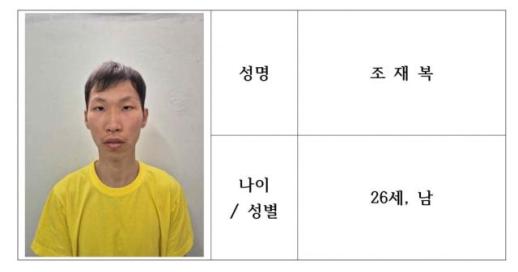 Man, 26, Indicted in Daegu for Beating Mother-in-Law to Death and Dumping Body in Suitcase The Daegu District Prosecutors Office said it has indicted Jo Jae-bok, 26, in custody on allegations that he beat his mother-in-law to death and later dumped her body. A dedicated prosecution team said April 28 that Jo was charged with killing an ascendant relative and related offenses after allegedly placing the body in a travel suitcase and abandoning it along the Sincheon stream in Daegu. Prosecutors said they declined to indict his wife, identified only as A, and released her. According to prosecutors, Jo assaulted his mother-in-law, identified only as B, 54, for about 12 hours on March 18 at a one-room apartment in Daegu’s Jung District where they lived together, citing reasons such as that she did not keep things organized. After B died, prosecutors said Jo and A put her body in a suitcase and dumped it near the Sincheon. A told investigators she took part because her husband forced her to, and authorities found that after B’s death Jo controlled A, including confining her so she could not report the case, prosecutors said. At the time the case was sent to prosecutors, A was injured, including broken ribs, and prosecutors concluded she acted under coercion while unable to resist due to ongoing confinement and violence. Under Article 12 of the Criminal Act, an act compelled by irresistible violence, or by threats that leave no way to protect one’s own life or body or that of relatives, is exempt from punishment. A prosecution official said authorities will support A’s medical treatment as a victim of domestic violence and work with related organizations, including the Korea Legal Aid Center for Family Relations and local governments, to help her return to daily life after recovery. 2026-04-28 15:39:35