

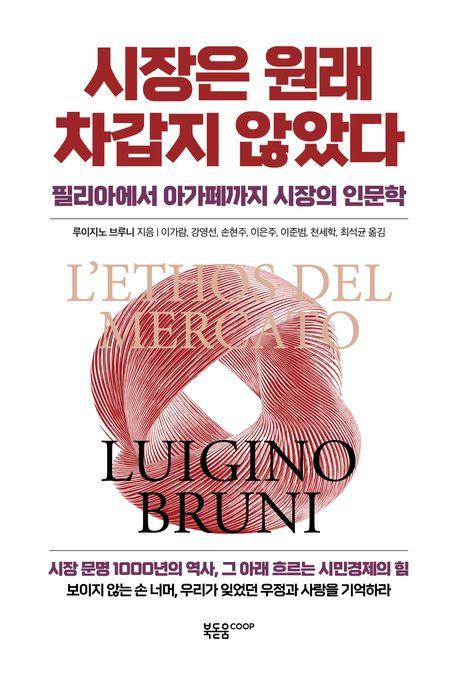
Drawing on history, philosophy, biblical studies and anthropology, Bruni argues that mainstream economics — often symbolized by the “invisible hand” — has limits when it treats markets as purely cold and efficient. He challenges modern economic logic that prioritizes efficiency above all else and calls for restoring the market economy’s “human face.”
Bruni, an economics professor at LUMSA University in Rome and a leading scholar of civil economy, traces roughly 1,000 years of history from the Middle Ages to the present. He revisits the Franciscan movement’s emphasis on fraternity and argues that ties such as trust, solidarity, friendship and mercy — often overlooked by mainstream economics — are core elements that sustain markets.
He says modern economics elevated efficiency while pushing relationships and emotions out of market life. The result, he argues, was material abundance alongside broader unhappiness driven by the loss of relationships. Bruni describes market exchange as evolving over time from relationship-based giving and receiving to contract-based trade among strangers, and says trust, friendship and cooperation are decisive for economic sustainability. He calls for restoring humanity to the center of economics through “philia” — friendship among peers — and “agape,” love given without expecting anything in return, as a way to answer the basic question of how to live well together.
“When the parties’ income or bargaining power objectively places them in a situation of economic inequality, can we create a market relationship with fraternity? Some may think not. To find an answer, let’s return to Smith’s example of the customer and the baker. For instance, if the baker works at a small bakery in the suburbs and the customer is a wealthy city banker, can their relationship be called ‘fraternal’? (omitted) If civil society wants to develop feelings of friendship and mutual aid, it should encourage its members to be well-disposed even toward people who are different from them in many ways, including economically. Even if we make a very critical judgment of the given social and economic system, no one can tell us not to experience certain economic encounters here and now as brothers.” (pp. 334–335)
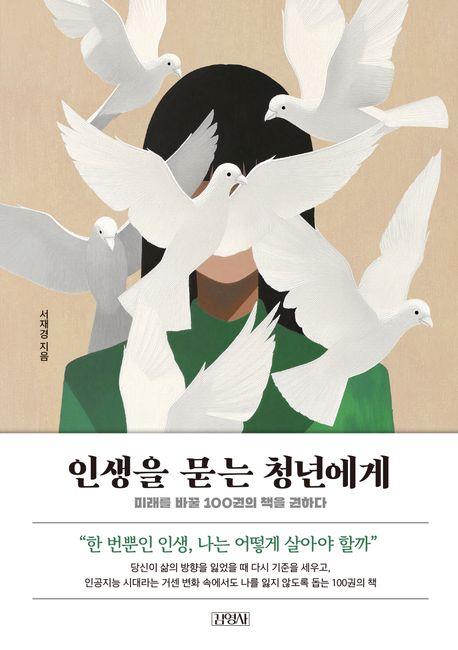
From Hermann Hesse’s “Demian” to Yu Seong-ryong’s “Jingbirok,” the author recommends 100 books meant to serve as guides when readers lose their sense of direction. As the title suggests, the selections are aimed at young people facing questions at life’s crossroads, drawing on philosophy, history and literature. Seo says a “map of the mind” formed through reading can become both a way of seeing the world and a marker along life’s journey, offering encouragement to find direction rather than urging speed.
The book is organized into seven “paths,” including: a heart that bends but does not break; light that reflects one another; the power to see beyond; reading the direction of the wind; how the world’s forces move; big waves made by small wingbeats; and skills for enduring life. Readers can choose sections based on taste or pick specific titles. Seo’s summaries are intended to help before reading and to help readers review and reflect afterward.
“Kafka’s existential literature reaches its peak in ‘The Metamorphosis.’ The anxiety that, the moment a person loses a place in society, the meaning of existence can be erased as well reflects the existential condition of modern people. Gregor, turned into an insect, is not only a literary figure but can be another self-portrait of those easily labeled in the real world as incompetent, left behind, irregular workers or the unemployed. It is also a passage that overlaps with the image of an unemployed breadwinner within a modern Korean family. The work sends a gaze of compassion and understanding toward such people, while also making the reader reflect on their own gaze.” (pp. 55–56)
* This article has been translated by AI.
Copyright ⓒ Aju Press All rights reserved.