
Journalist

Lee Hugh
=
-
 Si Woo Kim Rises to Career-High No. 25 in World Golf Ranking Si Woo Kim climbed to No. 25 in the world rankings, the best position of his career. In the men’s world golf rankings released April 28 (Korea time), Kim rose one place from last week’s No. 26. Kim’s move followed his third-place finish at the RBC Heritage, which ended April 20. He posted a 16-under 268, behind winner Matt Fitzpatrick of England and runner-up Scottie Scheffler of the United States, who both finished at 18-under 266. It was Kim’s third top-five result and fifth top-10 finish of the season. He had matched his previous career-best ranking by reaching No. 26, then improved again a week later. Kim is the only South Korean player inside the top 50. Im Sung-jae is No. 76, Kim Seong-hyeon No. 138, Kim Joo-hyung No. 144 and An Byeong-hun No. 147. There was no change at the top of the rankings from last week, with Scheffler No. 1, Rory McIlroy of Northern Ireland No. 2 and Fitzpatrick No. 3.* This article has been translated by AI. 2026-04-28 15:36:05
 -
 CrossHub Signs MOU With Vietnam National Universities on Blockchain Digital ID, Payments CrossHub said it has signed agreements with major Vietnamese national universities to link blockchain-based digital identity verification with payment services, stepping up its push into Southeast Asia’s education and public-sector markets. The company said it signed memorandums of understanding at the Hanoi IT Support Center of the National IT Industry Promotion Agency with the University of Danang’s College of Education, Vietnam National University, Hanoi, and Vietnam National University, Ho Chi Minh City, to introduce digital student IDs. CrossHub said the project goes beyond replacing physical student cards, aiming to build an “integrated campus platform” that combines decentralized identity (DID) technology with payment functions. It said students would be able to use a single digital ID for access control, administrative services and payments, with functions rolled out in stages. The planned rollout would cover more than 210,000 students, faculty and staff, the company said: about 70,000 at the University of Danang’s College of Education and about 140,000 across the two national universities in Hanoi and Ho Chi Minh City. CrossHub described it as a large-scale digital transition for Vietnam’s higher-education sector, with potential to spread as a standard model. CrossHub said it will work with South Korean systems company Daeyang CIS. CrossHub will build the blockchain software and authentication infrastructure, while Daeyang CIS will supply on-site hardware such as IoT-based terminals, access devices and an integrated control system. The company said the combined approach is intended to improve stability and scalability. CrossHub also pointed to policy support from local government. It said Da Nang is known to be discussing measures to provide operating infrastructure, including office space, free of charge for up to seven years if CrossHub sets up a local subsidiary, along with a plan for about nine years of corporate tax exemptions. The company said the system could later expand beyond campuses into public and urban infrastructure if it operates reliably, citing possible applications in transportation, public services and local retail payments. It noted the Vietnamese government is pursuing digital transformation and smart-city development as key policy tasks, and education institutions often serve as a starting point. CrossHub said it is currently based at the National Innovation Center in Hanoi and plans to finalize the headquarters location for a joint venture in June. It also said it is pursuing an artificial intelligence research open lab at Vietnam National University, Ho Chi Minh City. The company said it is also pursuing global expansion, with plans to establish a local corporation in China’s Shandong province in May, adding an Asian hub to its existing presence in North America, Europe, Japan and Singapore. CrossHub said it aims to complete the establishment of six overseas corporations within this year to build its global business base. 업계에서는 이번 프로젝트를 한국 블록체인 기반 인증 기술이 ‘실사용 인프라’로 해외 시장에 적용되는 사례로 보고 있다. 특히 교육기관이라는 대규모 사용자 기반에서 검증될 경우, 향후 공공·금융·헬스케어 등 다양한 분야로 확산될 수 있는 레퍼런스를 확보하게 된다는 점에서 전략적 의미가 크다는 분석이다. 2026-04-28 15:35:07
 -
 Fed Meeting Focuses on Powell’s Final Message: Inflation and Independence in Spotlight The Federal Reserve’s upcoming Federal Open Market Committee meeting is drawing attention less for the expected rate decision than for what Chair Jerome Powell says about inflation and the central bank’s independence. The Fed will meet April 28-29 (local time) and is set to announce its benchmark rate at 2 p.m. April 29 (3 a.m. April 30 in South Korea). Markets largely expect the rate to remain at 3.50% to 3.75%, unchanged since last December. The meeting coincides with the end of Powell’s term as Fed chair on May 15, with Kevin Warsh’s Senate confirmation as the next chair appearing within reach. With a criminal probe tied to renovations of the Fed’s headquarters shifting from the Justice Department to the Fed inspector general, a political factor that could have delayed Warsh’s confirmation has eased. That has fueled expectations that this could be Powell’s final FOMC news conference. Investors are focused on Powell’s guidance on where rates go next. Attention had been on when rate cuts might resume, but expectations have cooled after oil prices jumped following the Iran war. Reuters reported Brent crude has risen about 50% since the war began, and that higher gasoline and energy prices contributed to a sharp increase in last month’s U.S. consumer price index. Reuters also said the bond market is reflecting the possibility that the Fed’s policy rate could stay near current levels at least through mid-2027. That shift could show up in the Fed’s statement. While holding rates steady, the Fed has previously left the impression its next move would be a cut. If the statement highlights both inflation risks and slowing-growth risks — and leaves open the possibility of hikes as well as cuts — markets could read it as a signal the Fed is keeping the door open to tighter policy. Bank of America said Powell’s news conference “could sound more hawkish than the market expects.” As sensitive as monetary policy is the question of Fed independence. Axios said that while Warsh’s confirmation prospects have improved, a key unknown is whether Powell will remain on the Fed’s Board of Governors after stepping down as chair. Powell’s term as a governor runs through January 2028. Traditionally, Fed chairs have also resigned their board seats when their chair terms end, but Powell has left open the possibility of staying amid pressure on the Fed from the Trump administration. Questions also remain about Warsh. In a CNBC Fed survey of 26 economists, strategists and analysts, 50% said they expect Warsh to conduct monetary policy independently, while 46% said his independence could be constrained. In the same survey, 58% said Warsh would likely be favorable to rate cuts, and 65% expected him to be active in shrinking the Fed’s balance sheet, meaning reducing its asset holdings.* This article has been translated by AI. 2026-04-28 15:33:50
 -
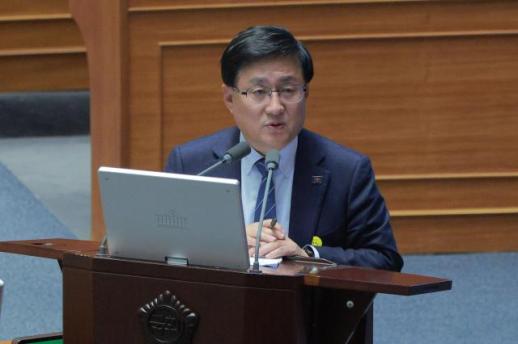 South Korea drops cup price-labeling plan from anti-plastic package, favors voluntary cuts The government on the 28th left out a proposed “cup price labeling system” — a plan to charge separately for cups — from its comprehensive anti-plastic package, saying it will prioritize voluntary reductions to reflect conditions in the field. Instead, it plans to curb single-use cups by expanding discounts for reusable tumblers and increasing the number of stores participating in the carbon-neutral points program. Kim Go-eung, director general for resource circulation at the Ministry of Climate, Energy and Environment, said at a briefing at the government complex in Sejong after a Cabinet meeting that officials had reviewed renaming the separate cup charge as a “cup price labeling system,” but did not include specific measures in the package. He said the ministry will first expand personal-cup discount programs through agreements with related industries. “We are continuing to communicate with the industry” on the cup price labeling plan, Kim said, adding that discussions are underway to design a system that both reflects on-the-ground acceptance and delivers real plastic-reduction effects. The ministry is reviewing ways to expand tumbler discounts now offered by some franchises to independent cafes and to increase the number of participating carbon-neutral points stores. The points awarded for using a personal cup are currently about 300 won. The ministry reported to the Cabinet on the 28th its plan to shift to a “plastic-free circular economy,” targeting a total reduction of 3 million metric tons of plastic by 2030. Minister Kim Seong-hwan told the Cabinet that household and business waste plastic totals about 8 million tons a year and, if the trend continues, could reach about 10 million tons by 2030. He said 1 million tons would be cut by avoiding plastic use at the source, while 2 million tons would be circulated through the use of recycled materials. Officials also raised the possibility of government support to ease the cost burden of recycled plastic. Kim Go-eung said the ministry is considering ways to cover the price gap when recycled feedstock costs more than virgin resin, including direct fiscal support and using reserve funds from the extended producer responsibility, or EPR, system. He said the scale and method of support have not been finalized. The government also plans to introduce a new certification system for recycled-material quality, reflecting concerns raised by makers of pay-as-you-throw trash bags. Officials said they will set quality standards, build a certification framework and boost market confidence. In addition, the government plans structural changes to reduce plastic use, including encouraging switches to alternatives such as paper for products where plastic is unnecessary. It is also reviewing changes to the waste charge, now uniformly set at 150 won per kilogram, to apply different rates based on product lifespan and characteristics. Kim said the current system imposes a uniform charge regardless of product lifespan and needs to be subdivided by product type, adding that the ministry will design the system in detail while considering impacts on industry. * This article has been translated by AI. 2026-04-28 15:31:25
 -
 U.S.-Iran Talks Stall as Back-Channel Contacts Continue and Washington Tightens Pressure U.S.-Iran ceasefire talks remain stalled, but back-channel contacts are continuing, according to reports. At the same time, the United States is stepping up economic pressure on Iran as it seeks leverage in the negotiations. CNN reported Sunday, citing multiple sources familiar with the mediation, that the two sides have not held a second face-to-face meeting in Pakistan, but quiet talks have continued. The discussions are focused on a phased approach. In an initial stage, key items include returning to prewar conditions and reopening the Strait of Hormuz without restrictions or transit fees. Iran’s nuclear program would be taken up in later stages, the report said. Uncertainty over the outlook remains. The Wall Street Journal reported that President Donald Trump and his national security team are skeptical of an Iranian proposal that would reopen the strait while putting nuclear talks on hold. Trump views the nuclear issue as a central condition of any agreement. White House press secretary Karoline Leavitt told a briefing that “the president’s red line on Iran is very clear,” and said Trump would state his position soon. Secretary of State Marco Rubio, in an interview with Fox News, said that if Iran’s idea of “opening the strait” means “yes, it’s open, but you have to consult Iran and get our permission, and if not we’ll attack you, and pay a toll,” then “that’s not opening the strait.” He said the Strait of Hormuz is an international waterway and stressed the United States cannot accept Iran normalizing a system in which it decides who can use it and how much they must pay. Rubio also said Iran is trying to threaten the world with nuclear weapons, adding that it wants to hold the world hostage to get what it wants, as it does now with oil. “That is unacceptable,” he said. With no visible breakthrough, Washington is increasing pressure. Treasury Secretary Scott Bessent warned that doing business with sanctioned Iranian airlines carries the risk of U.S. sanctions. He urged governments to take steps to ensure their companies do not provide services to those airlines “in any form,” including supplying jet fuel, catering, paying landing fees or providing maintenance. Bessent said the Treasury Department will maintain “maximum pressure” on Iran and will act against third parties that help or carry out Iran-related transactions. Pressure through a maritime blockade is also continuing. U.S. Central Command said the United States has diverted 37 vessels to other routes since the blockade began. Analysts said Iran’s crude storage capacity has fallen to an estimated 12 to 22 days. Commodities analytics firm Kpler forecast Iran could make additional output cuts of up to 1.5 million barrels a day by mid-May. Debate inside Iran over whether to negotiate is also continuing. Foreign Minister Abbas Araghchi told Russia’s Vesti broadcaster that Iran is “clearly fighting the world’s greatest power,” and said the other side has “clearly achieved no goals.” “That is why he is calling for negotiations, and we are now reviewing that option,” Araghchi said. Iranian officials have also moved to counter doubts about the negotiating team. State-run IRNA reported that 261 of the Majlis’ 290 lawmakers adopted a statement backing the negotiating team. The statement appeared to respond to Western media analyses suggesting the team had lost decision-making authority under pressure from hard-line military forces. The lawmakers said that as the war enters a new phase, the enemy is trying to stir conflict between authorities and the public across the battlefield, the streets and diplomacy. They said parliament, as the people’s representative, trusts and fully supports the negotiating team, especially Majlis Speaker Mohammad Bagher Ghalibaf, describing him as the head of the team who has stepped into a new arena of battle against the enemy.* This article has been translated by AI. 2026-04-28 15:30:11
 -
 Secondary Lenders Face Pressure to Expand Mid-Rate Loans as Funding Costs Rise Financial regulators are pushing to expand mid-rate lending to improve access for borrowers with mid-tier credit, but much of South Korea’s nonbank sector — including credit card companies and savings banks — is pushing back, citing rising funding costs and tighter profitability. The widening gap between policy goals and business realities is also raising questions about how effective the measures will be. According to the Korea Financial Investment Association on April 28, the yield on three-year AA+ bonds issued by specialized credit finance companies stood at 4.054% as of April 27. That is up 1.272 percentage points from April 28 last year, when it was 2.782%. Because card companies lack a deposit base and rely heavily on bond issuance, higher market rates directly increase funding burdens and squeeze earnings. Against that backdrop, regulators are calling for lower rates by shrinking card loans and introducing Saeitdol loans — a lower-rate product — for the card industry, prompting concerns that margins will narrow further. As of the end of last month, the average interest rate on card loans at eight dedicated card issuers — Lotte, BC, Samsung, Shinhan, Woori, Hana, Hyundai and KB Kookmin — was 13.49%. The Saeitdol loan rate announced for the sector is only 8% to 12%. “Overall funding conditions have worsened, and we are being pushed into handling lower-rate products as well, which increases the profitability burden,” a card industry official said. The official added that while Saeitdol loans come with incentives, “given the higher delinquency risk typical of mid- to low-credit borrowers, the burden is not small.” Savings banks are also voicing concerns about the regulator-led expansion of mid-rate loans. The planned cut in the interest-rate ceiling for private mid-rate loans to 15.26% from 16.51% has raised fears of a “cutoff,” with some lenders already effectively halting new loans to borrowers with credit scores below 500. If the cap falls further, borrowers who previously could still qualify at annual rates in the 15% to 16% range could be pushed out of the market, the industry says. Regulators have also said they will offer additional regulatory incentives for a “Mid-Rate Loan 1” product if a savings bank’s average rate is 12.26% (preliminary) or lower. Industry officials, however, expect limited impact because many savings bank customers are multiple-debt holders or have limited collateral, leaving relatively few borrowers who can qualify for rates below 12%. In the first quarter, the average rates on private mid-rate loans at the top five savings banks were 12.97% at SBI Savings Bank, 13.14% at OK Savings Bank, 13.32% at Korea Investment Savings Bank, 14.96% at Acuon Savings Bank and 15.38% at Welcome Savings Bank. For borrowers with credit scores of 700 or below, the average rate was 14.16%. That means rates would need to fall by at least 1 to 3 percentage points to meet the 12.26% incentive threshold. “With deposit rates rising to around 4%, if lending rates also fall, a squeeze in net interest margins is unavoidable,” a savings bank official said. The official added that higher-credit borrowers who can get rates below 12% often use such loans only temporarily, limiting the practical customer base and leaving little room for policy incentives to translate into meaningful lending capacity. 2026-04-28 15:24:21
 -
 Lee Says South Korea Can Defend Itself Without Relying on Foreign Troops President Lee Jae-myung on the 28th stressed self-reliant defense, saying, “A country should protect itself. Why depend on others? We can, naturally and sufficiently.” Speaking at a Cabinet meeting he chaired at Cheong Wa Dae, Lee said South Korea once faced difficulties but no longer does “thanks to the outstanding efforts and capabilities of the people.” He said South Korea’s military capability, excluding U.S. Forces Korea, ranks fifth in the world and that its annual defense spending is 1.4 times North Korea’s annual gross domestic product. He added that South Korean forces are well trained and morale is high, that the country’s economic strength is not comparable to the North’s, and that its defense industry has risen to fourth in the world in exports. “Then why do we keep feeling anxious, as if it would be difficult to defend ourselves without foreign troops?” Lee asked. Defense Minister Ahn Gyu-back replied that “some forces tend to incite and stir that up,” but most people do not share that view. Lee urged him to “make this objective situation widely known to the public.” Lee said the government should ensure that “even a small number” of people do not feel uneasy. “We must take responsibility ourselves with confidence,” he said, adding that the public should understand South Korea has sufficient capability now and “need not worry” that defense spending will be increased further. Ahn reported that, in that context, South Korea also has tangible and intangible assets and a strategic system that could allow it to move up the timeline for regaining wartime operational control. Lee replied, “Of course it should.” Lee also said payments of relief funds for damage from high oil prices began the day before. He instructed the government to closely manage the application process so people who have difficulty accessing online services are not inconvenienced, and to execute other supplementary budget funds as quickly as possible. He said the government should also check for any blind spots in support for groups hit hard by high oil prices, such as cargo truck workers and farmers. Lee said first-quarter GDP growth came in at 1.7%, nearly double the initial forecast of 0.9% and the highest in five years and six months. He said the recovery trend that began in the second half of last year appears to be accelerating. But he warned that external uncertainty remains high as the Middle East war enters its second month, and that signs are emerging that the shock from high oil prices could spread to the real economy. He said the government must respond with more finely tuned policies and “make an all-out effort” to sustain growth, with the mindset that “true crisis management starts now.” Meanwhile, the Cabinet meeting reviewed and approved a package of items including 27 presidential decree bills, three promulgation bills, one bill, 10 general agenda items and one report item, including steps to respond to high oil prices driven by the Middle East situation. The revisions include extending by two months, from the 30th of this month to June 30, a temporary flexible tax-rate cut on the individual consumption tax for butane, and expanding the size of the cut. The meeting also passed a revision to the enforcement decree of the Commercial Building Lease Protection Act, which sets detailed categories for management-fee information landlords must provide to tenants. The change is tied to an amended law that will take effect in May and creates tenants’ right to request management-fee breakdowns. Landlords must specify amounts for 14 categories, including general management fees, cleaning and security. To ease the burden on small landlords, if a tenant’s monthly management fee is less than 100,000 won, landlords may list only the categories without itemized amounts. The Cabinet also approved an agenda item to exempt preliminary feasibility studies and related procedures to speed housing supply using public idle land and aging government buildings. The measure is tied to the “plan to expand and accelerate urban housing supply” announced Jan. 29, which calls for supplying 60,000 homes for young people and newlyweds in prime locations in the Seoul metropolitan area. In a closed meeting, the Ministry of Land, Infrastructure and Transport and the Ministry of Finance and Economy presented reports on major real estate policy issues. Senior presidential spokesperson Kang Yu-jeong said in a written briefing that discussions included a plan to defer the owner-occupancy requirement, for fairness with multi-homeowners, when a nonresident one-homeowner sells a home that has a tenant. 2026-04-28 15:23:00
 -
 SEA LIFE COEX Aquarium to Host Zanmang Loopy Collaboration Campaign SEA LIFE COEX Aquarium will begin a special collaboration campaign with the popular character 'Zanmang Loopy' on May 1. The campaign will run through Aug. 2, about three months, and will feature Zanmang Loopy redesigned to match the aquarium theme. Visitors will see SEA LIFE-exclusive displays including 'Mermaid Zanmang Loopy' and 'Fish Zanmang Loopy' placed along visitor routes and in themed zones. The Rainbow Lounge zone will include a photo spot using Little Mermaid-style props. The aquarium also added hands-on events. Visitors who buy Zanmang Loopy photo cards or postcards can join a stamp rally and receive a campaign-limited sticker after completing missions. Standees inside the venue will be paired with point 안내 boards that explain nearby marine life in a playful way, the aquarium said. On-site perks and limited goods will also be offered. During the campaign, visitors can scan QR codes on in-venue installations to download six limited-edition smartphone wallpapers for free. Limited 'mermaid concept' items — including plush dolls, key rings and random badges — will be sold only during the campaign period. SEA LIFE COEX Aquarium said it will also sell discounted packages that combine admission tickets and goods exclusively through its official website and Naver Reservation. An aquarium official said the campaign is designed to add a new experience to the venue's marine-life exhibits by letting visitors connect with a popular character and make special memories. The official said it will give Zanmang Loopy fans nationwide a chance to enjoy the exhibition, merchandise and events in one place. 2026-04-28 15:22:14
 -
 WSJ: OpenAI Misses Key Targets, Raising Questions Ahead of Planned IPO OpenAI, which is pursuing an initial public offering this year, has missed major performance targets in 2025 and 2026, raising concerns ahead of the planned listing, The Wall Street Journal reported April 27, citing sources. According to the report, OpenAI failed to meet an internal goal of reaching 1 billion weekly active users for its AI model ChatGPT by the end of last year, a shortfall the Journal said has worried investors. Sources also said OpenAI missed its annual revenue target in 2025 as Google’s competing AI model Gemini grew rapidly. This year, OpenAI has also missed monthly revenue targets several times, the sources said, attributing the weakness to customers shifting in coding and enterprise AI to Anthropic, the developer of Claude. The missed targets have added pressure to OpenAI’s finances as it prepares for an IPO and signals large future spending. OpenAI completed $122 billion in funding last month, described as the largest in Silicon Valley history, and was valued at $852 billion. But it has said it expects to spend $600 billion through 2030 to secure computing resources such as data centers, and the performance gaps have intensified funding concerns. Sources said OpenAI Chief Financial Officer Sarah Friar recently told others that if revenue does not grow fast enough, the company may be unable to raise funds needed for future computing capacity. The board has also closely reviewed OpenAI’s data-center contracts and questioned CEO Sam Altman’s push to secure more computing resources despite a slowdown in the business, the sources said. The sources said the board is split between Altman’s goal of completing an IPO by the end of this year and other executives who want to prioritize cost controls. Friar has taken a cautious stance in recent months about pursuing an IPO by year’s end, the sources said. Altman and Friar, in a joint statement, denied reports of internal اختلاف, saying, “We are fully aligned on securing as much computing capacity as possible, and we work together every day to do so,” the Journal reported. OpenAI has also moved to cut costs, including ending its video AI model service, Sora. Separately, Reuters reported that OpenAI renegotiated contract terms with major shareholder Microsoft and can now offer its products on rival clouds including Amazon Web Services and Google Cloud, not only Microsoft. In addition, Kuo Ming-chi, an IT analyst at Taiwan’s TF International Securities known for Apple supply-chain analysis, said the day before that OpenAI is pursuing development of its own smartphone. The Journal said OpenAI is also facing other challenges ahead of the IPO, including a leadership gap after its No. 2 executive, product and business chief Fidji Simo, abruptly took health-related leave earlier this month, and litigation involving Tesla CEO Elon Musk, a co-founder of OpenAI. 2026-04-28 15:17:54
 -
 South Korea Expands Research Funding Flexibility, Eases R&D Rules The Ministry of Science and ICT said it is moving to significantly expand researchers’ discretion in using grant funds and to streamline what it called unnecessary administrative rules, aiming to let scientists focus more on research and less on paperwork. The ministry said a revision to the enforcement decree of the National Research and Development Innovation Act was approved at a Cabinet meeting on the 28th. The revision is a follow-up to the “R&D ecosystem innovation plan to lead the future through science and technology” announced in November 2025, which called for easing administrative regulations and improving conditions for researchers. To broaden flexibility for individual researchers, the decree creates a new direct-cost budget category called “research innovation expenses.” Under the new category, researchers may spend funds more freely — without subdividing items — for costs needed to carry out projects, including research materials, business travel and meeting expenses. The ministry said the category may be used up to 10% of direct costs, capped at 50 million won, and documentation requirements will be minimized to reduce administrative burdens. The system will apply to selected programs starting in June 2026 and will be fully implemented in 2027. The ministry also said it will shift how institutions use indirect costs to a “negative regulation” approach. Previously, indirect costs could be spent only on listed items; under the change, institutions may broadly spend on research-related costs except for items explicitly prohibited. The ministry said this will allow more flexible responses to new needs such as fees for artificial intelligence services. This change will take effect immediately upon promulgation. The decree does not fully liberalize indirect-cost spending. It specifies certain items as prohibited to maintain minimum controls. Commonly barred uses include payments a university-industry cooperation foundation makes to a university without consideration for carrying out an R&D project; costs such as damages and penalties; and expenses unrelated to research. For personnel support funds, prohibited items include additional pay for researchers or support staff already receiving salaries, as well as scholarships such as merit-based graduate awards or teaching assistant scholarships. For research support funds, prohibited items include costs that function as rewards for winning R&D contracts, as well as construction and building remodeling expenses. The ministry said it also revised smaller rules that had caused inconvenience in the field. It abolished a requirement for prior approval before using meeting expenses, and it will simplify supporting documents required for spending on research materials. Park In-gyu, head of the ministry’s Science and Technology Innovation Office, said, “We are continuously improving the system so researchers can focus on research without administrative burdens,” adding, “We will actively identify regulations that hinder research immersion and continue additional improvements.” * This article has been translated by AI. 2026-04-28 15:17:04